








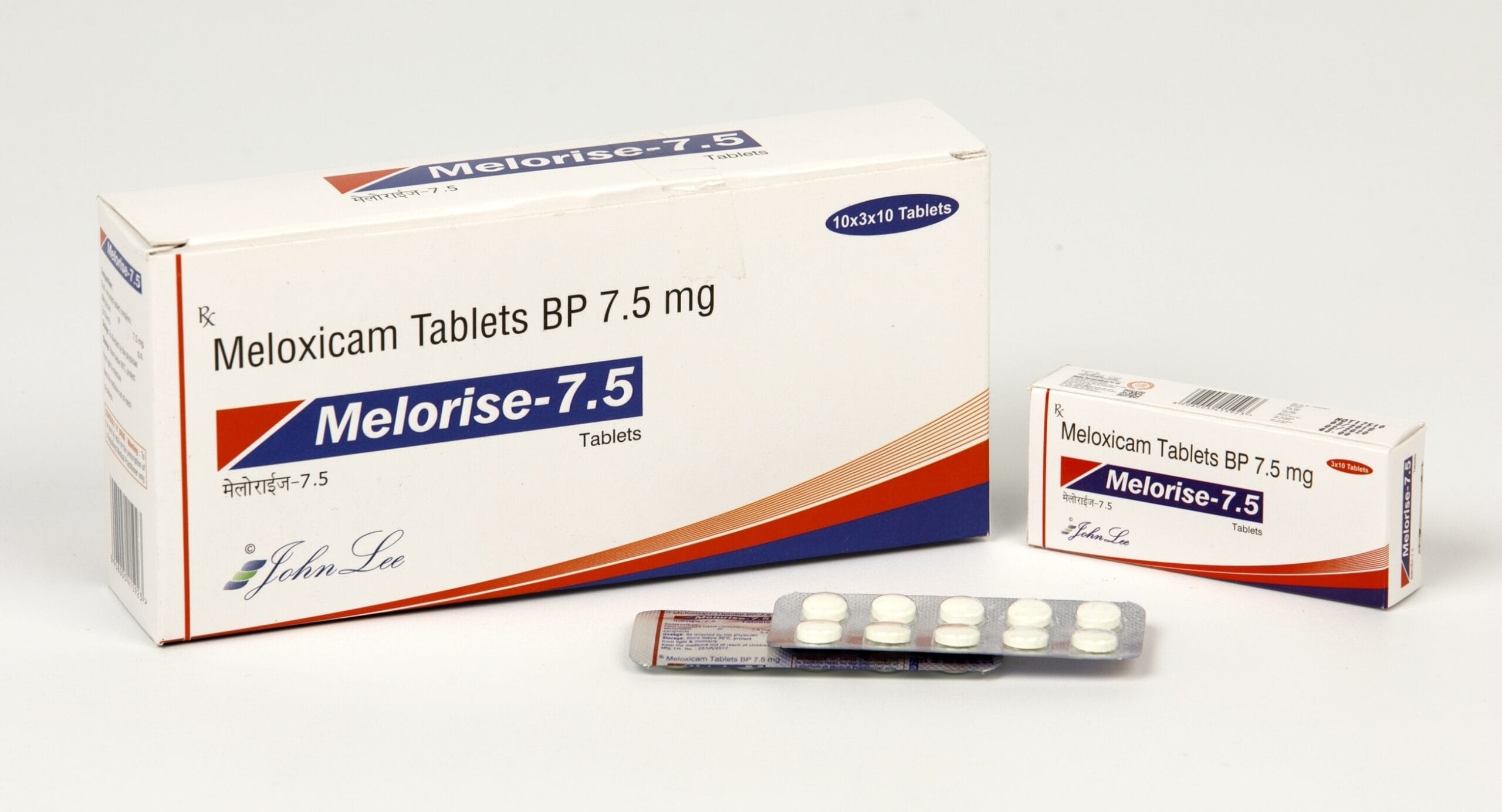
Melorise



✅ Verlicht pijn
✅ Vermindert ontsteking
✅ Verlicht gewrichtsstijfheid
✅ Verbeterd mobiliteit
✅ Behandelt artritis
Melorise bevat Meloxicam.
✓ Medisch beoordeeld door Morgan Ellis — Apotheekonderzoeker · 8 jaar ervaring · Laatst beoordeeld: mei 2026
⚡ Kort antwoord — Wat is Melorise?
Melorise is een meloxicam tablet verkrijgbaar in 7,5 mg en 15 mg sterktes. Meloxicam is een preferentiële COX-2 NSAID met een lange halfwaardetijd (~20 uur) die het mogelijk maakt dagelijkse dosering. Het wordt gebruikt voor osteoartritis (7,5 mg/dag), reumatoïde artritis en ankyloserende spondylitis (15 mg/dag), en biedt een sterke ontstekingsremmende werking met een iets milder maag-darmprofiel dan niet-selectieve NSAID's. Innemen met voedsel.
📦 Elke bestelling is gedekt door onze Reshipment Assurance-beleid — als uw pakket niet binnen 20 werkdagen arriveert, sturen wij het opnieuw.
Waarom bestellen bij MedsBase
Onze generieke medicijnen zijn afkomstig van WHO-GMP gecertificeerde fabrikanten en worden wereldwijd verzonden in discrete, eenvoudige verpakkingen — geen medicijnnaam op de buitenkant van het pakket. Betalingen met kaart worden verwerkt via een gereguleerde processor (betalingsoverzichten vermelden een gereguleerde kaartbetalingprocessor — nooit “MedsBase” of een medicijnnaam). Crypto en SEPA bankoverschrijvingen worden ook geaccepteerd. Elke bestelling wordt ondersteund door ons Reshipment Assurance Policy.
Melorise is een orale tablet van meloxicam, een NSAID uit de oxicamklasse met een voorkeursactiviteit tegen COX-2. Bij therapeutische doseringen (7,5–15 mg/dag) remt meloxicam COX-2 (de ontstekingsbevorderende isovorm) aanzienlijk meer dan COX-1 (de maagbeschermende isovorm), wat resulteert in een bescheiden maar reële vermindering van het risico op maagzweren in vergelijking met klassieke niet-selectieve NSAID's zoals diclofenac, ibuprofen en naproxen.
Meloxicam heeft een lange plasmahalfwaardetijd van ongeveer 20 uur, wat een eenvoudige dagelijkse dosering en stabiele 24-uurs ontstekingsremmende dekking mogelijk maakt — een praktisch voordeel bij chronische inflammatoire artritis waar therapietrouw belangrijk is.
Waar wordt Melorise voor gebruikt?
- Artrose — 7,5 mg eenmaal daags (15 mg/dag indien nodig en verdragen)
- Reumatoïde artritis — 15 mg eenmaal daags
- Ankyloserende spondylitis — 15 mg eenmaal daags
- Acute musculoskeletale pijn en letsel
- Juveniele idiopathische artritis (specialistenbegeleiding, op gewicht gebaseerde dosering)
- Primaire dysmenorroe (off-label, korte kuren)
Hoe werkt Meloxicam?
Meloxicam is een preferentiële COX-2-remmer. Bij therapeutische doseringen vertoont het ongeveer een 10-voudige selectiviteit voor COX-2 ten opzichte van COX-1, wat het plaatst tussen de niet-selectieve NSAID's (ibuprofen, diclofenac, naproxen) en de sterk selectieve coxiben (celecoxib, etoricoxib). Klinische onderzoeken en meta-analyses bevestigen een bescheiden maar reële vermindering van het risico op maagzweren en bloedingen in vergelijking met niet-selectieve NSAID's, terwijl de pijnstillende werking vergelijkbaar is.
Melorise Dosering
- Artrose: 7,5 mg eenmaal daags bij de maaltijd (kan worden verhoogd tot 15 mg/dag)
- Reumatoïde artritis en ankyloserende spondylitis: 15 mg eenmaal daags bij de maaltijd
- Ouderen: begin met 7,5 mg eenmaal daags
- Maximum: 15 mg/dag
- Nierfunctiestoornis (mild-matig): maximaal 7,5 mg/dag; vermijden bij CrCl < 30 ml/min
- Leverfunctiestoornis: 7,5 mg/dag; vermijden bij ernstige beperking
Slik het geheel door met water. Neem het altijd in met voedsel. Als u een dosis vergeet, neem deze dan zo snel mogelijk in, tenzij de volgende dosis binnen 8 uur gepland staat — sla deze dan over.
Maag-darm-, cardiovasculaire en renale veiligheid. Meloxicam brengt alle standaard NSAID-risico's met zich mee (maagzweer, hartaanval, beroerte, acuut nierletsel, verhoogde bloeddruk). Gebruik de laagst effectieve dosis voor de kortst mogelijke klinisch redelijke tijd. Overweeg een protonpompremmer toe te voegen bij behandelingen langer dan 2–4 weken. Patiënten met vastgestelde cardiovasculaire aandoeningen moeten vooraf met hun arts overleggen.
Wie mag Melorise niet gebruiken?
- Bekende overgevoeligheid voor meloxicam of enig NSAID
- Actieve maagzweer of GI-bloeding
- Astma, urticaria of angio-oedeem veroorzaakt door aspirine of NSAID's
- Ernstig hartfalen (NYHA IV)
- Vastgestelde ischemische hartziekte, perifeer arterieel vaatlijden, cerebrovasculaire aandoening (gebruik waar mogelijk een alternatief NSAID)
- Ernstige leverfunctiestoornis (Child-Pugh C)
- Ernstig nierfalen (CrCl < 30 mL/min)
- Derde trimester van de zwangerschap
- Recent CABG-operatie
- Opvlamming van inflammatoire darmziekte
Bijwerkingen van Melorise
- Vaak voorkomend: dyspepsie, misselijkheid, diarree, buikpijn, hoofdpijn, duizeligheid, huiduitslag, enkelzwelling
- Minder vaak voorkomend: maagzweer, maag-darmbloeding, verhoogde bloeddruk, verhoogde leverenzymen, oorsuizen, hartkloppingen
- Zeldzaam maar ernstig: ernstige hepatotoxiciteit, syndroom van Stevens-Johnson, acuut nierletsel, verergering van hartfalen, myocardinfarct, beroerte, anafylaxie
Melorise versus andere NSAID's
| Geneesmiddel | COX-preferentie | Dosering | GI-risico |
|---|---|---|---|
| Meloxicam (Melorise) | Preferentiële COX-2 | 7,5–15 mg eenmaal daags | Matig-laag |
| Etodolac (Etova) | Preferentiële COX-2 | 200–400 mg BID | Matig-laag |
| Celecoxib (Celeheal) | Hoogselectieve COX-2 | 100–200 mg BID | Laagste |
| Etoricoxib (Etorlee) | Hoogselectieve COX-2 | 60–120 mg eenmaal daags | Laag |
| Ibuprofen (Brufen) | Niet-selectief | 400 mg driemaal daags | Matig |
| Naproxen | Niet-selectief | 500 mg 2x daags | Matig |
| Diclofenac (Voveran SR) | Niet-selectief (lichte COX-2) | 75 mg tweemaal daags | Matig-hoog |
Bestellen & Levering
MedsBase biedt wereldwijde verzending bij elke bestelling. Bestellingen worden verzonden in discrete verpakkingen en arriveren in verpakkingen van de fabrikant. Als uw gewenste verpakkingsmaat niet op voorraad is, neem dan contact op met de klantenservice voor een verwachte leverdatum.
Medisch disclaimer. De informatie op deze pagina is alleen bedoeld voor algemene educatie. Het is geen vervanging voor advies van uw eigen arts of apotheker. Overleg met een gekwalificeerde zorgprofessional voordat u een therapie start, stopt of wijzigt.
Veelgestelde vragen
Waar wordt Melorise voor gebruikt?
Melorise (meloxicam) wordt gebruikt voor artrose, reumatoïde artritis, ankyloserende spondylitis en acute musculoskeletale pijn. Eenvoudige eenmaal daagse dosering maakt het geschikt voor chronische ontstekingsaandoeningen.
Is meloxicam veiliger voor de maag dan ibuprofen of diclofenac?
Enigszins wel. Meloxicam heeft een voorkeur voor COX-2-remming, wat het risico op maagzweren en bovenste GI-bloedingen verlaagt in vergelijking met niet-selectieve NSAID's bij een gelijkwaardig ontstekingsremmend effect. Het is niet zo mild als selectieve coxibs zoals celecoxib.
Welke sterkte moet ik nemen — 7,5 mg of 15 mg?
7,5 mg eenmaal daags is de startdosis voor artrose en meestal voldoende voor milde tot matige symptomen. 15 mg eenmaal daags wordt gebruikt voor reumatoïde artritis, ankyloserende spondylitis en wanneer 7,5 mg onvoldoende is voor artrose.
Hoe lang duurt het voordat Melorise werkt?
Pijnverlichting begint binnen 1–2 uur na een dosis. Het volledige ontstekingsremmende effect bij chronische artritis bouwt zich op over 1–2 weken dagelijks gebruik. Vanwege de lange halfwaardetijd duurt het 5–7 dagen om stabiele bloedspiegels te bereiken.
Moet ik Melorise met voedsel innemen?
Ja — altijd met voedsel of direct na de maaltijd. Dit vermindert maagirritatie.
Kan ik Melorise langdurig gebruiken?
Ja, voor chronische inflammatoire artritis in de laagst effectieve dosis. Controleer minstens jaarlijks de bloeddruk, nierfunctie en leverenzymen. Overweeg een protonpompremmer voor langdurige maagbescherming.
Kan ik Melorise met paracetamol innemen?
Ja. Paracetamol werkt via een ander mechanisme en kan veilig worden gecombineerd met meloxicam voor sterkere pijnverlichting.
Kan ik Melorise met aspirine innemen?
Lage doses aspirine (voor cardioprotectie) kunnen worden voortgezet met meloxicam, maar het gecombineerde risico op maagbloedingen neemt toe — meestal wordt een protonpompremmer voorgeschreven.
Is Melorise veilig tijdens de zwangerschap?
Vermijd na 20 weken; gecontra-indiceerd in het derde trimester. Gebruik in de vroege zwangerschap alleen op advies van een specialist.
Wat als ik een dosis vergeet?
Neem het in wanneer u eraan denkt, tenzij de volgende dosis binnen 8 uur gepland staat — sla deze dan over. Neem nooit een dubbele dosis.
Hoe verschilt meloxicam van etodolac?
Beide zijn preferentiële COX-2 NSAID's met vergelijkbare GI-profielen. Meloxicam wordt eenmaal daags gedoseerd (halfwaardetijd van 20 uur); etodolac wordt tweemaal daags gedoseerd (halfwaardetijd van 7 uur). Kies op basis van voorkeur voor therapietrouw en individuele tolerantie.
Gerelateerde alternatieven
Andere producten in Chronische aandoeningen die klanten ook bekijken:
Meer opties in pijnstillende medicatie
Gerangschikt op recente bestelvolumes van MedsBase — wat andere klanten in deze categorie kiezen.



| Sterkte | 7.5 mg, 15 mg |
|---|---|
| Hoeveelheid | 30 Tabletten, 60 Tabletten, 90 Tabletten, 180 Tabletten |
 Melorise
Vragen & antwoorden
Melorise
Gerelateerde producten












Beoordelingen
Er zijn nog geen beoordelingen