








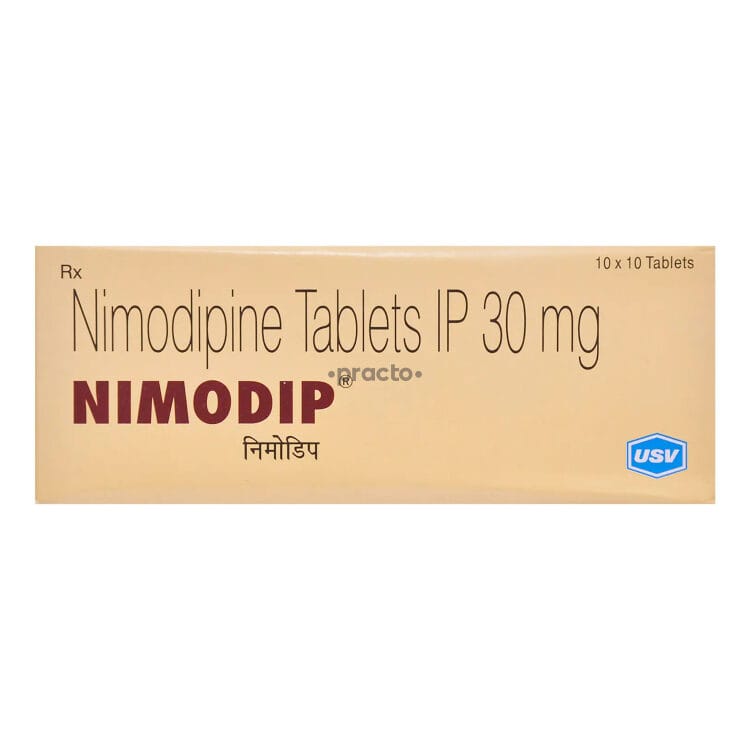
Nimodip
✅ Reguleert hypertensie
✅ Voorkomt beroerte
✅ Verbeterd de bloeddoorstroming
✅ Vermindert migrainefrequentie
✅ Verlicht hersen gerelateerde problemen
Nimodip bevat Nimodipine.
✓ Medisch beoordeeld door Morgan Ellis — Apotheekonderzoeker · 8 jaar ervaring · Laatst beoordeeld: mei 2026
⚡ Snelle vraag — Wat is Nimodip?
Nimodip is een oraal nimodipine (30 mg) tablet — een cerebraal-selectieve dihydropyridine calciumkanaalblokker specifiek gebruikt om te voorkomen en de ernst te verminderen van cerebrale vasospasme en vertraagde cerebrale ischemie (DCI) volgend op aneurysmatische subarachnoïdale bloeding (aSAH). Dosering: 60 mg elke 4 uur (360 mg/dag) gedurende 21 opeenvolgende dagen, gestart binnen 96 uur na de bloeding. Nimodipine verwijdt selectief cerebrale arteriën in vergelijking met perifere arteriën, waardoor de incidentie van vasospasme-gerelateerde neurologische uitval wordt verminderd zonder significante systemische hypotensie te veroorzaken bij standaarddoseringen. Veelvoorkomende bijwerkingen: hypotensie, hoofdpijn, misselijkheid, opvliegers.
📦 Elke bestelling is gedekt door onze Reshipment Assurance-beleid — als uw pakket niet binnen 20 werkdagen arriveert, sturen wij het opnieuw.
Waarom bestellen bij MedsBase
Onze generieke medicijnen zijn afkomstig van WHO-GMP gecertificeerde fabrikanten en worden wereldwijd verzonden in discrete, eenvoudige verpakkingen — geen medicijnnaam op de buitenkant van het pakket. Betalingen met kaart worden verwerkt via een gereguleerde processor (betalingsoverzichten vermelden een gereguleerde kaartbetalingprocessor — nooit “MedsBase” of een medicijnnaam). Crypto en SEPA bankoverschrijvingen worden ook geaccepteerd. Elke bestelling wordt ondersteund door ons Reshipment Assurance Policy.
Wat Is Nimodip?
Nimodip is een orale tablet die bevat nimodipine 30 mg. Nimodipine is een cerebraal-selectieve dihydropyridine calciumkanaalblokker — in tegenstelling tot andere CCB's (amlodipine, nifedipine) verwijdt het selectief cerebrale arteriën met minimaal effect op de perifere bloeddruk.
Nimodipine is de enige calciumantagonist met een neurologische indicatie: preventie van ischemische neurologische uitval (vasospasme) na aneurysmatische subarachnoïdale bloeding (SAH). De baanbrekende BIDA-studie (1983) toonde een ~40% reductie in cerebraal infarct en verbeterde neurologische uitkomsten aan met het standaard 21-daagse orale protocol. Nimodip wordt geproduceerd in een WHO-GMP gecertificeerde faciliteit en is bio-equivalent aan het originele merk Nimotop (Bayer).
Hoe Werkt Nimodip (Nimodipine)?
Nimodipine blokkeert L-type spanningsafhankelijke calciumkanalen, maar in tegenstelling tot andere calciumantagonisten (amlodipine, nifedipine) heeft het een voorkeursaffiniteit voor cerebrale vasculaire gladde spieren. Deze cerebrale selectiviteit betekent dat het hersenslagaders meer verwijdt dan perifere, waardoor het bijzonder geschikt is voor het voorkomen van vasospasme na subarachnoïdale bloeding.
Naast vasodilatatie kan nimodipine neuroprotectieve effecten hebben — het vermindert de calciuminstroom in neuronen tijdens ischemie, wat excitotoxische celdood vermindert. Klinische onderzoeken (de baanbrekende British Aneurysm Nimodipine Trial) toonden een significante vermindering van slechte uitkomsten aan, hoewel de angiografische vasospasmepercentages niet dramatisch verschillend waren — wat suggereert dat het voordeel deels neuroprotectief is.
Indicaties
- Preventie van cerebrale vasospasme en vertraagde cerebrale ischemie na aneurysmatische subarachnoïdale bloeding — de enige goedgekeurde indicatie
- Off-label gebruik: migraineprofylaxe, vasculaire dementie (beperkt bewijs), traumatische subarachnoïdale bloeding
Dosering — Het 21-Dagen Protocol
| Parameter | Standaardprotocol |
|---|---|
| Dosering | 60 mg (twee tabletten van 30 mg) |
| Frequentie | Elke 4 uur |
| Totale dagelijkse dosis | 360 mg/dag |
| Duur | 21 opeenvolgende dagen |
| Start | Binnen 96 uur na de bloeding |
| Leverfunctiestoornis | 30 mg elke 4 uur (gehalveerde dosis) |
Belangrijk: Nimodipine tabletten moeten in zijn geheel doorslikken, niet fijnkauwen. Voor patiënten die niet kunnen slikken, kan de inhoud met een spuit worden opgezogen en via een nasogastrische sonde worden toegediend — maar spuit de orale oplossing nooit intraveneus in (er zijn fatale gevallen geweest van per ongeluk intraveneuze toediening van orale nimodipine). Neem minstens 1 uur voor of 2 uur na de maaltijd in voor optimale absorptie.
Bijwerkingen
Vaak voorkomend: hypotensie (dosisafhankelijk, meestal mild), hoofdpijn, misselijkheid, opvliegers, perifeer oedeem.
Minder vaak: duizeligheid, tachycardie, huiduitslag, maag-darmklachten, bradycardie.
Ernstig: ernstige hypotensie (vooral bij patiënten met reeds bestaande lage bloeddruk of die andere antihypertensiva gebruiken), ileus (bij kritiek zieke SAH-patiënten), hepatotoxiciteit (zeldzaam — verhoogde transaminasen).
Waarschuwingen en voorzorgsmaatregelen
- Hypotensie. Nimodipine kan aanzienlijke bloeddrukdalingen veroorzaken, vooral bij hypovolemische SAH-patiënten of patiënten die andere antihypertensiva gebruiken. Meet de bloeddruk elke 1–2 uur gedurende de eerste 48 uur. Verlaag de dosis naar 30 mg elke 4 uur (in plaats van elke 2 uur) als de systolische druk onder 90 mmHg daalt.
- Leverfunctiestoornis. Nimodipine ondergaat uitgebreid first-pass levermetabolisme. Bij cirrose neemt de biologische beschikbaarheid aanzienlijk toe — halveer de dosis en controleer op hypotensie en bradycardie.
- Cerebraal oedeem / verhoogde ICP. Gebruik met voorzichtigheid bij patiënten met hersenoedeem of ernstig verhoogde intracraniële druk.
- Grapefruitsap. Remt de CYP3A4-metabolisme van nimodipine, waardoor de plasmaconcentraties verdubbelen. Vermijd grapefruitproducten tijdens het 21-daagse protocol.
- Epilepsie. Gebruik nimodipine voorzichtig bij patiënten met epilepsie — hoewel het niet epileptogeen is, zijn aanvallen een veelvoorkomende complicatie bij SAH en zijn geneesmiddelinteracties met anticonvulsiva (met name enzyminduceerders zoals fenytoïne en carbamazepine) klinisch significant.
- Zwangerschapscategorie C. Teratogeen bij dieren in hoge doses. Alleen gebruiken als het voordeel opweegt tegen het risico.
- Borstvoeding. Nimodipine wordt uitgescheiden in moedermelk. De klinische betekenis is onzeker — gebruik met voorzichtigheid.
Contra-indicaties — Wie mag Nimodipine NIET gebruiken
- Bekende overgevoeligheid voor nimodipine, andere dihydropyridinen of een hulpstof
- Gelijktijdig gebruik met rifampicine (verlaagt nimodipine tot subtherapeutische niveaus via CYP3A4-inductie)
- Gelijktijdig gebruik met sterke CYP3A4-remmers (ketoconazol, itraconazol, ritonavir) zonder dosisverlaging
- Instabiele angina of recent myocardinfarct (binnen 4 weken)
Geneesmiddelinteracties
- Andere antihypertensiva en calciumantagonisten: Additieve hypotensie
- CYP3A4-remmers (ketoconazol, fluconazol, macrolide antibiotica, grapefruitsap): Verhogen de nimodipine-spiegels aanzienlijk
- CYP3A4-induceerders (rifampicine, fenytoïne, carbamazepine, fenobarbital): Verlagen de nimodipine-spiegels, mogelijk tot subtherapeutische niveaus
- Bètablokkers: Additief negatief chronotroop effect — controleer de hartslag
- Nefrotoxische geneesmiddelen: Nimodipine kan de nierfunctie verslechteren bij patiënten met SAH die gelijktijdig nefrotoxische middelen krijgen
Bewaaradvies
- Bewaren bij kamertemperatuur, 15–25°C. Bescherm tegen licht — nimodipine is lichtgevoelig.
- Bewaar in de originele amberkleurige blisterverpakking tot gebruik.
- Bewaar niet in de badkamer.
- Buiten bereik van kinderen houden.
- Gebruik niet na de vervaldatum.
Gerelateerde categorieën op MedsBase
Veelgestelde vragen
Waar wordt Nimodip voor gebruikt?
Nimodip bevat nimodipine 30 mg en wordt gebruikt om cerebrale vasospasme en vertraagde cerebrale ischemie te voorkomen na een aneurysmatische subarachnoïdale bloeding (aSAH). Het is het enige geneesmiddel waarvan bewezen is dat het de neurologische uitkomsten na SAH verbetert.
Waarom wordt nimodipine elke 4 uur toegediend en niet tweemaal daags?
Nimodipine heeft een korte halfwaardetijd (1–2 uur oraal). De toediening om de 4 uur zorgt voor continue therapeutische niveaus gedurende de kritieke vasospasme-periode van 21 dagen (dagen 3–14 hebben het hoogste risico). Gemiste doses veroorzaken gaten in de bescherming.
Is nimodipine hetzelfde als nifedipine of amlodipine?
Alle drie zijn dihydropyridine calciumantagonisten, maar nimodipine is uniek cerebraal-selectief. Nifedipine en amlodipine richten zich voornamelijk op perifere en kransslagaders en worden gebruikt voor hypertensie/angina pectoris. Ze zijn niet uitwisselbaar — alleen nimodipine heeft bewezen effectiviteit voor SAH-uitkomsten.
Waarom mag nimodipine nooit intraveneus worden toegediend?
Orale nimodipine-formuleringen bevatten hulpstoffen die niet geschikt zijn voor IV-injectie. Onbedoelde IV-toediening heeft geleid tot cardiovasculaire collaps en overlijden. Wanneer orale toediening onmogelijk is (bij bewusteloze patiënten), moet nimodipine via een neus-maagsonde worden toegediend, niet geïnjecteerd.
Voorkomt nimodipine daadwerkelijk vasospasme?
Interessant genoeg vermindert nimodipine angiografisch vasospasme niet significant. Het voordeel lijkt voornamelijk neuroprotectief te zijn — het vermindert ischemische neuronale schade door vasospasme in plaats van het spasme zelf te voorkomen. Het klinische resultaat is dat minder patiënten permanente neurologische uitval hebben.
Kan ik nimodipine met grapefruitsap innemen?
Nee. Grapefruitsap remt CYP3A4, wat de nimodipinespiegel en het risico op hypotensie aanzienlijk verhoogt. Vermijd grapefruit gedurende de hele behandeling.
Wat gebeurt er als een dosis wordt gemist?
Neem de gemiste dosis zo snel mogelijk in. Als het bijna tijd is voor de volgende dosis, sla de gemiste dan over en ga verder met het schema. Gezien de korte halfwaardetijd vermindert elke onderbreking de bescherming tijdens het kritieke vasospasmevenster.
Wordt nimodipine gebruikt voor migraine?
Nimodipine is onderzocht voor migraineprofylaxe met wisselende resultaten. Sommige patiënten hebben baat bij het middel, maar het is geen eerstelijns migrainepreventivum — propranolol, topiramaat en valproaat hebben sterkere bewijzen. Het wordt off-label gebruikt wanneer andere opties hebben gefaald of gecontra-indiceerd zijn.
Kan nimodipine de bloeddruk te veel verlagen?
Ja — hypotensie is het belangrijkste klinische aandachtspunt. Bij patiënten met SAH is het handhaven van een adequate cerebrale perfusiedruk cruciaal. De bloeddruk moet regelmatig worden gecontroleerd, en de dosis kan moeten worden gehalveerd (30 mg elke 4 uur) bij patiënten met leverfunctiestoornissen of significante hypotensie.
Hoe lang duurt de behandeling?
Het standaardprotocol is 21 opeenvolgende dagen, ongeacht of vasospasme optreedt. De hoogste risicoperiode is dag 3–14, maar de behandeling wordt verlengd tot dag 21 om late vasospasme-gebeurtenissen te dekken.
Is Nimodip hetzelfde als Nimotop?
Beide bevatten nimodipine 30 mg. Nimotop is het originele Bayer-merk. Nimodip is een bio-equivalent generiek middel tegen lagere kosten.
Gerelateerde alternatieven
Andere producten in Chronische aandoeningen die klanten ook bekijken:
Meer opties in neurologische aandoeningen en epilepsie
Gerangschikt op recente bestelvolumes van MedsBase — wat andere klanten in deze categorie kiezen.


| Sterkte | 30 mg |
|---|---|
| Hoeveelheid | 30 Tabletten, 60 Tabletten, 90 Tabletten, 180 Tabletten |
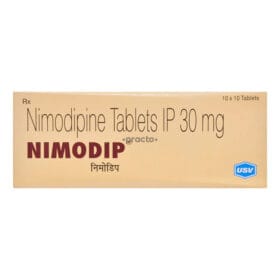 Nimodip
Vragen & antwoorden
Nimodip
Gerelateerde producten








Beoordelingen
Er zijn nog geen beoordelingen