








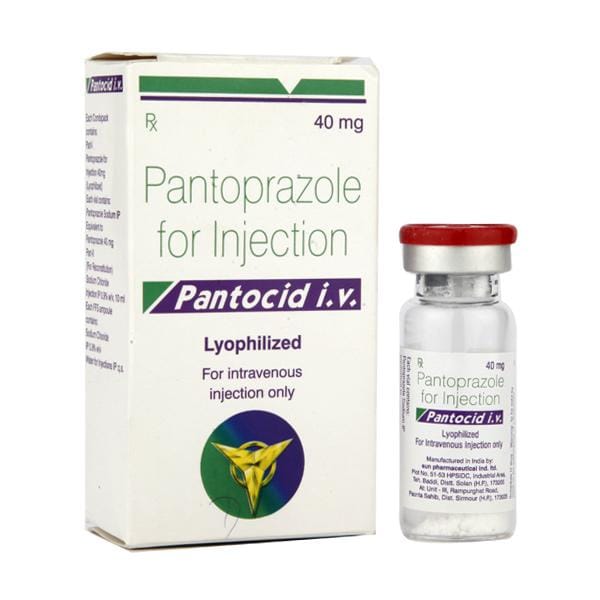
Pantocid Injectie
✅ Snelle verlichting van zuur
✅ Genezing van maagzweren
✅ Vermindert zuurbranden
✅ Voorkomt zuurgerelateerde schade
✅ Effectieve behandeling van GERD
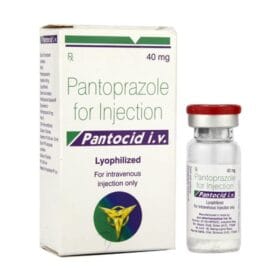
Pantocid Injection bevat Pantoprazole.
✓ Medisch beoordeeld door Morgan Ellis — Apotheekonderzoeker · 8 jaar ervaring · Laatst beoordeeld: mei 2026
⚡ Kort antwoord — Wat is Pantocid Injection?
Pantocid Injectie is pantoprazolnatrium 40 mg per flesje voor intraveneus gebruik, vervaardigd door Sun Pharma in een WHO-GMP gecertificeerde productiefaciliteit. Dit is de parenterale vorm van pantoprazole die wordt gebruikt in het ziekenhuis wanneer een patiënt geen orale PPI kan innemen — nuchter, postoperatief, geïntubeerd of met actieve bovenste GI-bloeding. Standaard dosering: 40 mg IV eenmaal daags opgelost in 0,9% zoutoplossing, toegediend gedurende 15 minuten. Voor actieve niet-variceuze bovenste GI-bloeding met een hoogrisico endoscopische laesie (Forrest Ia/Ib/IIa/IIb), is het protocol een 80 mg IV bolus gevolgd door een continue infusie van 8 mg/uur gedurende 72 uur. Schakel over op orale pantoprazol (bijv. Pantodac 40 mg) zodra de patiënt veilig kan slikken. Verdere IV PPI na 3–5 dagen voegt farmacologisch niets toe.
📦 Elke bestelling is gedekt door onze Reshipment Assurance-beleid — als uw pakket niet binnen 20 werkdagen arriveert, sturen wij het opnieuw.
Waarom bestellen bij MedsBase
Onze generieke medicijnen zijn afkomstig van WHO-GMP gecertificeerde fabrikanten en worden wereldwijd verzonden in discrete, eenvoudige verpakkingen — geen medicijnnaam op de buitenkant van het pakket. Betalingen met kaart worden verwerkt via een gereguleerde processor (betalingsoverzichten vermelden een gereguleerde kaartbetalingprocessor — nooit “MedsBase” of een medicijnnaam). Crypto en SEPA bankoverschrijvingen worden ook geaccepteerd. Elke bestelling wordt ondersteund door ons Reshipment Assurance Policy.
Wat Pantocid Injectie Is
Pantocid Injectie is het Sun Pharma merk van intraveneus pantoprazol natrium. Elk flesje bevat pantoprazol natrium equivalent aan 40 mg pantoprazol base, geleverd als een steriel lyofiliseerd poeder voor reconstitutie. Het is de parenterale vorm van hetzelfde molecuul dat oraal beschikbaar is als Pantodac, Pan, Pentab, Penlip en Walapan-40.
Hoe Pantocid Injectie Werkt
Pantoprazol is een benzimidazol protonpompremmer. Na IV toediening wordt het medicijn geconcentreerd in de zure secretoire kanaaltjes van de pariëtale cellen van de maag. Daar wordt het geprotoneerd tot de actieve sulfenamidevorm, die een covalente disulfidebinding vormt met cysteïneresiduen op de H+/K+-ATPase-pomp. Dit blokkeert onomkeerbaar de zuurafscheiding totdat nieuwe pompen zijn gesynthetiseerd, wat 24–72 uur farmacodynamisch effect geeft van elke dosis ondanks de korte plasmahalfwaardetijd van ~1 uur van het middel. Continue infusie wordt gebruikt bij actieve GI-bloedingen omdat het een verhoogde intragastrische pH van > 6 handhaaft — de drempel waarboven bloedplaatjesaggregatie behouden blijft en de stabiliteit van stolsels verbetert.
Indicaties — Wanneer IV Pantoprazol Wordt Gebruikt
1. Actieve bovenste-GI-bloeding door een maagzweer (na endoscopie)
De grootste bewijsbasis. Na endoscopische hemostase van een hoogrisicolesie (actieve arteriële bloeding Forrest Ia, sijpeling Ib, niet-bloedend zichtbaar vat IIa of vastzittend stolsel IIb), vermindert een 72 uur durende IV PPI-infusie met 80 mg bolus + 8 mg/u herbloedingen, operaties en 30-dagen mortaliteit. Patiënten met laagrisicolesies (Forrest IIc/III) hebben geen IV-therapie nodig en kunnen direct overgaan op orale hooggedoseerde pantoprazol.
2. Patiënten NPO (niets via de mond) die zuurremming nodig hebben
Postoperatieve ileus, mechanische beademing, ernstige pancreatitis, aanhoudend braken of dysfagie. Zodra enterale voeding wordt hervat, overschakelen op orale pantoprazol.
3. ICU-stressulcusprofylaxe
Voor mechanisch beademde patiënten > 48 uur, patiënten met coagulopathie of patiënten onder vaatverwijdende medicatie. Let op: langdurig PPI-gebruik op de ICU wordt geassocieerd met een verhoogd risico op C. difficile infectie en beademingsgerelateerde longontsteking — evalueer de indicatie dagelijks en stop wanneer niet meer nodig.
4. Zollinger-Ellison-syndroom — overbrugging
Voor patiënten met zuurhypersecretoire aandoeningen die tijdelijk geen orale PPI kunnen innemen.
Dosering en toediening
| Indicatie | Dosering | Opmerkingen |
|---|---|---|
| Standaard dosis voor volwassenen | 40 mg IV eenmaal daags | Reconstitueer met 10 mL 0,9% natriumchloride; kan verder worden verdund in 100 mL 0,9% NaCl; infuus gedurende 15 minuten |
| Bovenste-GI-bloeding (hoogrisicolesie, na endoscopie) | 80 mg IV bolus, daarna 8 mg/u continue infusie | 72 uur, daarna afbouwen naar 40 mg oraal tweemaal daags gedurende 14 dagen |
| Ernstige Zollinger-Ellison | 80 mg IV elke 8–12 uur (onder specialistische begeleiding) | 0,9% NaCl voor reconstitutie; specialistisch toezicht |
| Leverfunctiestoornis | Maximaal 40 mg/dag | Controleer leverfuncties |
| Nierfunctiestoornis | Geen dosisaanpassing nodig | Standaardregime |
Compatibiliteit: Alleen reconstitueren met 0,9% natriumchloride. Niet mengen met andere IV-medicatie in dezelfde lijn. De gereconstitueerde oplossing is 12 uur stabiel bij kamertemperatuur; gooi ongebruikt deel weg.
Overschakelen naar orale PPI zodra de patiënt veilig kan slikken. Doorgegane IV PPI-therapie na 3–5 dagen heeft geen farmacologisch voordeel ten opzichte van orale therapie en voegt aanzienlijk toe aan kosten en infectierisico.
Bijwerkingen
Vaak (1–10%): hoofdpijn, diarree, misselijkheid, buikpijn, injectieplaatsreacties (pijn, tromboflebitis op de canuleplaats).
Zeldzaam maar belangrijk: overgevoeligheid (huiduitslag, angio-oedeem; zeer zelden anafylaxie), acute interstitiële nefritis, hepatotoxiciteit (zeldzaam), ernstige hypomagnesiëmie (bij langdurig gebruik), C. difficile infectie (vooral bij gehospitaliseerde patiënten), en ventilator-geassocieerde pneumonie.
Contra-indicaties
- Bekende overgevoeligheid voor pantoprazol of een andere benzimidazol-PPI
- Gelijktijdig gebruik van rilpivirine (HIV) — absolute contra-indicatie
- Ernstige leverfunctiestoornis — dosis verlagen
Opslag
Bewaar ongeopende flacons bij 15–30 °C, beschermd tegen licht. Na reconstitutie is de oplossing 12 uur stabiel bij kamertemperatuur; koeling is niet vereist maar verlengt de stabiliteit niet verder dan 24 uur. Gooi elke zichtbaar verkleurde of deeltjes bevattende oplossing weg.
Veelgestelde vragen
Wanneer wordt IV pantoprazol gebruikt in plaats van oraal?
Alleen wanneer een patiënt geen orale PPI kan innemen — nil-by-mouth, postoperatief, geïntubeerd, aanhoudend braken, ernstige dysfagie — of in het specifieke geval van acute bovenste-GI-bloedingen waarbij hooggedoseerde continue infusie de uitkomsten na endoscopische hemostase verbetert. Zodra enterale voeding hervat wordt, geeft oraal pantoprazol equivalente zuurremming tegen een fractie van de kosten.
Waarom is de dosis voor het bloedingprotocol zo veel hoger (80 mg + 8 mg/u)?
Actieve bovenste-GI-bloeding vereist een aanhoudende intragastrische pH > 6 om plaatjesaggregatie te stabiliseren en het stolsel te beschermen tegen peptische vertering. De 80 mg startdosis plus 8 mg/u continue infusie is het regime met de grootste gerandomiseerde-trial-evidence voor dit doel. Lagere of intermitterende dosering veroorzaakt grote pH-schommelingen en minder bescherming tegen herbloedingen.
Hoe lang moet IV PPI worden voortgezet?
Bij acute GI-bloeding, 72 uur continue infusie, daarna afbouwen naar oraal 40 mg tweemaal daags gedurende 14 dagen, daarna eenmaal daags. Voor NPO-patiënten, schakel over op orale PPI zodra de darmfunctie hersteld is. Langdurige IV PPI > 5 dagen heeft geen farmacologisch voordeel en verhoogt C. difficile en het risico op pneumonie in het ziekenhuis.
Is IV pantoprazol beter dan IV omeprazol of esomeprazol?
Voor zuurremming alleen, nee — alle IV PPI's bereiken een equivalente intragastrische pH. Pantoprazol wordt in de klinische praktijk geprefereerd vanwege zijn gunstiger interactieprofiel met andere geneesmiddelen (met name relevant voor IC-patiënten die meerdere geneesmiddelen gebruiken die worden gemetaboliseerd door CYP3A4 en CYP2C19) en omdat de bewijsbasis voor bloedingprotocollen het grootst is bij pantoprazol en esomeprazol.
Kan het worden gemengd met andere IV-geneesmiddelen?
Nee. Los pantoprazol alleen op in 0,9% natriumchloride en geef het via een aparte IV-lijn. Geef het niet samen met andere medicijnen in dezelfde lijn vanwege compatibiliteitsproblemen met verschillende veelvoorkomende IV-geneesmiddelen.
Is IV-pantoprazol veilig tijdens de zwangerschap?
Pantoprazol heeft redelijke veiligheidsgegevens tijdens de zwangerschap. IV-pantoprazol zou tijdens de zwangerschap alleen worden gebruikt wanneer orale therapie niet mogelijk is — bijvoorbeeld bij hyperemesis gravidarum die ernstig genoeg is voor parenterale voeding, of bij acute maagzweerbloedingen. Overleg met verloskundige en GI-teams.
Wat zijn de bijwerkingen van IV-pantoprazol?
De meeste zijn vergelijkbaar met orale PPI: hoofdpijn, diarree, misselijkheid. Specifiek voor IV-gebruik: injectiepijn of tromboflebitis bij de canule. Belangrijke ziekenhuiscomplicaties om op te letten: C. difficile infectie, beademingsgerelateerde longontsteking, hypomagnesiëmie (lange IC-opnames) en zeldzame acute interstitiële nefritis (creatininestijging).
Interageert IV-pantoprazol met clopidogrel?
Pantoprazol heeft de kleinste interactie met clopidogrel van alle PPI's omdat het CYP2C19 niet in klinisch significante mate remt. Dit is een van de redenen waarom het de standaard IV-PPI is op cardiologie- en hartchirurgieafdelingen.
Kan het via een perifere canule worden toegediend?
Ja — de standaarddosis van 40 mg opgelost en verdund in 100 mL 0,9% zoutoplossing kan via een perifere lijn worden toegediend. De continue infusie van 8 mg/u voor GI-bloedingen wordt vaker via een aparte lijn gegeven vanwege de duur. Let op tromboflebitis op de canuleplaats.
Hoe wordt het opgeslagen na reconstitutie?
De opgeloste en verdunde oplossing is 12 uur stabiel bij kamertemperatuur in 0,9% zoutoplossing. Koeling verlengt de houdbaarheid tot 24 uur. Gooi elke oplossing weg die verkleurd, troebel is of deeltjes bevat.
Gerelateerde alternatieven
Andere producten in Algemene gezondheid die klanten ook bekijken:
Meer opties in de behandeling van maagzuurreflux
Gerangschikt op recente bestelvolumes van MedsBase — wat andere klanten in deze categorie kiezen.


| Sterkte | 40 mg |
|---|---|
| Hoeveelheid | 1 Fles/je, 2 Fles/jes, 3 Fles/jes, 6 Fles/jes |
 Pantocid Injectie
Vragen & antwoorden
Pantocid Injectie
Gerelateerde producten






Beoordelingen
Er zijn nog geen beoordelingen