







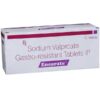
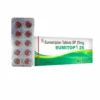
Ursodec

✅ Lost galstenen op
✅ Beschermt levercellen
✅ Vermindert galtoxiciteit
✅ Verbeterde leverfunctie
✅ Verlicht leverontsteking
Ursodec bevat Ursodeoxycholzuur.
✓ Medisch beoordeeld door Morgan Ellis — Apotheekonderzoeker · 8 jaar ervaring · Laatst beoordeeld: mei 2026
Snelle antwoord
Ursodec bevat ursodeoxycholzuur (UDCA) 150 mg per tablet — de eerstelijns orale therapie voor primaire biliaire cholangitis (PBC) en de belangrijkste orale optie voor het oplossen van cholesterolgalstenen. De gebruikelijke dosis voor volwassenen is 13–15 mg/kg/dag in verdeelde doses met maaltijden voor PBC, 8–10 mg/kg/dag voor galsteenoplossing. Hogere dosis tabletten (Udiliv 300mg) verminderen het aantal pillen.
📦 Elke bestelling is gedekt door onze Reshipment Assurance-beleid — als uw pakket niet binnen 20 werkdagen arriveert, sturen wij het opnieuw.
Wat ursodeoxycholic acid is
Ursodeoxycholic acid (UDCA, ook wel ursodiol genoemd) is een van nature voorkomend secundair galzuur. Therapeutisch doet het drie dingen tegelijk: het vervangt cytotoxische hydrofobe galzuren (chenodeoxycholzuur, deoxycholzuur, lithocholzuur) uit de galzuurpool, vermindert het de afscheiding van galcholesterol (wat cholesterolgalstenen over maanden oplost), en het beschermt cholangiocyten tegen door galzuur veroorzaakte schade via cytoprotectieve en immunomodulerende effecten. Het is de enige orale therapie met bewezen voordeel voor mortaliteit en transplantatievrije overleving bij primaire biliaire cholangitis (Poupon 1991, 1994; meta-analyses 2002, 2014).
Indicaties
- Primaire biliaire cholangitis (PBC) — eerstelijnsbehandeling; 13–15 mg/kg/dag in verdeelde doses tijdens maaltijden. ~60–70% biochemische respons (normalisatie van alkalische fosfatase of significante daling) binnen 12 maanden. Non-responders worden overgeschakeld of aangevuld met obeticholzuur of fibraten.
- Oplossen van cholesterolgalstenen — voor radiolucente stenen < 15 mm in een functionerende galblaas, bij patiënten die geen cholecystectomie kunnen of willen ondergaan. 8–10 mg/kg/dag gedurende 6–24 maanden. Steenrecidief na stopzetting is aanzienlijk (≈ 50% na 5 jaar).
- Primaire scleroserende cholangitis (PSC) — verbetert de biochemie; mortaliteitsvoordeel niet bewezen. Hoge doses (28–30 mg/kg/dag) zijn geassocieerd met slechtere uitkomsten en zijn gecontra-indiceerd.
- Intrahepatische cholestase van de zwangerschap (ICP) — 10–15 mg/kg/dag (of 500 mg tweemaal daags); vermindert maternale pruritus en galzuurspiegels; kan foetale complicaties verminderen.
- Niet-alcoholische leververvetting (NAFLD) — de biochemie verbetert maar hoogwaardig histologisch voordeel is niet bewezen; geen eerstelijns NAFLD-therapie volgens huidige richtlijnen.
- Cystic fibrosis geassocieerde leverziekte — gebruikt bij pediatrische en volwassen CF-cholestase.
Dosering
| Indicatie | Dosering (mg/kg/dag) | Schema |
|---|---|---|
| PBC | 13–15 | 2–3 verdeelde doses bij maaltijden |
| Oplossen van cholesterolgalstenen | 8–10 | 2 verdeelde doses (met de grootste dosis voor het slapengaan) |
| PSC | 13–15 (NIET meer dan 28 mg/kg) | 2–3 verdeelde doses |
| ICP (zwangerschap) | 10–15 | 2 verdeelde doses |
| NAFLD-adjuvans | 13–15 | 2–3 verdeelde doses |
Vermijd bij
- Acute cholecystitis, cholangitis of galwegobstructie
- Gecalcificeerde of pigmentgalstenen (geen oplossend effect)
- Niet-functionerende galblaas bij orale cholecystografie
- Ernstige hepatische decompensatie (Child-Pugh C) — overleg met hepatologie
Bijwerkingen
Over het algemeen zeer goed verdragen. Meest voorkomend: milde diarree (5–10%), buikklachten, misselijkheid, milde huiduitslag. Jeuk kan tijdelijk verergeren bij PBC gedurende de eerste weken voordat verbetering optreedt. Zelden: calcificatie van galstenen (radio-opaque verschuiving) bij langdurig gebruik.
Geneesmiddelinteracties
- Galzuurbindende harsen (cholestyramine, colesevelam, colestipol) — binden UDCA in de darm en verminderen de opname. Neem met een interval van ≥ 4–5 uur.
- Aluminiumbevattende antacida — binden UDCA. Neem met een interval van ≥ 2 uur.
- Oestrogenen, orale anticonceptiva, clofibraat — verhogen de verzadiging van galcholesterol en werken het galsteenoplossende effect tegen.
- Ciprofloxacine, dapson — licht gewijzigde absorptie; klinisch gering.
Zwangerschap en borstvoeding
Wordt routinematig off-label gebruikt bij intrahepatische cholestase van de zwangerschap met uitgebreide veiligheidsgegevens. Compatibel met borstvoeding (wordt in sporenhoeveelheden uitgescheiden in moedermelk; geen schade bij zuigelingen gerapporteerd).
Opslag
Bewaren onder 25 °C op een droge plaats, in de originele verpakking. Tabletten zijn stabiel voor de volledige gelabelde houdbaarheid wanneer ze droog worden bewaard.
Waarom bestellen bij MedsBase
Ursodec wordt geleverd door een WHO-GMP gecertificeerde fabrikant met volledige COA-documentatie. Wij verzenden wereldwijd in eenvoudige, discrete verpakkingen en elke bestelling wordt gedekt door onze Reshipment Assurance-beleid. Uw betalingsbeschrijving bij betaling per kaart toont de gereguleerde betalingsverwerker (een gereguleerde kaartbetalingverwerker), nooit "MedsBase" of een medicijnnaam.
Veelgestelde vragen
Hoelang duurt het voordat ik resultaten zie bij primaire biliaire cholangitis?
Alkalische fosfatase daalt meestal binnen 4–8 weken en het verloop na 12 maanden voorspelt het langetermijnresultaat. De Toronto-, Paris-1- en Paris-2-criteria definiëren een “biochemische responder” na 1 jaar aan de hand van ALP-, AST- en bilirubinedrempels. Niet-responders moeten met hepatologie bespreken of obeticholzuur of fibraten kunnen worden toegevoegd.
Kan UDCA elk soort galsteen oplossen?
Alleen cholesterolstenen, alleen als ze radiolucent zijn op beeldvorming, alleen in een functionerende galblaas en alleen als ze < 15 mm zijn. Gecalcificeerde, pigment- of gedeeltelijk gecalcificeerde stenen reageren niet.
Waarom wil mijn arts dat ik levenslang UDCA gebruik voor PBC?
PBC is een chronische auto-immuun cholangitis. UDCA verandert het ziekteverloop maar geneest het niet. Het stoppen van UDCA wordt gevolgd door een biochemische terugval binnen enkele weken. Levenslange therapie met 13–15 mg/kg/dag is standaard.
Kan ik het gebruiken tijdens de zwangerschap?
Ja — UDCA is de standaardbehandeling voor intrahepatische cholestase van de zwangerschap. Decennia van gebruik tonen geen schade aan de foetus aan en het vermindert maternale pruritus en galzuurgehalten.
Zorgt UDCA voor gewichtsverlies of gewichtstoename?
Geen van beide, bij de meeste patiënten. Milde diarree kan bij een klein deel in het begin voor gering gewichtsverlies zorgen.
Werkt UDCA bij niet-alcoholische leververvetting?
Het verbetert de bloedwaarden (ALT, AST). Of het leverhistologie en uitkomsten verbetert, is niet vastgesteld in grote onderzoeken. Huidige NAFLD/NASH-richtlijnen raden UDCA niet aan als standaardbehandeling.
Mag ik alcohol drinken bij gebruik van UDCA?
De meeste patiënten die UDCA gebruiken hebben een onderliggende leveraandoening. Alcohol wordt bij PBC, PSC en significante leverziekte het beste volledig vermeden.
Wat is het verschil tussen UDCA en galzouten in supplementen?
UDCA is een specifiek galzuur (ursodeoxycholzuur). Generieke “galzout”-supplementen zijn mengsels van natuurlijke galzuren zonder gestandaardiseerde therapeutische dosering. Alleen gezuiverde UDCA-tabletten worden klinisch gebruikt voor PBC en galsteenoplossing.
Hoe wordt UDCA gecontroleerd?
Voor PBC: ALP, ALT, AST, GGT, totaal bilirubine elke 3 maanden in het eerste jaar, daarna halfjaarlijks. Voor galsteenoplossing: echo na 6, 12 en 24 maanden om de steengrootte te volgen.
Kan een hoge dosis UDCA schadelijk zijn?
Bij primaire scleroserende cholangitis waren doses ≥ 28 mg/kg/dag geassocieerd met SLECHTERE klinische uitkomsten (Lindor 2009 NEJM). Houd bij PSC 13–15 mg/kg/dag aan en verhoog nooit zonder specialistisch advies.
Andere lever- en hepatologieproducten
- Udiliv (UDCA 300 mg) — hogere sterkte UDCA, minder tabletten
- Alle hepatitis- en levermedicijnen
- Hepcinat (sofosbuvir) — direct-acting antiviral voor chronische HCV
- MyHep All (sofosbuvir + velpatasvir) — pan-genotypische HCV-behandeling
- Celin (vitamine C) — antioxidant als ondersteunende therapie
- L-Glutathione 250 mg — antioxidant voor hepatische redoxondersteuning
Medische Disclaimer
Deze informatie is uitsluitend bedoeld voor educatieve doeleinden en is geen vervanging voor medisch advies. Raadpleeg altijd een gekwalificeerde zorgverlener voordat u met een medicatie begint, deze wijzigt of stopt.
Meer opties in hepatitismedicatie
Gerangschikt op recente bestelvolumes van MedsBase — wat andere klanten in deze categorie kiezen.
| Sterkte | 150 mg |
|---|---|
| Hoeveelheid | 30 Tabletten, 60 Tabletten, 90 Tabletten, 180 Tabletten |
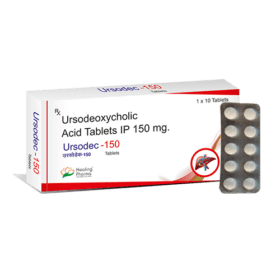 Ursodec
Vragen & antwoorden
Ursodec
Gerelateerde producten




Beoordelingen
Er zijn nog geen beoordelingen