







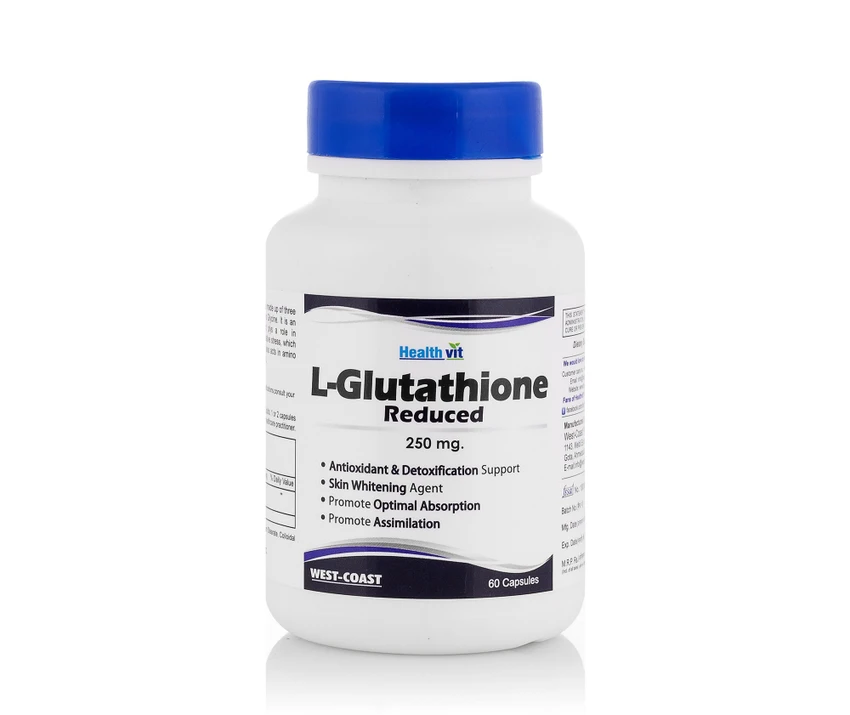
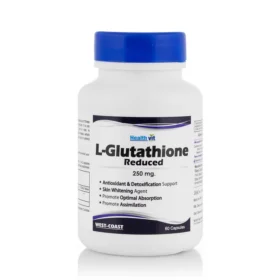
L-Glutathione 250mg
✅ Ondersteunt het ontgiftingsproces
✅ Bevordert een gezondere huid
✅ Versterkt de immuunfunctie
✅ Vermindert oxidatieve stress
✅ Verbeterd celherstel
Bevat L-Glutathione 250mg (gereduceerd) (Vrije vorm).
✓ Medisch beoordeeld door Morgan Ellis — Apotheekonderzoeker · 8 jaar ervaring · Laatst beoordeeld: mei 2026
Snelle antwoord
L-Glutathione 250mg is gereduceerd glutathion (GSH) in vrije vorm — het belangrijkste intracellulaire antioxidant van het lichaam. Elke capsule bevat 250 mg. Typisch volwassen gebruik is 250–500 mg een of twee keer per dag voor antioxidantondersteuning, ondersteuning bij leverontgifting en voor huidpigmentatie. In te nemen met voedsel. Geen vervanging voor voorgeschreven levertherapie bij gediagnosticeerde leveraandoeningen.
📦 Elke bestelling is gedekt door onze Reshipment Assurance-beleid — als uw pakket niet binnen 20 werkdagen arriveert, sturen wij het opnieuw.
Wat L-Glutathion is
Glutathion is een tripeptide van glutamaat, cysteïne en glycine, gesynthetiseerd door elke cel in het lichaam. Het is het dominante intracellulaire antioxidant — het GSH/GSSG-redoxpaar behoudt de cellulaire reductiecapaciteit, regenereert vitamine C en vitamine E uit hun geoxideerde vormen en dient als co-substraat voor glutathionperoxidasen (die peroxiden ontgiften) en glutathion S-transferasen (die xenobiotica conjugeren voor galexcretie).
De 250 mg capsule bevat gereduceerd (GSH) vrije-vorm L-glutathion, niet geoxideerd glutathion (GSSG) en geen glutathionprecursoren (NAC, glycine). Dit is belangrijk omdat de biologische beschikbaarheid van oraal GSH historisch controversieel is geweest: maagpeptidasen hydrolyseren een deel van de dosis, maar humane farmacokinetische studies (Allen 2011; Richie 2015) tonen aan dat aanhoudende orale inname van 250–1.000 mg/dag meetbaar de glutathionniveaus in volbloed verhoogt na 1–6 maanden.
Indicaties en ondersteunend bewijs
- Antioxidant ondersteuning — algemeen voedingssupplement bij oxidatieve stress (intensieve training, stoppen met roken, veroudering).
- Ondersteuning bij leverontgifting — ondersteunt fase-II conjugatie bij milde tot matige steatose, alcoholgerelateerde leverbelasting, subklinische leverirritatie door paracetamol. Niet geen vervanging voor medische zorg bij gediagnosticeerde leverziekte.
- Interesse voor huidpigmentatie — oraal glutathion wordt veel gebruikt in cosmetische dermatologie voor tyrosinasemodulatie en dyschromie. De klinische evidentie is wisselend (Sonthalia 2018 review): sommige studies tonen een bescheiden vermindering van de melanine-index bij 250–500 mg/dag gedurende 4–12 weken; andere tonen geen consistent effect. Het effect is kleiner en trager dan bij topische hydrochinon of tretinoïne.
- Ondersteunend bij PCOS, insulineresistentie en metabool syndroom — kleine studies suggereren verbeterde markers voor insulinegevoeligheid; geen primaire therapie.
Standaard dosering
| Gebruik | Dosering | Duur |
|---|---|---|
| Algemeen antioxidant | 250 mg een of twee keer per dag | Voortdurend |
| Leverondersteuning | 500 mg een of twee keer per dag | 3–6 maanden, daarna evalueren |
| Huid-/pigmentatie-interesse | 500 mg/dag met vitamine C 500–1.000 mg | Minimaal 4–12 weken voor zichtbare verandering |
Innemen met een maaltijd die vet bevat voor betere opname. Vitamine C 500–1.000 mg/dag wordt vaak samen voorgeschreven omdat ascorbaat GSH uit GSSG regenereert en parallel wordt verbruikt.
Wat dit NIET is
Dit product is orale glutathione. Zwartemarkt intraveneuze glutathione voor huidverlichting heeft fatale Stevens-Johnson-syndroom, toxische epidermale necrolyse, nierbeschadiging en uitbraken van loodverontreiniging veroorzaakt (Filipijnen 2011, Korea 2014). De Filipijnse FDA en de Amerikaanse FDA hebben herhaaldelijk gewaarschuwd tegen IV glutathione voor niet-medisch gebruik. Wij leveren of bevelen dit niet aan.
Bijwerkingen
Orale glutathion wordt over het algemeen goed verdragen. Gerapporteerde effecten: milde opgeblazenheid, buikkrampen, af en toe dunne ontlasting. Zeldzame allergische reacties. Langdurig oraal gebruik tot 1 g/dag gedurende 6 maanden heeft geen veiligheidssignalen opgeleverd.
Interacties en speciale populaties
- Zwangerschap/borstvoeding — onvoldoende gegevens; vermijd tenzij geadviseerd door een clinicus.
- Astma — casusrapporten van genebuleerde (niet orale) glutathion die bronchospasme veroorzaakt bij sulfietgevoelige astmapatiënten. Orale capsules bevatten geen vrij sulfiet.
- Chemotherapie — de GSH/GSSG-as interageert met veel cytotoxische middelen (cisplatin, doxorubicine). Overleg met oncologie voordat u antioxidanten toevoegt.
Opslag
Bewaren onder 30 °C op een droge plaats, in originele blister/verpakking. Glutathion oxideert bij blootstelling aan vocht — houd de droogmiddelen intact.
Waarom bestellen bij MedsBase
L-Glutathion 250mg wordt geleverd door een WHO-GMP-gecertificeerde fabrikant met volledige COA-documentatie. Wij verzenden wereldwijd in eenvoudige, discrete verpakkingen, en elke bestelling is gedekt door onze Reshipment Assurance-beleid. Uw betalingsbeschrijving bij betaling per kaart toont de gereguleerde betalingsverwerker (een gereguleerde kaartbetalingverwerker), nooit "MedsBase" of een medicijnnaam.
Veelgestelde vragen
Verhoogt orale L-glutathion daadwerkelijk de glutathionwaarden in het bloed?
Ja, bij langdurige dosering. Volbloed-GSH stijgt meetbaar na 1–6 maanden bij 250–1.000 mg/dag in humane studies (Richie 2015 EJCN). Enkele doses geven slechts tijdelijke pieken. Dagelijkse dosering is wat werkt.
Hoelang duurt het voordat ik veranderingen in huidskleur zie als ik het gebruik voor pigmentatie?
Reken op minimaal 4–12 weken. Het effect is bescheiden en geleidelijk. Combineer met dagelijks SPF 50, vitamine C 500–1.000 mg, en behandel eventuele onderliggende oorzaken (UV-blootstelling, hormonale melasma, post-inflammatoire hyperpigmentatie). Topische middelen (hydrochinon, azelaïnezuur, tretinoïne) werken sneller en sterker.
Is intraveneuze glutathion voor huidverlichting veilig?
Nee. IV-glutathion voor cosmetische huidverlichting is niet goedgekeurd door de FDA, EMA of Filipijnse FDA. Gerapporteerde schade omvat Stevens-Johnson-syndroom, toxische epidermale necrolyse, acuut nierletsel, schildklierdisfunctie en loodverontreiniging door ongecontroleerde samenstelling. Wij raden dit ten zeerste af.
Hoe verschilt L-glutathion van N-acetylcysteïne (NAC)?
NAC is een precursor — het lichaam zet het om in cysteïne en vervolgens in glutathion. NAC is goedkoper, heeft sterkere evidentie voor paracetamolvergiftiging (intraveneus), en is beter onderzocht. Directe GSH-suppletie omzeilt de omzettingsstap maar had historisch gezien een lagere orale biologische beschikbaarheid. Beide worden gebruikt; in de praktijk is dagelijkse orale GSH 250–500 mg of NAC 600 mg het gebruikelijke bereik.
Kan ik het innemen met vitamine C?
Ja — ze worden vaak gecombineerd. Vitamine C regenereert geoxideerd glutathion (GSSG) terug naar actief GSH en raakt parallel uitgeput. 500–1.000 mg/dag vitamine C is gebruikelijk in combinatie.
Zorgt glutathion voor afwijkende laboratoriumwaarden?
Geen klinisch significante afwijkingen bij orale inname van 250–500 mg/dag. Sommige laboratoria merken een kleine daling van plasma-cysteïne en een lichte stijging van GSH in volbloed bij langdurig gebruik.
Kan ik het gebruiken tijdens de zwangerschap?
Onvoldoende veiligheidsgegevens. Vermijd tijdens zwangerschap en borstvoeding, tenzij uw arts dit specifiek heeft geadviseerd.
Moet ik het op een lege maag innemen?
Neem in met een maaltijd die wat vet bevat. Maagzuur breekt een deel van elk oraal peptide af, maar de opname is betrouwbaarder met voedsel.
Hoe verhoudt dit product zich tot liposomaal glutathion?
Liposomaal GSH is verpakt in fosfolipidebolletjes voor betere gastro-intestinale opname, met sommige PK-studies die hogere GSH-waarden in volbloed laten zien bij lagere doseringen. Het 250 mg standaardcapsuleformaat werkt bij hogere dagelijkse totalen (500–1.000 mg) en tegen een fractie van de prijs; de keuze is vooral kosten versus gemak.
Kan ik de capsule openen en met voedsel mengen?
Ja — de inhoud is een off-wit poeder. Meng het in yoghurt, smoothies of sap. Neem het direct na het mengen in, omdat opgelost GSH binnen enkele minuten oxideert.
Andere antioxidanten en huidverzorgingsproducten
- Andere Vitamines & Mineralen
- Melanorm Crème (hydrochinon 2%) — directe topische depigmentatie
- Skinlite Crème (Kligman triple, HQ 2%) — multimodaal
- Skinshine Crème (Kligman triple, HQ 4%) — sterkere triple
- Eflora Crème (eflornithine) — aanvulling voor gezichtshaar
- Celin (vitamine C 500 mg) — antioxidantenpaar voor GSH-regeneratie
Medische Disclaimer
Deze informatie is uitsluitend bedoeld voor educatieve doeleinden en is geen vervanging voor medisch advies. Raadpleeg altijd een gekwalificeerde zorgverlener voordat u met een medicatie begint, deze wijzigt of stopt.
Meer opties in Vitaminen en Mineralen
Gerangschikt op recente bestelvolumes van MedsBase — wat andere klanten in deze categorie kiezen.
| Sterkte | 250 mg |
|---|---|
| Hoeveelheid | 1 Fles, 2 Flessen, 3 Flessen, 6 Flessen |
 L-Glutathione 250mg
Vragen & antwoorden
L-Glutathione 250mg
Gerelateerde producten

Beoordelingen
Er zijn nog geen beoordelingen