








Tenoric
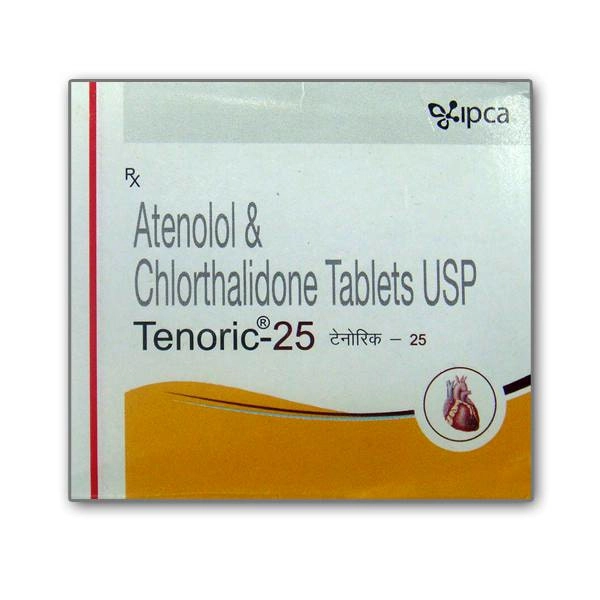
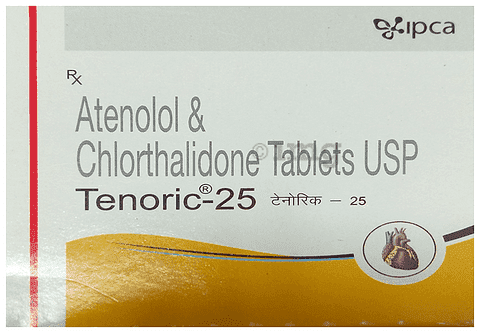
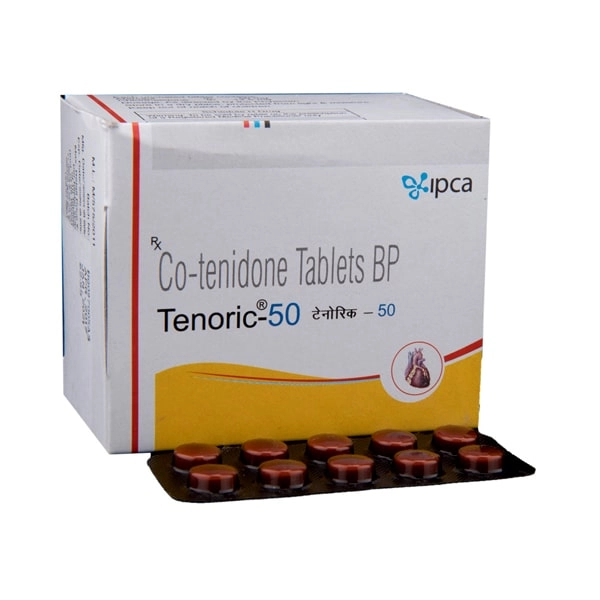
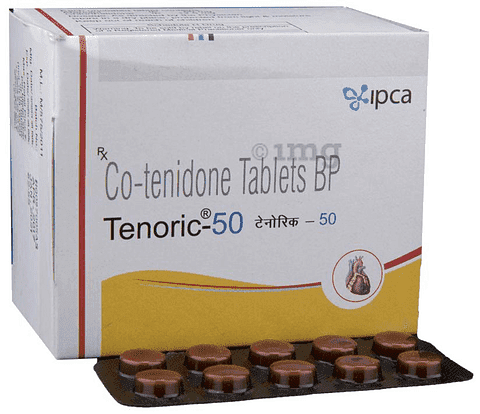
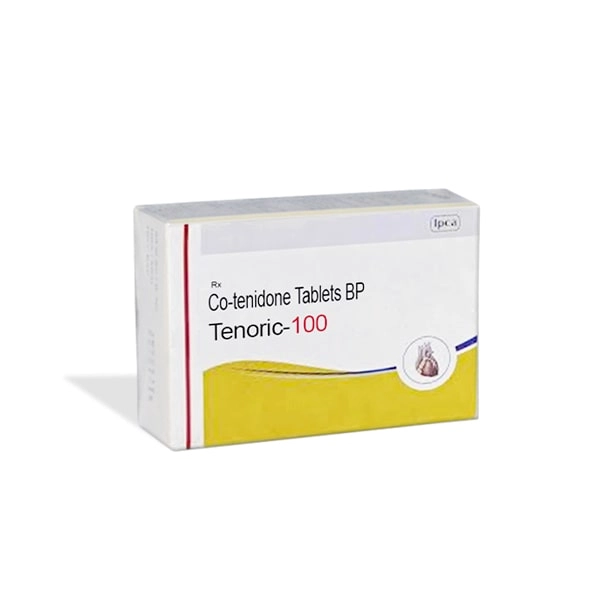
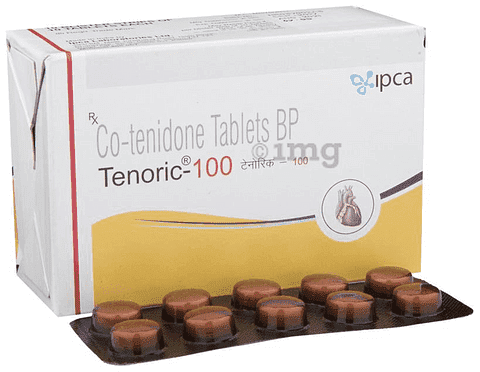
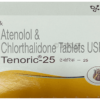

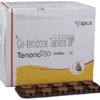

Tenoric is Ipca Laboratories’ vaste combinatie van atenolol (25/50/100 mg) + chlorthalidon 25 mg tabletten — een bètablokker + thiazide-achtig diureticum combinatie. Historisch eerste keus combinatie voor hypertensie (Tenoretic wereldwijd, jaren 70). Moderne richtlijnen plaatsen bètablokker-gebaseerde regimes op de tweede lijn voor ongecompliceerde hypertensie (LIFE/ASCOT data) — behoudt een rol bij hypertensie met angina, AF ritmecontrole, post-MI. Houd kalium en glucose in de gaten. Stop nooit abrupt.
✓ Medisch beoordeeld door Morgan Ellis — Apotheekonderzoeker · 8 jaar ervaring · Laatst beoordeeld: mei 2026
⚡ Kort Antwoord — Wat is Tenoric?
Tenoric is een 25/25 mg, 50/25 mg, 100/25 mg vaste combinatie tablet combinerend atenolol (cardioselectieve bèta-1 blokker) en chlorthalidon (langwerkend thiazide-achtig diureticum) van Ipca Laboratories. Historische combinatie voor hypertensie — effectief voor bloeddruk maar grotendeels vervangen door ACEi/ARB-gebaseerde regimes na LIFE en ASCOT die aantoonden dat atenolol-gebaseerde therapie inferieur was aan losartan-gebaseerde en amlodipine-gebaseerde regimes voor beroertepreventie en nieuw ontstane diabetes. Behoudt een rol bij patiënten die al stabiel zijn op beide componenten, of waar angina of ritmecontrole behoeften een bètablokker rationeel maken. Typische dosering: één tablet eenmaal daags. Contra-indicaties: tweede/derdegraads AV-blok, ernstig astma, anurie, symptomatische bradycardie, ernstige hypokaliëmie, lithium co-therapie (voorzichtigheid). Houd bloeddruk, hartslag, kalium, glucose in de gaten.
📦 Elke bestelling is gedekt door onze Reshipment Assurance-beleid — als uw pakket niet binnen 20 werkdagen arriveert, sturen wij het opnieuw.
Waarom bestellen bij MedsBase
Onze generieke medicijnen zijn afkomstig van WHO-GMP gecertificeerde fabrikanten en worden wereldwijd verzonden in discrete, eenvoudige verpakkingen — geen medicijnnaam op de buitenkant van het pakket. Betalingen met kaart worden verwerkt via een gereguleerde processor (betalingsoverzichten vermelden een gereguleerde kaartbetalingprocessor — nooit “MedsBase” of een medicijnnaam). Crypto en SEPA bankoverschrijvingen worden ook geaccepteerd. Elke bestelling wordt ondersteund door ons Reshipment Assurance Policy.
Wat is Tenoric?
Tenoric is een tablet met een vaste combinatiedosis van atenolol (25-100 mg) en chlorthalidon (meestal 25 mg) in één pil, van Ipca Laboratories. Leverbaar in verpakkingen van 30-90 tabletten.
Atenolol werd in 1976 geïntroduceerd door ICI als Tenormin — een cardioselectieve bèta-1-adrenerge blokker. Chlorthalidon is een langwerkend thiazide-achtig diureticum dat in 1960 werd geïntroduceerd en als eerstelijns antihypertensieve therapie werd gevalideerd in ALLHAT (2002). De vaste combinatie (Tenoric, wereldwijd Tenoretic) staat sinds de jaren 1970 op de geneesmiddelenlijsten.
Waarom een bètablokker combineren met een thiazide?
- Complementaire bloeddrukmechanismen — atenolol vermindert het hartminuutvolume en de renineafgifte; chlorthalidon vermindert natrium en veroorzaakt milde volumevermindering. Additieve bloeddrukdaling.
- Tegengereguleerd — thiaziden activeren het RAAS als een compensatoire respons (wat hun effect vermindert); bètablokkers onderdrukken dit gedeeltelijk door de renineafgifte te verminderen. De combinatie maakt meer van het bloeddrukverlagende potentieel van elk middel vrij.
- Elektrolytenbalans — bètablokkers verhogen kalium licht; thiaziden verlagen het. Het netto-effect is meestal een milde hypokaliëmie, maar minder ernstig dan bij thiaziden alleen.
Moderne positionering: De LIFE (2002), ASCOT (2005) en INVEST (2003) studies hebben bètablokkers naar de tweede lijn gedrongen voor ongecompliceerde hypertensie, vooral atenolol met chlorthalidon vanwege nieuwe diabetes en inferieure beroertepreventie vergeleken met ARB- en CCB-regimes. Tenoric behoudt een plaats waar bètablokkerade rationeel is (gelijktijdige angina, atriale fibrillatie frequentiecontrole, post-MI, rusttachycardie) en een diureticum nog steeds nodig is.
Dosering
Standaard dosering: één 25/25 mg, 50/25 mg, 100/25 mg tablet eenmaal daags 's ochtends (chlorthalidon diurese kan de slaap verstoren als het 's nachts wordt ingenomen).
Titratie: er bestaan hogere sterkte FDC's (bijv. 100/25 mg); voor ongecontroleerde bloeddruk is het vaak beter om een ACEi/ARB of CCB toe te voegen dan om atenolol of chlorthalidon verder te verhogen.
Monitoring: baseline BP, HR, U&E (kalium, natrium), creatinine, nuchtere glucose, urinezuur, ECG bij bradycardie/AV-problemen. Herhaal U&E na 1-2 weken, daarna na 4-6 weken. Jaarlijks metabool panel. Let op hypokaliëmie, nieuw jicht, verslechterende diabetescontrole, symptomatische bradycardie.
Bijwerkingen
Combineert de profielen van beide componenten. Veelvoorkomend:
- Vermoeidheid, verminderde inspanningstolerantie (atenolol)
- Koude extremiteiten (perifere vasoconstrictie door atenolol)
- Hypokaliëmie, milde hyponatriëmie (chlorthalidon)
- Hyperurikemie en jichtprecipitatie (chlorthalidon)
- Bescheiden verslechtering van glucosetolerantie (beide componenten)
- Erectiestoornissen
- Bradycardie, mild
- Fotosensitiviteitsuitslag (thiazide)
- Milde lipidenveranderingen
Zeldzaam maar ernstig: ernstige hyponatriëmie, symptomatische bradycardie/AV-blok, gedecompenseerd hartfalen, ernstige bronchospasmen, pancreatitis (thiazide), Stevens-Johnson-syndroom.
Contra-indicaties
- Tweede- of derdegraads AV-blok (zonder pacemaker)
- Ernstige bradycardie, cardiogene shock
- Acuut gedecompenseerd hartfalen
- Anurie of ernstig nierfalen (eGFR <30 — thiazide verliest effectiviteit)
- Sulfonamide-overgevoeligheid (chlorthalidon)
- Ernstig astma, ernstige COPD
- Symptomatische hyponatriëmie of hypokaliëmie bij aanvang
- Hypercalciëmie
- Onbehandeld feochromocytoom
- Zwangerschap (atenolol – groeivertraging van de foetus; thiazide – neonatale geelzucht/trombocytopenie)
Geneesmiddelinteracties
- Lithium – chloortalidon vermindert de lithiumklaring; kan toxiciteit veroorzaken. Controleer wekelijks; verminder lithium met 25-50%.
- Verapamil of diltiazem – additieve bradycardie met atenolol; vermijden.
- NSAID's – vermindert het antihypertensieve effect; triple-whammy acuut nierletsel bij combinatie met ACE-remmer/ARB.
- Digoxine – additieve bradycardie; hypokaliëmie versterkt digoxine-toxiciteit.
- Insuline, sulfonylureumderivaten – atenolol maskeert hypoglykemie; thiazide verslechtert de glucosetolerantie. Monitor diabetici zorgvuldig.
- Orale corticosteroïden, amfotericine B — additieve hypokaliëmie.
- Cholestyramine / colestipol — verminderen de absorptie van chloortalidon. Neem met een interval van 4 uur.
- Clonidine — stop altijd eerst de bètablokker; omgekeerde volgorde verergert clonidine-ontwenning.
- Alcohol — additieve orthostatische hypotensie.
Opslag
Bewaar Tenoric onder 25°C. Buiten bereik van kinderen houden.
Veelgestelde vragen
Is Tenoric tegenwoordig een eerstelijns bloeddrukmedicijn?
Nee — moderne richtlijnen reserveren bètablokker-gebaseerde regimes als tweede of derde keus voor ongecompliceerde hypertensie, voornamelijk vanwege LIFE-, ASCOT- en INVEST-data die inferieure beroertepreventie en een verhoogd risico op nieuw ontstane diabetes aantonen in vergelijking met ARB- en CCB-regimes. Tenoric behoudt een rol waar bètablokkerade specifiek geïndiceerd is (angina, AF-ritmecontrole, post-MI).
Kan ik abrupt stoppen met Tenoric?
Nee — het atenolol-component kan rebound-effecten veroorzaken (tachycardie, bloeddrukpiek, angina bij CAD-patiënten) bij abrupt stoppen. Afbouwen over 1-2 weken.
Heb ik kalium nodig bij gebruik van Tenoric?
Soms. Chloortalidon kan kalium onder 3,5 mmol/L doen dalen; atenolol verhoogt kalium licht, wat dit gedeeltelijk compenseert. Controleer bij aanvang, na 1-2 weken, en vervolgens periodiek. Hypokaliëmie wordt meestal gecorrigeerd door een ACE-remmer/ARB toe te voegen (vermindert thiazide-geïnduceerd K-verlies) in plaats van kaliumsupplementen.
Kan ik Tenoric gebruiken tijdens de zwangerschap?
Nee — atenolol is geassocieerd met foetale groeivertraging; thiaziden tijdens de zwangerschap kunnen neonatale geelzucht en trombocytopenie veroorzaken. Schakel over op methyldopa, labetalol of nifedipine.
Waar kan ik Tenoric online kopen?
U kunt Tenoric (atenolol + chloortalidon 25/25 mg, 50/25 mg, 100/25 mg, 30-90 tabletten) kopen bij MedsBase met discrete verpakking en wereldwijde verzending.
Gerelateerde hart- en hypertensiemedicijnen
- Amlode — Amlodipine (CCB)
- Cardace — Ramipril (ACE-remmer)
- Ecosprin — Aspirine 75/150 mg
- Lanoxin — Digoxine 0,25 mg (cardiac glycoside)
- Lotensyl — Cilnidipine 10/20 mg (L+N-type CCB)
- Zivast AM — Atorvastatin + Amlodipine combinatie
- Bekijk alle hoge bloeddruk medicijnen
Meer opties in medicatie tegen hoge bloeddruk
Gerangschikt op recente bestelvolumes van MedsBase — wat andere klanten in deze categorie kiezen.



| Sterkte | 25 mg, 50 mg, 100 mg |
|---|---|
| Hoeveelheid | 30 Tablet/s, 60 Tablet/s, 90 Tablet/s |
| Farmaceutische vorm | Tablet/s |
| Fabrikant | Ipca Laboratories |
| Behandeling | HART & BLOEDDRUK |
| Generiek merk | Atenolol + Chlorthalidon |
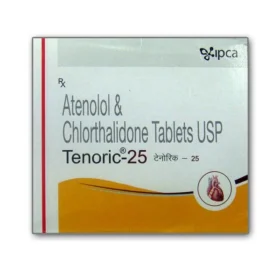 Tenoric
Vragen & antwoorden
Tenoric
Gerelateerde producten
















Beoordelingen
Er zijn nog geen beoordelingen