







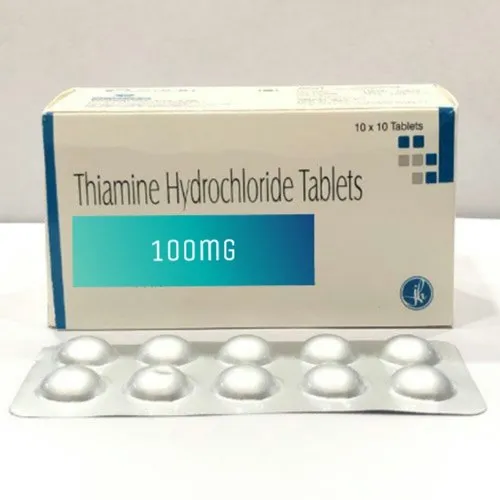
Thiamine HCL 100
✅ Verhoogt het energieniveau
✅ Ondersteunt de zenuwfunctie
✅ Verbetert de stofwisseling
✅ Verbeterd de cognitieve functie
✅ Bevordert een gezond hart
Thiamine HCL 100 bevat thiamine.
✓ Medisch beoordeeld door Morgan Ellis — Apotheekonderzoeker · 8 jaar ervaring · Laatst beoordeeld: mei 2026
Snelle antwoord
Thiamine HCL 100 (thiamine (vitamine B1) 100 mg tablet) is een hooggedoseerde orale thiamine voor de behandeling van thiaminedeficiëntie, alcoholgerelateerde neuropathie, beriberi en als Wernicke-profylaxe bij risicopatiënten.
- Thiamine 100 mg per tablet — volledige vervangingssterkte
- Indicaties: alcoholgebruiksstoornis, profylaxe van refeedingsyndroom, beriberi, hyperemesis
- Langdurig oraal 100–200 mg/dag voor chronische deficiëntie of alcoholgebruiksstoornis
- WHO-GMP gecertificeerde fabrikant
📦 Elke bestelling is gedekt door onze Reshipment Assurance-beleid — als uw pakket niet binnen 20 werkdagen arriveert, sturen wij het opnieuw.
Elke bestelling wordt gedekt door onze Reshipment Assurance-beleid.
Waarom bestellen bij MedsBase
Thiamine HCL 100 is afkomstig van een WHO-GMP gecertificeerde fabrikant. Elke bestelling wordt wereldwijd verzonden in discrete, ongemarkeerde verpakkingen en valt onder ons Reshipment Assurance Policy. Betaal veilig met creditcard, SEPA-bankoverschrijving of cryptocurrency. Zie onze 1.400+ geverifieerde klantbeoordelingen.
Wat is Thiamine HCL 100?
Thiamine HCL 100 is een hooggedoseerd oraal thiamine (vitamine B1) voor vervanging en onderhoudstherapie bij een tekort. Thiamine is een co-enzym dat essentieel is voor het koolhydraatmetabolisme (pyruvaatdehydrogenase, transketolase, alfa-ketoglutaraatdehydrogenase). Een tekort veroorzaakt natte beriberi (hoge-output hartfalen), droge beriberi (perifere neuropathie) en het Wernicke-Korsakoff-syndroom.
Indicaties
- Alcoholstoornis — chronisch alcoholgebruik over meerdere decennia veroorzaakt regelmatig een tekort. Langdurig oraal gebruik van 100 mg tweemaal daags is standaard.
- Wernicke-Korsakoff-syndroom — klassieke triade van verwardheid, ataxie en oftalmoplegie bij alcoholafhankelijke of hyperemetische patiënten. Acute behandeling bestaat uit parenterale hooggedoseerde thiamine; oraal 100 mg tweemaal daags is voor preventie en nazorg na de acute fase.
- Beriberi — zeldzaam in populaties met voldoende voedsel; komt nog voor bij alcoholafhankelijke en ernstig ondervoede patiënten
- Profylaxe van refeedingsyndroom — geef voor het opnieuw voeden van een ondervoede patiënt (anorexia, ernstige ondervoeding, langdurig vasten) eerst parenterale thiamine, daarna orale onderhoudsdosering
- Hyperemesis gravidarum — ernstig braken tijdens de zwangerschap put thiamine uit; vervanging beschermt tegen Wernicke’s
- Chronisch gebruik van lisdiuretica bij hartfalen (lisdiuretica verminderen thiamine; suppletie heeft bescheiden bewijs bij gevorderd hartfalen)
- Post-bariatrisch onderhoud
Orale thiamine 100 mg/tablet is geschikt voor preventie en chronische onderhoudsdosering. Bij vermoedelijke acute Wernicke’s encefalopathie (verwardheid, ataxie, oftalmoplegie — vooral bij alcoholafhankelijke patiënten, hyperemesis, post-bariatrische chirurgie of hervoeding) is de standaard IV thiamine 500 mg driemaal daags gedurende 2–3 dagen, daarna 250 mg/dag — orale toediening is te traag en de opname is onbetrouwbaar in deze groep. Geef nooit glucose of koolhydraten aan een patiënt met een thiaminetekort voordat thiamine is aangevuld — dit kan Wernicke’s uitlokken.
Dosering
- Onderhoud bij alcoholgebruiksstoornis: 100 mg oraal tweemaal daags langdurig
- Beriberi: 100–300 mg/dag in verdeelde doses gedurende enkele weken, daarna onderhoudsdosering
- Herintroductieprofylaxe: eerst parenteraal; oraal 100 mg tweemaal daags tijdens de herintroductieperiode
- Hyperemesis gravidarum: parenteraal thiamine 100 mg, daarna oraal indien verdragen
- Hartfalen bij gebruik van lisdiureticum: 100 mg/dag oraal
Bijwerkingen
- Over het algemeen zeer goed verdragen — oraal thiamine heeft een uitstekend veiligheidsprofiel
- Anafylaxie — zeldzaam en bijna uitsluitend gerapporteerd bij parenteraal thiamine, niet bij oraal
- Milde maag-darmklachten bij hoge doseringen
Geneesmiddelinteracties
Thiamine heeft geen significante klinisch relevante geneesmiddelinteracties. Lisdiuretica verminderen thiamine, maar suppletie verstoort de werking van het diureticum niet.
Contra-indicaties
- Overgevoeligheid voor thiamine (zeldzaam)
Opslag
Bewaren onder 25°C in originele verpakking, beschermen tegen vocht.
Veelgestelde vragen
Waarom is thiamine zo belangrijk bij alcoholgebruik?
Alcohol belemmert de opname van thiamine, verhoogt het urineverlies en concurreert met thiamine-afhankelijke enzymen. Langdurig alcoholgebruik veroorzaakt Wernicke's encefalopathie (acuut, omkeerbaar indien vroeg behandeld) en Korsakov-psychose (chronisch, gedeeltelijk omkeerbaar). Beide zijn in feite te voorkomen met voldoende thiamine.
Moet ik thiamine nemen als ik veel drink?
Als u niet kunt of wilt stoppen met drinken, vermindert oraal thiamine 100 mg tweemaal daags het risico op Wernicke's — dit is echt de moeite waard, zelfs naast doorlopend drinken. Stoppen met alcohol is de eigenlijke behandeling, maar thiamine biedt concrete bescherming terwijl u daaraan werkt.
Wat is refeedingsyndroom?
Ernstige ondervoeding put fosfaat, magnesium, kalium en thiamine uit. Wanneer koolhydraat-hervoeding begint, stijgt insuline en worden deze intracellulaire verschuivingen intenser, wat fatale aritmieën, hartfalen en Wernicke veroorzaakt. Refeeding omvat altijd eerst thiamine, langzame calorietoename en elektrolytcorrectie.
Kan ik het nemen zonder een tekort?
Ja — thiamine heeft een brede veiligheidsmarge en overtollige hoeveelheden worden uitgescheiden. Routine megadosering zonder indicatie is zinloos maar onschadelijk.
Hoe snel werkt het?
Acuut Wernicke (met parenterale thiamine): oftalmoplegie verbetert binnen uren, ataxie over dagen, verwardheid over dagen-tot-weken. Chronische alcoholische neuropathie: langzame verbetering over maanden, vaak onvolledig. Beriberi hartklachten: uren-tot-dagen.
Is het veilig tijdens de zwangerschap?
Ja — veilig en belangrijk bij hyperemesis gravidarum om Wernicke te voorkomen. De combinatie B6 + B12 + thiamine bij zwangerschapsmisselijkheid is goed onderbouwd.
Moet ik het met B-complex innemen?
B-complex preparaten bevatten thiamine maar in lagere doseringen. Voor preventie en onderhoud is B-complex voldoende. Voor actief tekort of alcoholgebruiksstoornis is toegewijde 100 mg thiamine de voorkeur — de dosis in standaard B-complex (vaak 5–20 mg) is onder de therapeutische drempel voor deze indicaties.
Waarom geeft mijn arts parenterale thiamine op de SEH?
Vermoeden van acuut Wernicke vereist parenterale hoge dosis thiamine omdat (a) orale absorptie verstoord is bij alcoholafhankelijke patiënten, (b) darmabsorptie traag is wanneer minuten tellen, en (c) koolhydraatbevattende IV-vloeistoffen waarschijnlijk toch worden gegeven en deze Wernicke kunnen uitlokken bij deficiënte patiënten zonder voorafgaande thiamine dekking.
Helpt het tegen mijn vermoeidheid?
Alleen als de vermoeidheid wordt veroorzaakt door een vastgesteld thiaminetekort. De meeste vermoeidheid komt niet door thiamine; controleer eerst de schildklier, ferritine, vitamine D, B12, depressie en slaapapneu.
Hoe lang moet ik het gebruiken?
Bij alcoholgebruiksstoornis is levenslange suppletie redelijk zolang het drinken doorgaat en minstens een jaar na soberheid. Anders totdat de onderliggende oorzaak (ondervoeding, hervoeding, hyperemesis) is opgelost.
Andere Vitamines & Mineralen
- Vitamine B12 1500 mcg — hoge dosis oraal cyanocobalamine
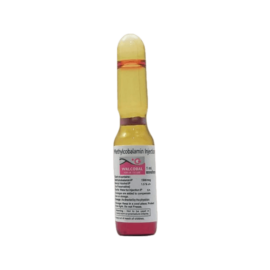
- Walcobal Injectie — methylcobalamine IM
- Polybion Ampul — B-complex parenteraal
- Beplex Forte — B-complex oraal
- Becozinc — B-complex met zink
- Thiamine HCL 100 — thiamine 100 mg voor alcoholgerelateerde neuropathie
Medische Disclaimer
Meer opties in Vitaminen en Mineralen
Gerangschikt op recente bestelvolumes van MedsBase — wat andere klanten in deze categorie kiezen.
| Sterkte | 100 mg |
|---|---|
| Hoeveelheid | 60 Tablet/s, 120 Tablet/s, 180 Tablet/s, 360 Tablet/s |
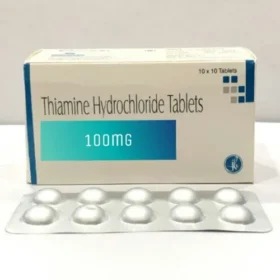 Thiamine HCL 100
Vragen & antwoorden
Thiamine HCL 100
Gerelateerde producten

Beoordelingen
Er zijn nog geen beoordelingen