







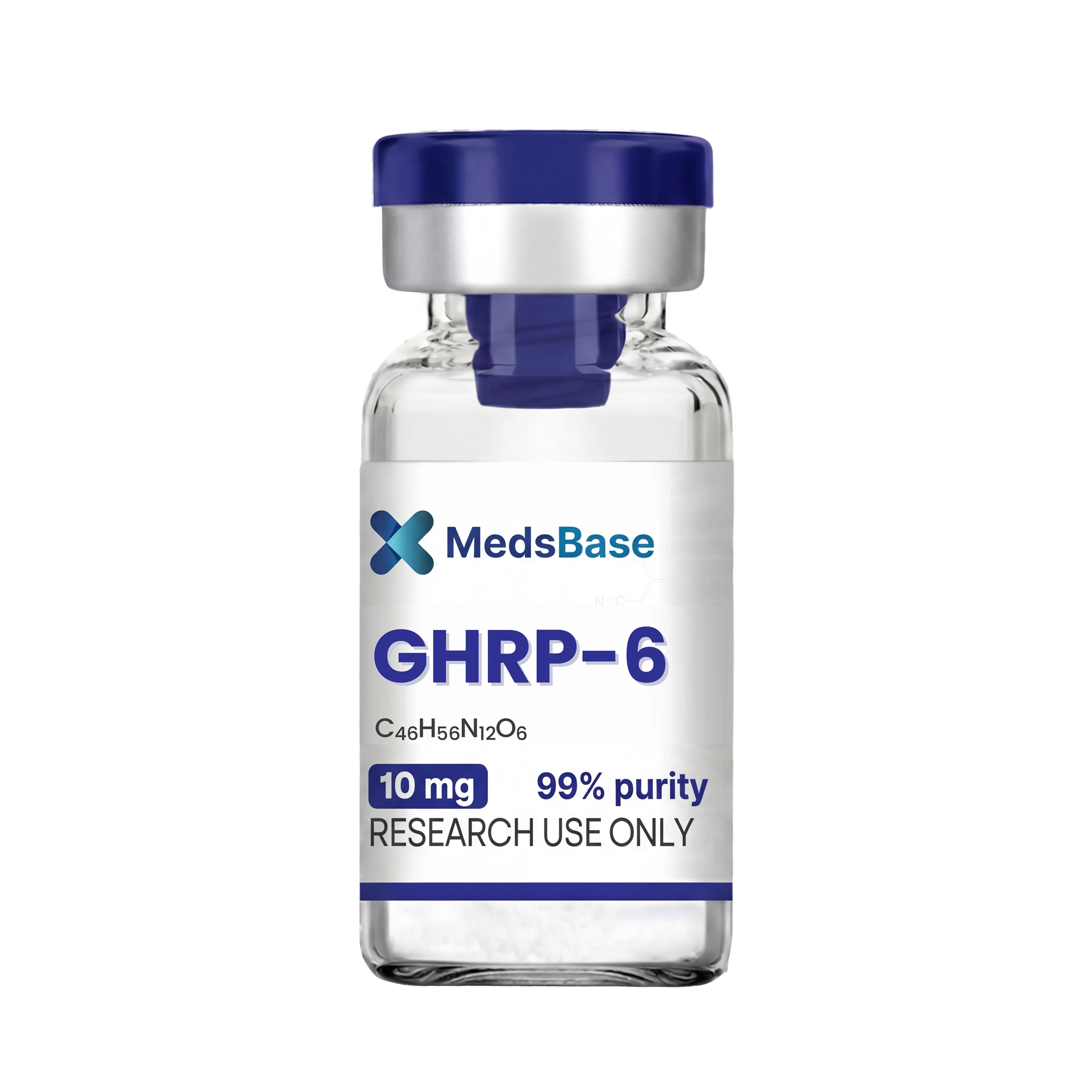
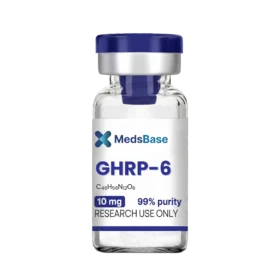
GHRP-6 Οξικός (Examorelin)
✅ Εξαπεπτίδιο GHRP πρώτης γενιάς
✅ Αγωνιστής υποδοχέα GHS-R1a / γρελίνης
✅ Προάγει την παλμική απελευθέρωση GH
✅ Έρευνα όρεξης στον άξονα γρελίνης
✅ Συνεργιστικό με αναλόγικα GHRH
GHRP-6 Οξικός (Examorelin) περιέχει συνθετική πεπτιδική ένωση.
✓ Ιατρικά ελεγμένο από Morgan Ellis — Ερευνητής Φαρμακευτικής · 8 χρόνια εμπειρία · Τελευταία αναθεώρηση: Μάιος 2026
Γρήγορη απάντηση — Τι είναι το GHRP-6 Ακετάτη;
GHRP-6 Οξικός (Examorelin) (Growth Hormone Releasing Peptide 6) είναι ένα συνθετικό εξαπεπτίδιο 6 αμινοξέων και ένα από τα αρχικά μυστραγωγά αυξητικής ορμόνης, που αναπτύχθηκε από τους Bowers και συνεργάτες ως μέλος δεύτερης γενιάς της σειράς GHRP. Δρα στον υποδοχέα μυστραγωγού αυξητικής ορμόνης (GHS-R1a) — τον ίδιο υποδοχέα με την ενδογενή γρελίνη — προκαλώντας παλμική απελευθέρωση GH παράλληλα με διέγερση της όρεξης. Προσφέρεται σε φιαλίδια λυοφιλισμένου σε δόσεις 5 mg και 10 mg μόνο για εργαστηριακή έρευνα.
📦 Κάθε παραγγελία καλύπτεται από την Πολιτική Εγγύησης Επαναποστολής — εάν το δέμα σας δεν φτάσει εντός 20 εργάσιμων ημερών, το επαναποστέλλουμε.
| Προδιαγραφή | Λεπτομέρεια |
|---|---|
| Αριθμός CAS | 87616-84-0 (GHRP-6 ελεύθερη βάση)· προσφέρεται ως ακετικό άλας |
| Μοριακός Τύπος | C46H56N12O6 (ελεύθερη βάση· το ακετατικό άλας προσθέτει αντιϊόν CH3COOH) |
| Μοριακό Βάρος | 873.02 Da (ελεύθερη βάση) |
| Ακολουθία | His-D-Trp-Ala-Trp-D-Phe-Lys-NH2 (HwAWfK-NH2, 6 αμινοξέα· περιέχει D-Trp στη θέση 2 και D-Phe στη θέση 5 για πρωτεολυτική σταθερότητα· C-τερματικά αμιδωμένο) |
| Μορφή | Λυοφιλισμένο ακετικό άλας (λευκή έως ελαφρώς κιτρινωπή σκόνη) |
| Καθαρότητα | ≥99% (HPLC επαληθευμένο, COA κατόπιν αιτήματος) |
| Αποθήκευση | Λυοφιλιωμένο: 2–8 °C (ψυγείο) για εργαστικό απόθεμα· −20 °C για μακροπρόθεσμη αποθήκευση ανοιχτών φιαλών. Ανασυντεθειμένο: 2–8 °C, χρήση εντός ~30 ημερών. Προστασία από το φως. Μην καταψύχετε-αποψύχετε το ανασυντεθειμένο διάλυμα. |
| Διαλυτότητα | Βακτηριοστατικό νερό (προτείνεται) ή στειρωμένο νερό για μικρότερα χρονικά διαστήματα χρήσης |
| Ερευνητική Χρήση | Μόνο για εργαστηριακή έρευνα. Δεν προορίζεται για διαγνωστική ή θεραπευτική χρήση σε ανθρώπους ή ζώα. |
Τι είναι το GHRP-6 Ακετάτη;
GHRP-6 (Growth Hormone Releasing Peptide 6) είναι ένα συνθετικό εξαπεπτίδιο 6 αμινοξέων και ένα από τα κανονικά μέλη της κλάσης των πεπτιδίων μυστικού αγωγού αυξητικής ορμόνης (GHS). Αναπτύχθηκε από τον Cyril Y. Bowers και τους συνεργάτες του στο Πανεπιστήμιο Tulane ως μέρος ενός προγράμματος σχέσης δομής-δραστηριότητας που σχεδιάστηκε για την αναγνώριση μικρών πεπτιδίων ικανών να διεγείρουν την παλμική απελευθέρωση αυξητικής ορμόνης από τον πρόσθιο υπόφυση — εργασία που τελικά οδήγησε στην ανακάλυψη του υποδοχέα μυστικού αγωγού αυξητικής ορμόνης και, έμμεσα, στον προσδιορισμό της ενδογενούς γρελίνης ως φυσικού του λιγάνου το 1999 από τους Kojima et al. (Nature). Το αντιιόν ακετάτης χρησιμοποιείται στη λυοφιλοποίηση ερευνητικής ποιότητας επειδή βελτιώνει τη μακροπρόθεσμη σταθερότητα του πεπτιδίου και τη διαλυτότητα στο νερό χωρίς να αλλάζει τη φαρμακολογία.
Η καλά χαρακτηρισμένη ακολουθία είναι HwAWfK-NH2 (όπου τα πεζά γράμματα υποδηλώνουν υπολείμματα D-αμινοξέων), μοριακό βάρος 873.02 Da, εμπειρικός τύπος C46H56N12O6. Οι δύο υποκαταστάσεις D-αμινοξέων (D-Trp στη θέση 2 και D-Phe στη θέση 5) προσδίδουν αντοχή στις ενδογενείς πρωτεάσες και επεκτείνουν τον χρόνο ημιζωής in-vivo σε σύγκριση με τα ανάλογα όλων των L. Το C-τέρμα είναι αμιδωμένο, το οποίο είναι απαραίτητο για τη δραστηριότητα του υποδοχέα. Το GHRP-6 είναι δεν έχει εγκριθεί από την FDA, EMA, MHRA ή οποιονδήποτε άλλο μεγάλο ρυθμιστικό φορέα για θεραπευτική χρήση σε ανθρώπους. Το GHRP-6 ακετάτη ερευνητικής ποιότητας που πωλείται εδώ παρέχεται μόνο για εργαστηριακή έρευνα και δεν προορίζεται για χρήση σε ανθρώπους ή ζώα. Για το νεότερης γενιάς αναλογικό με επιλεκτική δράση στους υποδοχείς χωρίς σήμα κορτιζόλης/προλακτίνης, δείτε το Ιπαμορελίνη σελίδα προϊόντος μας.
Μηχανισμός Δράσης — Δράση στον Υποδοχέα GHS-R1a και ο Παλμός της GH
Αυτό που κάνει το GHRP-6 μηχανιστικά ξεχωριστό μεταξύ των πεπτιδίων έρευνας του άξονα ανάπτυξης είναι η επιλεκτική του δράση στον υποδοχέα εκκριτικού ορμόνου ανάπτυξης — τον ίδιο υποδοχέα που ενεργοποιείται από την ενδογενή γρελίνη — και όχι στον υποδοχέα GHRH που χρησιμοποιούν τα sermorelin και CJC-1295. Η επακόλουθη επίδραση στην έρευνα είναι ένας παλμικός και όχι τονικός μοτίβο απελευθέρωσης της GH:
- Δράση στον υποδοχέα GHS-R1a στους σωματοτρόφους — Το GHRP-6 δεσμεύεται στον υποδοχέα εκκριτικού ορμόνου ανάπτυξης τύπου 1a (GHS-R1a, επίσης γνωστός ως υποδοχέας γρελίνης) στους σωματοτρόφους της πρόσθιας υπόφυσης. Η ενεργοποίηση του υποδοχέα συνδέεται με την Gαq/11 και τη φωσφολιπάση C, αυξάνοντας το ενδοκυττάριο ασβέστιο και προκαλώντας εξωκυττάωση των κυστιδίων που περιέχουν GH. Το σήμα ενισχύεται από την καταστολή του τόνου της σωματοστατίνης — το GHRP-6 δρα τόσο στους σωματοτρόφους όσο και στα νευρώνες σωματοστατίνης του υποθαλάμου, παράγοντας έναν μεγαλύτερο παλμό GH από ό,τι θα προέβλεπε η άμεση διέγερση των σωματοτρόφων μόνο.
- Συνέργεια με την ενδογενή GHRH — Οι οδοί GHS-R και GHRH-R συγκλίνουν ενδοκυττάρια αλλά χρησιμοποιούν διαφορετικά συστήματα δεύτερων αγγελιοφόρων (PLC/IP3/Ca2+ έναντι της αδενυλυλ κυκλάσης/cAMP/PKA), επομένως το GHRP-6 και τα αναλόγια GHRH παράγουν πρόσθετη ή συνεργιστική απελευθέρωση GH όταν συνδυάζονται. Αυτή είναι η λογική πίσω από τους κανονικούς συνδυασμούς έρευνας “GHRP + αναλόγιο GHRH”: ένα GHS όπως το GHRP-6 σε συνδυασμό με ένα αναλόγιο GHRH όπως το Σερμορελίνη ή CJC-1295 with DAC. Ο συνδυασμένος ερεθισμός παράγει παλμούς GH σημαντικά μεγαλύτερους από ό,τι κάθε ένωση ξεχωριστά.
- Παράπλευρη διέγερση της όρεξης και μέτριο σήμα κορτιζόλης/προλακτίνης — Επειδή το GHRP-6 δρα στον υποδοχέα γρελίνης, κληρονομεί την όρεξη-διεγερτική επίδραση της γρελίνης — χρήσιμη στην έρευνα της καχεξίας, αλλά παρεμβαίνει σε καθαρότερη φαρμακολογία του άξονα GH. Το GHRP-6 προκαλεί επίσης μια μέτρια αύξηση στην έκκριση κορτιζόλης και προλακτίνης. Το νεότερης γενιάς επιλεκτικό αναλόγιο Ipamorelin σχεδιάστηκε ειδικά για να εξαλείψει αυτό το σήμα κορτιζόλης/προλακτίνης διατηρώντας παράλληλα την επίδραση στην GH — δείτε την ενότητα σύγκρισης παρακάτω.
Το GHRP-6 έχει χρόνο ημιζωής στο πλάσμα περίπου 30–60 λεπτά, σημαντικά μεγαλύτερο από αυτόν της φυσικής γρελίνης (~10–30 λεπτά) λόγω των υποκαταστάσεων D-αμινοξέων που αντιστέκονται στην πρωτεολυτική διάσπαση. Η υποδόρια χορήγηση είναι ο πιο συχνά αναφερόμενος τρόπος έρευνας στη βιβλιογραφία· ενδοφλέβιες και ενδορινικές διαδρομές έχουν επίσης τεκμηριωθεί σε μελέτες μηχανισμού δράσης.
Εφαρμογές Δημοσιευμένης Έρευνας
Το GHRP-6 χρησιμοποιείται σε ερευνητικά πλαίσια εργαστηρίου που διερευνούν:
- Φαρμακολογία του άξονα της αυξητικής ορμόνης — παλμική δυναμική της GH, ανταπόκριση των σωματοτροφών, συγκριτική έρευνα για GH-εκκριτικά μέσα· αναφορά πρώτης γενιάς GHS σε δημοσιευμένες μελέτες αρχιτεκτονικής παλμών GH (Bowers et al., J Clin Endocrinol Metab· Smith et al., Science 1996)
- Έρευνα για την όρεξη και τη συμπεριφορά σίτισης — ενεργοποίηση του άξονα γρελίνης, δοκιμές πρόσληψης τροφής σε μοντέλα τρωκτικών, μοντέλα καχεξίας σε ζώα με όγκους· κανονικό ερευνητικό εργαλείο για τον διαχωρισμό της γρελινο-μεσολαβούμενης ωρεξιογόνου σηματοδότησης από άλλες οδούς όρεξης
- Έρευνα λειτουργίας της υπόφυσης — δοκιμές αποθέματος GH σε προκλινικά μοντέλα, υπερτροφία/υπερπλασία σωματοτροφών, έρευνα μηχανισμού δράσης για νέα GH-εκκριτικά μέσα
- Έρευνα για καχεξία και σύνδρομο αδυνάτισης — καχεξία σε τρωκτικά με όγκους, μοντέλα αδυνάτισης συνδεδεμένα με COPD, διατήρηση λιπώδους μάζας/λεπτής μάζας μέσω συνδυασμένης ενεργοποίησης του άξονα GH και του άξονα όρεξης
- Συγκριτική έρευνα GHS — απευθείας σύγκριση με νεότερα ανάλογα, συμπεριλαμβανομένων Ιπαμορελίνη (επιλεκτικά στους υποδοχείς χωρίς κορτιζόλη/προλακτίνη), εξαρελίνη (τροποποιημένο GHRP-6), GHRP-2 (εναλλακτικό ανάλογο πρώτης γενιάς), και από του στόματος ενεργά μικρομόρια GHS όπως το MK-677
- Καρδιαγγειακή έρευνα — έκφραση GHS-R σε καρδιομυοκύτταρα· δημοσιευμένη έρευνα για καρδιακή ισχαιμία-επανέγχυση και καρδιακή λειτουργία σε μοντέλα με έλλειψη GH
- Συνδυασμένη έρευνα GHRP + GHRH — συνεργιστικά πρωτόκολλα απελευθέρωσης GH που συνδυάζουν το GHRP-6 με ανάλογα GHRH όπως Σερμορελίνη ή CJC-1295 with DAC για μέγιστο παλμικό ερευνητικό ερέθισμα GH.
Για ευρύτερο πλαίσιο σχετικά με το πού ταιριάζει το GHRP-6 στο τοπίο των πεπτιδίων του άξονα ανάπτυξης, δείτε Ιπαμορελίνη ως το νεότερης γενιάς αναλογικό επιλεκτικό στον υποδοχέα, CJC-1295 with DAC για έρευνα μακράς διάρκειας στον άξονα GHRH, και Σερμορελίνη για έρευνα GHRH με μικρότερη διάρκεια δράσης. Περιηγηθείτε σε ολόκληρη κατάλογο ερευνητικών πεπτιδίων για σχετικές ενώσεις.
Διαθέσιμες Δυνάμεις και Συγκεντρώσεις
MedsBase stocks GHRP-6 Acetate in two lyophilized vial sizes calibrated to typical research protocol lengths. Each strength is available in 10-vial, 20-vial, or 30-vial pack formats with full reconstitution guidance:
| Δύναμη Φιαλιδίου | Τυπική Περίπτωση Ερευνητικής Χρήσης | Μεγέθη Συσκευασίας |
|---|---|---|
| 5 mg | Τυπική ερευνητική δύναμη — πρωτόκολλα παλμών GH βραχείας διάρκειας, μελέτες μίας ομάδας | 10, 20 ή 30 φιαλίδια |
| 10 mg | Πρωτόκολλα εκτεταμένου κύκλου, μελέτες πολλαπλών ομάδων, χαμηλότερο κόστος ανά mg | 10, 20 ή 30 φιαλίδια |
Και οι δύο δυνάμεις είναι της ίδιας χημικής μορφής (λυοφιλισμένη σκόνη ακετάτου αλατιού, καθαρότητα HPLC 99%+). Τα φιαλίδια υψηλότερης mg απαιτούν μικρότερους όγκους ανασύνθεσης ανά μονάδα δόσης, κάτι που είναι χρήσιμο όταν οι ερευνητές θέλουν να ελαχιστοποιήσουν τον όγκο έγχυσης σε πρωτόκολλα τρωκτικών. Επειδή οι δόσεις GHRP-6 κυμαίνονται στο καθεστώς 50–300 mcg ανά χορήγηση, ένα μόνο φιαλίδιο 5 mg υποστηρίζει πολλές εβδομάδες έρευνας σε τυπικές δόσεις.
Σύγκριση — GHRP-6 vs Ipamorelin
Το GHRP-6 και το Ιπαμορελίνη είναι τα κανονικά μέλη πρώτης και τρίτης γενιάς της κλάσης των πεπτιδίων μιμητών της ορμόνης ανάπτυξης, αντίστοιχα, και είναι η πιο αναφερόμενη άμεση σύγκριση σε δημοσιευμένη έρευνα GHS. Μοιράζονται τον ίδιο υποδοχέα (GHS-R1a) και παράγουν συγκρίσιμους παλμούς GH, αλλά διαφέρουν σημαντικά στην επιλεκτικότητα υποδοχέων και στην πλευρική σηματοδότηση.
| Κριτήριο | GHRP-6 | Ιπαμορελίνη |
|---|---|---|
| Length | 6 αμινοξέα (εξαπεπτίδιο) | 5 αμινοξέα (πενταπεπτίδιο) |
| Γενιά | Γενιά πρώτης γενιάς GHS (~1984) | Γενιά τρίτης γενιάς GHS (~1998) |
| Υποδοχέας | GHS-R1a (υποδοχέας γρελίνης) | GHS-R1a (υποδοχέας γρελίνης) |
| Παλμός GH | Ισχυρή παλμική απελευθέρωση GH | Ισχυρή παλμική απελευθέρωση GH (συγκρίσιμη με GHRP-6) |
| Σήμα πείνας | Ναι (ghrelin-like orexigenic effect) | Ελάχιστη ή απουσία σε δημοσιευμένες έρευνες |
| Κορτιζόλη / προλακτίνη | Μέτριες αυξήσεις (σχετική με την έρευνα παρεμβολή) | Καμία μετρήσιμη αύξηση — το κύριο κέρδος επιλεκτικότητας |
| Τυπική δόση έρευνας | 50–300 mcg, 1–3 φορές ημερησίως | 100–300 mcg, 1–3 φορές την ημέρα |
| Ημιζωή στο πλάσμα | ~30–60 λεπτά | ~2 ώρες |
Για έρευνες όπου το σήμα διέγερσης της όρεξης είναι χαρακτηριστικό (μοντέλα καχεξίας, μελέτες πρόσληψης τροφής), το GHRP-6 προτιμάται επειδή η ορεξιγόνος επίδραση αποτελεί μέρος του ερευνητικού στόχου. Για καθαρή φαρμακολογία του άξονα GH όπου η κορτιζόλη και η προλακτίνη είναι παρεμβατικές μεταβλητές, το Ipamorelin προτιμάται επειδή τα κέρδη επιλεκτικότητας των υποδοχέων εξαλείφουν αυτά τα εκτός στόχου σήματα. Και τα δύο συχνά συνδυάζονται με ένα ανάλογο GHRH (όπως CJC-1295 with DAC) για το κανονικό συνεργιστικό πρωτόκολο έρευνας παλμών GH.
Αποθήκευση και ανασύνθεση
Πριν την ανασύνθεση: εγχύστε βακτηριοστατικό νερό στον πλευρικό τοίχο του φιαλιδίου πεπτιδίου (όχι απευθείας πάνω στο λυοφιλισμένο κέικ). Για ένα φιαλίδιο 5 mg, 2,0 mL βακτηριοστατικού νεράτος δίνουν μια συγκέντρωση εργασίας 2,5 mg/mL — 0,04 mL παρέχει μια ερευνητική δόση 100 mcg; 0,1 mL παρέχει 250 mcg. Ανακατέψτε απαλά — μην.
Διαδικασία ανασύνθεσης: εγχύστε βακτηριοστατικό νερό κατά μήκος του πλευρικού τοιχώματος του φιαλιδίου πεπτιδίου (όχι απευθείας πάνω στο λυοφιλιωμένο κέικ). Για ένα φιαλίδιο 5 mg, 2.0 mL βακτηριοστατικού νερού δίνουν μια συγκέντρωση εργασίας 2.5 mg/mL — 0.04 mL παρέχει μια δόση έρευνας 100 mcg· 0.1 mL παρέχει 250 mcg. Ανακινήστε απαλά — μην δεν ταρακουνήσετε — και αφήστε 2–5 λεπτά για πλήρη διάλυση. Ένα σωστά ανασυσκευασμένο διάλυμα θα πρέπει να είναι διαυγές και άχρωμο.
Μετά την ανασύνθεση: Αποθηκεύστε σε ψυγείο στους 2–8 °C και χρησιμοποιήστε εντός 30 ημερών για βέλτιστη σταθερότητα. Μην καταψύχετε το ανασυσκευασμένο διάλυμα — οι κύκλοι κατάψυξης-απόψυξης υποβαθμίζουν την ακεραιότητα του πεπτιδίου. Απορρίψτε οποιοδήποτε φιαλίδιο εμφανίζει θολότητα, ίζημα ή αποχρωματισμό.
Συχνές Ερωτήσεις
Ποια είναι η χρήση του GHRP-6 στην έρευνα;
Το GHRP-6 χρησιμοποιείται σε εργαστηριακές έρευνες που μελετούν τον άξονα της αυξητικής ορμόνης, τη δυναμική της παλμικής απελευθέρωσης GH, την ανταπόκριση των σωματοτροφικών κυττάρων, τη φαρμακολογία του άξονα γρελίνης, την όρεξη και τη διατροφική συμπεριφορά, τις συνδρομές καχεξίας και απώλειας σωματικής μάζας, καθώς και συνδυαστικά πρωτόκολλα συνεργιστικής απελευθέρωσης GH με GHRP + GHRH. Είναι το κανονικό πεπτίδιο έρευνας πρώτης γενιάς GHS και το δομικό πρότυπο από το οποίο προέκυψαν το Ιπαμορελίνη και άλλα αναλόγα μεταγενέστερων γενεών. Το GHRP-6 ερευνητικής ποιότητας που πωλείται εδώ είναι δεν Εγκεκριμένο από τον FDA και παρέχεται αυστηρά μόνο για εργαστηριακή έρευνα.
Πώς διαφέρει το GHRP-6 από το Ipamorelin;
Και οι δύο δρουν στον ίδιο υποδοχέα (GHS-R1a, ο υποδοχέας της γρελίνης) και προκαλούν συγκρίσιμη παλμική απελευθέρωση GH, αλλά διαφέρουν σημαντικά στην επιλεκτικότητα του υποδοχέα και στην πλευρική σηματοδότηση. Το GHRP-6 προκαλεί διέγερση της όρεξης παρόμοια με τη γρελίνη και μέτριες αυξήσεις στην κορτιζόλη και την προλακτίνη. Το Ipamorelin σχεδιάστηκε ειδικά για να εξαλείψει αυτές τις πλευρικές σηματοδοτήσεις διατηρώντας ταυτόχρονα την επίδραση στην GH — προκαλεί ελάχιστο σήμα όρεξης και καμία μετρήσιμη αύξηση της κορτιζόλης ή της προλακτίνης σε δημοσιευμένες έρευνες. Για καθαρή φαρμακολογία του άξονα GH, προτιμάται το Ipamorelin· για έρευνες που αφορούν την όρεξη ως στόχο, το GHRP-6 παραμένει χρήσιμο.
Ποια είναι η διαφορά μεταξύ του GHRP-6 και του GHRP-2;
Και τα δύο είναι πρωτογενή εξαπεπτιδικά μυστραγωγά αυξητικής ορμόνης από το εργαστήριο Bowers. Το GHRP-2 είναι κάπως πιο δραστικό ανά mg και παράγει ελαφρώς λιγότερο σήμα πείνας από το GHRP-6, αλλά η ποιοτική φαρμακολογία είναι παρόμοια — και τα δύο αυξάνουν μέτρια την κορτιζόλη και την προλακτίνη. Το GHRP-6 είναι το πιο εκτενώς μελετημένο από τα δύο σε δημοσιευμένες έρευνες και παραμένει το κανονικό πρωτογενές αναφορικό μόριο.
Ποια είναι η τυπική δοσολογία έρευνας του GHRP-6;
Σύμφωνα με δημοσιευμένες προκλινικές μεθόδους, συνήθως χρησιμοποιούνται 50–300 mcg ανά χορήγηση, υποδόρια 1–3 φορές ημερησίως για ερευνητικούς κύκλους 2–12 εβδομάδων. Ένα φιαλίδιο 5 mg ανασυσταμένο με 2,0 mL βακτηριοστατικού νερού δίνει διάλυμα 2,5 mg/mL — 0,04 mL ισοδυναμούν με 100 mcg, 0,1 mL ισοδυναμούν με 250 mcg.
Is GHRP-6 FDA approved?
Όχι. Το GHRP-6 δεν έχει εγκριθεί από τον FDA, την EMA, την MHRA ή οποιονδήποτε άλλο μεγάλο ρυθμιστικό φορέα για θεραπευτική χρήση σε ανθρώπους. Όλο το GHRP-6 που πωλείται από προμηθευτές μόνο για ερευνητική χρήση προορίζεται για εργαστηριακή έρευνα και δεν πρέπει να χορηγείται σε ανθρώπους.
Πώς πρέπει να αποθηκεύεται το GHRP-6 Acetate;
Λυοφιλισμένα φιαλίδια: ψυκτικά στους 2–8 °C για βραχυπρόθεσμη αποθήκευση, ή −20 °C για μακροπρόθεσμη αποθήκευση ανοιγμένων φιαλιδίων. Ανασυσταθείσα διάλυση: ψυκτικά στους 2–8 °C, χρήση εντός 30 ημερών. Μην καταψύχετε την ανασυσταθείσα διάλυση — οι κύκλοι κατάψυξης-απόψυξης υποβαθμίζουν το πεπτίδιο. Προστατέψτε από άμεσο φως ανά πάσα στιγμή.
Πώς ανασυνθέτω το GHRP-6;
Ακολουθήστε τη διαδικασία ανασύνθεσης που αναφέρεται παραπάνω. Προσθέστε βακτηριοστατικό νερό κατά μήκος του πλευρικού τοιχώματος του φιαλιδίου (όχι πάνω από το λυοφιλισμένο κέικ), ανακατέψτε απαλά και αφήστε 2–5 λεπτά για πλήρη διάλυση. Μην δεν Ανακινήστε ελαφρά το φιαλίδιο. Ένα σωστά ανασυντιθέμενο διάλυμα είναι διαυγές και άχρωμο. Για φιαλίδιο 5 mg + 2,0 mL διαλύτη, η συγκέντρωση εργασίας είναι 2,5 mg/mL.
Ποιες δόσεις διαθέτει το MedsBase;
MedsBase carries GHRP-6 Acetate in 5 mg and 10 mg lyophilized vials. Each strength is available in 10-vial, 20-vial, or 30-vial pack sizes. All vials are supplied at 99%+ HPLC purity with a certificate of analysis available on request.
Γιατί το GHRP-6 διεγείρει επίσης την όρεξη;
Το GHRP-6 δεσμεύει τον υποδοχέα εκκρινομένου ορμόνης ανάπτυξης (GHS-R1a) — τον ίδιο υποδοχέα που ενεργοποιείται από την ενδογενή γρελίνη. Επειδή η γρελίνη είναι η κύρια ορμόνη πείνας, οποιοσδήποτε αγωνιστής του υποδοχέα της κληρονομεί κάποιο βαθμό ωρεξιγενικής (διεγερτικής της όρεξης) δραστηριότητας. Για τα GHS πρώτης γενιάς όπως το GHRP-6 και το GHRP-2, το αποτέλεσμα στην όρεξη είναι σημαντικό· για μεταγενέστερα αναλογικά επιλεκτικά στον υποδοχέα όπως το Ipamorelin, το ωρεξιγενικό σήμα αποδυναμώθηκε με επιτυχία μέσω δομικής βελτιστοποίησης.
Μπορεί το GHRP-6 να συνδυαστεί με ένα ανάλογο GHRH στην έρευνα;
Ναι — αυτό είναι το κανονικό συνεργιστικό πρωτόκολλο έρευνας παλμών GH. Το GHRP-6 ενεργοποιεί το GHS-R1a (σήμανση PLC/IP) ενώ τα ανάλογα GHRH όπως3/Ca2+ ενώ τα ανάλογα GHRH όπως Σερμορελίνη ή CJC-1295 with DAC ενεργοποιούν τον υποδοχέα GHRH-R (αδενυλυλοκυκλάση/cAMP/PKA σηματοδότηση). Οι δύο οδοί συγκλίνουν στους σωματοτροφούς αλλά χρησιμοποιούν διαφορετικά συστήματα δεύτερων αγγελιοφόρων, παράγοντας πρόσθετη ή συνεργιστική απελευθέρωση GH όταν συνδυάζονται.
Προκαλεί το GHRP-6 παρενέργειες στην έρευνα;
Οι κύριες επιδράσεις στο στόχο είναι η απελευθέρωση της αυξητικής ορμόνης (GH) και η διέγερση της όρεξης. Οι παρενέργειες περιλαμβάνουν μέτριες αυξήσεις στην κορτιζόλη και την προλακτίνη (το κύριο ερευνητικό παρεμβαλλόμενο παράγοντα για μελέτες του άξονα GH), παροδική ερυθρότητα ή τοπικές αντιδράσεις στο σημείο έγχυσης και (σπάνια) επιδράσεις που μεσολαβούνται από τον GHS-R στην καρδιακή λειτουργία σε υψηλές δόσεις. Το σήμα της κορτιζόλης/προλακτίνης είναι ο κύριος λόγος για τον οποίο αναπτύχθηκαν νεότερες γενιές επιλεκτικών αναλόγων, όπως το Ιπαμορελίν.
Ποια είναι η ημιζωή του GHRP-6;
Στην προκλινική έρευνα, το GHRP-6 έχει ημιζωή πλάσματος περίπου 30–60 λεπτά μετά από υποδόρια χορήγηση. Η εκτεταμένη ημιζωή σε σχέση με την ενδογενή γρελίνη (~10–30 λεπτά) οφείλεται στις δύο υποκαταστάσεις D-αμινοξέων (D-Trp στη θέση 2 και D-Phe στη θέση 5) που αντιστέκονται στην πρωτεολυτική διάσπαση. Ο παλμός της GH διαρκεί περισσότερο από την εκκαθάριση του πλάσματος επειδή η απευαισθητοποίηση των σωματοτροφών και η υποκατάσταση των υποδοχέων είναι πιο αργές διαδικασίες.
Πόσο χρόνο χρειάζεται το GHRP-6 για να δείξει αποτελέσματα στην προκλινική έρευνα;
Οι οξείες παλμικές αυξήσεις της GH ανιχνεύονται εντός 15–30 λεπτών από την υποδόρια χορήγηση και φτάνουν στο μέγιστο εντός 60–90 λεπτών. Τα αποτελέσματα διέγερσης της όρεξης στην πρόσληψη τροφής μετρώνται εντός ωρών από τη χορήγηση σε μοντέλα τρωκτικών. Οι επακόλουθες επιδράσεις στην παραγωγή IGF-1 και τη σηματοδότηση του άξονα GH σε επίπεδο ιστού συσσωρεύονται σε διάστημα 1–4 εβδομάδων τακτικής χορήγησης.
Μπορώ να παραγγείλω GHRP-6 για διεθνή αποστολή;
Ναι. Η MedsBase αποστέλλει το GHRP-6 παγκοσμίως από το δικό μας δίκτυο αποστολής πεπτιδίων. Οι παραγγελίες που περιλαμβάνουν μόνο πεπτίδια πληρούν τις προϋποθέσεις για την αυτόνομη υπηρεσία αποστολής πεπτιδίων μας. Όλες οι παραγγελίες αποστέλλονται σε θερμοκρασιακά ελεγχόμενη συσκευασία με πλήρη παρακολούθηση και καλύπτονται από την Πολιτική Εγγύησης Επαναποστολής.
Άλλα Πεπτίδια για Έρευνα στον Άξονα Αύξησης, Απελευθέρωσης GH και Αναβολισμού
- Ιπαμορελίνη — Πενταπεπτίδιο τρίτης γενιάς επιλεκτικό GHS — καθαρός παλμός GH χωρίς κορτιζόλη/προλακτίνη
- CJC-1295 with DAC — Αναλόγιο GHRH με μακρά διάρκεια δράσης — κανονική έρευνα στον άξονα GHRH
- Σερμορελίνη — Ανάλογο GHRH(1-29) με συντομότερη δράση — έρευνα φυσικών παλμών GH
- IGF-1 LR3 — Αναλόγιο ανασυνδυασμένου IGF-1 με μακρά αργινίνη — κατώτερα του άξονα GH/IGF
- Tesamorelin — Αναλόγιο GHRH — έρευνα λιπώδους ιστού σπλάχνων
Περαιτέρω ανάγνωση
📖 Εξερευνήστε το τοπίο των πεπτιδίων του άξονα GH
Περιηγηθείτε σε ολόκληρη την κατάλογο ερευνητικών πεπτιδίων, με σχετικές ενώσεις του άξονα GH συμπεριλαμβανομένων Ιπαμορελίνη για καθαρή έρευνα επιλεκτικών υποδοχέων GHS, CJC-1295 with DAC για έρευνα GHRH με μακρά δράση, και Σερμορελίνη για έρευνα φυσικής παλμικής GHRH.
Περισσότερες επιλογές σε Πεπτίδια
Ταξινομημένα σύμφωνα με τον όγκο παραγγελιών στο MedsBase — τι επιλέγουν άλλοι πελάτες σε αυτήν την κατηγορία.
| Ισχύς | 5 mg, 10 mg |
|---|---|
| Ποσότητα | 10 Φιαλίδια, 20 Φιαλίδια, 30 Φιαλίδια |
 GHRP-6 Οξικός (Examorelin)
Ερωτήσεις & Απαντήσεις
GHRP-6 Οξικός (Examorelin)
Σχετικά προϊόντα
Κριτικές
Δεν υπάρχουν ακόμη κριτικές