








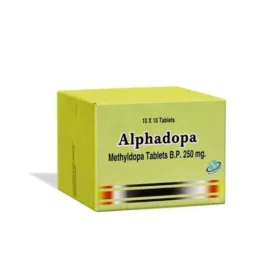
Alphadopa
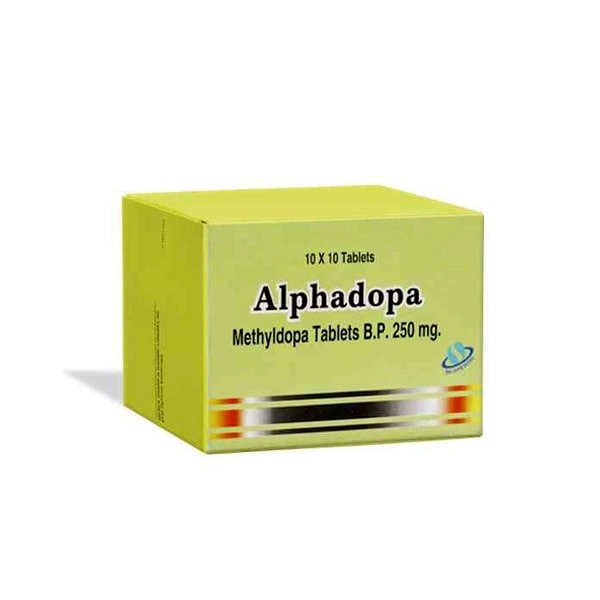
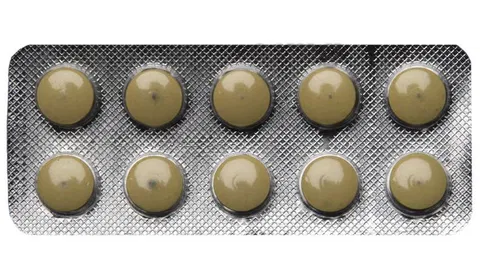

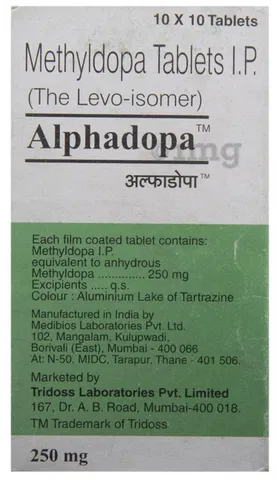




Alphadopa is Lupin’s methyldopa 250 mg tabletten — de gouden standaard antihypertensivum tijdens zwangerschap en een baanbrekend molecuul in de cardiovasculaire geneeskunde. Geïntroduceerd als Aldomet in 1960; de VA Cooperative Study (1967) was het eerste definitieve bewijs dat het behandelen van hypertensie cardiovasculaire gebeurtenissen vermindert. Moderne rol: eerste keus bij zwangerschapshypertensie (NICE, ACOG, ISSHP) met meer dan 40 jaar veiligheidsdata; add-on bij resistente hypertensie buiten zwangerschap. Monitor LFTs (idiosyncratische hepatitis) en FBC/Coombs (zeldzame hemolytische anemie).
✓ Medisch beoordeeld door Morgan Ellis — Apotheekonderzoeker · 8 jaar ervaring · Laatst beoordeeld: mei 2026
⚡ Kort antwoord — Wat is Alphadopa?
Alphadopa is een 250 mg Methyldopa tablet van Lupin — een centraal werkende alfa-2 adrenerge agonist (via actieve metaboliet alfa-methyl-noradrenaline), werkend op centrale alfa-2 adrenerge receptoren in de hersenstam — werkt via de valse neurotransmitter metaboliet alfa-methyl-noradrenaline, die wordt opgeslagen in adrenerge neuronen en vrijkomt in plaats van noradrenaline, waarbij het selectief remmende alfa-2 receptoren stimuleert en de centrale sympathische uitstroom vermindert. Methyldopa werd geïntroduceerd door Merck Sharp & Dohme in 1960 als Aldomet. Oorspronkelijk ontwikkeld als een experimenteel DOPA-decarboxylaseremmer, leidde het antihypertensieve effect in klinische onderzoeken tot de lancering als een van de eerste evidence-based hypertensie medicijnen. De VA Cooperative Study on Antihypertensive Agents (1967) bevestigde methyldopa-gebaseerde therapie als het eerste bewijs ooit dat het behandelen van hypertensie cardiovasculaire gebeurtenissen vermindert — een historisch resultaat. Modern gebruik is drastisch afgenomen met de komst van ACE-remmers, ARB's, calciumantagonisten en bètablokkers, maar methyldopa blijft de gouden standaard voor hypertensie tijdens zwangerschap, waar 40 jaar veiligheidsgegevens het een unieke positie geven. Halveringstijd 2 uur (ouderverbinding); centrale werkingduur 6-12 uur na orale inname; begin 4-6 uur; piek antihypertensief effect 4-6 uur; volledig effect bij steady state (24-48 uur). Primaire indicaties: hypertensie tijdens zwangerschap (gouden standaard, eerstelijns), resistente hypertensie als add-on, historisch antihypertensivum. Standaard dosering: Hypertensie tijdens zwangerschap: start met 250 mg twee of drie keer per dag; doseer elke 2-3 dagen op naar 500-2.000 mg/dag in twee tot vier verdeelde doses (typisch onderhoud 500 mg TDS tot 750 mg TDS). Streefwaarde poliklinische bloeddruk <140/90. Voorkeursmiddel vanwege de grootste veiligheidsdatabase tijdens zwangerschap van alle antihypertensiva (40+ jaar, duizenden zwangerschappen, geen teratogeniciteit of nadelig neonataal signaal). Niet-zwangere volwassenen met resistente HTN: 250 mg twee tot vier keer per dag, op te titreren naar 2.000 mg/dag. Zelden eerstelijns buiten zwangerschap gezien beter verdragen moderne alternatieven. Regelmatig LFT's en volledig bloedbeeld controleren (zeldzame idiosyncratische hepatitis; Coombs-positieve anemie). Voorkeursantihypertensivum tijdens zwangerschap. Voor de meeste hypertensiepatiënten begint moderne behandeling met een ACE-remmer/ARB, een calciumkanaalblokker, een thiazide en spironolacton voordat wordt overgegaan op een alfablokker of centraal werkend middel.
📦 Elke bestelling is gedekt door onze Reshipment Assurance-beleid — als uw pakket niet binnen 20 werkdagen arriveert, sturen wij het opnieuw.
Waarom bestellen bij MedsBase
Onze generieke medicijnen zijn afkomstig van WHO-GMP gecertificeerde fabrikanten en worden wereldwijd verzonden in discrete, eenvoudige verpakkingen — geen medicijnnaam op de buitenkant van het pakket. Betalingen met kaart worden verwerkt via een gereguleerde processor (betalingsoverzichten vermelden een gereguleerde kaartbetalingprocessor — nooit “MedsBase” of een medicijnnaam). Crypto en SEPA bankoverschrijvingen worden ook geaccepteerd. Elke bestelling wordt ondersteund door ons Reshipment Assurance Policy.
Wat Is Alphadopa?
Alphadopa is een orale 250 mg Methyldopa tablet van Lupin, geleverd in 30-90 tabletten. Methyldopa werd in 1960 geïntroduceerd door Merck Sharp & Dohme als Aldomet. Oorspronkelijk ontwikkeld als een experimenteel DOPA-decarboxylaseremmer, leidde het antihypertensieve effect in klinische onderzoeken tot de lancering als een van de eerste evidence-based hypertensie medicijnen. De VA Cooperative Study on Antihypertensive Agents (1967) bevestigde methyldopa-gebaseerde therapie als het eerste bewijs ooit dat het behandelen van hypertensie cardiovasculaire gebeurtenissen vermindert — een historisch resultaat. Modern gebruik is drastisch afgenomen met de komst van ACE-remmers, ARB's, calciumantagonisten en bètablokkers, maar methyldopa blijft de gouden standaard voor hypertensie tijdens zwangerschap, waar 40 jaar veiligheidsgegevens het een unieke positie geven.
Hoe Methyldopa Werkt
Methyldopa werkt in op centrale alfa-2 adrenerge receptoren in de hersenstam — werkt via de valse neurotransmitter metaboliet alfa-methyl-noradrenaline, die wordt opgeslagen in adrenerge neuronen en vrijkomt in plaats van noradrenaline, waarbij het selectief remmende alfa-2 receptoren stimuleert en de centrale sympathische uitstroom vermindert. De downstream-effecten:
- Omzetting in alfa-methyl-noradrenaline in centrale adrenerge neuronen — methyldopa wordt opgenomen in dezelfde neuronen als endogene dopa, gedecarboxyleerd door dezelfde enzymen, en opgeslagen als een “valse neurotransmitter”
- Preferentiële stimulatie van remmende alfa-2-receptoren — de valse neurotransmitter wordt vrijgegeven door zenuwactiviteit maar stimuleert bij voorkeur remmende alfa-2-autoreceptoren, wat verdere noradrenalinesecretie onderdrukt
- Verminderde perifere sympathische uitstroom — geleidelijke, aanhoudende bloeddrukdaling; minimale reflex tachycardie omdat het centrale sympathische signaal daadwerkelijk verminderd is in plaats van slechts gecompenseerd
- Geen directe vasculaire, renale of cardiale werking — het gehele klinische effect is centraal
- Geen effect op het renine-angiotensinesysteem, elektrolyten of glucose — de belangrijkste reden voor het aanvaardbare metabole profiel tijdens zwangerschap
- Placentaire overdracht is beperkt — methyldopa passeert de placenta maar veroorzaakt geen meetbaar effect op de foetale of neonatale bloeddruk in 40 jaar zwangerschapsgebruik
Goedgekeurde en evidence-based toepassingen
- Hypertensie tijdens zwangerschap (gouden standaard, eerstelijns), resistente hypertensie als add-on, historisch antihypertensivum
- Hypertensie tijdens zwangerschap — eerstelijns volgens NICE, ACOG en ISSHP; gouden standaard
- Resistente hypertensie buiten zwangerschap — vierde/vijfelijns add-on
- Historisch eerstelijns antihypertensivum (VA Cooperative Study 1967) — verdrongen door beter verdragen moderne klassen
Belangrijke klinische onderzoeksresultaten: VA Cooperative Study (1967, 1970) — methyldopa + hydrochlorothiazide + reserpine verminderde fatale en niet-fatale cardiovasculaire gebeurtenissen bij mannen met hypertensie. Het eerste en definitieve bewijs dat het behandelen van hypertensie levens redt. Redman et al. (1976, 1982) — methyldopa tijdens de zwangerschap had geen negatieve invloed op de neuroontwikkeling van het nageslacht gedurende een follow-up van 7,5 jaar. CHIPS trial (2015) — strengere versus minder strenge bloeddrukcontrole tijdens de zwangerschap; methyldopa en labetalol waren de meest gebruikte middelen; strengere controle verminderde ernstige maternale hypertensie zonder foetale uitkomsten te verslechteren. NICE / ACOG / ISSHP richtlijnen vermelden consequent methyldopa, labetalol en nifedipine als eerstelijnsbehandeling bij zwangerschapshypertensie.
Alphadopa Dosering
Primaire dosering: Hypertensie tijdens zwangerschap: start met 250 mg twee of drie keer per dag; doseer elke 2-3 dagen op naar 500-2.000 mg/dag in twee tot vier verdeelde doses (typisch onderhoud 500 mg TDS tot 750 mg TDS). Streefwaarde poliklinische bloeddruk <140/90. Voorkeursmiddel vanwege de grootste veiligheidsdatabase tijdens zwangerschap van alle antihypertensiva (40+ jaar, duizenden zwangerschappen, geen teratogeniciteit of nadelig neonataal signaal). Niet-zwangere volwassenen met resistente HTN: 250 mg twee tot vier keer per dag, oplopend tot 2.000 mg/dag. Zelden eerstelijns buiten zwangerschap vanwege beter verdragen moderne alternatieven.
Andere indicaties: Methyldopa wordt bijna uitsluitend gebruikt voor hypertensie — met name tijdens zwangerschap. Historisch gebruikt bij hypertensieve encefalopathie en voorbereiding op feochromocytoom (nu vervangen).
Toediening: Innemen met of zonder voedsel; verdeel de dagelijkse dosis over 2-4 toedieningen. Avonddosis kan het grootst zijn om sedatie naar de slaap te verplaatsen.
Controleschema:
- Uitgangswaarden: Bloeddrukmeting liggend en staand (documenteer posturale daling), hartslag, leverfunctietesten, volledig bloedbeeld, directe Coombs-test, medicatielijst (controleer op interactieve middelen).
- Week 1-2: herhaal bloeddruk (liggend en staand), hartslag, symptoombeoordeling. Pas de dosis aan op basis van bloeddruk en verdraagzaamheid.
- Week 4-6: Beoordeel streefbloeddruk; symptoomlast; herhaal leverfunctietesten.
- Doorlopend: Leverfunctietesten elke 6 maanden; volledig bloedbeeld/Coombs jaarlijks. Screen op depressie bij elk bezoek.
- Stop of verlaag de dosis bij: Transaminasestijging >3× ULN, onverklaarde anemie, ernstige depressie, overgevoeligheidsreactie.
Stopzetting: Geen rebound-syndroom. Methyldopa kan abrupt worden gestopt bij overschakeling op andere regimes, hoewel geleidelijke cross-titratie verstandig is als het vervangende middel dagen nodig heeft om een stabiele concentratie te bereiken.
Praktische overwegingen voor Alphadopa
- Gouden standaard tijdens zwangerschap. Geen ander antihypertensivum tijdens zwangerschap heeft een vergelijkbaar grote geruststellende database — dit is de belangrijkste reden om methyldopa in het moderne formularium te houden. Alternatieven tijdens zwangerschap: labetalol, nifedipine, hydralazine.
- Risico op hepatitis — idiosynchratische hepatitis en zeldzaam fatale fulminante leverinsufficiëntie (ongeveer 1/5.000 blootstellingen). Controleer leverfunctietesten bij aanvang, daarna na 4, 8 en 12 weken, en vervolgens elke 6 maanden. Stop onmiddellijk bij transaminasestijging >3× bovenste referentiewaarde of symptomen van hepatitis.
- Coombs-positieve hemolytische anemie — tot 20% van de patiënten ontwikkelt na 6-12 maanden een positieve directe Coombs-test; echte hemolytische anemie is zeldzaam (<1%). Controleer Hb en Coombs bij aanvang en jaarlijks; stop bij onverklaarde anemie.
- Sedatie en depressie — centrale sympathische onderdrukking veroorzaakt aanzienlijke vermoeidheid, vooral bij aanvang. Vermijd bij patiënten met een voorgeschiedenis van ernstige depressie.
- Geen rebound hypertensie na staken — in tegenstelling tot clonidine; methyldopa kan abrupt worden gestopt.
- Verstoort catecholaminebepalingen — methyldopametabolieten kunnen vals-positieve urinecatecholamineresultaten veroorzaken; stop 7-14 dagen voor feochromocytoomtesten.
Bijwerkingen
Vaak (>1%):
- Sedatie, vermoeidheid, slaperigheid overdag (zeer vaak, vooral de eerste 2-4 weken)
- Droge mond
- Orthostatische hypotensie, duizeligheid
- Depressie, stemmingsveranderingen, verminderd libido
- Neusverstopping
- Extrapiramidale symptomen (parkinsonisme, bradykinesie) bij gevoelige patiënten
- Vochtretentie en gewichtstoename
- Positieve directe Coombs-test (10-20%); zelden ontwikkelt zich hemolytische anemie
- Hepatitis (idiosyncratisch)
- Koorts, overgevoeligheidsuitslag
Zeldzaam maar klinisch belangrijk:
- Idiosyncratische hepatitis, inclusief fulminant leverfalen — zeldzaam maar fataal indien gemist. Controleer leverfunctietesten bij aanvang, na 4 weken, 8 weken, 12 weken, en vervolgens elke 6 maanden.
- Coombs-positieve hemolytische anemie — tot 20% wordt Coombs-positief, <1% ontwikkelt duidelijke hemolyse. Controleer volledig bloedbeeld jaarlijks of bij onverklaarbare vermoeidheid.
- Geneesmiddel-geïnduceerde lupus, pancreatitis, myocarditis — zeldzame overgevoeligheidsreactie.
- Ernstige depressie of suïcidale gedachten — centrale sympathische onderdrukking kan depressie verergeren.
- Bradycardie en hartblok (minder dan clonidine, maar mogelijk).
- Extrapyramidale syndromen (parkinsonisme) bij gevoelige patiënten.
Contra-indicaties
- Actieve hepatitis of eerder leverletsel gerelateerd aan methyldopa
- Feochromocytoom (vervalst catecholaminebepalingen; ongecontroleerde alfa-1-activiteit kan paradoxaal de bloeddruk verhogen)
- MAO-remmertherapie (interactie op sympathische tonus)
- Ernstige depressie
- Hemolytische anemie van welke oorzaak dan ook (relatief)
- Bekende overgevoeligheid voor methyldopa
Zwangerschap: eerste keuze antihypertensivum tijdens zwangerschap. 40+ jaar veiligheidsgegevens over duizenden zwangerschappen tonen geen teratogeniciteit en geen nadelig neurodevelopmenteel signaal bij nakomelingen gevolgd tot 7,5 jaar (Redman et al.). Dosering 250-750 mg twee of drie keer per dag; streef-BP <140/90. Alternatieven: labetalol, nifedipine.
Borstvoeding: verenigbaar met borstvoeding; kleine hoeveelheden in moedermelk zonder gerapporteerde nadelige effecten op de zuigeling.
Geneesmiddelinteracties
- Lithium — methyldopa kan lithiumtoxiciteit verhogen bij ongewijzigde lithiumdoseringen; monitor niveaus.
- IJzer (ferrosulfaat, ferrogluconaat) — vermindert de opname van methyldopa met 50-80%. Houd een interval van minstens 2 uur aan tussen de doses.
- MAO-remmers — hypertensieve crisis door ongehinderde catecholamineafgifte. Gecontra-indiceerde combinatie.
- Levodopa — methyldopa concurreert met levodopa; vermindert het anti-parkinson effect.
- Tolbutamide, haloperidol, lithium — verhoogde CNS-depressie.
- Tricyclische antidepressiva en sympathicomimetica (pseudo-efedrine) — werken het antihypertensieve effect van methyldopa tegen.
- Algemene anesthetica — additieve hypotensie; informeer de anesthesist.
- Alcohol — additieve sedatie en orthostatische hypotensie.
De plaats van Alphadopa in de antihypertensieve hiërarchie
| Niveau | Klasse / Voorbeelden | Rol |
|---|---|---|
| Eerstelijns | ACE-remmers (ramipril), ARB's (telmisartan), CCBs (amlodipine), thiaziden (indapamide, HCTZ) | Start hier voor nieuw gediagnosticeerde HTN |
| Tweede/derde middel | Combinaties van bovenstaande (ACEi+CCB, ARB+thiazide) | Wanneer één middel onvoldoende is |
| Vierde middel (resistente HTN) | Spironolacton (PATHWAY-2 bewijs); bètablokker; doxazosine | Indien bloeddruk ongecontroleerd blijft bij drievoudige combinatie in volledige dosering |
| Vijfde middel | Alfablokkers (Prazosine, Terazosine, doxazosine); centraal werkende middelen | Toevoegen indien spironolacton onvoldoende of gecontra-indiceerd; voorkeur voor alfablokkers bij gelijktijdige BPH |
| Vijfde / zesde middel | Centraal werkende middelen (Clonidine, moxonidine) | Toevoegen om resistente HTN op doel te brengen; let op rebound en sedatie |
| Eerstelijns tijdens zwangerschap | Methyldopa, labetalol, nifedipine | Zwangerschapshypertensie en bestaande hypertensie tijdens de zwangerschap |
Opslag
Bewaar Alphadopa onder 25°C in de originele blisterverpakking. Buiten bereik van kinderen houden.
Veelgestelde vragen
Is Alphadopa het juiste medicijn voor hoge bloeddruk tijdens de zwangerschap?
Ja — methyldopa is de gouden standaard antihypertensivum tijdens de zwangerschap en wordt als eerstelijnsbehandeling aanbevolen door de richtlijnen van NICE, ACOG en ISSHP. De reden is niet een superieur bloeddrukverlagend effect, maar de ongeëvenaarde veiligheidsdatabase: meer dan 40 jaar gebruik bij tienduizenden zwangerschappen zonder teratogeniciteit of signalen van nadelige neuro-ontwikkeling (Redman follow-up tot 7,5 jaar). Labetalol en nifedipine zijn de gebruikelijke alternatieven wanneer methyldopa niet wordt verdragen, en worden in de moderne praktijk steeds vaker als gelijkwaardige eerstelijnskeuzes gebruikt.
Moet ik bloedonderzoek laten doen tijdens het gebruik van Alphadopa?
Ja — in tegenstelling tot de meeste bloeddrukverlagende middelen vereist methyldopa periodieke controle van de lever en het bloedbeeld vanwege twee zeldzame maar ernstige idiosyncratische reacties: door geneesmiddelen geïnduceerde hepatitis (ongeveer 1 op 5.000) en Coombs-positieve hemolytische anemie (tot 20% positieve Coombs, <1% duidelijke hemolyse). Schema: Leverfunctietesten bij aanvang, na 4 weken, 8 weken, 12 weken, en vervolgens elke 6 maanden. Volledig bloedbeeld en directe Coombs-test bij aanvang en jaarlijks, of eerder bij onverklaarbare vermoeidheid of geelzucht. Stop onmiddellijk met methyldopa als de transaminasen meer dan drie keer de bovengrens van normaal stijgen of als er onverklaarbare anemie ontstaat.
Kan ik Alphadopa gebruiken met alcohol?
Licht, incidenteel drinken wordt meestal verdragen. Regelmatig of overmatig drinken versterkt de orthostatische hypotensie en sedatie van Alphadopa aanzienlijk — vallen, black-outs en ongelukken worden waarschijnlijker. Patiënten met een hoger risico (ouderen, eerdere valincidenten, gelijktijdig gebruik van diuretica of sedativa) moeten alcohol volledig vermijden bij gebruik van dit medicijn.
Waarom voel ik me zo moe met Alphadopa?
Methyldopa onderdrukt de centrale sympathische activiteit — hetzelfde mechanisme dat de bloeddruk verlaagt, vermindert ook de algehele alertheid. Sedatie en vermoeidheid komen bijna universeel voor in de eerste 2-4 weken en verbeteren meestal gedeeltelijk tegen week 6-8. Strategieën: verschuif een groter deel van de dagelijkse dosis naar het slapengaan; vermijd alcohol en andere CNS-depressiva; gebruik de kleinste effectieve dosis. Als de vermoeidheid na 8-10 weken nog steeds invaliderend is, schakel dan over op een alternatief (labetalol bij niet-zwangeren; nifedipine; of een ACE-remmer bij niet-zwangeren). Ernstige of verslechterende somberheid tijdens het gebruik van methyldopa vereist onmiddellijke evaluatie — methyldopa kan depressie uitlokken bij gevoelige patiënten.
Wat als ik een dosis vergeet?
Neem het in zodra u eraan denkt, tenzij het bijna tijd is voor uw volgende dosis — sla in dat geval de gemiste dosis over en hervat op het volgende geplande tijdstip. Neem geen dubbele dosis. Een enkele gemiste dosis heeft geen significant effect op de langetermijncontrole van de bloeddruk.
Kan ik stoppen met Alphadopa als mijn bloeddruk onder controle is?
Methyldopa kan worden gestopt zonder een rebound-syndroom, maar hypertensie zal meestal binnen enkele dagen terugkeren — chronische hypertensie wordt niet “genezen” door succesvolle behandeling. Als u methyldopa stopt vanwege bijwerkingen, schakel dan over naar een alternatief middel in plaats van simpelweg te stoppen. Patiënten na de bevalling die methyldopa zijn gestart voor zwangerschapshypertensie kunnen overstappen op een modern middel (ACE-remmer, ARB, CCB) als borstvoeding dit toelaat; bespreek dit met uw specialist.
Kan ik Alphadopa gebruiken tijdens de zwangerschap?
Ja — methyldopa is de voorkeursmiddel tegen hoge bloeddruk tijdens de zwangerschap. Alternatieven zijn labetalol en nifedipine. Vermijd ACE-remmers, ARB's, renineremmers en mineralocorticoïde receptorantagonisten tijdens de zwangerschap.
Waar kan ik Alphadopa online kopen?
U kunt Alphadopa (250 mg methyldopa, 30-90 tabletten) kopen bij MedsBase met discrete verpakking en wereldwijde verzending.
Gerelateerde antihypertensiva op MedsBase
- Aldactone — Spironolacton 25/50/100 mg (PATHWAY-2 4e lijn)
- Arkamin — Clonidine 100 mcg (Torrent)
- Natrilix SR — Indapamide 1.5 mg (thiazide-achtig)
- Prazopill XL — Prazosin ER 5 mg
- Ramcor — Ramipril 2.5/5/10 mg (ACE-remmer)
- Telma H — Telmisartan + HCTZ combinatie
- Bekijk alle hoge bloeddruk medicijnen
Meer opties in medicatie tegen hoge bloeddruk
Gerangschikt op recente bestelvolumes van MedsBase — wat andere klanten in deze categorie kiezen.

| Sterkte | 250 mg |
|---|---|
| Hoeveelheid | 30 Tablet/s, 60 Tablet/s, 90 Tablet/s |
| Farmaceutische vorm | Tablet/s |
| Fabrikant | Wockhardt Ltd |
| Behandeling | Hoge bloeddruk |
| Generiek merk | Methyldopa |
 Alphadopa
Vragen & antwoorden
Alphadopa
Gerelateerde producten







Beoordelingen
Er zijn nog geen beoordelingen