







Orzine
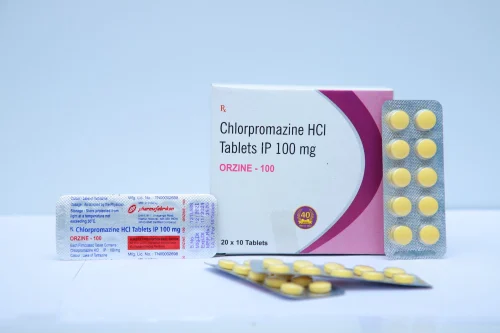
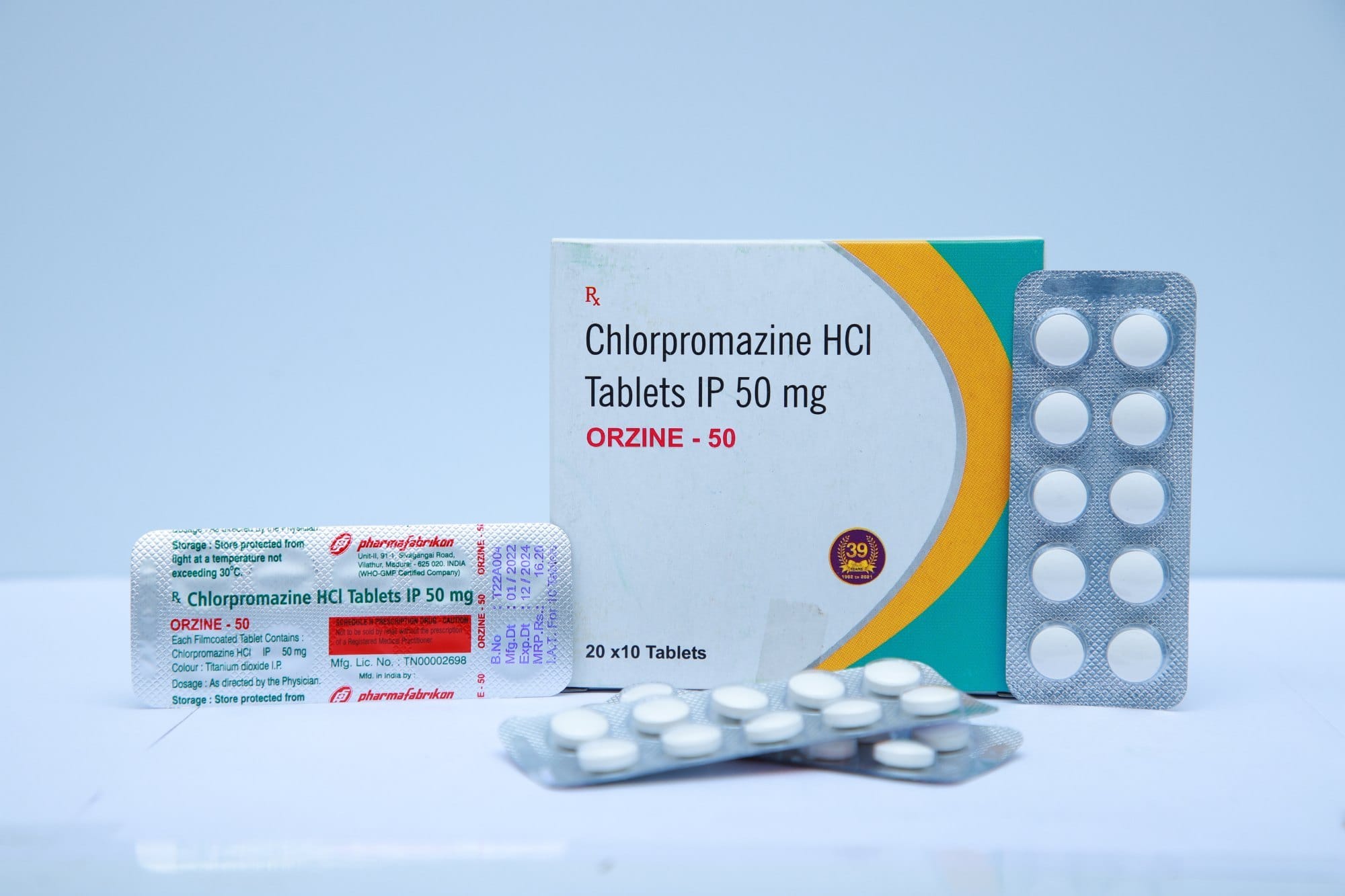

Orzine (Chlorpromazine 10/100 mg) — eerste generatie fenothiazine voor schizofrenie, ernstige agitatie, hardnekkige hik. Eerste antipsychoticum ooit (1952) — nuttige niche FGA.
✓ Medisch beoordeeld door Morgan Ellis — Apotheekonderzoeker · 8 jaar ervaring · Laatst beoordeeld: mei 2026
⚡ Snel antwoord
Orzine (Chlorpromazine 10 / 100 mg) is een eerste generatie fenothiazine antipsychoticum. Gebruikt voor schizofrenie, ernstige agitatie, hardnekkige hik, ernstige misselijkheid/braken en pre-anesthetische sedatie. Typicals (FGA's) zijn nu over het algemeen tweede keus achter atypicals.
📦 Elke bestelling is gedekt door onze Reshipment Assurance-beleid — als uw pakket niet binnen 20 werkdagen arriveert, sturen wij het opnieuw.
Waarom bestellen bij MedsBase
Orzine bij MedsBase wordt rechtstreeks geleverd door een WHO-GMP gecertificeerde fabrikant in eenvoudige, discrete verpakking. Elke bestelling wordt gedekt door onze Reshipment Assurance-beleid — 20 werkdagen levertermijn of wij sturen kosteloos opnieuw — en komt in aanmerking voor ons klantenloyaliteitsprogramma. Wereldwijde verzending is beschikbaar naar de meeste bestemmingen.
Wat Orzine is en hoe het werkt
Orzine is een Chlorpromazine tablet geleverd door Sun Pharma. Beschikbare sterktes: 10 / 100 mg.
Chlorpromazine was het eerste antipsychoticum (1952) en blijft nuttig voor ernstige agitatie, hardnekkige hik en acute psychose. Het oorspronkelijke fenothiazine — sterke sedatie, sterke anticholinerge werking, sterke α1-blokkade en aanzienlijk risico op EPS/tardieve dyskinesie.
Indicaties en dosering
| Indicatie | Startdosering | Streefdosering | Maximaal |
|---|---|---|---|
| Schizofrenie (volwassenen) | 25–50 mg TID | 200–800 mg/dag | 1000 mg |
| Ernstige agitatie (IM) | 25–50 mg IM | — | 3 doses/24u |
| Hardnekkige hik | 25–50 mg TID–QID PO | — | 50 mg QID |
| Ernstige misselijkheid/braken | 10–25 mg q4–6h PO | — | — |
| Ouderen / dementie (off-label, laatste redmiddel) | 10 mg HS | 10–25 mg/dag | op basis van tolerantie |
Belangrijke veiligheidsoverwegingen
Net als atypische antipsychotica dragen alle antipsychotica de waarschuwing voor sterfte gerelateerd aan psychose bij dementie.
Chlorpromazine verlengt het QT-interval (minder dan thioridazine). EPS en tardieve dyskinesie komen vaker voor dan bij atypische antipsychotica. Het cumulatieve risico op TD is ongeveer 5% per jaar blootstelling.
Alle fenothiazines hebben aanzienlijke anticholinergische, antihistaminische en α1-blokkerende activiteit. Vooral problematisch bij ouderen - vallen, delirium, urineretentie en obstipatie komen vaak voor. Vermijd bij dementie, BPH, nauwe kamerhoekglaucoom, ernstige leverziekte.
Fenothiazines veroorzaken fotosensitiviteit (ernstige zonnebrand) en, bij langdurig gebruik, blauw-grijze huidpigmentatie, en zelden lens-/hoornvliespigmentatie (vooral chloorpromazine). Zonnebescherming is verplicht.
Veelvoorkomende bijwerkingen
- Sedatie — universeel.
- Orthostatische hypotensie — sterke α1-blokkade.
- Anticholinerg — droge mond, obstipatie, moeilijk plassen, wazig zien.
- EPS / tardieve dyskinesie — significant.
- Hyperprolactinemie — sterk.
- Gewichtstoename — matig.
- QT-verlenging — aanwezig bij beide, ernstig bij thioridazine.
- Fotosensitiviteit — universeel.
- Cholestatische hepatitis (zeldzaam, idiosynkratisch) — vooral chloorpromazine.
Geneesmiddelinteracties
- Andere QT-verlengende geneesmiddelen — additief risico; vermijd combinaties.
- Sterke CYP2D6-remmers (paroxetine, fluoxetine, bupropion, quinidine) — verhogen de niveaus aanzienlijk; absoluut gecontra-indiceerd voor thioridazine.
- Antihypertensiva — sterke additieve hypotensie.
- Anticholinergica — additionele belasting.
- CNS-depressiva — additionele sedatie.
- Levodopa — antagonisme; vermijden bij Parkinson.
Zwangerschap, borstvoeding, pediatrie
Zwangerschap: beperkte gegevens; chloorpromazine is in het verleden met voorzichtigheid gebruikt bij hyperemesis. Borstvoeding: komt in de moedermelk terecht; wordt meestal vermeden. Kinderen: geen eerste keus; chloorpromazine wordt soms in lage doses gebruikt voor ernstige agitatie bij kinderen onder specialistische begeleiding.
Opslag
Bewaren bij 15–30 °C, uit het licht, in de originele verpakking.
Veelgestelde vragen
Waarom wordt chloorpromazine nu als tweedelijns beschouwd?
Chloorpromazine was het eerste effectieve antipsychoticum en blijft nuttig, maar atypische middelen (olanzapine, risperidon, aripiprazol, lurasidon, quetiapine) hebben over het algemeen lagere EPS/TD-snelheden en vergelijkbare werkzaamheid voor positieve symptomen. Chloorpromazine behoudt een klinische niche bij ernstige acute agitatie, hardnekkige hik en ernstige misselijkheid/braken.
Is chloorpromazine veilig voor oudere volwassenen?
Over het algemeen niet de voorkeur — anticholinerge belasting, valrisico, orthostase en TD-risico nemen allemaal toe met de leeftijd. De Beers Criteria markeren beide als potentieel ongepaste medicatie bij oudere volwassenen. Indien gebruikt, start met een lage dosis en evalueer wekelijks.
Zal chloorpromazine tardieve dyskinesie veroorzaken?
Het cumulatieve TD-risico voor typische antipsychotica is ongeveer 5%/jaar blootstelling (atypische ongeveer 1%/jaar). Na 5 jaar blootstelling aan typische antipsychotica ontwikkelt ongeveer 25% van de patiënten enkele TD-tekenen. Het risico is hoger bij leeftijd en vrouwelijk geslacht. TD kan onomkeerbaar zijn — schakel over naar clozapine of een atypisch middel met lage EPS bij de eerste tekenen.
Waarom veroorzaakt chloorpromazine zonlichtgevoeligheid?
Fenothiazinen worden in de huid afgezet en ondergaan fotochemische schade bij blootstelling aan UV-straling — wat ernstige zonnebrand en, bij langdurig gebruik, blauwgrijze pigmentatie veroorzaakt. Zonnebrandcrème, beschermende kleding en beperkte UV-blootstelling zijn verplicht.
Kan chloorpromazine abrupt worden gestopt?
Afbouwen over 2–4 weken. Abrupt stoppen veroorzaakt cholinerge rebound (misselijkheid, zweten, slapeloosheid) en antipsychoticumrecidief. Ontwenningsdyskinesie kan ook TD blootleggen die door het medicijn werd onderdrukt.
Zal chloorpromazine interageren met mijn andere medicijnen?
Enkele belangrijke interacties: (1) andere QT-verlengende medicijnen (additief effect); (2) sterke CYP2D6-remmers zoals paroxetine en fluoxetine (verhogen de spiegels aanzienlijk); (3) antihypertensiva (additief effect op orthostatische hypotensie). Overleg altijd de volledige medicatielijst met de voorschrijver.
Waarom chlorpromazine bij hik?
Chlorpromazine is het enige door de FDA goedgekeurde medicijn voor hardnekkige hik. Het werkingsmechanisme is onzeker — waarschijnlijk een combinatie van centrale anticholinerge en dopamine-blokkerende werking op de hikreflexboog. 25–50 mg 3–4 maal daags oraal is de gebruikelijke dosering; meestal tijdelijk.
Hoe lang duurt het voordat chlorpromazine werkt?
Kalmerend en sederend effect binnen enkele uren. Antipsychotisch effect na 1–2 weken voor positieve symptomen. Volledig effect na 4–6 weken.
Kan chlorpromazine worden gebruikt voor kortdurende ernstige agitatie?
Ja — intramusculaire chlorpromazine wordt soms gebruikt voor ernstige acute agitatie bij psychiatrische noodsituaties. Nieuwere atypische antipsychotica (IM olanzapine, IM ziprasidone, IM aripiprazole) en IM benzodiazepines hebben chlorpromazine voor deze indicatie grotendeels vervangen in de moderne praktijk.
Beïnvloedt chlorpromazine mijn rijvaardigheid?
Sterke sedatie in de eerste 1–2 weken. De meeste patiënten met stabiele doseringen rijden normaal, maar de orthostatische hypotensie en sedatie kunnen aanhouden.
Andere medicijnen voor geestelijke gezondheid
- Aripicon (Aripiprazole — atypisch, lage EPS)
- Risdone (Risperidon)
- Olanzap (Olanzapine)
- Sulpitac (Amisulpride)
- Skizoril (Clozapine — refractaire aandoening)
Meer opties in Mentale Gezondheid en Psychiatrische Medicatie
Gerangschikt op recente bestelvolumes van MedsBase — wat andere klanten in deze categorie kiezen.



| Sterkte | 50 mg, 100 mg |
|---|---|
| Hoeveelheid | 30 Tabletten, 60 Tabletten, 90 Tabletten, 180 Tabletten |
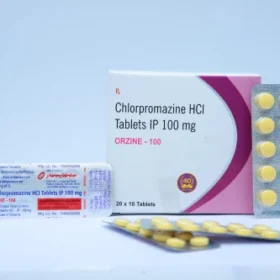 Orzine
Vragen & antwoorden
Orzine
Gerelateerde producten















Beoordelingen
Er zijn nog geen beoordelingen