








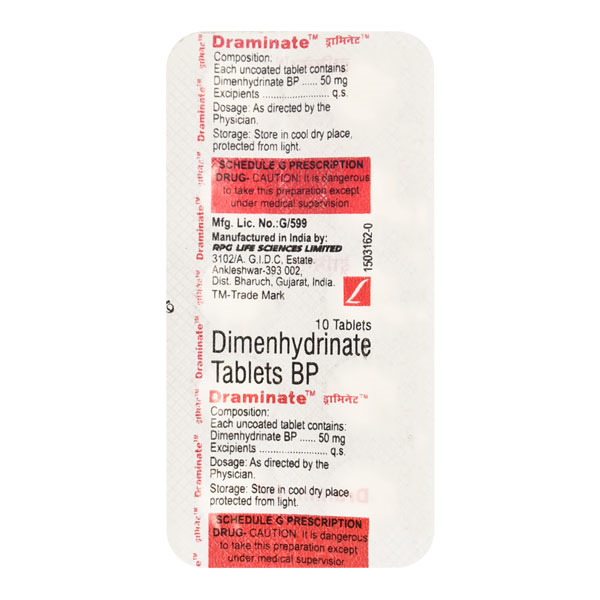
Draminate
✅ Verlicht reisziekte
✅ Vermindert misselijkheid en braken
✅ Voorkomt reisongemak
✅ Niet-suffige formule
✅ Snelle verlichting
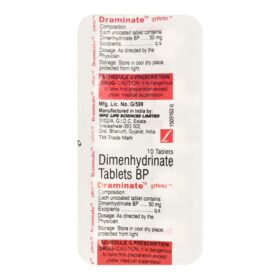
Draminate bevat Dimenhydrinate.
✓ Medisch beoordeeld door Morgan Ellis — Apotheekonderzoeker · 8 jaar ervaring · Laatst beoordeeld: mei 2026
⚡ Snel antwoord — Wat is Draminate?
Draminate is een dimenhydrinaat 50 mg orale tablet gebruikt om te voorkomen en te behandelen reisziekte, duizeligheid (inclusief de ziekte van Menière en vestibulaire neuritis), en misselijkheid en braken van vestibulaire oorsprong. Dimenhydrinaat is een eerste generatie H1-antihistaminicum met anticholinerge werking — de combinatie dempt de vestibulaire signalen in het binnenoor die reisziekte veroorzaken. De werking begint 15–30 minuten na een orale dosis; de werkingsduur is 4–6 uur. Neem 30–60 minuten voor vertrek ter preventie; herhaal elke 4–6 uur, maximaal vier doses per 24 uur. Het meest voorkomende bijwerking is sedatie — rijd niet of bedien geen machines gedurende ten minste 4 uur. Niet “niet-sederend” ondanks marketingclaims; tweede generatie antihistaminica (cetirizine, loratadine) werken niet tegen reisziekte — hiervoor is het sederende H1-effect en het anticholinerge effect nodig.
Wat is Draminate?
Draminate is een dimenhydrinaat 50 mg orale tablet gebruikt om reisziekte, duizeligheid en misselijkheid van vestibulaire oorsprong te voorkomen en behandelen. Dimenhydrinaat zelf is een chloor-theofyllinaat zout van difenhydramine (Benadryl); in het lichaam dissocieert het om difenhydramine vrij te geven, het actieve antihistaminicum, samen met 8-chloor-theofylline (een mild stimulerend middel dat een deel van de slaperigheid compenseert). Dit is waarom dimenhydrinaat vaak wordt omschreven als “iets minder sederend” dan difenhydramine alleen — maar het veroorzaakt nog steeds aanzienlijke slaperigheid en moet als een sederend medicijn worden behandeld.
Dimenhydrinaat wordt wereldwijd verkocht als Dramamine (US), Gravol (Canada), Vomex A (Germany), Travel Calm (verschillende) en vele generieke versies. Draminate is het Indiase generieke merk; dosering en klinische indicaties zijn identiek voor alle merken. Het staat op de WHO Lijst van Essentiële Geneesmiddelen voor duizeligheid.
Het medicijn werkt het beste voor symptomen van vestibulaire oorsprong: reisziekte, binnenoor-duizeligheid, labyrinthitis, aanvallen van Menière en postoperatieve misselijkheid na ooroperaties. Het is minder effectief voor misselijkheid van gastro-intestinale oorsprong (gastro-enteritis, chemotherapie, migraine) — deze reageren meestal beter op ondansetron of metoclopramide.
Hoe Werkt Draminate?
Reisziekte ontstaat wanneer het vestibulaire systeem (evenwichtsorganen in het binnenoor) en het gezichtsvermogen (ogen) sturen tegenstrijdige signalen naar de hersenen — bijvoorbeeld wanneer je leest in een rijdende auto, zeggen je ogen “stil” maar je binnenoor “versnelling in een bocht”. Deze mismatch activeert het braakcentrum in de medulla oblongata via histamine (H1) en muscarine (M1) receptorbanen, wat misselijkheid, bleekheid, koud zweet en braken veroorzaakt.
Dimenhydrinaat blokkeert beide banen:
- H1-antihistaminewerking onderdrukt histaminesignalering in de vestibulaire kernen en de chemoreceptor trigger zone
- Anticholinergische (antimuscarine) werking blokkeert M1-receptoren in dezelfde banen — dit is het cruciale mechanisme voor reisziekte, daarom werken niet-sederende tweede generatie antihistaminica (cetirizine, loratadine, fexofenadine) niet niet werken tegen reisziekte ondanks een sterker H1-effect; ze hebben geen anticholinerge werking
Het effect treedt in na een volledige orale dosis 15–30 minuten, piekbloedspiegels na 1–2 uur, en klinische werkingsduur 4–6 uur. De eliminatiehalfwaardetijd is ongeveer 8 uur; sedatie kan langer aanhouden.
Toepassingen en Indicaties
- Reisziekte — auto, boot, vliegtuig, trein (preventie en behandeling)
- Perifere vertigo — ziekte van Menière, labyrinthitis, vestibulaire neuritis, benigne paroxismale positieduizeligheid (acute symptomatische verlichting; niet voor langdurige controle)
- Postoperatieve misselijkheid en braken na oor-, neus-, keel- of oogheelkundige chirurgie
- Zwangerschapsgerelateerde ochtendmisselijkheid (off-label in sommige regio's; doxylamine of ondansetron meestal eerste keus)
- Misselijkheid door bestraling — aanvullend
Draminate is geen goede keuze voor: misselijkheid door chemotherapie (gebruik 5-HT3-antagonisten zoals ondansetron), misselijkheid door gastro-enteritis, braken geassocieerd met migraine (metoclopramide + triptaan), of misselijkheid door opioïden (gebruik ondansetron of cyclizine).
Draminate Dosering
| Leeftijd | Dosering | Frequentie | Dagelijkse max |
|---|---|---|---|
| Volwassenen en kinderen ≥12 jaar | 50–100 mg | Elke 4–6 uur | 400 mg / 24 uur |
| Kinderen 6–11 jaar | 25–50 mg (half tot 1 tablet) | Elke 6–8 uur | 150 mg / 24 uur |
| Kinderen 2–5 jaar | 12,5–25 mg (kwart tot half tablet) | Elke 6–8 uur | 75 mg/24 uur |
| Kinderen onder 2 jaar | Niet aanbevolen | — | — |
| Ouderen (≥65) | Start met 25 mg; doseer voorzichtig op | Elke 6–8 uur | 150 mg/24 uur; overweeg alternatieven |
Hoe Draminate correct in te nemen
- Neem 30–60 minuten voor reizen in ter voorkoming van reisziekte — wachten tot misselijkheid begint vermindert de effectiviteit en verhoogt het braken.
- Innemen met water. Voedsel heeft geen significant effect op de opname, maar een lichte maaltijd vermindert maagklachten.
- Vermijd alcohol en andere sedativa gedurende ten minste 6 uur na een dosis — verhoogd risico op sedatie en ademhalingsdepressie.
- Niet autorijden of machines bedienen gedurende ten minste 4–6 uur na een dosis.
- Herhaal de dosis elke 4–6 uur tijdens een lange reis (maximaal 4 doses per 24 uur bij volwassenen).
- Bij aanvallen van duizeligheid — neem direct in wanneer de symptomen beginnen; positioneer jezelf op een veilige plek (liggend in een stille, donkere kamer), probeer niet te lopen.
- Drink voldoende water — het anticholinerge effect veroorzaakt een droge mond en milde uitdroging.
- Bij gebruik voor chronische duizeligheid, overleg met uw voorschrijver na 48–72 uur — langdurig gebruik kan een onderliggende diagnose maskeren en medicatiegerelateerde cognitieve vertraging veroorzaken.
Bijwerkingen van Draminate
Vaak voorkomend:
- Slaperigheid, sedatie — de meest voorkomende en belangrijkste
- Droge mond en keel
- Wazig zicht (accommodatieverlamming)
- Obstipatie
- Moeite met plassen
- Duizeligheid — paradoxaal genoeg bij ouderen
Minder vaak:
- Paradoxale opwinding — vooral bij jonge kinderen (agitatie, slapeloosheid) en ouderen (delirium, agitatie)
- Tachycardie, hartkloppingen
- Hoofdpijn
- Veranderingen in eetlust
- Tinnitus
Ernstig (stop en raadpleeg een arts):
- Ernstige allergische reactie (zeldzaam bij oraal ingenomen antihistaminica)
- Ernstig anticholinerg delirium bij ouderen — verwardheid, agitatie, hallucinaties, urineretentie
- Toevallen (bij overdosering)
- Veranderingen in hartgeleiding (verlengd QT) bij hoge doseringen
Waarschuwingen en voorzorgsmaatregelen
- Sedatie en autorijden: het label “niet-sufmakend” op sommige marketing is misleidend. Dimenhydrinaat veroorzaakt klinisch significante sedatie bij de meeste volwassenen — rijd niet, vlieg niet als piloot, bedien geen machines of verricht geen veiligheidskritisch werk gedurende 4–6 uur na inname.
- Alcohol, benzodiazepines, opioïden, andere antihistaminica: combineer niet — additieve sedatie en ademhalingsdepressie.
- Ouderen: dimenhydrinaat staat op de Beers List van medicijnen die vermeden moeten worden bij volwassenen van 65+. De anticholinerge belasting verslechtert de cognitie, verhoogt het valrisico en verergert delirium. Gebruik alleen kortdurend en in verlaagde dosering.
- Benigne prostaathypertrofie (BPH): anticholinerge effect verergert urineretentie.
- Nauwe-kamerhoekglaucoom: anticholinerge effect kan acute angle-closure veroorzaken. Vermijden.
- Astma/COPD: antihistaminica verdikken bronchiale secreties — vermijden bij ernstige acute astma.
- Dementie: vermijden — verslechtert cognitie en versnelt achteruitgang.
- Kinderen onder 2 jaar: niet gebruiken — risico op paradoxale opwinding en respiratoire depressie.
- Zwangerschap en borstvoeding: Categorie B — wordt als veilig beschouwd bij standaarddoseringen; veel gebruikt voor zwangerschapsmisselijkheid in veel landen. Overleg met verloskundige.
- Rijd niet na de eerste dosis — individuele sedatie varieert sterk.
Contra-indicaties
- Bekende overgevoeligheid voor dimenhydrinaat, difenhydramine of verwante antihistaminica
- Ernstig astma
- Kinderen onder 2 jaar
- Nauwe-kamerhoekglaucoom (acuut of onbehandeld)
- Ernstige urineretentie door BPH
- Pylorusduodenale obstructie
- Pasgeborenen en premature zuigelingen (borstvoedende moeders: stoppen)
Geneesmiddelinteracties
| Interagerend geneesmiddel | Effect | Wat te doen |
|---|---|---|
| Alcohol | Additieve sedatie, respiratoire depressie | Vermijd — houd minstens 6 uur tussen |
| Benzodiazepinen (diazepam, lorazepam, alprazolam) | Additieve sedatie en valrisico | Vermijd combinatie; indien essentieel, nauwlettend monitoren |
| Opioïden (morfine, tramadol, codeïne) | Additieve sedatie en respiratoire depressie | Vermijd of verlaag doses aanzienlijk |
| Andere sederende antihistaminica (difenhydramine, promethazine, cyclizine) | Additieve sedatie en anticholinergische belasting | Niet stapelen |
| Tricyclische antidepressiva (amitriptyline, nortriptyline) | Additieve anticholinergische effecten — delirium bij ouderen, urineretentie, obstipatie | Vermijd indien mogelijk; monitor |
| MAO-remmers | Langdurige, geïntensiveerde anticholinergische effecten; risico op hypertensieve crisis | Vermijd binnen 14 dagen na MAOI |
| Ototoxische geneesmiddelen (aminoglycosiden, cisplatin, hoge doses lisdiuretica) | Dimenhydrinate maskeert vroege ototoxiciteitssymptomen (tinnitus, duizeligheid) | Audiogrammonitoring tijdens gecombineerde therapie |
Opslag
- Bewaren beneden 25°C Op een droge plaats.
- Bewaar in de originele blisterverpakking tot gebruik.
- Beschermen tegen licht.
- Buiten bereik van kinderen houden — overdosering is bijzonder gevaarlijk voor kleine kinderen.
Veelgestelde vragen
Is Draminate “niet-sederend”?
Nee — dit is een marketinglabel overdrijving. Dimenhydrinaat is een eerste-generatie antihistaminicum en veroorzaakt klinisch significante sedatie bij de meeste volwassenen. Het is iets minder sederend dan difenhydramine alleen omdat het gecombineerd wordt met een 8-chlorotheofylline tegenwicht, maar het is niet “niet-sederend”. Tweede-generatie antihistaminica (cetirizine, loratadine) zijn echt niet-sederend — maar ze werken niet tegen reisziekte omdat reisziekte het anticholinerge component vereist dat dimenhydrinaat heeft en nieuwere antihistaminica niet.
Draminate vs Stugeron (cinnarizine) — welke is beter?
Beide werken tegen reisziekte en duizeligheid. Dimenhydrinate heeft een snellere werking (15–30 min vs 45–60 min voor cinnarizine) en is beter voor een plotseling geplande reis. Cinnarizine heeft een veel langere werkingsduur (8 uur) en is minder sederend — beter voor lange dagreizen of chronisch gebruik bij duizeligheid. Kies dimenhydrinaat voor korte, snelle reizen; cinnarizine voor lange overtochten.
Draminate vs scopolaminepleisters?
Scopolamine (Transderm Scop pleisters) is aanzienlijk effectiever tegen ernstige reisziekte — vooral op boten — en werkt 72 uur per pleister. Het heeft een zwaarder anticholinerg bijwerkingenprofiel (droge mond, wazig zien, occasionele verwardheid) en staat onder specialistisch toezicht in de meeste rechtsgebieden. Dimenhydrinate is zonder recept verkrijgbaar in de meeste landen, goedkoper en heeft een bewezen veiligheidsprofiel voor routinegebruik — geschikt voor auto, trein en korte vluchten. Voor transoceanische cruises of een eerste geschiedenis van ernstige zeeziekte is scopolamine de sterkere keuze.
Wanneer moet ik Draminate innemen voor reizen?
Neem de eerste tablet 30–60 minuten voor vertrek. Het werkt veel beter als preventie dan als behandeling — zodra ernstige misselijkheid begint, wordt het middel langzamer opgenomen en kan braken voorkomen dat de tablet blijft zitten. Herhaal elke 4–6 uur tijdens een lange reis.
Kan ik Draminate gebruiken tijdens de zwangerschap?
Ja — dimenhydrinaat is FDA Zwangerschaps categorie B, heeft een zeer lange staat van dienst tijdens zwangerschap en wordt in veel landen als eerstelijnsbehandeling voor ochtendmisselijkheid gebruikt. Bij ernstige hyperemesis gravidarum kan je verloskundige de voorkeur geven aan doxylamine/pyridoxine (Diclegis) of ondansetron. Overleg altijd met je verloskundige.
Is Draminate veilig voor kinderen?
Voor kinderen van 2 jaar en ouder, ja — de dosering is gebaseerd op gewicht en leeftijd (zie tabel hierboven). Geef dit niet aan kinderen onder de 2 jaar — bij baby's kan ernstige paradoxale opwinding en ademhalingsdepressie optreden. Let op tekenen van agitatie, slapeloosheid of hyperactiviteit als paradoxale reactie bij jonge kinderen; als dit optreedt, stop dan en kies een andere aanpak.
Ik ben bejaard — moet ik Draminate nemen?
Gebruik met voorzichtigheid. Dimenhydrinaat staat op de Beers List lijst van medicijnen die volwassenen van 65+ moeten vermijden omdat de anticholinerge belasting de cognitie verslechtert, het valrisico verhoogt en delirium kan veroorzaken. Voor oudere patiënten met duizeligheid is, betahistine (Vertin) meestal de betere keuze — geen anticholinerg effect en specifiek geregistreerd voor de ziekte van Ménière. Voor reisziekte zijn, scopolamine in een verlaagde dosis of cinnarizine in 15 mg minder anticholinerge alternatieven.
Wat moet ik doen als ik te veel Draminate tabletten heb ingenomen?
Een overdosis veroorzaakt ernstige anticholinerge toxiciteit: verwarring, hallucinaties, verwijde pupillen, opgewarmde droge huid, droge mond, tachycardie, urineretentie, mogelijk epileptische aanvallen. Bij zeer grote overdoses kunnen hartritmestoornissen en coma optreden. Bel onmiddellijk de hulpdiensten of een antigifcentrum. Neem de verpakking mee. Probeer niet thuis braken op te wekken.
Mag ik koffie drinken met Draminate?
Matige cafeïne-inname is over het algemeen geen probleem en kan de slaperigheid gedeeltelijk tegengaan, maar vertrouw niet op koffie om je “veilig genoeg om te rijden” te maken — de verdoving en het verminderde beoordelingsvermogen blijven aanwezig, zelfs als cafeïne je wakker houdt. Meng niet dimenhydrinaat niet met alcohol (versterkt de verdoving en ademhalingsdepressie).
Waarom bestellen bij MedsBase
Draminate wordt ingekocht bij WHO-GMP gecertificeerde fabrikanten, discreet verpakt en wereldwijd verzonden. Elke bestelling wordt gedekt door onze Reshipment Assurance-beleid en ondersteund door meer dan 1.400 klantbeoordelingen.
Waarom bestellen bij MedsBase
📦 Elke bestelling is gedekt door onze Reshipment Assurance-beleid — als uw pakket niet binnen 20 werkdagen arriveert, sturen wij het opnieuw.
Dimenhydrinaat in Draminate is het klassieke antihistaminicum tegen reisziekte voor korte reizen, maar voor reizen langer dan 4 tot 6 uur, of waar sterkere sedatie acceptabel is, biedt, Avimax (promethazine 25 mg) een langere anti-emetische werking per dosis met één tablet 30 tot 60 minuten voor vertrek.
Gerelateerde alternatieven
Andere producten in Reisgezondheid die klanten ook bekijken:
Meer opties in reisziektetabletten
Gerangschikt op recente bestelvolumes van MedsBase — wat andere klanten in deze categorie kiezen.

| Hoeveelheid | 30 Tabletten, 60 Tabletten, 90 Tabletten, 180 Tabletten |
|---|
 Draminate
Vragen & antwoorden
Draminate
Gerelateerde producten




Beoordelingen
Er zijn nog geen beoordelingen