








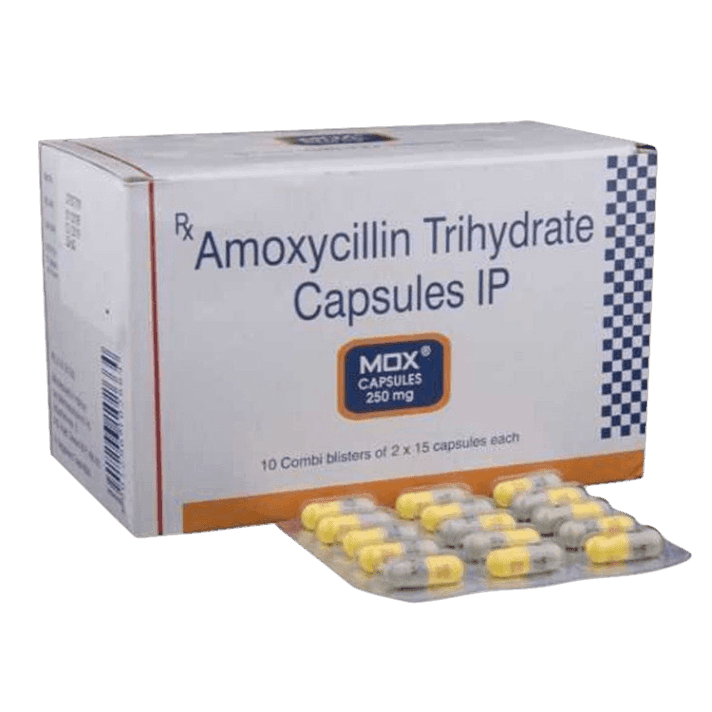
Mox
✅ Behandelt bacteriële infecties
✅ Vermindert ontsteking
✅ Verlicht koorts
✅ Oraal suspensie beschikbaar
✅ Effectief tegen luchtweginfecties
Mox bevat Amoxicillin.
✓ Medisch beoordeeld door Morgan Ellis — Apotheekonderzoeker · 8 jaar ervaring · Laatst beoordeeld: mei 2026
⚡ Kort antwoord — Wat is Mox?
Mox is een breedspectrum amoxicillinecapsule gebruikt voor de behandeling van bacteriële infecties van de luchtwegen, oren, sinussen, urinewegen, huid en tandweefsel. Beschikbaar in 250 mg en 500 mg sterktes. Geproduceerd door Sun Pharma. Standaard dosering voor volwassenen is 500 mg driemaal daags gedurende 5–7 dagen. Maak de volledige voorgeschreven kuur af, zelfs als de symptomen eerder verdwijnen.
📦 Elke bestelling is gedekt door onze Reshipment Assurance-beleid — als uw pakket niet binnen 20 werkdagen arriveert, sturen wij het opnieuw.
Waarom bestellen bij MedsBase
Onze generieke medicijnen zijn afkomstig van WHO-GMP gecertificeerde fabrikanten en worden wereldwijd verzonden in discrete, eenvoudige verpakkingen — geen medicijnnaam op de buitenkant van het pakket. Betalingen met kaart worden verwerkt via een gereguleerde processor (betalingsoverzichten vermelden een gereguleerde kaartbetalingprocessor — nooit “MedsBase” of een medicijnnaam). Crypto en SEPA bankoverschrijvingen worden ook geaccepteerd. Elke bestelling wordt ondersteund door ons Reshipment Assurance Policy.
Mox is een veelgebruikt amoxicilline capsule geproduceerd door Sun Pharma. Amoxicilline is een bèta-lactam antibioticum in de aminopenicillineklasse — een eerstelijnsbehandeling voor veelvoorkomende bacteriële infecties wereldwijd en een van de meest voorgeschreven medicijnen in de humane geneeskunde. Elke capsule bevat amoxicillinetrihydraat equivalent aan 250 mg of 500 mg amoxicilline, wat flexibele dosering mogelijk maakt voor infecties bij volwassenen en kinderen.
Mox staat op de WHO Model-lijst van essentiële geneesmiddelen en blijft het middel van keuze voor een lange lijst van in de gemeenschap opgelopen infecties, met name in de eerstelijnszorg.
Wat Is Mox?
Mox is een voorschriftplichtig breedspectrum bèta-lactam antibioticum actief tegen een breed scala aan Gram-positieve en geselecteerde Gram-negatieve bacteriën. Het is structureel verwant aan ampicilline maar heeft een betere orale biologische beschikbaarheid (~95%) en wordt consistenter opgenomen, ongeacht voedselinname.
Mox wordt doorgaans voorgeschreven voor:
- Acute otitis media (middenoorontsteking) — eerstelijns bij kinderen en volwassenen
- Bacteriële rhinosinusitis wanneer antibiotica geïndiceerd zijn
- Streptokokken faryngitis / tonsillitis (keelontsteking door streptokokken)
- Community-acquired pneumonia — bij ongecompliceerde gevallen bij verder gezonde volwassenen
- Huid- en weke delen infecties veroorzaakt door streptokokken of gevoelige stafylokokken
- Ongecompliceerde urineweginfecties in geselecteerde gevallen waar de gevoeligheid bekend is
- Tandinfecties — abces, infectie na extractie
- Helicobacter pylori eradica — in triple of quadruple therapie regimes
- Profylaxe van bacteriële endocarditis bij hoogrisico tandheelkundige ingrepen (voor geselecteerde patiënten volgens richtlijnen)
Amoxicilline alleen beschermt niet niet tegen bèta-lactamase-producerende bacteriën zoals veel Haemophilus, Moraxella, en S. aureus stammen — voor deze wordt amoxicilline + clavulaanzuur (bijv. Augmentin) aanbevolen.
Hoe Werkt Mox?
Amoxicilline is een bactericide antibioticum — het doodt bacteriën in plaats van alleen hun groei te remmen:
- Het bindt zich aan penicillinebindende eiwitten (PBPs) ingebed in de bacteriële celwand
- PBPs zijn normaal gesproken verantwoordelijk voor de laatste stap van peptidoglycaan cross-linking, wat de celwand zijn mechanische sterkte geeft
- Het blokkeren van PBPs stopt de synthese van nieuwe celwanden — wanneer groeiende bacteriën zich proberen te delen, faalt hun fragiele celwand en ondergaan ze osmotische lysis
- Amoxicilline is goed oraal opgenomen (~95%) en heeft een halfwaardetijd van ongeveer 1 uur, daarom wordt het elke 8 uur gedoseerd
- Het middel verspreidt zich wijd in weefsels, inclusief middenoorvocht, sinussen, pleuraal en peritoneaal vocht, en huid — maar niet goed in CSF tenzij de meninges ontstoken zijn
Toepassingen en Indicaties
- Acute otitis media — eerstelijns bij kinderen en volwassenen wanneer antibiotica geïndiceerd zijn
- Bacteriële sinusitis — eerstelijns in de meeste richtlijnen (AAP, IDSA, NICE)
- Streptokokken faryngitis — voorkeur boven penicilline V voor therapietrouw (een- of tweemaal daagse regimes)
- Community-acquired pneumonia — poliklinisch, bij verder gezonde volwassenen
- Tandinfecties — abces, pericoronitis, post-extractie infectie
- Vroege ziekte van Lyme
- Helicobacter pylori — als onderdeel van combinatietherapie voor uitroeiing
- Ongecompliceerde huid- en weke delen infecties veroorzaakt door gevoelige micro-organismen
Mox Dosering en Toediening
| Indicatie | Dosering voor volwassenen | Duur |
|---|---|---|
| Oor-/bijholte-/keelinfectie | 500 mg driemaal daags (of 875 mg tweemaal daags) | 5–7 dagen (10 dagen voor keelontsteking door streptokokken) |
| Longontsteking opgelopen in de gemeenschap (mild) | 1 g driemaal daags | 5 dagen |
| Ongecompliceerde urineweginfectie | 500 mg driemaal daags | 5–7 dagen (gevoeligheidsafhankelijk) |
| Tandabces | 500 mg driemaal daags | 5 dagen (plus drainage) |
| Vroege ziekte van Lyme | 500 mg driemaal daags | 14–21 dagen |
| H. pylori eradica | 1 g tweemaal daags + PPI + claritromycine OF metronidazol | 10–14 dagen |
| Endocarditisprofylaxe (tandheelkundig) | 2 g eenmalige dosis, 30–60 min voor de ingreep | Eenmalige dosis |
| Pediatrisch (standaard) | 25–50 mg/kg/dag verdeeld over elke 8 uur | Afhankelijk van indicatie |
| Pediatrisch (hoge dosis, bv. AOM) | 80–90 mg/kg/dag verdeeld over elke 12 uur | 10 dagen |
| CrCl 10–30 mL/min | 250–500 mg elke 12 uur | Afhankelijk van indicatie |
| CrCl <10 mL/min / dialyse | 250–500 mg elke 24 uur (geef dosis na dialyse op dialysedagen) | Onder begeleiding van specialist |
Hoe Mox correct in te nemen
- Slik de capsule heel door met een vol glas water
- Kan met of zonder voedsel worden ingenomen — voedsel heeft geen significant effect op de opname, hoewel een kleine hoeveelheid milde maag-darmklachten kan verminderen
- Voltooi de volledige voorgeschreven kuur zelfs als de symptomen eerder verdwijnen — voortijdig stoppen verhoogt het risico op terugval en resistentie
- Houd de doses zo gelijkmatig mogelijk (elke 8 uur voor drie keer daagse regimes)
- Als u een dosis mist en de volgende binnen 2 uur is, sla dan de gemiste dosis over. Neem nooit een dubbele dosis
- Probiotica of live yoghurt tijdens en na de kuur kunnen antibiotica-geassocieerde diarree verminderen
- Amoxicilline vermindert niet de effectiviteit van gecombineerde orale anticonceptiva in de meeste klinische scenario's, in tegenstelling tot oudere adviezen — maar backup anticonceptie is nog steeds redelijk bij braken of ernstige diarree
Bijwerkingen van Mox
De meeste mensen verdragen amoxicilline goed. De meeste bijwerkingen zijn mild en verdwijnen na afloop van de kuur.
| Ernst | Bijwerking |
|---|---|
| Vaak (≥1 op de 10) | Misselijkheid, milde diarree, buikklachten, huiduitslag |
| Vaak (≥1 op de 100) | Braken, vaginale candidiasis, orale spruw, veranderde smaak |
| Minder vaak | Netelroos, duizeligheid, slapeloosheid, verhoogde leverenzymen, interstitiële nefritis |
| Zeldzaam maar ernstig | Clostridioides difficile-geassocieerde diarree / colitis, Stevens-Johnson-syndroom, DRESS, acute gegeneraliseerde exanthemateuze pustulose (AGEP), ernstige hepatitis, cholestatische geelzucht, anafylaxie |
Zoek onmiddellijk medische hulp voor een uitgebreide huiduitslag, zwelling van het gezicht, tong of keel, ademhalingsmoeilijkheden, ernstige waterige diarree met bloed of slijm, of geelverkleuring van de ogen of huid.
Amoxicilline en mononucleosis
Patiënten met infectieuze mononucleosis (Epstein-Barr-virus) die amoxicilline krijgen, ontwikkelen in ongeveer 80-95% van de gevallen een kenmerkende uitgebreide niet-allergische huiduitslag in ongeveer 80–95% van de gevallen. Dit is geen echte penicilline-allergie en sluit toekomstig gebruik van amoxicilline niet uit, maar patiënten dragen vaak onnodig het label “allergie” mee.
Waarschuwingen en voorzorgsmaatregelen
- Penicillineallergie. Ongeveer 10% van de patiënten meldt “penicillineallergie”, maar minder dan 1% heeft een echte IgE-gemedieerde allergie bij formele testen. Desalniettemin moet amoxicilline worden vermeden bij iedereen die eerder anafylaxie, Stevens-Johnson-syndroom of DRESS heeft gehad op enige penicilline of cefalosporine.
- Virale infecties. Niet actief tegen virussen - amoxicilline helpt niet bij verkoudheid, griep, ongecompliceerde keelpijn of bronchitis van virale oorsprong. Ongepast gebruik versnelt resistentie.
- Infectieuze mononucleosis. Vermijden - zie bovenstaande opmerking over huiduitslag
- Nierfunctiestoornis. Dosering aanpassen volgens de nierfunctie
- Zwangerschap en borstvoeding. Amoxicillin wordt als veilig beschouwd tijdens zwangerschap en borstvoeding.
- Diarree. Milde diarree komt vaak voor. Ernstige waterige diarree, koorts of buikpijn na antibiotica kan wijzen op C. difficile colitis — stop het antibioticum en raadpleeg een arts
Contra-indicaties — Wie mag Mox NIET gebruiken
- Bekende overgevoeligheid voor amoxicilline of een ander penicilline
- Eerder ernstige overgevoeligheid (anafylaxie, Stevens-Johnson-syndroom, DRESS) voor een bètalactamantibioticum, inclusief cefalosporines en carbapenems
- Actieve infectieuze mononucleosis
Geneesmiddelinteracties
| Geneesmiddel / Klasse | Interactie |
|---|---|
| Methotrexaat | Amoxicilline vermindert de renale klaring van methotrexaat — verhoogt de toxiciteit. Gebruik met voorzichtigheid en monitor MTX-niveaus |
| Allopurinol | Hoger risico op amoxicilline-geïnduceerde huiduitslag |
| Warfarine | Kan het INR-waarde bescheiden verhogen door verandering van de darmflora en verminderde vitamine K-synthese — controleer de INR-waarde tijdens de behandeling |
| Orale anticonceptiepil | Modern onderzoek ondersteunt niet geen significante vermindering van de anticonceptieve werking, ondanks historisch advies. Overweeg een back-upmethode bij braken of ernstige diarree |
| Probenecide | Vermindert de renale klaring van amoxicilline; verhoogt de bloedspiegels (wordt therapeutisch gebruikt in sommige behandelingsschema's) |
| Alcohol | Geen directe interactie; matige alcoholinname is acceptabel tijdens de behandeling |
Vertel uw arts over alle voorgeschreven en niet-voorgeschreven medicijnen voordat u met Mox begint.
Wat te doen bij overdosering
Een overdosis amoxicilline wordt meestal goed verdragen, maar kan maag-darmklachten en, zelden, kristalurie met nierfunctiestoornissen veroorzaken. Voldoende hydratatie is meestal voldoende. Neem contact op met het plaatselijke antigifcentrum als een kind een grote hoeveelheid heeft ingenomen.
Bewaaradvies
- Bewaren bij een temperatuur onder 25 °C op een droge plaats, uit direct zonlicht
- Bewaren in de originele blisterverpakking
- Buiten bereik van kinderen houden
- Niet gebruiken na de vervaldatum die op de verpakking staat vermeld
- Lever ongebruikte capsules in via een inleverpunt bij de apotheek waar beschikbaar
Gerelateerde alternatieven op MedsBase
Op zoek naar gerelateerde antibiotica-opties?
- Augmentin — amoxicilline + clavulaanzuur voor bèta-lactamase-producerende bacteriën
- Azee — azitromycine, een macrolide-alternatief voor patiënten met een penicilline-allergie
- Ceftum — cefuroxim, een tweede generatie cefalosporine
- Ciplox — ciprofloxacine, een fluoroquinolon voor urineweginfecties en andere Gram-negatieve infecties
- Erythromycin — klassiek macrolide, alternatief voor penicilline
- Flagyl — metronidazol, voor anaërobe en protozoale infecties (en onderdeel van H. pylori triple therapie)
- Bekijk alle antibiotica →
Veelgestelde vragen
Waar wordt Mox voor gebruikt?
Mox is een breedspectrum amoxicilline-antibioticum dat wordt gebruikt voor bacteriële infecties van het middenoor, sinussen, keel, longen, huid, urinewegen en tanden, voor Helicobacter pylori eradicaat, en voor geselecteerde profylactische indicaties.
Hoe snel begint Mox te werken?
De meeste patiënten voelen een significante verbetering binnen 48–72 uur. Als u tegen dag 3 geen verbetering merkt of als u achteruitgaat, zoek dan medische beoordeling — de infectie kan resistent zijn of een ander antibioticum nodig hebben.
Moet ik Mox met voedsel innemen?
Beide opties werken — de opname van amoxicilline wordt niet significant beïnvloed door voedsel. Inname met een kleine maaltijd kan milde misselijkheid verminderen.
Moet ik de volledige kuur afmaken?
Ja — maak altijd de voorgeschreven kuur af, ook als u zich beter voelt. Stoppen voor het einde verhoogt het risico op terugval en bevordert antibioticaresistentie.
Mag ik alcohol drinken tijdens het gebruik van Mox?
Matige alcoholinname heeft geen significante interactie met amoxicilline — het klassieke advies om “nooit alcohol te drinken bij antibiotica” komt vooral van metronidazol (Flagyl) en tinidazol, die een disulfiram-achtige reactie veroorzaken. Toch vertraagt zwaar drinken tijdens een infectie het herstel.
Wat als ik een dosis vergeet?
Neem het in zodra u eraan denkt, tenzij de volgende geplande dosis binnen 2 uur is, in dat geval slaat u de gemiste dosis over. Neem nooit een dubbele dosis.
Werkt Mox tegen verkoudheid of griep?
Nee. Verkoudheid, griep en de meeste acute bronchitis worden veroorzaakt door virussen en worden niet beïnvloed door antibiotica. Onjuist gebruik van antibiotica bij virale infecties draagt bij aan resistentie zonder enig voordeel te bieden.
Beïnvloedt Mox mijn anticonceptiepil?
Huidig onderzoek geeft aan dat amoxicilline niet de effectiviteit van gecombineerde orale anticonceptie bij de meeste vrouwen niet significant vermindert, in tegenstelling tot eerder advies. Backup-anticonceptie is nog steeds verstandig als u moet braken of ernstige diarree heeft tijdens het gebruik van het antibioticum.
Ik had jaren geleden uitslag van amoxicilline — ben ik allergisch?
Niet noodzakelijk. Veel “amoxicilline-uitslag” is niet-allergisch, vooral bij patiënten die op dat moment mononucleose hadden. Een echte IgE-gemedieerde allergie is zeldzaam. Als uw uitslag mild was en niet gepaard ging met anafylaxie, Stevens-Johnson of DRESS, overleg dan met uw arts — formele allergiederegistratie is vaak de moeite waard omdat amoxicilline een eerstelijnsgeneesmiddel is voor veel infecties.
Is Mox veilig tijdens de zwangerschap?
Ja — amoxicilline wordt als veilig beschouwd tijdens de zwangerschap en borstvoeding en is vaak het antibioticum van keuze voor veelvoorkomende infecties bij zwangere patiënten.
Wat is het verschil tussen amoxicilline en Augmentin?
Augmentin is amoxicilline gecombineerd met clavulaanzuur, wat de werking uitbreidt naar bacteriën die beta-lactamase-enzymen produceren (veel Haemophilus, Moraxella, en S. aureus stammen). Het wordt gebruikt wanneer amoxicilline alleen onvoldoende is — bijvoorbeeld bij terugkerende sinusitis, dierenbeten, sommige huidinfecties.
Gerelateerde alternatieven
Andere producten in Algemene gezondheid die klanten ook bekijken:
Meer opties in Antibiotica
Gerangschikt op recente bestelvolumes van MedsBase — wat andere klanten in deze categorie kiezen.

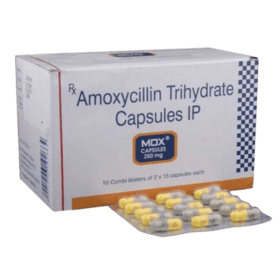
| Sterkte | 250 mg, 500 mg |
|---|---|
| Hoeveelheid | 30 Capsule/s, 60 Capsule/s, 90 Capsule/s, 180 Capsule/s |
 Mox
Mox
Vragen & antwoorden
Mox
Gerelateerde producten




Beoordelingen
Er zijn nog geen beoordelingen