







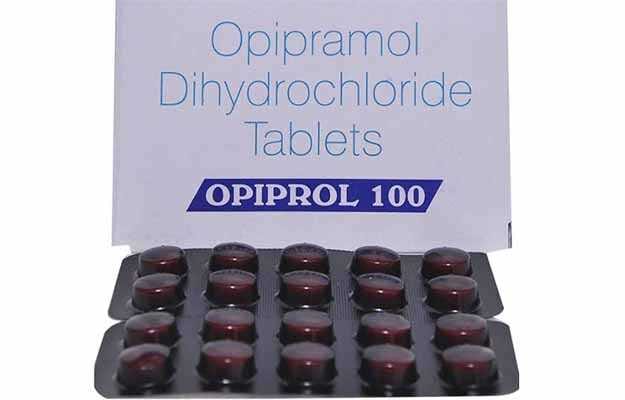
Opiprol
✅ Angstverlichting
✅ Behandeling van depressie
✅ Stemmingsstabilisatie
✅ Verbeterde slaapkwaliteit
✅ Minimale bijwerkingen
Opiprol bevat Opipramol.
✓ Medisch beoordeeld door Morgan Ellis — Apotheekonderzoeker · 8 jaar ervaring · Laatst beoordeeld: mei 2026
⚡ Kort antwoord — Wat is Opiprol?
Opiprol bevat opipramol 50 mg van een door WHO-GMP gecertificeerde fabrikant (Sun Pharma) — een atypisch TCA-gerelateerd anxiolyticum met als primaire toepassing bij gegeneraliseerde angststoornis (GAD) en somatoforme stoornissen. Anders dan klassieke TCA's: opipramol remt niet de heropname van monoaminen niet. Het werkingsmechanisme wordt gedomineerd door sigma-1- en sigma-2-receptoragonisme plus H1 antihistaminicum en zwakke D2-antagonisme. Standaarddosering: 50–150 mg/dag in 1–3 verdeelde doses. Begin: 1–3 weken. Voornamelijk op de markt in Duitsland, Zwitserland, Oostenrijk en delen van Oost-Europa als Insidon. Niet goedgekeurd door de FDA — niet beschikbaar in de VS of het VK als een geregistreerd product. Lagere anticholinerge belasting dan klassieke TCA's.
📦 Elke bestelling is gedekt door onze Reshipment Assurance-beleid — als uw pakket niet binnen 20 werkdagen arriveert, sturen wij het opnieuw.
Waarom bestellen bij MedsBase
Onze generieke medicijnen zijn afkomstig van WHO-GMP gecertificeerde fabrikanten en worden wereldwijd verzonden in discrete, eenvoudige verpakkingen — geen medicijnnaam op de buitenkant van het pakket. Betalingen met kaart worden verwerkt via een gereguleerde processor (betalingsoverzichten vermelden een gereguleerde kaartbetalingprocessor — nooit “MedsBase” of een medicijnnaam). Crypto en SEPA bankoverschrijvingen worden ook geaccepteerd. Elke bestelling wordt ondersteund door ons Reshipment Assurance Policy.
Wat Is Opiprol?
Opiprol is een orale tablet van opipramol dihydrochloride 50 mg geproduceerd door Sun Pharma. Opipramol is een tricyclische verbinding die structureel verwant is aan imipramine maar farmacologisch zeer verschillend — het remt de heropname van serotonine of noradrenaline niet significant. In plaats daarvan is het een hoogaffiene sigma-1 en sigma-2 receptoragonist met secundaire H1-antihistaminische en zwakke D2-antagonistische werking. Het wordt sinds 1961 klinisch gebruikt (geïntroduceerd als Insidon door Geigy) en blijft een standaard anxiolyticum voor poliklinisch gebruik in de Duitssprekende wereld.
Goedgekeurde indicaties
- Gegeneraliseerde angststoornis (GAD) — het primaire klinische gebruik
- Somatoforme stoornissen — somatisatie, aanhoudende functionele somatische symptomen
- Aanvullende behandeling bij milde tot matige depressie met prominente angst
- Slapeloosheid als gevolg van angst
Dosering
| Indicatie | Start | Standaard | Maximum | Opmerkingen |
|---|---|---|---|---|
| GAD, somatoforme stoornis | 50 mg 's avonds × 3–5 dagen | 50–150 mg/dag in 1–3 doses | 300 mg/dag | De meeste voorschrijvers gebruiken 50–100 mg 's avonds of 50 mg + 100 mg 's ochtends + 's avonds |
| Angst met slapeloosheid | 50 mg voor het slapengaan | 50–100 mg voor het slapengaan | 150 mg voor het slapengaan | Sedatie piekt 2–3 uur na inname |
| Ouderen | 25–50 mg 's avonds | 50–100 mg/dag | 150 mg/dag | Lager doelwit; gevoeliger voor sedatie en orthostase |
Bijwerkingen
Bijwerkingenprofiel
| Frequentie | Effect | Opmerkingen |
|---|---|---|
| Vaak voorkomend | Sedatie, vermoeidheid | Handig voor het slapengaan; kan beperkend zijn als het overdag wordt ingenomen |
| Vaak voorkomend | Droge mond | Milde anticholinerge belasting — minder dan imipramine of amitriptyline |
| Vaak voorkomend | Gewichtstoename (bescheiden) | H1 eetluststimulatie |
| Vaak voorkomend | Duizeligheid, milde orthostatische hypotensie | Voorzichtigheid bij snel opstaan, vooral bij ouderen |
| Minder vaak voorkomend | Obstipatie, wazig zien | Anticholinerg |
| Zeldzaam | QT-verlenging | Voorzichtigheid bij andere QT-verlengende medicijnen |
| Zeldzaam | Hyponatriëmie, tijdelijke verhoging van leverenzymen | Monitor bij langdurig gebruik |
Geneesmiddelinteracties
Vermijd combinatie met MAO-remmers — 14 dagen wash-out, hoewel het risico op serotoninesyndroom laag is vanwege afwezigheid van SERT-activiteit.
Additieve CNS-depressie: alcohol, benzodiazepinen, opioïden, antihistaminica — combineer voorzichtig.
QT-verlenging: voorzichtigheid met citalopram (hoge dosis), fluoroquinolonen, quetiapine, ondansetron.
Anticholinergische belasting: additief effect met difenhydramine, oxybutynine, trihexifenidyl.
Veelgestelde vragen
Hoe lang duurt het voordat Opiprol werkt?
Sommige patiënten merken verbetering van angst en slaap binnen 1–2 weken; het volledige effect bij GAD treedt meestal op na 4–6 weken consistent gebruik.
Is Opiprol een echt antidepressivum?
Het is structureel een tricyclisch middel, maar farmacologisch meer een anxiolyticum. Het primaire geregistreerde gebruik in Europa is GAD en somatoforme stoornissen, niet klassieke depressie. SSRI's en SNRI's zijn eerste keus waar MDD het dominante probleem is.
Waarom wordt Opiprol niet gebruikt in de VS of het VK?
Opipramol is ontwikkeld in Zwitserland in 1961 en nooit door fabrikanten aangeboden voor FDA/MHRA-goedkeuring. Het blijft een standaard voorgeschreven medicijn in Duitsland, Zwitserland, Oostenrijk, Polen, Turkije en andere Europese markten.
Is Opiprol veiliger dan benzodiazepines voor chronische angst?
Ja — opipramol heeft geen verslavingspotentieel, geen misbruiksrisico en geen reboundangst bij stoppen. Het is een verstandig alternatief wanneer benzodiazepines problematisch zouden zijn voor chronische GAD.
Zal Opiprol afhankelijkheid of ontwenning veroorzaken?
Er is geen sprake van fysiologische afhankelijkheid. Milde reboundslapeloosheid of angst kan optreden als een langdurige dosis abrupt wordt gestopt — afbouwen over 1–2 weken is verstandig.
Kan ik alcohol drinken bij gebruik van Opiprol?
Vermijd zwaar alcoholgebruik — additief sedatief effect. Licht occasioneel alcoholgebruik wordt over het algemeen verdragen.
Is Opiprol veilig tijdens de zwangerschap?
Beperkte veiligheidsgegevens — niet de voorkeur tijdens zwangerschap. Bespreek alternatieven met de voorschrijver.
Wat gebeurt er als ik een dosis mis?
Neem het in zodra u het zich herinnert, tenzij het bijna tijd is voor de volgende dosis. Het overslaan van een enkele dosis veroorzaakt zelden problemen vanwege de lange halfwaardetijd.
Zal Opiprol seksuele bijwerkingen veroorzaken?
Minder dan SSRIs — opipramol wordt vaak gebruikt als alternatief wanneer SSRI-geïnduceerde seksuele disfunctie onverdraaglijk is bij patiënten bij wie angst de primaire klacht is in plaats van depressie.
Hoe moet Opiprol worden bewaard?
Bewaren bij 15–30 °C in de originele blisterverpakking, uit de buurt van vocht en zonlicht. Buiten bereik van kinderen houden.
Gerelateerde alternatieven
Andere producten in Chronische aandoeningen die klanten ook bekijken:
Meer opties in behandeling van situationele angst
Gerangschikt op recente bestelvolumes van MedsBase — wat andere klanten in deze categorie kiezen.
| Sterkte | 100 mg |
|---|---|
| Hoeveelheid | 30 Tabletten, 60 Tabletten, 90 Tabletten, 180 Tabletten |
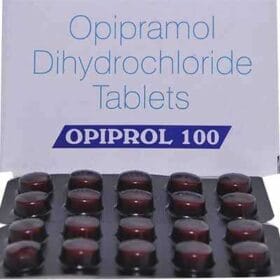 Opiprol
Vragen & antwoorden
Opiprol
Gerelateerde producten



Beoordelingen
Er zijn nog geen beoordelingen