







Silectone
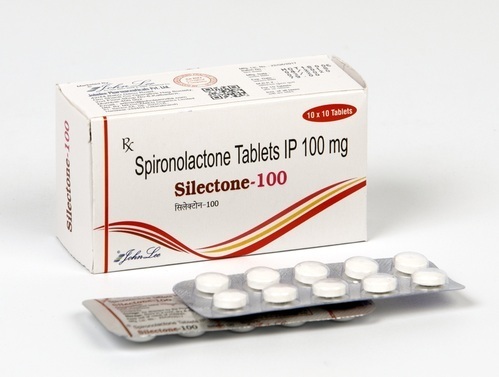
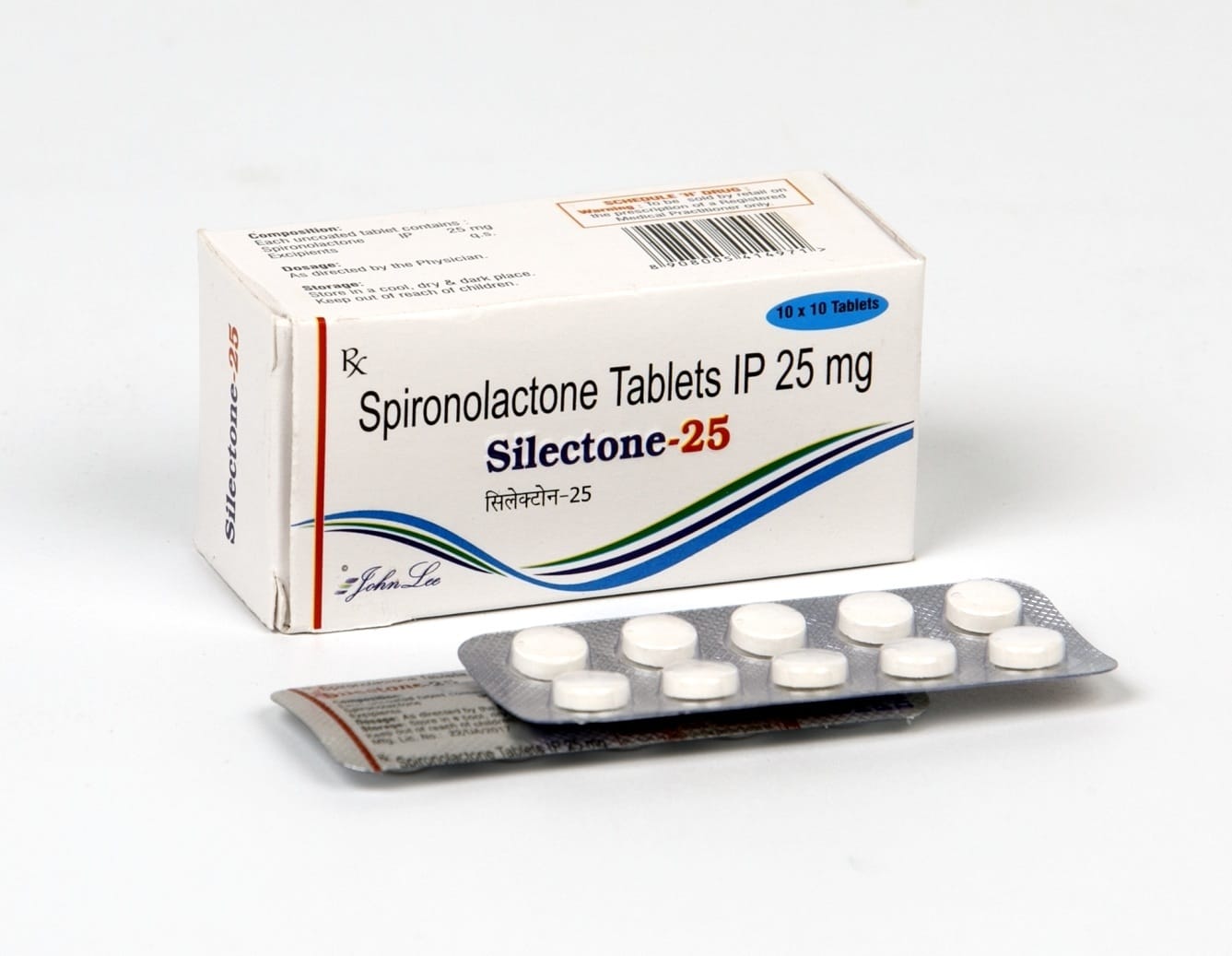
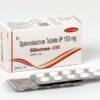
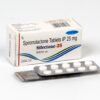
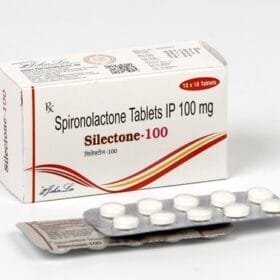
Silectone je spironolakton 25/50 mg od společnosti Sun Pharma — antagonista mineralokortikoidních receptorů. Standardní dávky při srdečním selhání (12,5-25 mg, cílová dávka 25-50 mg dle RALES), rezistentní hypertenzi (25-50 mg dle PATHWAY-2), cirhotické ascites (50-400 mg) a PCOS/hirsutismu (50-200 mg). Šetří draslík s opožděným nástupem účinku (24-72 hodin přes aktivní metabolit canrenon). Monitorujte hladinu draslíku.
✓ Lékařsky ověřeno Morgan Ellis — Pharmacy Researcher · 8 years experience Last reviewed: May 2026
⚡ Rychlá odpověď — Co je Silectone?
Silectone je Tableta spironolaktonu 25 / 50 mg od společnosti Sun Pharma — antagonista mineralokortikoidního receptoru (antagonista aldosteronu) který působí na mineralokortikoidní receptor (MR) v hlavních buňkách kortikálního sběrného kanálku. Spironolakton byl uveden společností G.D. Searle v roce 1959 — navržen jako syntetický steroid k antagonizaci účinku aldosteronu na distálním tubulu při retenci sodíku a exkreci draslíku. První antagonista MR; zůstává referenční látkou navzdory dostupnosti selektivnějšího eplerenonu. Poločas 1,4 hodiny (mateřská látka); 16-24 hodin (aktivní metabolity canrenon a 7-α-thiomethylspirolakton); nástup účinku 24-48 hodin (vyžaduje čas pro projevení antagonismu receptorů na tkáňové úrovni); vrchol účinku za 2-3 dny; trvání 2-3 dny po vysazení. Hlavní indikace: srdeční selhání se sníženou ejekční frakcí (HF-REF), primární hyperaldosteronismus, rezistentní hypertenze, jaterní ascites, adjuvantní léčba hirsutismu a PCOS. Typické dávkování: Rezistentní hypertenze (TK nekontrolovaný na ACEi/ARB + CCB + thiazid): 25-50 mg jednou denně — důkaz z PATHWAY-2. Spironolakton překonává bisoprolol a doxazosin jako čtvrtá látka u rezistentní hypertenze. Není lékem první volby při hypertenzi. Primární hyperaldosteronismus (Connův syndrom): 50-400 mg/den dokud se normalizuje draslík a TK, poté udržovací dávka 25-100 mg. Klíčové kontraindikace: viz úplný seznam níže. Monitorujte elektrolyty, kreatinin a glukózu. Nekombinujte s lithiem (thiazidová/smyčková diuretika mohou vyvolat toxicitu lithia). Užití v těhotenství je případ od případu (viz poznámka k těhotenství). U většiny hypertoniků fungují diuretika nejlépe jako druhý nebo třetí lék — obvykle v kombinaci s ARB, ACE inhibitorem nebo blokátorem kalciových kanálů spíše než samostatně.
📦 Každá objednávka je pokryta naší Zárukou opětovného odeslání — pokud vaše zásilka nedorazí do 20 pracovních dnů, přeposíláme ji.
Proč objednávat z MedsBase
Naše generické léky pocházejí od výrobců certifikovaných WHO-GMP a jsou expedovány po celém světě v diskrétním, nenápadném balení – na vnější straně balíku není uveden název léku. Platby kartou jsou směrovány prostřednictvím regulovaného procesoru (popisky na výpisu zahrnují regulovaného procesora plateb kartou – nikdy “MedsBase” nebo název léku). Přijímáme také kryptoměny a bankovní převody SEPA. Každá objednávka je zajištěna naší politikou přeposlání.
Co je Silectone?
Silectone je perorální tableta spironolaktonu 25 / 50 mg od společnosti Sun Pharma, dodávaná v balení po 30-180 tabletách. Spironolakton byl uveden společností G.D. Searle v roce 1959 — navržen jako syntetický steroid k antagonizaci účinku aldosteronu na distální tubuly, konkrétně na zadržování sodíku a vylučování draslíku. První antagonista MR; zůstává referenčním léčivem navzdory dostupnosti selektivnějšího eplerenonu.
Jak spironolakton funguje
Spironolakton inhibuje mineralokortikoidní receptor (MR) v hlavních buňkách kortikálního sběrného kanálku. Následné účinky:
- Blokuje aldosteron na mineralokortikoidním receptoru v hlavních buňkách kortikálního sběrného kanálku
- Snížená reabsorpce sodíku, snížená sekrece draslíku — mírná natriuréza se zadržováním draslíku (šetřící draslík)
- Protifibrotický a anti-remodelační účinek na myokard — aldosteron vyvolává srdeční fibrózu nezávisle na svém účinku zadržování soli; blokování receptoru fibrózu snižuje. Toto je hlavní mechanismus snížení mortality u HF-REF (RALES).
- Antiandrogenní účinek — zkřížená reaktivita s androgenními a progesteronovými receptory způsobuje gynekomastii a menstruační nepravidelnosti jako třídní nežádoucí účinky; stejná aktivita vysvětluje jeho použití off-label u hirsutismu a PCOS.
- Pozdní nástup/útlum účinku (24-72 hodin v každém směru) — farmakologie receptorů plus dlouhodobě působící aktivní metabolity (canrenon)
- Účinný u rezistentní hypertenze (PATHWAY-2) — působí na subpopulaci hypertoniků se skrytým nadbytkem aldosteronu
Schválené a vědecky podložené indikace
- Srdeční selhání se sníženou ejekční frakcí (HF-REF), primární hyperaldosteronismus, rezistentní hypertenze, cirhotická ascites, adjuvantní léčba hirsutismu a PCOS — primární indikace
- Srdeční selhání se sníženou ejekční frakcí (EF ≤35%) — důkazy z studie RALES, 25–50 mg denně
- Primární hyperaldosteronismus (Connův syndrom) — definitivní léčba oboustranné adrenální hyperplazie; přechodná terapie před operací jednostranného adenomu
- Rezistentní hypertenze — důkazy ze studie PATHWAY-2; čtvrtá volba po ACEi/ARB + CCB + thiazidu
- Jaterní ascites — diuretikum první volby u cirhózy (kličková diuretika přidána při nedostatečné odpovědi)
- Hirsutismus, akné spojené s PCOS, ženský typ vypadávání vlasů — off-label antiandrogenní terapie
- Stav po IM s dysfunkcí LK — preferován eplerenon (specifické pro studii EPHESUS)
Klíčové důkazy z klinických studií: RALES (1999) — přelomová studie se spironolaktonem 25–50 mg u těžkého HF-REF; 30% snížení celkové mortality. Stanovila antagonismus aldosteronu jako standardní terapii HF-REF. EPHESUS a EMPHASIS-HF rozšířeno na eplerenon. PATHWAY-2 (2015) — spironolacton 25-50 mg byl nejúčinnějším čtvrtým lékem u rezistentní hypertenze ve srovnání s bisoprololem nebo doxazosinem. TOPCAT — mírný benefit u srdečního selhání s zachovanou ejekční frakcí (HF-PEF); signál silnější v americké větvi než v ruské (kontroverzní).
Dávkování Silectone
Dávka pro srdce: Rezistentní hypertenze (TK nekontrolovaný na ACEi/ARB + CCB + thiazid): 25-50 mg jednou denně — důkaz z PATHWAY-2. Spironolakton překonává bisoprolol a doxazosin jako čtvrtá látka u rezistentní hypertenze. Není lékem první volby při hypertenzi. Primární hyperaldosteronismus (Connův syndrom): 50-400 mg/den, dokud se neupraví draslík a krevní tlak, poté udržovací dávka 25-100 mg.
Další indikace: Srdeční selhání se sníženou ejekční frakcí (EF ≤35%): 12,5-25 mg jednou denně; cílem je 25-50 mg, pokud je tolerováno (studie RALES). Cirhotický ascites: 50-400 mg/den, obvykle s furosemidem 20-160 mg (poměr 1:2,5); cílem je úbytek hmotnosti 0,5 kg/den. Hirsutismus / PCOS / akné (u žen): 50-200 mg/den — potlačuje androgenem stimulovaný růst ochlupení a akné během 3-6 měsíců (mimo indikaci, ale dobře zavedené).
Podávání: jednou denně (nebo dvakrát denně u vysokých dávek kličkových diuretik při srdečním selhání), ráno. Večerní podávání způsobuje nykturii a mělo by být pokud možno vynecháno. Užívejte ve stejnou denní dobu. Potrava významně neovlivňuje vstřebávání žádného z těchto diuretik.
Monitorovací plán:
- Vstupní vyšetření: močovina, elektrolyty (zejména draslík a sodík), kreatinin, eGFR, glukóza, sérový urát. Domácí nebo klinické měření TK a denní váha u pacientů se srdečním selháním.
- 1-2 týdny po zahájení nebo změně dávky: opakujte U&E a kreatinin. Očekávejte mírné změny elektrolytů; vyšetřte výrazné odchylky.
- 4-6 týdnů: Kontrola krevního tlaku a kompletní metabolický panel.
- Průběžné: Roční vyšetření U&E, urátů, glukózy a lipidového panelu po stabilizaci. Častější u CKD, srdečního selhání nebo při kombinované terapii.
- Přerušit léčbu nebo snížit dávkování při: sodík 5,5, vzestup kreatininu >30%, nová dna, příznaky těžké dehydratace.
Ukončení léčby: Žádný abstinenční syndrom, ale náhlé vysazení může způsobit rebound retenci tekutin u pacientů se srdečním selháním na chronické vysoké dávce kličkových diuretik — pokud možno postupně snižovat a monitorovat hmotnost.
- Neselektivní aktivita steroidních receptorů způsobuje gynekomastii (5-10%), mastalgii a menstruační nepravidelnosti prostřednictvím účinků na androgenní a progesteronové receptory. Eplerenon je selektivní pro MR a těmto účinkům se vyhýbá; při rozvoji gynekomastie přejít na něj.
- Pozdní nástup účinku: účinek se projeví za 2-3 dny a trvá 2-3 dny; úpravy dávkování by měly tuto prodlevu zohledňovat.
- Hyperkalemie je dávkově limitující toxicita, zejména v kombinaci s ACEi/ARB (standard u HF a HTN). Monitorujte hladinu draslíku a kreatininu na začátku, po 1 týdnu, 1 měsíci a každé 3-4 měsíce.
- Důležité informace ohledně antikoncepce: spironolakton je teratogenní (feminizace mužského plodu) — ženy užívající spironolakton na akné/hirsutismus musí používat spolehlivou antikoncepci.
Vedlejší účinky
Časté (>1 %):
- Hyperkalémie — dávkově limitující; závažné u CKD nebo v kombinaci s ACEi/ARB
- Gynekomastie a mastalgie u mužů (5-10 % při 25-50 mg; až 50 % při vysokých dávkách >150 mg)
- Menstruační nepravidelnosti u žen
- Erektilní dysfunkce a snížené libido u některých mužů
- Mírné gastrointestinální potíže
- Metabolická acidóza (snížená distální sekrece H+) — obvykle mírné
- Stevensův-Johnsonův syndrom — vzácná hypersenzitivní reakce
- Vzestup kreatininu — mírný vzestup (10-20 %) je po zahájení léčby očekáván; vyšetřte, pokud >30 %
Nepříliš časté, ale klinicky významné:
- Těžká hyponatrémie — zejména u starších osob na nízkosolných dietách, při stavech náchylných k SIADH nebo v kombinaci se SSRI. Může se projevit zmateností, pády nebo záchvaty.
- Pankreatitida — vzácný třídní účinek thiazidů/smyčkových diuretik; okamžitě vysadit při bolesti v nadbřišku se vzestupem lipázy
- Trombocytopenie, leukopenie, agranulocytóza — vzácné hypersenzitivní reakce (častější u thiazidů než u smyčkových diuretik)
- Akutní myopie a uzavřený úhel glaukomu — vzácná reakce sulfonamidové třídy během hodin až dnů od začátku podávání; okamžitě vysadit při náhlé bolesti oka nebo změně vidění
- Stevens-Johnsonův syndrom / toxická epidermální nekrolýza — extrémně vzácné, ale popsané
- Těžká hyperkalémie u pacientů se srdeční arytmií — nejčastější u CKD nebo při kombinaci s ACEi/ARB
Kontraindikace
- Hyperkalémie >5,5 mmol/l výchozí — zkontrolujte před zahájením
- Těžké poškození ledvin (eGFR <30) — nepřijatelné riziko hyperkalémie
- Addisonova choroba (primární adrenální insuficience)
- Těhotenství — teratogenní (antiandrogenní účinek feminizuje mužské plody)
- Současné podávání doplňků draslíku — nekombinujte bez monitorování
- Současné podávání jiných šetřících draslík diuretik (amilorid, triamteren, eplerenon)
- Anurie
Těhotenství: absolutně kontraindikovány — antiandrogenní aktivita způsobuje feminizaci mužských plodů.
Kojení: obecně přijatelné v nízkých dávkách; vysoké dávky mohou potlačit laktaci (zejména thiazidy). Preferují se alternativní antihypertenziva (propranolol, nifedipin), pokud je to možné.
Interakce s léčivy
- Lithium — KRITICKÁ INTERAKCE. Spironolakton má ve srovnání s thiazidy a kličkovými diuretiky mírný vliv na clearance lithia, ale hladiny je nutné monitorovat, pokud je kombinace nevyhnutelná.
- NSAID — snižují diuretický účinek (blokádou prostaglandinů) a výrazně zvyšují riziko akutního poškození ledvin (AKI) v kombinaci s ACEi/ARB (tzv. “triple whammy”). Při chronické bolesti upřednostňujte paracetamol.
- ACE inhibitory a ARB — aditivní riziko hyperkalémie — pečlivě monitorujte draslík, zejména u CKD. Standard u HF-REF (ACEi/ARB + spironolakton) s pečlivým monitorováním; nebezpečné u pacientů s výchozí K >5,0 nebo eGFR <30.
- Draslíkové doplňky a šetřící diuretika — nekombinujte; aditivní riziko hyperkalémie.
- Digoxin — hypokalémie zesiluje toxicitu digoxinu (kličková a thiazidová diuretika); spironolakton přímo snižuje clearance digoxinu. Monitorujte hladiny digoxinu a draslíku při zahájení nebo změně diuretické léčby.
- Perorální kortikosteroidy, amfotericin B, stimulační laxativa — aditivní hypokalémie (kličková/thiazidová diuretika) nebo maskovaná potřeba draslíku (spironolakton).
- Perorální antidiabetika, inzulin — thiazidy a (méně) kličková diuretika zhoršují glukózovou toleranci; může být nutná úprava dávkování.
- Cholestyramin / colestipol — snižují absorpci thiazidů a kličkových diuretik o 40–85%. Dávkování oddělte 4hodinovým intervalem.
- Silné inhibitory CYP3A4 (klarithromycin, ritonavir, itrakonazol) — zvyšují hladinu metabolitu kanrenonu; zvyšují riziko hyperkalemie.
- Alkohol — aditivní ortostatická hypotenze.
Místo Silectone ve třídiuretické klasifikaci
| Třída | Zástupci | Typické použití |
|---|---|---|
| Thiazid | HCTZ, chlortalidon | První volba u hypertenze, ledvinové kameny, nefrogenní diabetes insipidus |
| Thiazidům podobné | Indapamid, metolazon | Hypertenze (u starších pacientů, důkazy z HYVET), sekvenční blokáda nefronu |
| Kličková (krátkodobá) | Furosemid, bumetanide | Akutní plicní edém, městnavé srdeční selhání, ascites, hyperkalcémie |
| Akutní plicní edém, CHF, ascites, hyperkalcémie | Kličková diuretika (dlouhodobá) | Chronické CHF, HTN (jen kličková diuretika s důkazy HTN), edém při CKD |
| Chronické CHF, hypertenze (pouze kličková diuretika s prokázaným účinkem při hypertenzi), edém při CKD | Spironolakton, Antagonisté aldosteronu | HF-REF (RALES), resistant HTN (PATHWAY-2), Conn’s, cirrhotic ascites |
| eplerenon | HF-REF (RALES), rezistentní hypertenze (PATHWAY-2), Connův syndrom, cirhotický ascites | Prevence hypokalémie při přidání ke kličkovému/thiazidovému diuretiku |
| Amilorid, triamteren (obvykle v kombinacích) | Prevence hypokalémie při přidání ke kličkovým/thiazidovým diuretikům | výšková nemoc, glaukom, metabolická alkalóza |
Skladování
Skladujte přípravek Silectone při teplotě nižší než 25 °C v původním blistru. Uchovávejte mimo dosah dětí.
Často kladené dotazy
Kdy mám užívat Silectone — ráno nebo večer?
Ráno v téměř všech případech. Diuretický účinek způsobuje zvýšenou tvorbu moči po dobu 2-8 hodin po podání. Večerní dávkování způsobuje nokturii a narušuje spánek. Pacienti užívající kličková diuretika dvakrát denně obvykle dávkují při snídani a brzy odpoledne (ne před spaním).
Je Silectone lékem první volby na vysoký krevní tlak?
Ne — spironolakton je antihypertenzivum čtvrté volby. Je preferovaným doplňkem, když krevní tlak zůstává nekontrolovaný při třílékové kombinaci ACE inhibitoru/ARB + blokátoru kalciových kanálů + thiazidu (důkazy z studie PATHWAY-2). Má také specifické role první volby u primární hyperaldosteronismus, srdečního selhání se sníženou ejekční frakcí, a cirhotické ascites.
Ovlivní Silectone hladinu draslíku v mém těle?
Ano — spironolakton zvyšuje draslík (je šetrný k draslíku). Hyperkalemie (>5,5 mmol/l) je hlavním bezpečnostním rizikem, zejména v kombinaci s ACE inhibitory nebo ARB (což je standardní kombinace při srdečním selhání). Před zahájením léčby zkontrolujte základní hladinu draslíku, poté po 1 týdnu, 1 měsíci a každé 3-4 měsíce následně. Přerušte užívání Silectone, pokud hladina draslíku stoupne nad 5,5 a proveďte vyšetření.
Mám dnu — mohu užívat Silectone?
Ano — spironolakton je neutrální až mírně snižující hladinu kyseliny močové a nevyvolává dnu. Je rozumnou volbou diuretika u pacientů s dnou.
Mám diabetes — je Silectone bezpečný?
Ano. Spironolakton je metabolicky neutrální vůči glukóze a lipidům. Má specifické důkazy u pacientů s diabetem a srdečním selháním (populace studie RALES zahrnovala 26 % diabetiků) a nezhoršuje kontrolu diabetu.
Mohu užívat ibuprofen spolu se Silectone?
Občasné krátkodobé užívání je obvykle v pořádku. Chronické denní užívání NSAID (ibuprofen, diklofenak, naproxen) snižuje diuretický a antihypertenzní účinek Silectone (blokáda prostaglandinů) a výrazně zvyšují riziko akutního poškození ledvin (AKI) v kombinaci s ACE inhibitorem nebo ARB — tzv. “trojitá rána”. Pro chronickou bolest upřednostňujte paracetamol.
Budu v noci více močit?
Obvykle ne, pokud užíváte Silectone ráno. Diuretický účinek vrcholí 2-8 hodin po podání a večer je většinou již pryč. Nokturie je častou stížností při přechodu na večerní užívání; přejděte zpět na ranní dávkování a nokturie se obvykle vyřeší během 1-3 dnů.
Mohu užívat Silectone v těhotenství?
Ne — absolutně kontraindikováno. Spironolacton má antiandrogenní účinky, které způsobují feminizaci mužských plodů. Ženy v reprodukčním věku užívající spironolakton (z jakéhokoli důvodu, včetně akné a hirsutismu) musí používat spolehlivou antikoncepci. Pro ženy plánující těhotenství je nutné přejít na alternativní léčbu před početím.
Co když vynechám dávku?
Užijte ho, jakmile si vzpomenete, pokud již není blízko čas další dávky — v tom případě vynechejte zapomenutou dávku. Nezdvojujte dávku. Jedna vynechaná dávka významně neovlivní dlouhodobou kontrolu krevního tlaku ani tekutin.
Kde si mohu koupit Silectone online?
Silectone (25 / 50 mg spironolaktonu, 30-180 tablet) si můžete koupit na MedsBase s diskrétním balením a celosvětovou dopravou.
Související antihypertenziva a diuretika na MedsBase
- Aquazide — Hydrochlorothiazid (HCTZ) thiazid
- Dytor — Torasemid (kličkové, předvídatelnější biologická dostupnost)
- Lasix — Furosemid 40 mg (kličkové diuretikum)
- Losar — Losartan (ARB v kombinaci s diuretiky)
- Natrilix SR — Indapamid 1.5 mg SR (thiazidového typu)
- Ramcor — Ramipril (ACE inhibitor jako partner pro diuretikum)
- Prohlédnout všechny léky na vysoký krevní tlak
Související alternativy
Další produkty v Chronická onemocnění které zákazníci také prohlížejí:
Další možnosti v léčbě vysokého krevního tlaku
Řazeno podle nedávného objemu objednávek na MedsBase — co si ostatní zákazníci v této kategorii vybírají.
| Síla | 25 mg, 100 mg |
|---|---|
| Množství | 30 tablet/ks, 60 tablet/ks, 90 tablet/ks, 180 tablet/ks |
 Silectone
Otázky a odpovědi
Silectone
Související produkty


Hodnocení
Zatím zde nejsou žádná hodnocení