







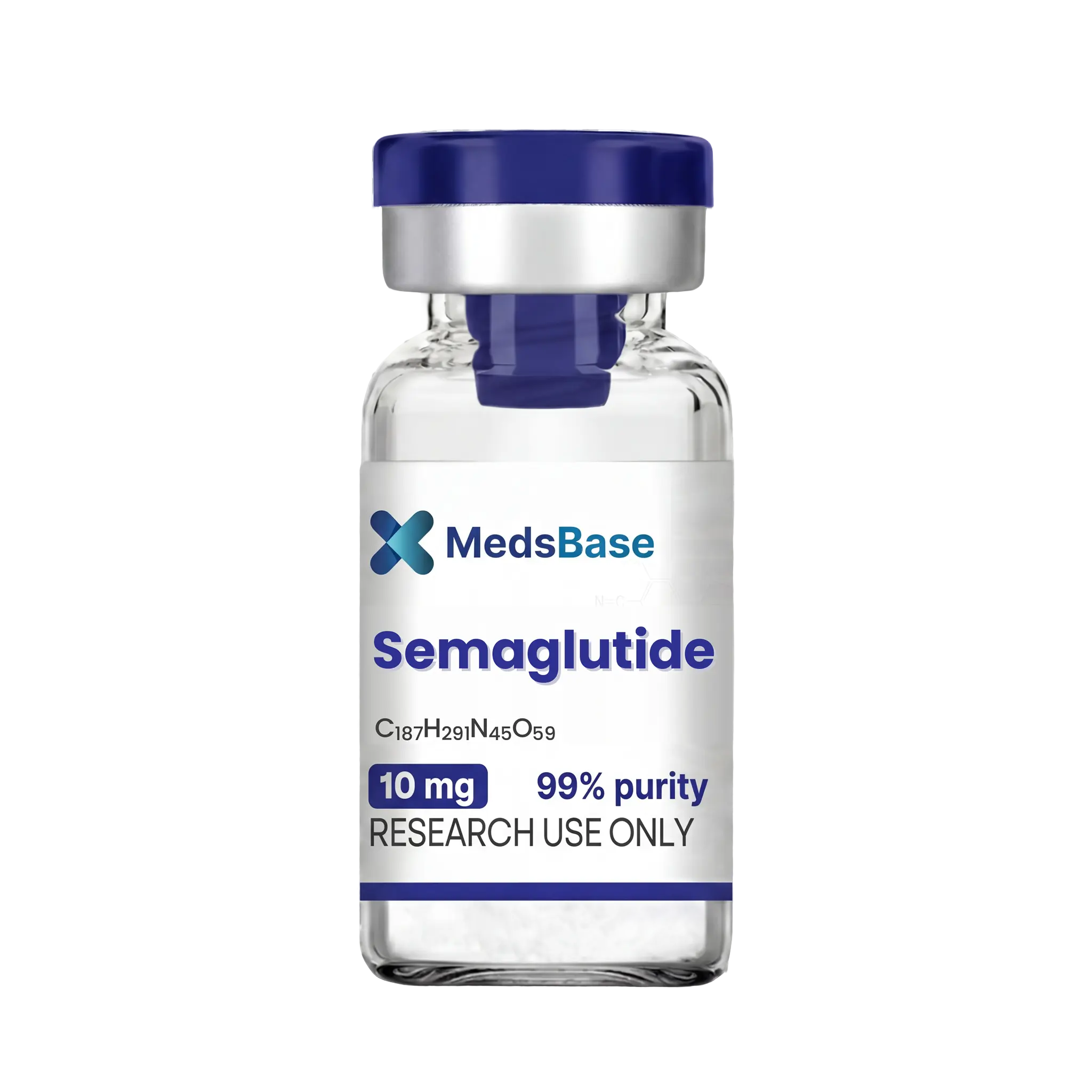
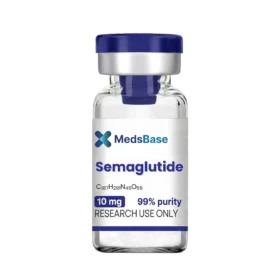
Semaglutide
✅ Langwerkende GLP-1-receptoragonist
✅ Ondersteunt onderzoek naar glykemische controle
✅ Moduleert eetlust- en verzadigingssignalen
✅ Vertraagt maagledigingsonderzoek
✅ Eenmaal per week doseringsprotocollen
Semaglutide bevat synthetisch peptideverbinding.
✓ Medisch beoordeeld door Morgan Ellis — Apotheekonderzoeker · 8 jaar ervaring · Laatst beoordeeld: mei 2026
Kort antwoord — Wat is Semaglutide?
Semaglutide is een 31-aminozuur GLP-1-receptoragonistpeptide en het actieve onderzoeksmolecuul achter Ozempic, Wegovy en Rybelsus. Het is het meest uitgebreid bestudeerde langwerkende GLP-1-analoog in gepubliceerd onderzoek, met een plasmahalfwaardetijd van ongeveer 165 uur (~7 dagen), wat wekelijkse doseringsprotocollen mogelijk maakt. Leverbaar in lyofiliseerde flacons van 2 mg tot 50 mg, uitsluitend voor laboratoriumonderzoek.
📦 Elke bestelling is gedekt door onze Reshipment Assurance-beleid — als uw pakket niet binnen 20 werkdagen arriveert, sturen wij het opnieuw.
| Specificatie | Detail |
|---|---|
| CAS-nummer | 910463-68-2 |
| Molecuulformule | C187H291N45O59 |
| Moleculair gewicht | 4113.58 Da |
| Sequentie | H-Aib-EGTFTSDVSSYLEGQAAK(Nε-(N-(17-carboxy-1-oxoheptadecyl)-L-γ-glutamyl)-[2-(2-aminoethoxy)ethoxy]acetyl-[2-(2-aminoethoxy)ethoxy]acetyl)EFIAWLVRGRG-OH (31 aa, GLP-1[7-37] skelet met Aib8, Arg34, en Lys26-vetzuuracylering) |
| Form | Lyofiliseerd poeder (wit tot off-white) |
| Zuiverheid | ≥99% (HPLC geverifieerd, COA op aanvraag) |
| Opslag | Lyofiliseerd: 2–8 °C (koelkast) voor werkvoorraad; −20 °C voor langdurige opslag van ongeopende flesjes. Gereconstitueerd: 2–8 °C, gebruik binnen ~30 dagen. Bescherm tegen licht. Vries de gereconstitueerde oplossing niet in en ontdooi deze niet. |
| Oplosbaarheid | Bacteriostatisch water (aanbevolen) of steriel water voor kortere gebruiksperioden |
| Onderzoeksgebruik | Alleen voor laboratoriumonderzoek. Niet voor humaan of veterinair diagnostisch of therapeutisch gebruik. |
Wat Is Semaglutide?
Semaglutide is een langwerkende glucagon-like peptide-1 (GLP-1)-receptoragonist, ontwikkeld als een structureel analoog van het endogene incretinehormoon GLP-1. Het is een 31-aminozuurpeptide gebaseerd op het GLP-1(7-37)-skelet met drie ontworpen modificaties die het onderscheiden van eerdere kortwerkende analogen: een α-aminoisoboterzuur (Aib)-substitutie op positie 8 die resistent is tegen DPP-4-cleavage, een argininesubstitutie op positie 34 om ongewenste acylering te voorkomen, en een C18-vetdiacid gehecht aan lysine 26 via een γ-glutaminezuur en twee 2-(2-aminoethoxy)ethoxyazijnzuur (AEEA)-spacers. De vetzuurketen zorgt voor sterke reversibele binding aan circulerend albumine, wat de plasmahalfwaardetijd verlengt tot ongeveer 165 uur en semaglutide de langst werkende GLP-1-agonist maakt die tot nu toe is ontwikkeld voor wekelijkse subcutane toediening in gepubliceerd onderzoek.
Semaglutide’s peptide sequence and molecular structure are well-characterised: empirical formula C187H291N45O59, gemiddeld molecuulgewicht 4113,58 Da. De verbinding wordt geleverd als een hoogzuiver lyofilisaat voor reconstitutie met bacteriostatisch water. Farmaceutische semaglutide is goedgekeurd door de FDA, EMA en MHRA onder de merknamen Ozempic (subcutaan, diabetes type 2), Wegovy (subcutaan, chronisch gewichtsbeheer) en Rybelsus (oraal, diabetes type 2). De onderzoekskwaliteit semaglutide die hier wordt verkocht is uitsluitend voor laboratoriumonderzoek en is niet door de FDA goedgekeurd voor menselijke of veterinaire toediening. Voor een diepgaande analyse van het werkingsmechanisme, farmacokinetiek en vergelijkende onderzoeksgegevens, zie ons volledige Retatrutide vs Tirzepatide gids en de bredere onderzoekspeptiden catalogus.
Werkingsmechanisme — GLP-1-receptorsignalering in drie weefselcompartimenten
Wat semaglutide farmacologisch interessanter maakt dan eerdere GLP-1-analogen (liraglutide, exenatide) is de combinatie van hoge receptorspecificiteit met een halfwaardetijd die lang genoeg is om bijna continue receptorbezetting te handhaven. Gepubliceerd onderzoek heeft de activiteit in kaart gebracht over drie afzonderlijke weefselcompartimenten, die elk bijdragen aan het waargenomen metabole fenotype:
- Pancreas β-cel — glucose-afhankelijke insulinesecretie — Semaglutide bindt aan de GLP-1-receptor op pancreas β-cellen, activeert Gαs-gekoppelde adenylaatcyclase, verhoogt intracellulair cAMP en PKA/EPAC2-signalering. Het downstream-effect is een glucose-afhankelijke versterking van insulinesecretie: hypoglykemie komt zelden voor omdat het signaal verhoogde intracellulaire glucose vereist om te vertalen in insulineafgifte. Parallelle onderdrukking van glucagonsecretie uit α-cellen draagt bij aan lagere nuchtere hepatische glucoseproductie in diabetesmodellen.
- Centraal zenuwstelsel — eetlust- en verzadigingscircuits — Semaglutide passeert de bloed-hersenbarrière voldoende om GLP-1-receptoren te activeren in de nucleus arcuatus, nucleus paraventricularis en area postrema. Onderzoek in dieet-geïnduceerde obese (DIO) knaagdier modellen heeft activering van anorexigene pro-opiomelanocortine (POMC) neuronen en onderdrukking van orexigene neuropeptide Y/agouti-related peptide (NPY/AgRP) neuronen gedocumenteerd. Dit centrale effect is de belangrijkste drijver van het lichaamsgewichtfenotype waargenomen in obesitasonderzoek.
- Gastro-intestinale motiliteit — vertraagde maaglediging — GLP-1-receptoractivatie in vagale afferenten en enterische neuronen vertraagt de maaglediging, vermindert postprandiale glucose-excursies en verlengt verzadigingssignalen. Tachyfylaxie (gedeeltelijke desensitisatie) van dit effect ontwikkelt zich over weken van continue receptorbezetting, wat verklaart waarom gastro-intestinale tolerantie typisch verbetert bij langdurige dosering in onderzoeksmodellen.
De C18-vetdi-zuurverbinding is wat semaglutide farmacokinetisch onderscheidt van oudere GLP-1-analogen. Door reversibel te binden aan serumalbumine via deze verbinding vormt semaglutide een circulerend depot dat het beschermt tegen renale klaring en DPP-4-degradatie. Gecombineerd met de Aib8 Door de substitutie (die direct de DPP-4 splitsingsplaats op positie 8–9 blokkeert), heeft semaglutide een halfwaardetijd van 165 uur vergeleken met 13 uur voor liraglutide en <2 minuten voor natuurlijk GLP-1 — een ongeveer 12× verlenging die wekelijkse onderzoeksdoseringen mogelijk maakt.
Gepubliceerde onderzoeksapplicaties
Semaglutide wordt gebruikt in laboratoriumonderzoeken die zich richten op:
- Glucosehomeostase en insulinegevoeligheid — glucose-gestimuleerde insulinesecretie, orale en intraveneuze glucosetolerantietests, hyperinsulinemisch-euglykemische klemmen in db/db, ZDF en hoogvetdieet knaagdier modellen (Lau et al., J Med Chem 2015; Knudsen & Lau, Front Endocrinol 2019)
- Lichaamsgewicht en eetlustregulatie — voedselinnamebeoordelingen, lichaamssamenstelling (DEXA / MRI), respiratoire uitwisselingsratio in DIO en ob/ob muismodellen; benchmark voor nieuw anti-obesitas peptide onderzoek
- Cardiovasculair en atherosclerose onderzoek — effecten op endotheelfunctie, plaque progressie in ApoE-/- en LDLR-/- muizen; mechanistische opvolging van het SUSTAIN-6 en PIONEER cardiovasculaire signaal in klinische onderzoeken
- Nierbescherming en diabetische nefropathie modellen — albuminurie, glomerulaire filtratiesnelheid, mesangiale expansie in streptozotocine-geïnduceerde en Akita-muis diabetische nierziekte
- Onderzoek naar neuroprotectie — cognitieve functie, neuro-inflammatie, α-synucleïne en amyloid-β pathologie in Parkinson’s en Alzheimer’s preklinische modellen — GLP-1R wordt door het hele CZS tot expressie gebracht en is een huidig onderzoeksfront
- Hepatische steatose (MASLD/MASH) onderzoek — lever triglyceride gehalte, ALT/AST, fibrose stadiering in choline-deficiënte en hoogvet-hoogfructose knaagdier diëten
- Vergelijkend metabolisch peptide onderzoek — benchmarken tegen nieuwere multi-agonisten. Zie de Retatrutide pagina voor de triple GLP-1/GIP/glucagon vergelijker en de Retatrutide vs Tirzepatide gids voor een directe vergelijking van dual-agonisten.
Voor een bredere context over waar semaglutide past binnen het metabolische-peptide landschap, zie onze onderzoekspeptiden catalogus en verwante verbindingen inclusief Retatrutide (triple agonist) en Tesamorelin (GHRH-analoog voor onderzoek naar visceraal vet).
Beschikbare sterktes en concentraties
MedsBase stocks Semaglutide in seven lyophilized vial strengths to support both micro-dose titration research and extended weekly-dosing protocols. Each strength is available in 10-vial, 20-vial, or 30-vial pack formats with full reconstitution guidance:
| Vulsterkte | Typisch Onderzoeksgebruik | Verpakkingsgroottes |
|---|---|---|
| 2 mg | Pilotdosering, lage titratie, kortdurende protocollen | 10, 20 of 30 vialen |
| 5 mg | Standaard onderhoudsdosis onderzoekssterkte | 10, 20 of 30 vialen |
| 10 mg | Langdurige protocollen, hogere-dosis titratiearmen | 10, 20 of 30 vialen |
| 15 mg | Middelgroot onderzoeksflesje voor bulk, verlaagd reconstitutievolume | 10, 20 of 30 vialen |
| 20 mg | Meerdere maanden durende onderzoekscycli, lagere kosten per mg | 10, 20 of 30 vialen |
| 30 mg | Hooggedoseerd vergelijkend onderzoek, langetermijnprotocollen | 10, 20 of 30 vialen |
| 50 mg | Bulk onderzoeksflesje, laagste kosten per mg, studies met meerdere cohorten | 10, 20 of 30 vialen |
Alle zeven sterktes hebben dezelfde chemische vorm (lyofiliseerd poeder, 99%+ HPLC zuiverheid). Hogere-mg flesjes vereisen kleinere reconstitutievolumes per eenheidsdosis, wat handig is wanneer onderzoekers het injectievolume per toediening willen minimaliseren of langdurige protocollen van enkele maanden vanuit een enkel flesje willen uitvoeren.
Vergelijking — Semaglutide vs Retatrutide vs Tirzepatide
Semaglutide, Retatrutide, en tirzepatide zijn de drie meest aangehaalde langwerkende incretinepeptiden in het huidige metabolische onderzoek. Ze verschillen voornamelijk in receptorselectiviteit: semaglutide is een enkele GLP-1 agonist, tirzepatide is een dubbele GLP-1/GIP agonist, en retatrutide is een drievoudige GLP-1/GIP/glucagon agonist. Het escalerende receptorprofiel correleert met progressief grotere lichaamsgewichts-effecten in DIO-modellen maar ook bredere off-target signalering.
| Criterium | Semaglutide | Tirzepatide | Retatrutide |
|---|---|---|---|
| Receptorprofiel | GLP-1 (enkelvoudig) | GLP-1 + GIP (dubbel) | GLP-1 + GIP + glucagon (drievoudig) |
| Sequentiëlengte | 31 aminozuren | 39 aminozuren | 39 aminozuren |
| Halfwaardetijd | ~165 uur (~7 dagen) | ~120 uur (~5 dagen) | ~6 dagen |
| Merkreferentie | Ozempic / Wegovy / Rybelsus | Mounjaro / Zepbound | Onderzoek (LY3437943) |
| Typische wekelijkse onderzoeksdosis | 0,25–2,4 mg | 2,5–15 mg | 2–12 mg |
| Sterkste onderzoekssignaal | Glykemische controle, cardiovasculaire bescherming | Gecombineerd glykemisch + lichaamsgewicht, MASH | Grootste effect op lichaamsgewicht in DIO-modellen |
| Effect op lichaamsgewicht in onderzoeken | ~15% (STEP) | ~22% (SURMOUNT-1) | ~24% (Fase 2) |
Voor een volledige methodologische vergelijking van de dual- versus triple-agonist onderzoeksliteratuur, lees Retatrutide versus Tirzepatide: triple versus dual agonist en Ozempic versus Mounjaro. Onderzoekers die tussen deze peptiden kiezen, wegen meestal receptorselectiviteit (zuiverdere farmacologie met semaglutide) af tegen de omvang van het effect (groter bij dual- en triple-agonisten).
Opslag en Reconstituering
Voor reconstituering: bewaar lyofiliseerde flesjes gekoeld bij 2–8 °C in de originele verpakking voor kortdurende werkvoorraad. Voor ongeopende langdurige opslag, vries in bij −20 °C. Lyofiliseerd semaglutide is stabiel onder koeling tot 24 maanden en bij −20 °C tot 36 maanden. Vermijd vries-dooicycli met het lyofiliseerde poeder.
Reconstitueringsprocedure: spuit bacteriostatisch water langs de zijkant van het peptideflesje (niet rechtstreeks op de lyofiliseerde cake). Voor een 5 mg flesje levert 2,0 mL bacteriostatisch water een werkconcentratie van 2,5 mg/mL op — tien eenheden op een U-100 insulinespuit komt overeen met 250 mcg. Draai voorzichtig — doe niet Schud — en laat 2–5 minuten staan voor volledige oplossing. Een correct gereconstitueerde oplossing moet helder en kleurloos zijn.
Na reconstitutie: bewaar gekoeld bij 2–8 °C en gebruik binnen 30 dagen voor optimale stabiliteit. Vries de gereconstitueerde oplossing niet in — vries-dooicycli tasten de peptide-integriteit aan. Gooi elk flesje weg dat troebelheid, neerslag of verkleuring vertoont. Omdat semaglutide eenmaal per week wordt gedoseerd in onderzoeksprotocollen, ondersteunt een enkele gereconstitueerde 5 mg flesje meestal 4–8 weken titratieonderzoek, afhankelijk van de doeldosis.
Veelgestelde vragen
Waar wordt Semaglutide voor gebruikt in onderzoek?
Semaglutide wordt gebruikt in laboratoriumonderzoek naar glucosehomeostase, insulinesecretie, lichaamsgewicht en eetlustregulatie, maaglediging, cardiovasculaire eindpunten, nierebescherming in diabetische nefropathiemodellen, hepatische steatose (MASLD/MASH) en neuroprotectie. Het is de meest uitgebreid gekarakteriseerde langwerkende GLP-1-agonist in de gepubliceerde literatuur en dient als referentievergelijker voor nieuwere multi-agonist incretinepeptiden. Het onderzoekskwaliteit semaglutide dat hier wordt verkocht is niet FDA-goedgekeurd voor humaan therapeutisch gebruik en wordt strikt geleverd voor laboratoriumonderzoek.
Hoe verschilt Semaglutide van Retatrutide en Tirzepatide?
Het belangrijkste verschil is receptorselectiviteit. Semaglutide is een enkele GLP-1-receptoragonist met de zuiverste receptorfarmacologie van de drie. Tirzepatide voegt GIP-receptoractiviteit toe (dual agonist). Retatrutide voegt daar bovenop glucagonreceptoractiviteit toe (triple agonist). Het escalerende receptorprofiel produceert progressief grotere lichaamsgewichtseffecten in gepubliceerd onderzoek, maar ook bredere systemische signalering. Semaglutide blijft de gouden standaard voor glykemische controle en cardiovasculair onderzoek; multi-agonisten hebben de voorkeur waar maximaal lichaamsgewichtseffect het onderzoeksdoel is.
Wat is de gebruikelijke onderzoeksdosis van Semaglutide?
Gepubliceerde preklinische en klinische onderzoeksprotocollen gebruiken meestal een titratieschema dat start bij 0,25 mg per week en elke 4 weken met 0,25–0,5 mg wordt verhoogd tot een onderhoudsdosis van 1,0–2,4 mg per week. Een 5 mg flesje gereconstitueerd met 2,0 mL bacteriostatisch water levert 2,5 mg/mL op — tien eenheden op een U-100 insulinespuit komt overeen met 250 mcg.
Is Semaglutide goedgekeurd door de FDA?
Farmaceutische semaglutide is door de FDA goedgekeurd onder de merknamen Ozempic, Wegovy en Rybelsus voor humaan therapeutisch gebruik bij diabetes type 2 en chronisch gewichtsbeheer, vervaardigd volgens GMP-normen door Novo Nordisk. De onderzoekskwaliteit semaglutide die hier wordt verkocht, is een apart product dat uitsluitend bestemd is voor laboratoriumonderzoek en is niet niet door de FDA goedgekeurd voor menselijk of veterinair gebruik. Het mag niet worden toegediend aan mensen of dieren.
Hoe moet Semaglutide worden bewaard?
Gevriesdroogde flesjes: gekoeld bewaren bij 2–8 °C voor kortdurende werkvoorraad, of bij −20 °C voor langdurige opslag van ongeopende flesjes. Gereconstitueerde oplossing: gekoeld bewaren bij 2–8 °C, binnen 30 dagen gebruiken. Bevries de gereconstitueerde oplossing niet — vries-ontdooicycli degraderen het peptide. Bescherm te allen tijde tegen direct licht.
Hoe moet ik Semaglutide reconstitueren?
Volg de hierboven beschreven reconstitutieprocedure. Voeg bacteriostatisch water toe langs de zijkant van het flesje (niet rechtstreeks op het gevriesdroogde poeder), draai voorzichtig en laat 2–5 minuten staan voor volledige oplossing. Schud niet Schud het flesje. Een correct gereconstitueerde oplossing is helder en kleurloos. Voor een flesje van 5 mg + 2,0 mL verdunningsmiddel is de werkconcentratie 2,5 mg/mL.
Welke sterktes heeft MedsBase op voorraad?
MedsBase carries Semaglutide in seven lyophilized vial strengths: 2 mg, 5 mg, 10 mg, 15 mg, 20 mg, 30 mg, and 50 mg. Each strength is available in 10-vial, 20-vial, or 30-vial pack sizes. All vials are supplied at 99%+ HPLC purity with a certificate of analysis available on request.
Wat is de halfwaardetijd van Semaglutide?
Semaglutide heeft een ongebruikelijk lange plasmahalfwaardetijd van ongeveer 165 uur (~7 dagen) na subcutane toediening. Deze verlengde halfwaardetijd wordt bereikt door reversibele binding aan circulerend serumalbumine via de C18-vetdi-zuurverbinding op lysine 26, wat het peptide beschermt tegen renale klaring. De lange halfwaardetijd maakt een eenmaal per week doseringsschema mogelijk in gepubliceerd onderzoek, in tegenstelling tot native GLP-1 (halfwaardetijd onder 2 minuten) en liraglutide (halfwaardetijd ~13 uur).
Kunnen Semaglutide en Tirzepatide in onderzoek worden vergeleken?
Ja — directe vergelijking is een van de meest actief onderzochte gebieden in de metabolische peptidefarmacologie. Gepubliceerde onderzoeken zoals SURPASS-2 (klinisch) en een groeiend aantal preklinische studies vergelijken de twee peptiden op glykemische controle, lichaamsgewicht, maaglediging en cardiovasculaire eindpunten. Semaglutide is doorgaans de actieve vergelijkingsarm in nieuwere multi-agonistonderzoeken omdat het een enkel-receptorprofiel biedt dat een schone basislijn vormt.
Veroorzaakt Semaglutide bijwerkingen in onderzoek?
De meest consistente bevinding in semaglutide-onderzoek is gastro-intestinaal — misselijkheid, tijdelijke eetlustremming en vertraagde maaglediging zijn dosisafhankelijk en hebben de neiging af te nemen over 4–8 weken van continue dosering naarmate receptor-tachyfylaxie ontstaat. Minder vaak voorkomende bevindingen in langetermijnstudies zijn effecten op de galblaasmotiliteit en (in knaagdier-modellen met schildklier C-celgevoeligheid) C-celhyperplasie — het laatste is een soort-specifiek signaal dat in langdurige klinische follow-up bij mensen niet is waargenomen.
Wat is het verschil tussen subcutane en orale Semaglutide in onderzoek?
Subcutane semaglutide (Ozempic, Wegovy) is de standaard onderzoeksroute omdat het peptide snel wordt afgebroken in het maag-darmkanaal. Orale semaglutide (Rybelsus) is geformuleerd met het absorptiebevorderende middel SNAC (natrium N-(8-[2-hydroxybenzoyl]amino)caprylaat), dat tijdelijk de maag-pH verhoogt en het peptide lang genoeg beschermt om de maagmucosa te passeren. De orale biologische beschikbaarheid blijft laag (~1%), dus onderzoeksrelevante orale doses zijn aanzienlijk hoger dan subcutane equivalenten.
Hoe lang duurt het voordat Semaglutide effecten laat zien in preklinisch onderzoek?
Acute farmacodynamische effecten op glucosetolerantie en maaglediging zijn binnen enkele uren na de eerste dosis detecteerbaar. Effecten op lichaamsgewicht in DIO-knaagdier modellen worden doorgaans statistisch significant na 1–2 weken van wekelijkse toediening en blijven toenemen tot 8–12 weken. Het maximale effect op lichaamssamenstelling wordt meestal waargenomen na 16–20 weken van continue toediening in onderzoeksmodellen.
Kan ik Semaglutide bestellen voor internationale verzending?
Ja. MedsBase verzendt Semaglutide wereldwijd vanuit ons toegewijde peptideverzendnetwerk. Bestellingen met alleen peptides komen in aanmerking voor onze zelfstandige peptideverzenddienst. Alle bestellingen worden verzonden in temperatuurgecontroleerde verpakkingen met volledige tracking en zijn gedekt door onze Reshipment Assurance-beleid.
Andere peptiden voor metabolisch en lichaamssamenstellingsonderzoek
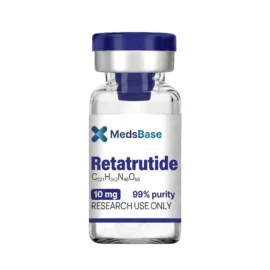
- Retatrutide — Triple GLP-1/GIP/glucagon agonist (LY3437943) — het grootste effect op lichaamsgewicht in huidig metabool peptideonderzoek
- Tesamorelin — GHRH-analoog — onderzoek naar visceraal vetweefsel en lipodystrofie
- CJC-1295 met DAC — Langwerkend GHRH-analoog voor onderzoek naar de groeias
- Ipamorelin — Selectieve GHRP voor puur GH-as pulsonderzoek
- IGF-1 LR3 — Lang-arginine IGF-1-analoog — anabool en regeneratief onderzoek
Verder lezen
📖 Vergelijk het landschap van langwerkende incretines
Lees onze directe vergelijkingen: Retatrutide vs Tirzepatide — triple versus dual agonist en Ozempic versus Mounjaro. Behandelt receptorfarmacologie, sequentie-engineering, halfwaardetijd, dosis-respons en de gepubliceerde onderzoeksgegevens die semaglutide onderscheiden van de nieuwere multi-agonist peptiden.
Meer opties in Peptiden
Gerangschikt op recente bestelvolumes van MedsBase — wat andere klanten in deze categorie kiezen.
| Sterkte | 2 mg, 5 mg, 10 mg, 15 mg, 20 mg, 30 mg, 50 mg |
|---|---|
| Hoeveelheid | 10 flacons, 20 flacons, 30 flacons |
 Semaglutide
Vragen & antwoorden
Semaglutide
Gerelateerde producten
Beoordelingen
Er zijn nog geen beoordelingen