







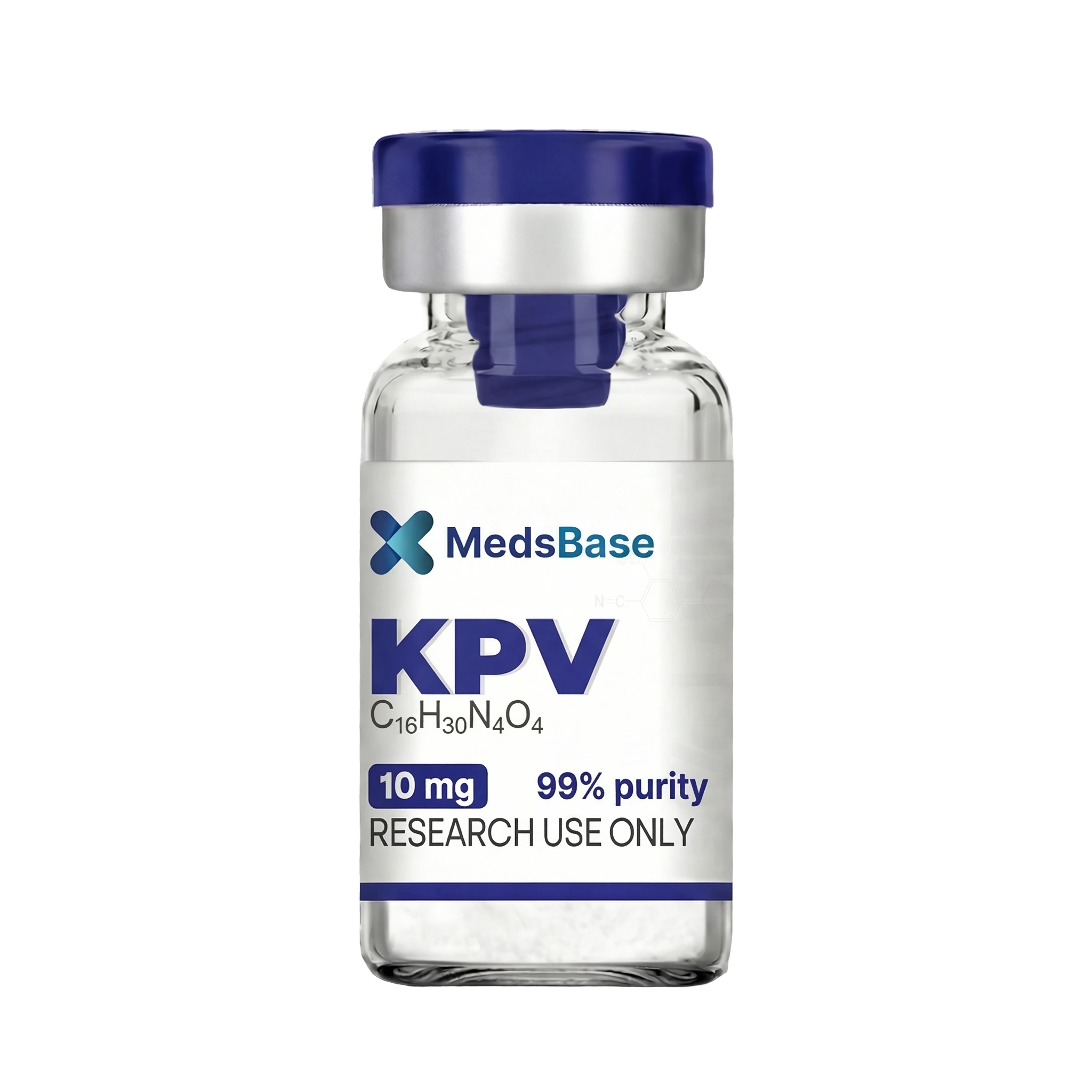
KPV (Lysine-Proline-Valine)
✅ Ondersteunt weefselherstel
✅ Vermindert oxidatieve stress
✅ Moduleert immuunrespons
✅ Bevordert cellulaire veerkracht
✅ Verbetert de epitheliale integriteit
KPV bevat synthetisch peptideverbinding.
✓ Medisch beoordeeld door Morgan Ellis — Apotheekonderzoeker · 8 jaar ervaring · Laatst beoordeeld: mei 2026
Kort antwoord — Wat is KPV?
KPV is het Lys-Pro-Val tripeptide — het C-terminale anti-inflammatoire fragment van alfa-melanocytenstimulerend hormoon (α-MSH). In tegenstelling tot bredere melanocortine-analogen heeft KPV geen pigmentatieactiviteit; het onderzoekssignaal is puur anti-inflammatoir via NFkB-remming en mestcelstabilisatie. Bestudeerd voor IBD, allergische ontsteking en huidontstekingsonderzoek. Leverbaar in 5 mg en 10 mg lyofilisatieflacons uitsluitend voor laboratoriumonderzoek.
📦 Elke bestelling is gedekt door onze Reshipment Assurance-beleid — als uw pakket niet binnen 20 werkdagen arriveert, sturen wij het opnieuw.
| Specificatie | Detail |
|---|---|
| CAS-nummer | 67727-97-3 |
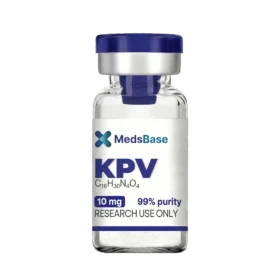
| Molecuulformule | C16H30N4O4 |
| Moleculair gewicht | 342.43 Da |
| Sequentie | Lys-Pro-Val (α-MSH 11–13) |
| Form | Lyofiliseerd poeder (of zoals geleverd) |
| Zuiverheid | ≥99% (HPLC geverifieerd, COA op aanvraag) |
| Opslag | Lyofiliseerd: 2–8 °C (koelkast) voor werkvoorraad; −20 °C voor langdurige opslag van ongeopende flesjes. Gereconstitueerd: 2–8 °C, gebruik binnen ~30 dagen. Bescherm tegen licht. Vries de gereconstitueerde oplossing niet in en ontdooi deze niet. |
| Oplosbaarheid | Bacteriostatisch water (aanbevolen) of steriel water voor kortere gebruiksperioden |
| Onderzoeksgebruik | Alleen voor laboratoriumonderzoek. Niet voor humaan of veterinair diagnostisch of therapeutisch gebruik. |
Wat is KPV?
KPV is de drieletterige afkorting voor het Lys-Pro-Val tripeptide — de C-terminale drie aminozuren (posities 11–13) van alfa-melanocytenstimulerend hormoon (α-MSH). In de jaren 1980–1990 merkten meerdere onderzoeksgroepen op dat het volledige α-MSH-molecuul twee functioneel te scheiden effecten produceerde: de bekende N-terminale MC-receptor pigmentatie/opwekkingsactiviteit, en een C-terminale anti-inflammatoire activiteit. Toen het C-terminale KPV-tripeptide geïsoleerd werd gesynthetiseerd en getest, reproduceerde het de anti-inflammatoire effecten zonder de pigmentatiebijwerkingen.
Molecuulgewicht ongeveer 342,4 Da. KPV is een van de kleinste peptiden in de melanocortinefamilie en een van de meest bestudeerde anti-inflammatoire onderzoeks-tripeptiden. Het wordt geleverd als een hoogzuiver lyofilisatiepoeder. KPV is uitsluitend voor laboratoriumonderzoek en is niet bedoeld voor menselijke of veterinaire diagnose of therapie. Voor mechanisme, IBD-onderzoeksgeschiedenis en stacking-context, zie onze KPV onderzoeksgids.
Werkingsmechanisme — Drie ontstekingsremmende pathways
De ontstekingsremmende activiteit van KPV verloopt via ten minste drie complementaire pathways, die allemaal samenkomen in het verminderen van ontstekingssignalen zonder andere melanocortinefuncties te beïnvloeden:
- NFkB-remming — KPV blokkeert de translocatie van NFkB naar de kern, waardoor de transcriptie van pro-inflammatoire cytokinen zoals TNF-alfa, IL-6, IL-1β en IL-8 wordt voorkomen. NFkB is de belangrijkste regulator van inflammatoire genexpressie, dus het blokkeren van de activering ervan heeft een breed, upstream ontstekingsremmend effect.
- Mestcelstabilisatie — KPV vermindert mestceldegranulatie en histamineafgifte in onderzoeksmodellen. Dit is een ander mechanisme dan NFkB-remming en is vooral relevant voor onderzoek naar allergische ontstekingen en topische huidontstekingsmodellen.
- Peptide-versus-MSH-scheiding — omdat KPV alleen het C-terminale fragment is, activeert het MC1R niet (het pigmentatiereceptor) of MC4R (de arousal/voedingsreceptor). Dit scheidt de ontstekingsremmende activiteit mechanistisch van de andere effecten van α-MSH — anders dan bredere MC-analogen zoals Melanotan II of PT-141.
De praktische onderzoeksimplicatie: KPV is een “schoon” ontstekingsremmend onderzoeksmiddel dat het α-MSH-ontstekingsremmende signaal produceert zonder de bruinings-, arousal- of eetlustmodulerende effecten die de interpretatie van onderzoek met volledige MC-agonisten bemoeilijken.
Gepubliceerde onderzoeksapplicaties
KPV wordt gebruikt in laboratoriumonderzoeken die zich richten op:
- IBD en colitisonderzoek — inflammatoire darmziekte bij knaagdier modellen; KPV is actief via zowel SC als orale routes, wat het bijzonder flexibel maakt voor GI-ontstekingsonderzoek (Brzoska et al., Endocr Rev 2008)
- Allergische ontsteking — onderzoek naar mestcelstabilisatie en histaminevrijzetting in allergie- en atopiemodellen
- Huidontsteking — eczeem, psoriasis en contactdermatitis onderzoeksmodellen; topische formuleringen komen voor in sommige onderzoeksprotocollen
- Wondgenezing — anti-inflammatoire fase van wondgenezingonderzoek, vaak gecombineerd met BPC-157 voor gecombineerde anti-inflammatoire en groeifactordekking
- Gewrichtsontsteking — artritis en gewrichtsontsteking onderzoeksmodellen bij knaagdieren
- Stacking onderzoek — vaak gecombineerd met BPC-157 in maag-darm- en bindweefselonderzoek waar anti-inflammatoire + weefselhersteldekking nodig is
- Melanocortine vergelijkend onderzoek — naast elkaar met Melanotan II en PT-141 om de pure ontstekingsremmende versus MC-receptoreffecten te isoleren
Voor een bredere context over ontstekingsremmende en helende peptiden, zie de onderzoekspeptiden catalogus.
Beschikbare sterktes en concentraties
MedsBase heeft KPV in de volgende lyofilized vial groottes op voorraad:
| Vulsterkte | Typisch gebruik | Verpakkingsgroottes |
|---|---|---|
| 5 mg | Korte onderzoeksprotocollen, pilotdosering — ondersteunt ~10 toedieningen van 500 mcg | 10, 20 of 30 vialen |
| 10 mg | Standaard onderzoekssterkte — ondersteunt ~20 toedieningen van 500 mcg | 10, 20 of 30 vialen |
KPV-onderzoeksprotocollen variëren afhankelijk van het modelsysteem — 200–500 mcg SC dagelijks voor systemisch ontstekingsremmend onderzoek, of topisch/orale routes voor GI- en huidonderzoek. Alle sterktes worden geleverd als lyofilized poeder met een HPLC-puurheid van 99%+.
Hoe het zich verhoudt — KPV versus andere ontstekingsremmende/melanocortine peptiden
KPV is een van de meest specifieke ontstekingsremmende peptiden in onderzoeksgebruik vanwege zijn nauwe werkingsspectrum. Vergeleken met verwante verbindingen:
| Criterium | KPV | BPC-157 | Melanotan II |
|---|---|---|---|
| Lengte | 3 aminozuren | 15 aminozuren | 7 aminozuren (cyclisch) |
| Primaire activiteit | Alleen ontstekingsremmend | Ontstekingsremmend + weefselherstel + GH-receptor | Brede MC-agonist (MC1-5) |
| MC-receptoractiviteit | Geen (alleen C-terminus) | Geen | MC1, MC3, MC4, MC5 |
| Pigmentatie-effect | Geen | Geen | Sterk (primair signaal) |
| Onderzoeksapplicaties | IBD, allergie, huidontsteking | Pezen, darmen, spierherstel | Melanogenese, fotoprotectie |
Voor onderzoek naar GI-ontsteking is KPV + BPC-157 een veelvoorkomende combinatie omdat KPV upstream ontstekingsremmende signalering biedt terwijl BPC-157 weefselherstel-groeifactoractiviteit levert. Dit wordt behandeld in onze BPC-157 onderzoeksgids.
Opslag en Reconstituering
Voor reconstituering: Bewaar lyofiliseerde flesjes gekoeld bij 2–8 °C in de originele verpakking, stabiel tot 36 maanden. Vermijd vries-dooicycli van het poeder.
Reconstitueringsprocedure: Injecteer bacteriostatisch water langs de zijkant van het peptideflesje volgens de bovenstaande tabel. Draai voorzichtig — niet niet schudden — en laat 5–10 minuten staan voor volledige oplossing. De oplossing moet helder en kleurloos zijn.
Na reconstitutie: bewaar gekoeld bij 2–8 °C en gebruik binnen 30 dagen. Vries de gereconstitueerde oplossing niet in.
Veelgestelde vragen
Waar wordt KPV voor gebruikt in onderzoek?
KPV wordt gebruikt in laboratoriumonderzoek naar ontstekingsremmende biologie, inflammatoire darmziekten (IBD) en colitis, allergische ontsteking, huidontsteking (eczeem/psoriasis-modellen), ontstekingsfase van wondgenezing, gewrichtsontsteking en vergelijkende melanocortinefarmacologie. Het is niet FDA-goedgekeurd en wordt hier strikt verkocht voor alleen laboratoriumonderzoek.
Hoe verschilt KPV van Melanotan II of PT-141?
KPV is alleen het drie-aminozuur C-terminale fragment van alfa-MSH, terwijl Melanotan II en PT-141 volledige of bijna volledige cyclische MSH-analogen zijn. Dit betekent dat KPV geen melanocortine-receptoractiviteit heeft en daarom geen pigmentatie (MC1R), opwinding (MC4R) of eetlust (MC4R) effecten — alleen ontstekingsremmende activiteit via NFkB en mestcelroutes.
Wat is de typische onderzoeksdosis van KPV?
Gepubliceerde preklinische protocollen gebruiken typisch 200–500 mcg SC dagelijks voor systemisch anti-inflammatoir onderzoek. Sommig IBD- en huidontstekingsonderzoek gebruikt orale of topische toediening. Een flesje van 10 mg gereconstitueerd met 2,0 mL bacteriostatisch water levert 5 mg/mL — 10 streepjes op een U-100 SC-spuit geeft 500 mcg.
Is KPV goedgekeurd door de FDA?
Nee. KPV heeft geen goedkeuring van de FDA, EMA of enige andere regelgevende instantie ontvangen. Het volledige alfa-MSH-peptide en KPV-gerelateerd onderzoek hebben de ontwikkeling van melanocortine-geneesmiddelen in het algemeen geïnformeerd, maar KPV zelf blijft uitsluitend voor onderzoeksdoeleinden. Alle KPV die door peptide-onderzoeksleveranciers wordt verkocht, is uitsluitend bestemd voor laboratoriumonderzoek.
Kan KPV oraal worden ingenomen voor IBD-onderzoek?
Ja. In tegenstelling tot de meeste peptiden die worden afgebroken door maagenzymen, behoudt KPV enige anti-inflammatoire activiteit via de orale route in gepubliceerd IBD- en colitisonderzoek. Dit maakt het bijzonder flexibel voor GI-ontstekingsonderzoek waar orale toediening het maag-darmkanaal direct beïnvloedt. Onderzoeksprotocollen variëren per model — SC blijft de dominante systemische route.
Hoe moet KPV worden opgeslagen?
Gevriesdroogde flesjes: gekoeld bij 2–8 °C in originele verpakking, stabiel tot 36 maanden. Gereconstitueerde oplossing: gekoeld bij 2–8 °C, gebruik binnen 30 dagen. Vries de gereconstitueerde oplossing niet in.
Hoe reconstitueer ik KPV?
Volg de bovenstaande reconstructietabel. Voeg bacteriostatisch water langs de zijkant van het flesje toe, draai voorzichtig en laat 5-10 minuten staan voor volledige oplossing. Schud niet schudden.
Kunnen KPV en BPC-157 worden gecombineerd in onderzoek?
Ja — dit is een van de meest voorkomende onderzoekscombinaties voor GI- en bindweefselontsteking. KPV biedt upstream NFkB-pathway anti-inflammatoire signalering; BPC-157 biedt VEGF-pathway weefselherstel en groeifactoractiviteit. De mechanismen zijn complementair in plaats van overlappend.
Welke sterktes heeft MedsBase op voorraad?
MedsBase voert KPV in lyofilisatieflacons van 5 mg en 10 mg. Elke sterkte is beschikbaar in verpakkingen van 10, 20 of 30 flacons. Alle flacons worden geleverd met een HPLC-puurheid van 99%+ en een certificaat van analyse op verzoek.
Veroorzaakt KPV bijwerkingen in onderzoek?
Gepubliceerd preklinisch onderzoek heeft een opmerkelijk veiligheidsprofiel gerapporteerd. Omdat KPV geen melanocortine-receptoractiviteit heeft, treden de pigmentatie-, opwinding- en bloeddrukseffecten die soms worden gezien bij volledige MC-agonisten niet op met KPV. Er zijn geen significante off-target signalen geïdentificeerd bij typische onderzoeksdoseringen. Langetermijnveiligheidsgegevens bij mensen zijn niet beschikbaar.
Wat is de halfwaardetijd van KPV?
KPV (Lys-Pro-Val) is een tripeptide met een korte plasmahalfwaardetijd die consistent is met kleine ongemodificeerde peptiden — geschat op minder dan 30 minuten. De primaire onderzoeksapplicatie is gastro-intestinaal, waar lokale toedieningsstudies effecten aantonen op darmepitheelcellen en immuuncelpopulaties die aanhouden naast plasmadetectie, toegeschreven aan directe receptorinteractie bij het darmslijmvlies.
Hoe vermindert KPV ontsteking in onderzoeksmodellen?
KPV is het C-terminale tripeptide van α-MSH (alfa-melanocytstimulerend hormoon) en behoudt veel van de ontstekingsremmende activiteit van het ouderpeptide via MC1R-activering. In colitis- en darmbeschadigingsmodellen vermindert KPV NF-κB-signalering, verlaagt het de productie van pro-inflammatoire cytokinen (IL-1β, IL-6, TNF-α) en bevordert het de integriteit van de darmepitheelbarrière. De kleine omvang vergemakkelijkt directe opname door epitheelcellen onafhankelijk van dragerproteïnen.
Kan ik KPV bestellen voor internationale verzending?
Ja. MedsBase verzendt KPV wereldwijd vanuit ons toegewijde peptideverzendnetwerk. Bestellingen met alleen peptiden komen in aanmerking voor onze zelfstandige peptideverzendservice. Bestellingen worden verzonden in temperatuurgecontroleerde verpakkingen met volledige tracking.
Andere Peptiden voor Herstel- en Prestatieonderzoek
- BPC-157 — Body Protection Compound — onderzoek naar pees-, ligament- en darmherstel
- TB-500 — Thymosine Beta-4 fragment — onderzoek naar zacht weefsel en vasculair herstel
- Ipamorelin — Selectieve ghreline-agonist — schone GH-puls zonder cortisol/prolactine
- CJC-1295 met DAC — GHRH-analoog met verlengde halfwaardetijd
- GHK-Cu — Koperpeptide — onderzoek naar huid- en bindweefselregeneratie
Verder lezen
📖 Lees het onderzoek achter dit peptide
Lees onze volledige evidence-based gids: KPV — het C-terminale alfa-MSH-fragment voor ontstekingsremmend onderzoek. Behandelt NFkB-farmacologie, mestcelstabilisatie, IBD-onderzoeksgeschiedenis, orale en SC-protocollen, en stacking met BPC-157.
Meer opties in Peptiden
Gerangschikt op recente bestelvolumes van MedsBase — wat andere klanten in deze categorie kiezen.
| Sterkte | 5 mg, 10 mg |
|---|---|
| Hoeveelheid | 10 flacons, 20 flacons, 30 flacons |
 KPV (Lysine-Proline-Valine)
Vragen & antwoorden
KPV (Lysine-Proline-Valine)
Gerelateerde producten
Beoordelingen
Er zijn nog geen beoordelingen