







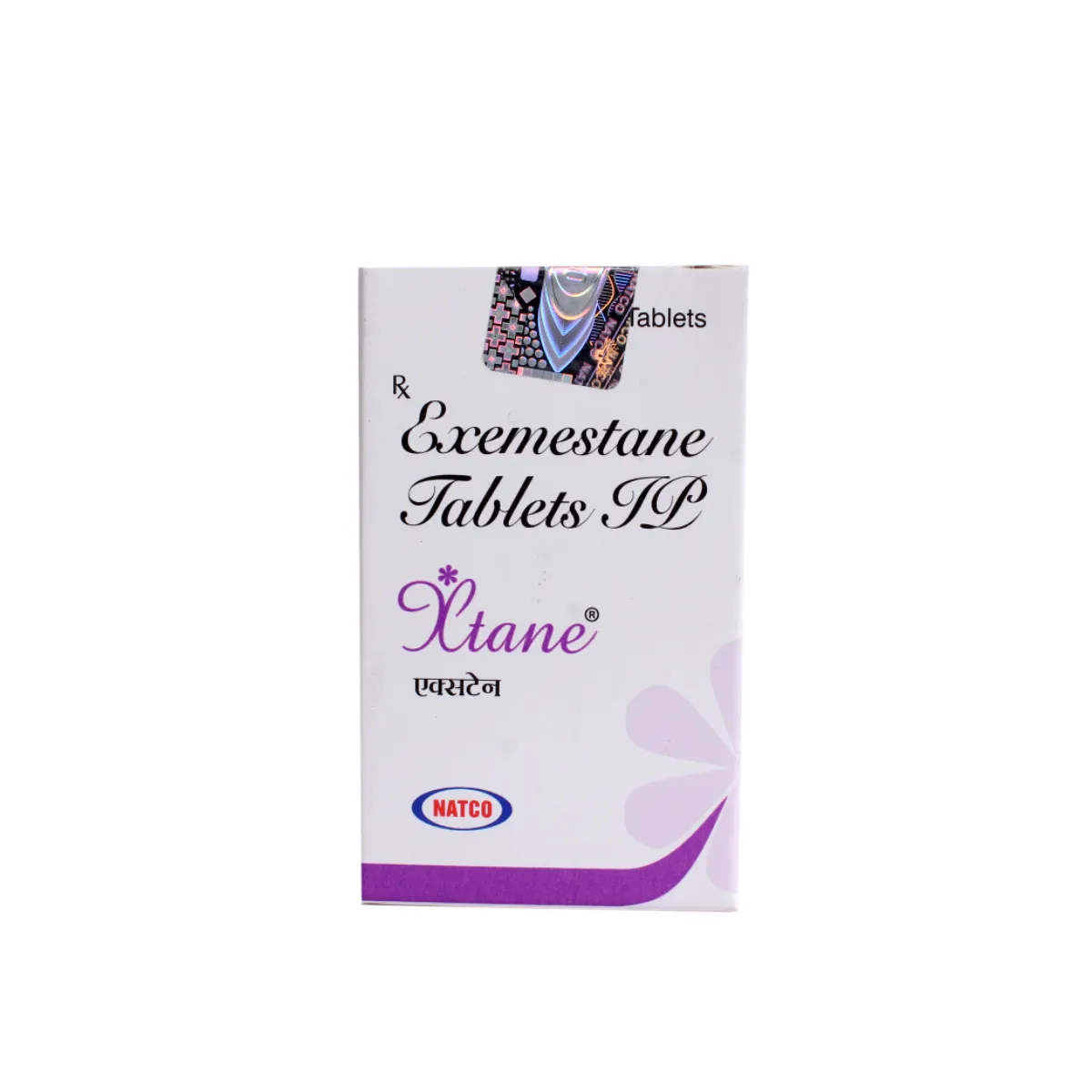
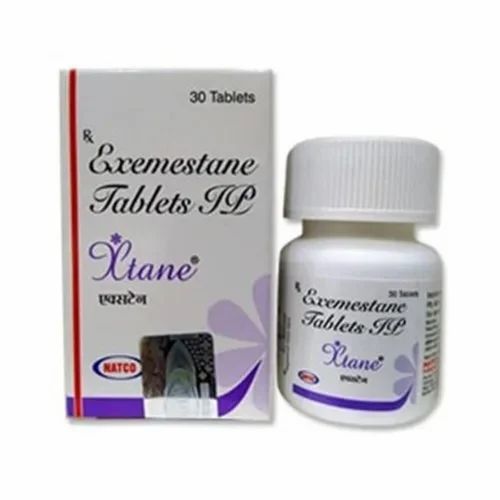
Xtane
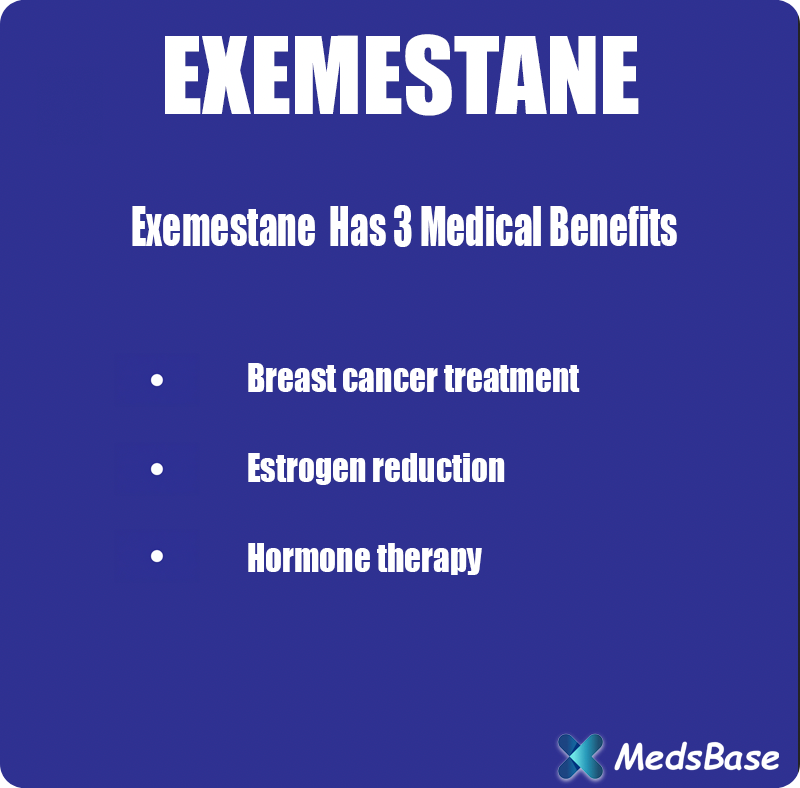


✅ Verlaagt oestrogeenniveaus
✅ Vermindert kankergroei
✅ Ondersteunt borstgezondheid
✅ Effectief na operaties
✅ Verlaagt het risico op herhaling
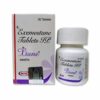
Xtane bevat Exemestane.
✓ Medisch beoordeeld door Morgan Ellis — Apotheekonderzoeker · 8 jaar ervaring · Laatst beoordeeld: mei 2026
⚡ Snelle Vraag — Wat is Xtane?
Xtane is een orale tablet van Natco Pharma met exemestane 25 mg — een derdegeneratie steroïdale aromataseremmer. Adjuvante en metastatische therapie voor hormoonreceptor-positieve borstkanker bij postmenopauzale vrouwen. Standaarddosering: 25 mg eenmaal daags na een maaltijd, meestal voor 5–10 jaar in adjuvante setting. Exemestane inactiveert aromatase onomkeerbaar (suïcideremmer) versus de reversibele binding van anastrozol/letrozol. Vaak het AI van keuze voor sequentiële therapie na 2–3 jaar van tamoxifen (volgens IES-onderzoek), of na intolerantie voor een niet-steroïde AI. Alleen voor postmenopauzale vrouwen. Dezelfde botdichtheid- en artralgieproblemen als andere AI's — verplichte DEXA-monitoring + calcium/vitamine D + overweeg bisfosfonaat.
📦 Elke bestelling is gedekt door onze Reshipment Assurance-beleid — als uw pakket niet binnen 20 werkdagen arriveert, sturen wij het opnieuw.
Wat Is Xtane?
Xtane is een orale tablet van Natco Pharma die bevat exemestane 25 mg. Exemestane is een derde generatie, steroïde aromataseremmer — structureel en mechanistisch verschillend van de niet-steroïdale aromataseremmers anastrozol en letrozol. Het wordt gebruikt voor adjuvante en metastatische behandeling van hormoonreceptor-positieve (HR+) borstkanker bij postmenopauzale vrouwen. Oorspronkelijk ontwikkeld door Pfizer (merknaam Aromasin), is exemestane nu een veelgebruikt generiek medicijn.
Hoe Werkt Xtane?
Exemestane is een zelfmoordsubstraatremmer (onomkeerbare inactivator) van aromatase, het enzym dat androgenen omzet in oestrogenen in postmenopauzaal perifeer weefsel. Mechanistisch:
- Steroidestructuur die lijkt op het natuurlijke androgeensubstraat (androstenedion) — bindt aan het actieve centrum van aromatase en wordt vervolgens onomkeerbaar omgezet in een covalente enzymadduct dat het enzymmolecuul permanent inactiveert.
- Onderdrukt de circulerende oestrogeen met ~95% binnen enkele dagen — vergelijkbaar met anastrozol en letrozol.
- Geen kruisresistentie met niet-steroïdale aromataseremmers — patiënten die progressie vertoonden op anastrozol of letrozol reageren soms op exemestaan (en vice versa) omdat het mechanisme structureel verschillend is.
- Mild androgeen effect — exemestaan en zijn belangrijkste metaboliet hebben een zwakke androgeenreceptoractiviteit, wat het botdichtheidsverlies dat wordt gezien bij niet-steroïdale AI's enigszins kan verzachten (hoewel de klinische betekenis ter discussie staat).
Toepassingen en Indicaties
- Adjuvante therapie voor vroeg HR+ borstkanker bij postmenopauzale vrouwen, meestal als sequentiële therapie na 2–3 jaar tamoxifen (volgens IES-onderzoek) of als primaire AI
- Metastatische HR+ borstkanker na progressie op een niet-steroïdale AI (anastrozol of letrozol)
- Gecombineerd met everolimus voor HR+ HER2- metastatische borstkanker na falen van niet-steroïdale AI (BOLERO-2)
- Off-label gebruik: chemopreventie bij hoogrisico postmenopauzale vrouwen (MAP.3-onderzoek); ovulatie-inductie bij PCOS (specialist)
Xtane is niet aangewezen voor: premenopauzale vrouwen zonder ovariële suppressie, HR-negatieve borstkanker, of niet-kanker cosmetische indicaties.
Xtane Dosering en Hoe In Te Nemen
Standaard dosering: 25 mg eenmaal daags na een maaltijd. Voedsel verhoogt de biologische beschikbaarheid van exemestaan met ongeveer 40% — dus dit is meer dan alleen een regel voor verdraagzaamheid.
Hoe Xtane Correct In Te Nemen
- Neem één tablet van 25 mg eenmaal daags in na een maaltijd. Voedsel verhoogt de opname aanzienlijk — NIET innemen op een lege maag.
- Elke dag op hetzelfde tijdstip voor consistentie.
- Slik de tablet heel door met water.
- Verplichte monitoring: baseline DEXA botdichtheidsscan, herhaal elke 2 jaar. Jaarlijks lipidenpanel.
- Botbescherming: calcium 1.000–1.200 mg/dag + vitamine D 800–2.000 IE/dag. Bisfosfonaat of denosumab bij osteopenie.
- Gewrichtspijnbehandeling: regelmatige lichaamsbeweging, paracetamol/NSAID's naar behoefte. Overschakelen op anastrozol of letrozole kan helpen als exemestane-artralgie niet verdraagbaar is.
- Kuurlengte: 5 jaar totale endocriene therapie (of langer bij hoger risico op ziekte) in adjuvante setting; tot progressie bij metastatische ziekte.
- Niet stoppen zonder instructie van oncoloog.
Bijwerkingen van Xtane
Veelvoorkomend (oestrogeendeprivatie-symptomen):
- Opvliegers (35–40%)
- Artralgie en myalgie (~30%)
- Vaginale droogte, dyspareunie
- Stemmingswisselingen, vermoeidheid
- Milde haarverdunning
- Toegenomen transpiratie
- Misselijkheid (mild, verdwijnt meestal)
Belangrijk op lange termijn:
- Versnelde botdichtheidsafname en verhoogd fractuurrisico — mogelijk iets minder dan niet-steroïdale AIs (mild androgeen effect van exemestane), maar klinische betekenis wordt bediscussieerd
- Milde androgene bijwerkingen (acne, haarveranderingen) — ongewoon maar kenmerkend
- Hyperlipidemie (mild)
Minder vaak maar raadpleeg een arts:
- Hepatotoxiciteit (lichte LFT-stijgingen komen vaak voor)
- Lymfocytopenie, trombocytopenie
- Ernstige overgevoeligheidsreactie
- Carpale tunnelsyndroom
Waarschuwingen en voorzorgsmaatregelen
- Zwangerschap: ABSOLUUT CONTRA-INDICATIE. Exemestaan is teratogeen. Postmenopauzale patiënten hebben meestal geen vruchtbaarheid meer, maar perimenopauzale patiënten hebben betrouwbare anticonceptie nodig.
- Premenopauzale vrouwen: niet effectief tenzij gecombineerd met ovariële suppressie onder specialistische begeleiding.
- Botgezondheid: baseline DEXA, herhaal elke 2 jaar. Calcium + vitamine D + bisfosfonaat/denosumab bij osteopenie.
- Lever- en nierfunctiestoornissen: geen dosisaanpassing voor mild-moderate; voorzichtigheid bij ernstig.
- Gelijktijdige oestrogeentherapie: vermijd - gaat tegen het doel in.
Geneesmiddelinteracties
| Combineren met | Effect | Wat te doen |
|---|---|---|
| Sterke CYP3A4-induceerders (rifampicine, fenytoïne, carbamazepine, Sint-Janskruid) | Verlaagt exemestaan-niveaus aanzienlijk - risico op behandelingsfalen | Vermijd combinatie. Als een CYP3A4-inducer essentieel is, verdubbel dan exemestaan naar 50 mg/dag onder specialistische begeleiding. |
| Oestrogeenbevattende HRT of vaginaal oestrogeen | Verstoort mechanisme — behandeling faalt | Vermijd. Gebruik niet-hormonale vaginale vochtinbrengers. |
| Tamoxifen | Tamoxifen verlaagt exemestaan-niveaus | Gebruik sequentieel, niet gelijktijdig. |
| Bisfosfonaten / denosumab | Synergistische botbescherming | Voeg toe wanneer osteopenie ontstaat. |
| Everolimus (mTOR-remmer) | Standaardcombinatie voor gemetastaseerd HR+ HER2- borstkanker (BOLERO-2) | Specialistische oncologievoorschriften. |
Bewaaradvies
- Bewaren bij kamertemperatuur, 15–30°C. Bewaar in de originele blister.
- Buiten bereik van kinderen en huisdieren houden.
- Breng ongebruikte tabletten terug naar een apotheek voor vernietiging.
Gerelateerde alternatieven op MedsBase
Andere oncologische medicijnen die naast dit product wordt aangeboden:
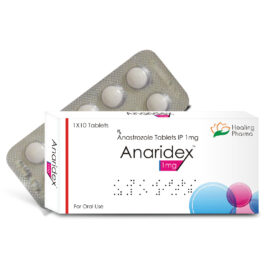
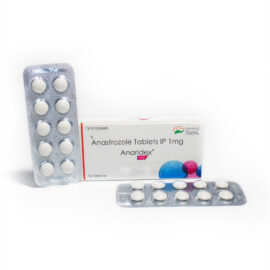
- Anaridex (anastrozol 1 mg)
- Fempro (letrozole 2,5 mg)
- Letroheal (letrozole 2,5 mg)
- Tamilong (tamoxifen 10 / 20 mg)
- Tamodex (tamoxifen 10 / 20 mg)
- Tamoxilon (tamoxifen 10 / 20 mg)
- Cytotam (tamoxifen 10 / 20 mg)
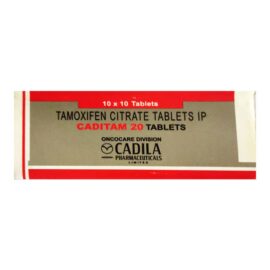
- Caditam (tamoxifen 20 mg)
Bekijk alle anti-kankermedicijnen →
Waarom bestellen bij MedsBase
Elke batch wordt ingekocht bij een WHO-GMP gecertificeerde fabrikant. Bestellingen worden verzonden in eenvoudige, ongemarkeerde verpakkingen door onze logistieke partners en vallen onder onze Reshipment Assurance-beleid: als een pakket niet binnen 20 werkdagen arriveert, sturen wij kosteloos een nieuwe zending, zonder vragen te stellen.
Gerelateerde Antikankermedicijnen
Andere oncologische medicijnen die naast dit product wordt aangeboden:
- Anaridex (anastrozol 1 mg)
- Letroheal (letrozole 2,5 mg)
- Fempro (letrozole 2,5 mg)
- Tamilong (tamoxifen 10/20 mg)
- Tamodex (tamoxifen 10/20 mg)
Veelgestelde vragen
Waarom moet Xtane met voedsel worden ingenomen?
Voedsel verhoogt de biologische beschikbaarheid van exemestaan met ongeveer 40% — dit is een echt farmacokinetisch effect, niet slechts een regel voor verdraagzaamheid. Het innemen van exemestaan op een lege maag leidt tot een significant lagere dosering. Neem het in na de eerste grote maaltijd van de dag voor een consistente opname.
Hoe verschilt Xtane van anastrozol en letrozol?
Exemestane is een steroïde een aromataseremmer die de aromatasemoleculen onomkeerbaar vernietigt. Anastrozol en letrozol zijn niet-steroïde omkeerbare remmers. De klinische implicaties: (1) geen kruisresistentie — patiënten die progressie vertonen op anastrozol of letrozol kunnen nog steeds reageren op exemestaan; (2) een mild androgeen effect van exemestaan (soms gebruikt om een marginaal minder botverlies te argumenteren, hoewel de klinische betekenis wordt bediscussieerd); (3) een ander voedseleffect (de opname van exemestaan neemt met 40% toe bij inname met voedsel).
Wanneer heeft Xtane de voorkeur boven anastrozol of letrozol?
Drie veelvoorkomende scenario's: (1) sequentiële therapie na 2–3 jaar tamoxifen (de IES-studie gebruikte exemestaan in deze setting); (2) na progressie op anastrozol of letrozol — het structureel verschillende mechanisme kan een vernieuwde respons geven; (3) na onverdraagbare artralgie op een niet-steroïde aromataseremmer — ongeveer 30% van de patiënten verdraagt de ene remmer wel maar de andere niet.
Hoe lang moet ik Xtane gebruiken?
De standaard adjuvante duur is 5 jaar totale endocriene therapie (dit kan tamoxifen of een andere remmer in de eerste 2–3 jaar omvatten als exemestaan in een sequentiële setting wordt gebruikt). Voor hoger risico bij lymfeklierpositieve ziekte, kan de therapie worden verlengd tot 7–10 jaar wordt steeds vaker gebruikt. Voor uitgezaaide ziekte, tot progressie of onaanvaardbare toxiciteit.
Verzwakt Xtane mijn botten?
Ja - zoals alle aromataseremmers. Sommige gegevens suggereren dat exemestaan mogelijk iets minder botverlies veroorzaakt dan anastrozol of letrozol vanwege zijn milde androgene effect, maar de klinische betekenis hiervan wordt betwist en de veilige aanname is dat botbescherming nodig is. Verplichte baseline DEXA, herhaal elke 2 jaar. Calcium- en vitamine D-suppletie. Bisfosfonaat (zoledronzuur IV elke 6 maanden) of denosumab (60 mg SC elke 6 maanden) bij osteopenie.
Hoe beheer ik gewrichtspijn bij Xtane?
Zelfde aanpak als bij andere aromataseremmers: regelmatige lichaamsbeweging (yoga, wandelen, zwemmen), vitamine D-suppletie, paracetamol of korte NSAID-kuren, gewichtsbeheersing. Als het onhoudbaar is, kan overschakelen naar anastrozol of letrozole soms helpen. Acupunctuur heeft bescheiden bewijs bij AI-geïnduceerde artralgie.
Kan ik HRT of vaginaal oestrogeen gebruiken bij Xtane?
Over het algemeen niet - zelfs lage doses vaginaal oestrogeen veroorzaken meetbare systemische absorptie die de AI-therapie kan ondermijnen. Eerste keus voor vaginale symptomen: niet-hormonale vochtinbrengende middelen (Replens, hyaluronzuurgels) en op water gebaseerde glijmiddelen. Specialisten overwegen soms zeer lage doses vaginaal oestriol op basis van individuele risico-batenanalyse.
Zijn er geneesmiddelinteracties waar ik me zorgen over moet maken?
De belangrijkste is sterke CYP3A4-inducers (rifampicine, fenytoïne, carbamazepine, sint-janskruid) die de exemestaan-spiegels aanzienlijk verlagen. Als een CYP3A4-inducer essentieel is, kan de dosis onder specialistische begeleiding worden verdubbeld tot 50 mg/dag. Vermijd sint-janskruid volledig. Anders heeft exemestaan relatief weinig geneesmiddelinteracties.
Meer opties in antikankermedicatie
Gerangschikt op recente bestelvolumes van MedsBase — wat andere klanten in deze categorie kiezen.

| Sterkte | 25 mg |
|---|---|
| Hoeveelheid | 30 Tablet/s, 60 Tablet/s, 90 Tablet/s, 180 Tablet/s, 360 Tablet/s, 720 Tablet/s |
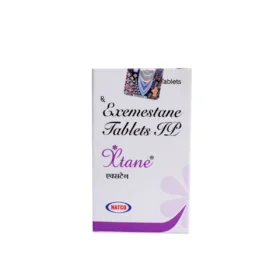 Xtane
Xtane
Vragen & antwoorden
Xtane
Gerelateerde producten



Beoordelingen
Er zijn nog geen beoordelingen