







Oxytocine Acetaat
✅ 9-aminozuur cyclisch neuropeptide
✅ OXTR-receptoragonist
✅ Onderzoek naar sociaal bindings- en affiliatief gedrag
✅ Intranasaal bioactief peptide
✅ Acetaat zoutvorm — verbeterde stabiliteit
Oxytocine Acetaat bevat synthetisch peptideverbinding.
✓ Medisch beoordeeld door Morgan Ellis — Apotheekonderzoeker · 8 jaar ervaring · Laatst beoordeeld: mei 2026
Kort antwoord — Wat is Oxytocine Acetaat?
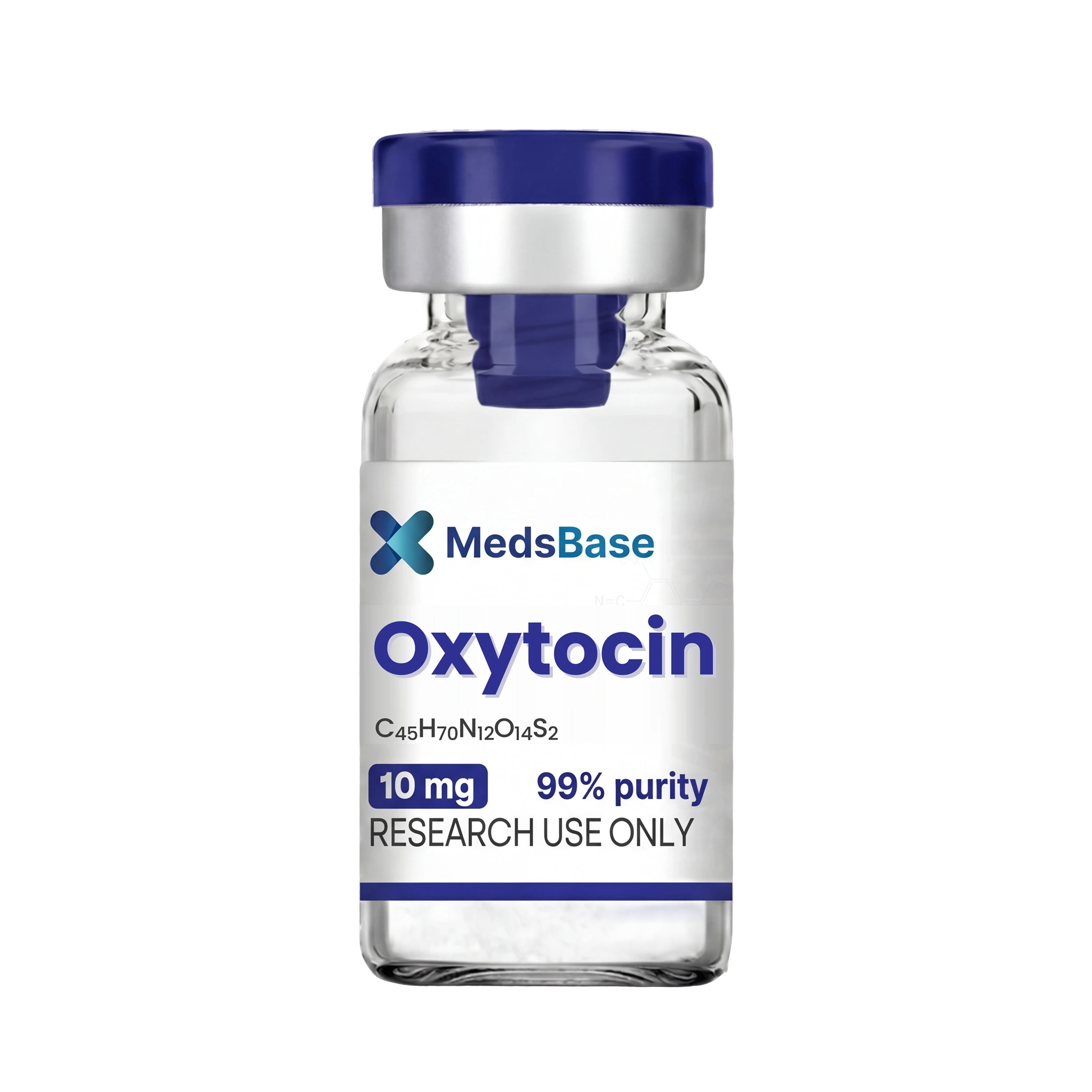
Oxytocine Acetaat is de acetaatzoutvorm van oxytocine, een 9-aminozuur cyclisch neuropeptide met een enkele disulfidebrug tussen Cys1 en Cys6. Het is een van de oudste en meest bestudeerde neuropeptiden in gepubliceerd onderzoek, werkend als zowel een hypothalamisch hormoon (baarmoedercontractie, melkejectie) als een centrale neuromodulator van sociale binding, vertrouwen en affiliatief gedrag. Leverbaar in 5 mg en 10 mg lyofilisatieflacons uitsluitend voor laboratoriumonderzoek.
📦 Elke bestelling is gedekt door onze Reshipment Assurance-beleid — als uw pakket niet binnen 20 werkdagen arriveert, sturen wij het opnieuw.
| Specificatie | Detail |
|---|---|
| CAS-nummer | 50-56-6 (oxytocine vrije base); geleverd als de acetaatzoutvorm |
| Molecuulformule | C43H66N12O12S2 (vrije base; acetaatzout voegt CH3COOH tegenion toe) |
| Moleculair gewicht | 1007.19 Da (vrije base) |
| Sequentie | Cys-Tyr-Ile-Gln-Asn-Cys-Pro-Leu-Gly-NH2 (CYIQNCPLG-NH2, 9 aminozuren; intramoleculaire disulfidebrug Cys1–Cys6 vormt een 6-residu macrocyclische ring met een 3-residu C-terminaal staartje; C-terminus geamideerd) |
| Form | Gevriesdroogd acetaatzout (wit tot off-white poeder) |
| Zuiverheid | ≥99% (HPLC geverifieerd, COA op aanvraag) |
| Opslag | Lyofiliseerd: 2–8 °C (koelkast) voor werkvoorraad; −20 °C voor langdurige opslag van ongeopende flesjes. Gereconstitueerd: 2–8 °C, gebruik binnen ~30 dagen. Bescherm tegen licht. Vries de gereconstitueerde oplossing niet in en ontdooi deze niet. |
| Oplosbaarheid | Bacteriostatisch water (aanbevolen) of steriel water voor korter gebruik. Compatibel met intranasale onderzoeksformuleringen. |
| Onderzoeksgebruik | Alleen voor laboratoriumonderzoek. Niet voor humaan of veterinair diagnostisch of therapeutisch gebruik. |
Wat Is Oxytocine Acetaat?
Oxytocine Acetaat is de acetaatzout-vorm van oxytocine, een 9-aminozuur cyclisch neuropeptide dat voor het eerst geïsoleerd werd door Sir Henry Dale in 1906 en chemisch gesynthetiseerd door Vincent du Vigneaud in 1953 — het eerste peptidehormoon dat ooit door totale synthese werd geproduceerd, werk dat du Vigneaud de Nobelprijs voor Scheikunde in 1955 opleverde. Het acetaat-tegenion wordt gebruikt in onderzoeksgrade lyofilisatie omdat het de langetermijnstabiliteit en wateroplosbaarheid van het peptide verbetert ten opzichte van vrije-base oxytocine zonder de farmacologie te veranderen — het acetaat dissocieert snel in fysiologische oplossing.
De goed gekarakteriseerde sequentie is CYIQNCPLG-NH2 met een intramoleculaire disulfidebrug tussen Cys1 en Cys6 die een 6-residu macrocyclische ring en een 3-residu C-terminaal staartje vormt. Molecuulgewicht is 1007.19 Da (vrije base); empirische formule C43H66N12O12S2. Oxytocine wordt geleverd als een hoogzuiver gevriesdroogd poeder voor reconstitutie met bacteriostatisch water. Farmaceutische oxytocine is FDA-goedgekeurd als een injecteerbaar obstetrisch medicijn (Pitocin, Syntocinon) voor weeënopwekking en postpartumbloedingcontrole; de onderzoeksgrade oxytocine acetaat die hier wordt verkocht is geleverd uitsluitend voor laboratoriumonderzoek en is niet FDA-goedgekeurd voor menselijke of veterinaire toediening. Voor gerelateerd klein-peptide CNS-onderzoek, zie onze Selank en PT-141 productpagina's.
Werkingsmechanisme — Perifere Endocriene en Centrale Neuromodulator Rollen
Wat oxytocine bijzonder maakt onder onderzoekspeptiden is zijn dubbele identiteit als zowel een perifeer endocrien hormoon als een centrale neuromodulator. Hetzelfde molecuul, afgegeven vanuit verschillende anatomische compartimenten, produceert fundamenteel verschillende fysiologische effecten:
- Perifere endocriene afgifte — uteriene en mammarie effecten — Oxytocine wordt gesynthetiseerd in magnocellulaire neuronen van de supraoptische en paraventriculaire hypothalamische kernen en afgegeven in de systemische circulatie vanuit de achterste hypofyse. Perifere oxytocine bindt aan OXTR-receptoren op uteriene gladde spieren (wat weeën stimuleert tijdens de bevalling) en op myo-epitheliale cellen van de mammarie alveoli (wat de melkejectiereflex veroorzaakt). De perifere halfwaardetijd is kort (~3–5 minuten IV) vanwege snelle afbraak door oxytocinasen en andere peptidasen.
- Centrale afgifte — sociaal, verbindend en stress-buffergedrag — Een aparte populatie van parvocellulaire oxytocine-neuronen projecteert axonale uitlopers naar hersengebieden zoals de amygdala, nucleus accumbens, ventrale tegmentale area en prefrontale cortex. Centrale oxytocine-afgifte komt niet in de systemische circulatie terecht en wordt niet gemeten door plasma-assays. In gepubliceerd onderzoek moduleert het paarvorming, groepsaansluiting, vertrouwen, angstextinctie en stressreactiviteit. De literatuur over paarvorming bij prairiewoelmuizen is de canonieke mechanistische dataset voor centrale oxytocine-signalering.
- Receptorfarmacologie en signaaltransductie — Oxytocine werkt in op een enkele G-proteïne-gekoppelde receptor (OXTR), die voornamelijk koppelt aan Gαq/11 om fosfolipase C, IP te activeren.3, en intracellulaire calciumafgifte in gladde spieren. In het centrale zenuwstelsel is OXTR-signalering complexer en omvat het Gαi/o koppeling, modulatie van GABAerge interneuronen, en interactie met de nauw verwante vasopressine V1a-receptor. Selectieve OXTR-agonisten en -antagonisten worden veel gebruikt in huidig onderzoek om de bijdragen van oxytocine versus vasopressine aan gedrag te ontrafelen.
De intranasale toedieningsroute is een van de meest aangehaalde onderzoeksmethoden omdat het meetbare effecten heeft op het centrale zenuwstelsel wat betreft sociaal gedrag, zonder perifere plasma-oxytocine tot fysiologisch relevante niveaus te verhogen. Het exacte mechanisme waardoor intranasale oxytocine de hersenen bereikt — ofwel via transport langs de olfactorische en trigeminuszenuwen, diffusie door de cribriforme plaat, of een perifeer feedbacksignaal — blijft een actieve onderzoeksvraag. De gedragseffecten zijn reproduceerbaar genoeg dat intranasale toediening de standaardroute is geworden in menselijk en knaagdieronderzoek naar oxytocine en gedrag.
Gepubliceerde onderzoeksapplicaties
Oxytocine Acetaat wordt gebruikt in laboratoriumonderzoek dat zich richt op:
- Sociaal gedrag en paarvorming — prairiewoelmuis partnerpreferentietests, partnerpreferentievorming bij monogame versus polygame woelmuizen, sociale herkenningsparadigma's bij knaagdieren (Insel & Hulihan, Behav Neurosci 1995; Young & Wang, Nat Neurosci 2004)
- Autismespectrum en sociaal-cognitief onderzoek — preklinische modellen van sociale-deficiëntie fenotypen, OXTR-variant cohortstudies, intranasale oxytocine gedragseindpunten; een van de meest actieve gebieden in hedendaags oxytocine klinisch onderzoek
- Vertrouwen en samenwerking in gedragsonderzoek — vertrouwensspel economische paradigma's, coöperatieve besluitvorming onder onzekerheid; in-groep versus uit-groep bias modulatie
- Stress, angst en angstextinctie — amygdala-afhankelijke angstconditionering, stress-geïnduceerde HPA-as activatie, cortisolresponsmodulatie in gepubliceerd onderzoek
- Moedergedrag en ouderlijke zorg — postpartale moedergedragsinductie bij knaagdieren, onderzoek naar vaderlijke zorg bij monogame woelmuissoorten, alloparentaal gedrag
- Onderzoek naar reproductieve fysiologie — uteruscontractiliteitsassays, onderzoek naar mammair myoepitheelweefsel, studies naar mechanismen van bevalling en partus
- Wondgenezing en weefselregeneratie — OXTR-expressie op dermale fibroblasten en keratinocyten; opkomend onderzoek naar lokale oxytocinesignalering bij cutane wondherstel
- Vergelijkend neuropeptideonderzoek — benchmarking tegen vasopressine (verwacht 9-aa cyclisch neuropeptide met één aminozuurverschil) en tegen andere kleine CNS-actieve peptiden zoals Selank.
Voor een bredere context van waar oxytocine past binnen het landschap van kleine-peptide neuromodulatoren, zie Selank (anxiolytisch heptapeptide), PT-141 (CNS-actieve melanocortine-agonist), en Semax (nootroop heptapeptide). Bekijk het volledige onderzoekspeptiden catalogus voor gerelateerde verbindingen.
Beschikbare sterktes en concentraties
MedsBase stocks Oxytocin Acetate in two lyophilized vial sizes calibrated to typical research protocol lengths. Each strength is available in 10-vial, 20-vial, or 30-vial pack formats with full reconstitution guidance:
| Vulsterkte | Typisch Onderzoeksgebruik | Verpakkingsgroottes |
|---|---|---|
| 5 mg | Standaard onderzoekssterkte, intranasale-voertuigformulering, gedragstestprotocollen | 10, 20 of 30 vialen |
| 10 mg | Langdurig onderzoek, laagste kosten per mg, multi-cohort gedragsstudies | 10, 20 of 30 vialen |
Beide sterktes zijn dezelfde chemische vorm (lyofilisiert acetaatzoutpoeder, 99%+ HPLC zuiverheid). Omdat het onderzoeksdoseringbereik van oxytocine in het lage microgram-per-toedieningsregime ligt, ondersteunt een enkele 5 mg vial vele weken van gedragsonderzoek bij typische intranasale doseringen (24 IE ≈ 40 mcg per toediening in menselijk onderzoek, met lagere doses voor knaagdieren).
Hoe het zich verhoudt — Oxytocine Acetaat vs Selank
Oxytocin en Selank zijn beide kleine CNS-actieve peptiden die worden gebruikt in onderzoek naar gedrag en de stemming-as, maar ze richten zich op verschillende receptoren en gedragsgebieden. Ze worden soms in onderzoek vergeleken omdat beide intranasaal biobeschikbaar zijn en beide meetbare gedragseffecten produceren in gepubliceerde studies bij knaagdieren en mensen, ondanks dat ze structureel en farmacologisch niet verwant zijn.
| Criterium | Oxytocine Acetaat | Selank |
|---|---|---|
| Lengte | 9 aminozuren (cyclisch nonapeptide) | 7 aminozuren (lineair heptapeptide) |
| Structuur | Disulfidebrug macrocyclus | Lineair met geamideerd C-terminus |
| Primaire receptor | OXTR (G-proteïne-gekoppeld) | Niet-klassiek (GABA-modulatie, BDNF) |
| Gedragssignaal | Sociale binding, vertrouwen, affiliatief gedrag | Anxiolyticum, stressbestendigheid |
| Typische onderzoeksdosis (intranasaal) | 24–40 IE (~40–65 mcg) | 300–900 mcg |
| Plasma-halfwaardetijd | ~3–5 min (intraveneus) | ~15–30 min (intranasaal) |
| Goedgekeurd klinisch gebruik | Bevalling opwekken, postpartumbloeding | Angstremmend (alleen in Rusland) |
Voor gedragsonderzoek-stacking hebben de twee peptiden niet-overlappende mechanismen (oxytocine werkt via zijn eigen GPCR; Selank werkt via GABA/BDNF-modulatie), dus co-toediening is niet farmacologisch redundant. Onderzoeksprotocollen die stress en sociaal gedrag als gezamenlijke eindpunten bestuderen, gebruiken soms beide armen.
Opslag en Reconstituering
Voor reconstituering: Bewaar lyofiliseerde flesjes gekoeld bij 2–8 °C in de originele verpakking voor kortdurende werkvoorraad. Voor ongeopende langdurige opslag, vries in bij −20 °C. Lyofiliseerd oxytocineacetaat is stabiel onder koeling tot 24 maanden en bij −20 °C tot 36 maanden. Vermijd vries-ontdooicycli van het lyofiliseerde poeder. De acetaatzoutvorm is hygroscopisch stabieler dan de vrije base, maar flesjes moeten nog steeds beschermd worden tegen atmosferische vochtigheid.
Reconstitueringsprocedure: Spuit bacteriostatisch water langs de zijkant van het peptideflesje (niet direct op de lyofiliseerde cake). Voor een 5 mg flesje levert 5,0 mL bacteriostatisch water een werkconcentratie van 1 mg/mL; 0,04 mL levert een onderzoeksdosis van 40 mcg (~24 IE). Draai voorzichtig — niet niet Schud — en laat 2–5 minuten staan voor volledige oplossing. Een correct gereconstitueerde oplossing moet helder en kleurloos zijn. Voor intranasale-voertuig onderzoeksformuleringen kan de gereconstitueerde oplossing worden overgebracht naar een gekalibreerde neussprayfles die ~100 μL per pomp afgeeft.
Na reconstitutie: Bewaar gekoeld bij 2–8 °C en gebruik binnen 30 dagen voor optimale stabiliteit. Vries de gereconstitueerde oplossing niet in — vries-ontdooicycli tasten de peptide-integriteit aan en verstoren de Cys1–Cys6-disulfidebinding. Gooi elk flesje weg dat troebelheid, neerslag of verkleuring vertoont.
Veelgestelde vragen
Waar wordt Oxytocine Acetaat voor gebruikt in onderzoek?
Oxytocin Acetate wordt gebruikt in laboratoriumonderzoek naar sociaal gedrag en paarvorming, autismespectrum en sociale cognitie, vertrouwen en samenwerkingsparadigma's, stress en angstextinctie, moeder- en ouderlijke zorg, reproductieve fysiologie en wondgenezing. Het is een van de meest uitgebreid bestudeerde neuropeptiden in de gepubliceerde literatuur en dient als het standaard OXTR-as onderzoeksmiddel. Het onderzoekskwaliteit oxytocinacetaat dat hier wordt verkocht, is niet FDA-goedgekeurd voor niet-klinisch menselijk gebruik en wordt strikt geleverd voor laboratoriumonderzoek.
Wat is het verschil tussen oxytocinacetaat en vrij-base oxytocine?
Het acetaat-tegenion verandert de farmacologie niet - het dissocieert snel in fysiologische oplossing. Het acetaatzout wordt gebruikt in onderzoekskwaliteit peptidelyofilisatie omdat het de langetermijnstabiliteit van het peptide verbetert, de hygroscopiciteit vermindert en de wateroplosbaarheid verbetert ten opzichte van vrij-base oxytocine. Alle gepubliceerde gedrags- en endocriene effecten van oxytocine zijn van toepassing op het acetaatzout bij gelijkwaardig oxytocinegehalte.
Hoe verschilt Oxytocine van Selank?
Beide zijn kleine CNS-actieve peptiden die worden gebruikt in gedragsonderzoek, maar ze richten zich op verschillende receptoren en gedragsdomeinen. Oxytocine is een 9-aminozuur disulfide-gebrugd macrocyclisch peptide dat bindt aan de OXTR G-proteïne-gekoppelde receptor, met een primair onderzoekssignaal in sociale binding en vertrouwensparadigma's. Selank is een 7-aminozuur lineair heptapeptide dat werkt via GABA-modulatie en BDNF-expressie, met een primair onderzoekssignaal in anxiolyse en stressresistentie. De twee zijn farmacologisch niet verwant.
Wat is de typische onderzoeksdosis Oxytocine?
Gepubliceerde humane intranasale onderzoeksprotocollen gebruiken typisch 24–40 IE per toediening (1 IE ≈ 1,7 mcg, dus 24 IE ≈ 40 mcg). Knaagdiere doses worden lager geschaald in absolute massa maar hoger in mg/kg. Een 5 mg vial gereconstitueerd met 5,0 mL bacteriostatisch water levert 1 mg/mL op — 40 mcg per 0,04 mL.
Is Oxytocin Acetate FDA-goedgekeurd?
Farmaceutische injecteerbare oxytocine (Pitocin, Syntocinon) is FDA-goedgekeurd voor specifieke obstetrische indicaties — weeënopwekking, postpartumbloedingscontrole en melkafgiftebevordering — vervaardigd volgens GMP-normen door goedgekeurde farmaceutische fabrikanten. Het onderzoekskwaliteit oxytocinacetaat dat hier wordt verkocht, is een apart product dat uitsluitend wordt geleverd voor laboratoriumonderzoek en is niet FDA-goedgekeurd voor menselijk of veterinair gebruik buiten die obstetrische indicaties.
Hoe moet Oxytocin Acetate worden opgeslagen?
Gevriesdroogde flacons: gekoeld bij 2–8 °C voor kortetermijnwerkvoorraad, of −20 °C voor langdurige opslag van ongeopende flacons. Gereconstitueerde oplossing: gekoeld bij 2–8 °C, gebruik binnen 30 dagen. Vries de gereconstitueerde oplossing niet in — vries-dooicycli degraderen het peptide en kunnen de disulfidebrug verstoren. Bescherm te allen tijde tegen direct licht.
Hoe reconstitueer ik Oxytocin Acetate?
Volg de hierboven beschreven reconstitutieprocedure. Voeg bacteriostatisch water toe langs de zijkant van het flesje (niet rechtstreeks op het gevriesdroogde poeder), draai voorzichtig en laat 2–5 minuten staan voor volledige oplossing. Schud niet schud de flacon niet — krachtige agitatie kan de disulfidebinding verstoren. Een correct gereconstitueerde oplossing is helder en kleurloos. Voor een 5 mg vial + 5,0 mL verdunningsmiddel is de werkconcentratie 1 mg/mL.
Welke sterktes heeft MedsBase op voorraad?
MedsBase carries Oxytocin Acetate in 5 mg and 10 mg lyophilized vials. Each strength is available in 10-vial, 20-vial, or 30-vial pack sizes. All vials are supplied at 99%+ HPLC purity with a certificate of analysis available on request.
Kan Oxytocin intranasaal worden toegediend in onderzoek?
Ja — intranasale toediening is een van de meest genoemde onderzoeksmethoden voor gedragsstudies met oxytocin. Intranasale oxytocin produceert meetbare effecten op het centrale zenuwstelsel (CZS) op sociaal gedrag, vertrouwen en stressreactiviteit zonder perifere plasma-oxytocin tot fysiologisch relevante niveaus te verhogen. Het exacte mechanisme van CZS-toegang blijft een actieve onderzoeksvraag (transport via olfactorische en trigeminale zenuwen, diffusie door de cribriforme plaat, of perifere feedback). Subcutane en intracerebroventriculaire routes zijn ook gedocumenteerd in onderzoek met knaagdieren.
Wat is de halfwaardetijd van Oxytocin?
In gepubliceerd onderzoek heeft oxytocin een plasma-halfwaardetijd van ongeveer 3–5 minuten na intraveneuze toediening. De korte perifere halfwaardetijd is te wijten aan snelle metabolisering door oxytocinase (ook wel cystinyl aminopeptidase genoemd) en andere peptidasen. Gedragseffecten na intranasale toediening overstijgen de plasma-klaring omdat centrale oxytocin-compartimenten verschillen van de perifere circulatie.
Waarom is de disulfidebrug belangrijk?
De Cys1–Cys6 disulfidebinding houdt oxytocin vast in de cyclische conformatie die nodig is voor receptorbinding. Reductie van de disulfidebinding zet oxytocin om in een inactieve lineaire vorm — daarom vermijden reconstitutieprocedures uitdrukkelijk krachtig schudden en vries-dooicycli, die de brug kunnen verstoren en de peptideactiviteit kunnen verminderen. Het nauw verwante neuropeptide vasopressine heeft dezelfde disulfidebrugarchitectuur met slechts één aminozuurverschil op positie 3 (Phe in vasopressine vs Ile in oxytocin).
Veroorzaakt Oxytocin bijwerkingen in onderzoek?
De meest consistente bevinding in oxytocinonderzoek is de dosisafhankelijkheid van gedragseffecten — de respons is niet monotoon bij hoge doses, en zeer hoge doses kunnen paradoxale effecten veroorzaken. Acute perifere effecten kunnen onder meer uteruscontractie omvatten (relevant in zwangerschapsonderzoeksmodellen) en bescheiden vasoactieve effecten bij suprafysiologische doses. Langetermijn gedragsonderzoek heeft contextafhankelijke effecten gerapporteerd — bijvoorbeeld, verhoogde in-groep affiliatie kan gepaard gaan met verhoogde out-group bias in sommige sociale-cognitieparadigma's.
Hoe lang duurt het voordat Oxytocin effecten laat zien in preklinisch onderzoek?
Acute gedragseffecten op sociale herkenning, partnerpreferentie en vertrouwensspelparadigma's zijn detecteerbaar binnen 30–60 minuten na intranasale toediening in menselijk en knaagdieronderzoek. Perifere effecten (baarmoedercontractie, melkejectie) treden binnen seconden op na intraveneuze toediening vanwege directe OXTR-koppeling aan PLC/IP3/Ca2+ signalisering.
Kan ik Oxytocin Acetaat bestellen voor internationale verzending?
Ja. MedsBase verzendt Oxytocin Acetaat wereldwijd vanuit ons toegewijde peptide-verzendnetwerk. Bestellingen met alleen peptides komen in aanmerking voor onze aparte peptide-verzendservice. Alle bestellingen worden verzonden in temperatuurgecontroleerde verpakkingen met volledige tracking en zijn gedekt door onze Reshipment Assurance-beleid.
Andere Peptides voor CNS, Gedrags- en Affectonderzoek
- Selank — Anxiolytisch heptapeptide tuftsin analoog — GABA/BDNF stressbestendigheidsonderzoek
- Semax — Russisch ontwikkeld nootropisch heptapeptide — melanocortine en dopaminerge modulatie
- PT-141 (Bremelanotide) — Melanocortine receptoragonist — CNS-actief klein peptide voor seksueel gedragsonderzoek
- Epitalon — AEDG-pineale tetrapeptide — onderzoek naar levensduur en circadiaan ritme
- BPC-157 — Body Protection Compound — weefselherstelonderzoek
Verder lezen
📖 Ontdek CNS-actieve onderzoekspeptides
Bekijk het volledige onderzoekspeptiden catalogus, met verwante verbindingen inclusief Selank voor anxiolytisch GABA-as onderzoek, Semax voor nootropisch melanocortine-as onderzoek, en PT-141 voor melanocortine seksueel gedragsonderzoek.
Meer opties in Peptiden
Gerangschikt op recente bestelvolumes van MedsBase — wat andere klanten in deze categorie kiezen.
| Sterkte | 5 mg, 10 mg |
|---|---|
| Hoeveelheid | 10 flacons, 20 flacons, 30 flacons |
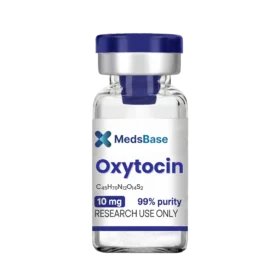 Oxytocine Acetaat
Vragen & antwoorden
Oxytocine Acetaat
Gerelateerde producten

Beoordelingen
Er zijn nog geen beoordelingen