







Synclar
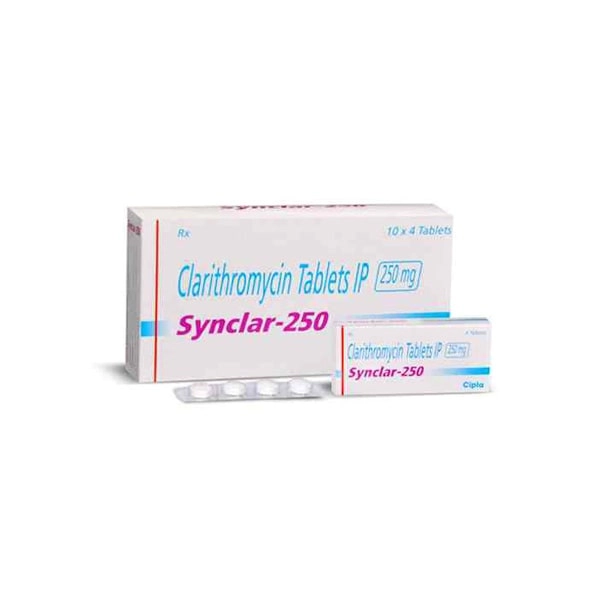
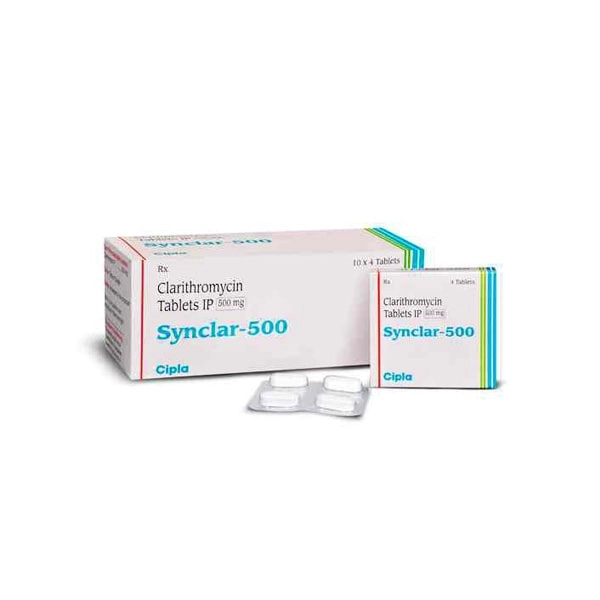
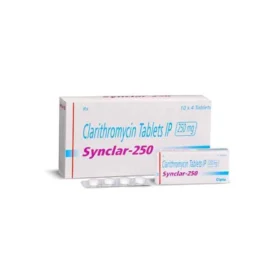
Synclar (Claritromycine 250/500 mg, Cipla) — macrolide antibioticum voor eerste lijn H. pylori-eradicatie (met PPI + amoxicilline), atypische longontsteking en MAC-infectie. Sterke CYP3A4-remmer — controleer interacties. Wereldwijde verzending via MedsBase.
✓ Medisch beoordeeld door Morgan Ellis — Apotheekonderzoeker · 8 jaar ervaring · Laatst beoordeeld: mei 2026
⚡ Snelle vraag — Wat is Synclar?
Synclar is claritromycine 250 mg of 500 mg tablet van Cipla — een 14-ledig macrolide antibioticum. In een gastro-enterologische context is het de hoeksteen van Helicobacter pylori eerste lijn eradicatie als onderdeel van een triple-therapieregime met een PPI en amoxicilline of metronidazol gedurende 14 dagen. Andere indicaties zijn luchtweginfectie (community-acquired pneumonia, exacerbatie van COPD), atypische pneumonie (Mycoplasma, Legionella, Chlamydophila), Mycobacterium avium complex (MAC), en huid-/weke delen infectie. Standaard dosering voor volwassenen: 250–500 mg tweemaal daags gedurende 7–14 dagen. WHO-GMP gecertificeerde fabrikant.
📦 Elke bestelling is gedekt door onze Reshipment Assurance-beleid — als uw pakket niet binnen 20 werkdagen arriveert, sturen wij het opnieuw.
Waarom bestellen bij MedsBase
Onze generieke medicijnen zijn afkomstig van WHO-GMP gecertificeerde fabrikanten en worden wereldwijd verzonden in discrete, eenvoudige verpakkingen — geen medicijnnaam op de buitenkant van het pakket. Betalingen met kaart worden verwerkt via een gereguleerde processor (betalingsoverzichten vermelden een gereguleerde kaartbetalingprocessor — nooit “MedsBase” of een medicijnnaam). Crypto en SEPA bankoverschrijvingen worden ook geaccepteerd. Elke bestelling wordt ondersteund door ons Reshipment Assurance Policy.
Waarom bestellen bij MedsBase
Synclar wordt geleverd vanuit een WHO-GMP gecertificeerde fabrikant. Elke bestelling wordt discreet wereldwijd verzonden en valt onder onze Reshipment Assurance-beleid — als het niet binnen 20 werkdagen arriveert, sturen wij het kosteloos opnieuw. Claritromycine is de standaard partnerantibioticum bij eerstelijns H. pylori-eradicatie en blijft een eerstekeus middel voor atypische pneumonie — bewezen effectiviteit met brede richtlijnondersteuning.
Werkingsmechanisme
Claritromycine bindt reversibel aan het 23S rRNA in de 50S bacteriële ribosomale subunit, waardoor peptide-elongatie wordt geblokkeerd. Het is bacteriostatisch tegen de meeste soorten en bacteriedodend in hoge concentraties tegen gevoelige organismen. Het middel dringt goed door in respiratoir weefsel, maagslijmvlies, macrofagen en bot. De primaire metaboliet (14-OH-claritromycine) is ook actief en draagt bij aan het spectrum. Resistentie ontstaat door 23S rRNA-mutaties en methylering; H. pylori-resistentie tegen claritromycine overschrijdt nu 20–30 procent in veel regio's.
Indicaties
- H. pylori-eradicatie (eerstelijns): claritromycine 500 mg BD + amoxicilline 1 g BD + PPI BD gedurende 14 dagen; vervang door metronidazol bij penicilline-allergie; vervang door bismutquadrupletherapie waar lokale claritromycineresistentie > 15 procent is
- Community-acquired pneumonia (atypisch of als onderdeel van combinatietherapie)
- Acute exacerbatie van chronische bronchitis
- Streptokokkenfaryngitis/tonsillitis (penicilline-allergie)
- Mycobacterium avium complex (MAC)-profylaxe en behandeling bij HIV/transplantatie
- Huid- en weke delen infectie (Staphylococcus, Streptococcus — indien gevoelig)
- Acute bacteriële sinusitis
Dosering
Volwassenen: 250–500 mg tweemaal daags gedurende 7–14 dagen. H. pylori: 500 mg tweemaal daags gedurende 14 dagen als onderdeel van triple/quadruple therapie. MAC: 500 mg tweemaal daags langdurig. CrCl < 30: halveer dosis of verleng interval. Ernstige leverfunctiestoornis bij normale nierfunctie: geen aanpassing; bij gecombineerde lever- en nierfunctiestoornis: vermijden. Kinderen: op gewicht gebaseerd 7,5 mg/kg tweemaal daags (max 500 mg BD).
Bijwerkingen
- Maag-darm: bittere/metaalachtige smaak, misselijkheid, braken, diarree, buikpijn
- QT-verlenging, torsades de pointes (zeldzaam; risico neemt toe bij gelijktijdig gebruik van QT-verlengende middelen)
- Hepatotoxiciteit (zeldzaam; cholestatische hepatitis)
- C. difficile-geassocieerde diarree
- Allergische reacties: huiduitslag, netelroos; zeldzaam Stevens-Johnson syndroom en DRESS
- Hoofdpijn, duizeligheid, tijdelijk gehoorverlies (zeldzaam)
- Cardiovasculaire gebeurtenissen bij langdurig gebruik (licht signaal in observationele gegevens)
Geneesmiddelinteracties
Clarithromycine remt CYP3A4 sterk. Veel interacties; de belangrijkste:
- Statines (simvastatine, lovastatine, atorvastatine): rabdomyolyse — schorsen of overschakelen op pravastatine/rosuvastatine/fluvastatine.
- Ergotalkaloïden: ergotisme (vasospasme) — absoluut gecontra-indiceerd.
- Pimozide: torsades de pointes — absolute contra-indicatie.
- Colchicine bij nierfunctiestoornissen: fatale toxiciteit — absolute contra-indicatie.
- Calciumantagonisten: hypotensie en acuut nierfalen — dosis verlagen, monitoren.
- Warfarine: INR-stijging — monitor.
- QT-verlengende geneesmiddelen: additief risico — combinatie vermijden.
- Gecombineerde anticonceptiepil: werkzaamheid behouden bij korte kuren.
- Carbamazepine, fenytoïne: spiegels stijgen — monitoren.
- Tacrolimus, ciclosporine: spiegels stijgen — monitoren.
- Theofylline: spiegels stijgen.
Veelgestelde vragen
Hoe wordt de H. pylori-tripletherapie ingenomen?
Standaardregime: claritromycine 500 mg tweemaal daags + amoxicilline 1 g tweemaal daags + een PPI (omeprazol 20 mg, esomeprazol 40 mg, of equivalent) tweemaal daags gedurende 14 dagen. Neem alle drie samen in voor maximale eradica.
Wat als H. pylori terugkomt?
Herhaal de test niet eerder dan 4 weken na voltooiing van de therapie en stop de PPI 2 weken voor de test (ureum-ademtest of ontlastingsantigeen). Indien positief, schakel over op bismut-quadruple therapie (PPI + bismut + tetracycline + metronidazole).
Mag ik alcohol drinken tijdens de behandeling?
Matig alcoholgebruik is acceptabel. Zwaar alcoholgebruik verhoogt het risico op hepatotoxiciteit.
Waarom smaakt alles naar metaal?
Een bekend bijwerking van claritromycine (~5% van de patiënten). Het verdwijnt binnen enkele dagen na afloop van de kuur.
Is het veilig tijdens de zwangerschap?
Categorie C. Gebruik alleen als het voordeel duidelijk opweegt tegen het risico; alternatieven (amoxicilline alleen, azitromycine) zijn vaak beschikbaar.
Heeft het interactie met mijn statine?
Ja — simvastatine en lovastatine moeten worden gepauzeerd tijdens claritromycinegebruik (risico op rabdomyolyse). Atorvastatine moet worden verlaagd. Pravastatine, rosuvastatine en fluvastatine worden niet beïnvloed door CYP3A4-remming.
Hoe verschilt het van azitromycine?
Azithromycin is een 15-ledige azalide afgeleid van erytromycine. Het heeft een zwakkere CYP3A4-remming (dus minder geneesmiddelinteracties), een langere halfwaardetijd (behandelingen van één dag of 5 dagen) en een zwakkere werking tegen H. pylori. Claritromycine blijft de voorkeur hebben voor H. pylori; azithromycine heeft de voorkeur wanneer CYP3A4-interacties of eenmaal daagse dosering belangrijk zijn.
Kunnen kinderen het gebruiken?
Ja, met gewichtsgebonden dosering. Nuttig voor atypische pneumonie en kinkhoest bij kinderen.
Kan ik een probioticum gebruiken in combinatie hiermee?
Ja. Neem het probioticum minstens 2 uur voor of na claritromycine in. Probiotica tijdens en na de behandeling verminderen het risico op antibiotica-geassocieerde diarree.
Opslag
Bewaren onder 25°C op een droge plaats. Bewaar de tabletten in de originele blisterverpakking.
Andere Maag-Darm Gezondheidsmedicijnen
- Famocid — Famotidine (H. pylori-partner: H2-blokker)
- Omez — Omeprazol 20 mg (PPI-partner)
- Rcifax — Rifaximin
- Cendox — Doxycycline (H. pylori-salvage)
- Ciplox — Ciprofloxacine (H. pylori-salvage)
- Bekijk alle Maag-Darm Gezondheidsmedicijnen
Meer opties in acnebehandeling
Gerangschikt op recente bestelvolumes van MedsBase — wat andere klanten in deze categorie kiezen.


| Sterkte | 250 mg, 500 mg |
|---|---|
| Hoeveelheid | 32 Tablet/s, 64 Tablet/s, 128 Tablet/s |
| Farmaceutische vorm | Tablet/s |
| Fabrikant | Cipla Inc |
| Behandeling | Maag-darmgezondheid |
| Generiek merk | Clarithromycin |
 Synclar
Vragen & antwoorden
Synclar
Gerelateerde producten









Beoordelingen
Er zijn nog geen beoordelingen