







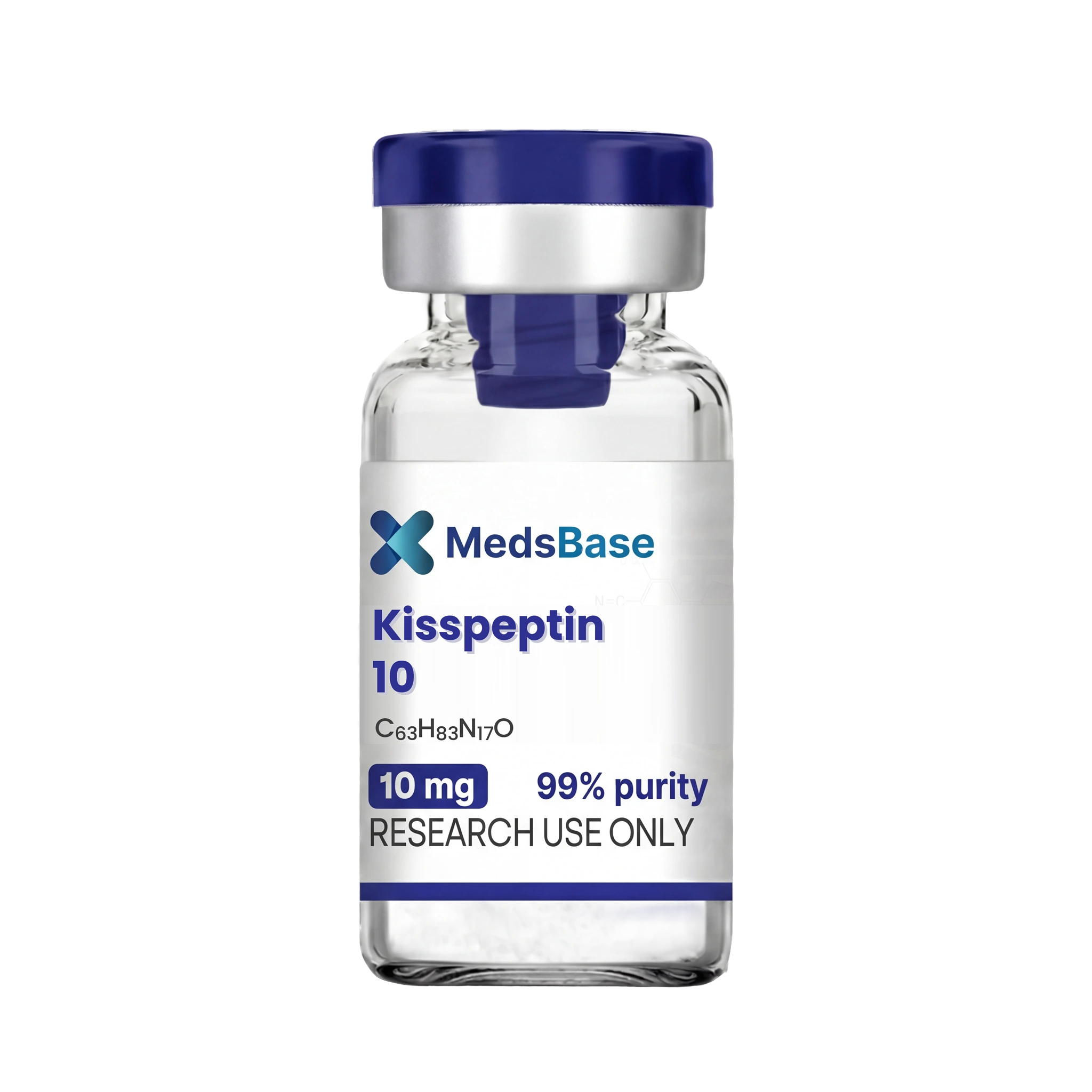
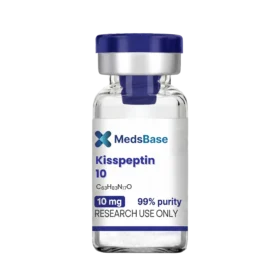
Kisspeptine-10
✅ Apicale regulator van GnRH-neuronactiviteit
✅ KISS1R / GPR54-receptoragonist
✅ HPG-as & puberteitsonderzoeksverbinding
✅ IVF- en ovulatie-inductieonderzoek
✅ Oorspronkelijk geïdentificeerd als metastase-onderdrukker
Kisspeptine-10 bevat synthetisch peptideverbinding.
✓ Medisch beoordeeld door Morgan Ellis — Apotheekonderzoeker · 8 jaar ervaring · Laatst beoordeeld: mei 2026
Kort antwoord — Wat is Kisspeptin-10?
Kisspeptine-10 (KP-10) is een 10-aminozuur peptide, C-terminaal geamideerd, en het meest bestudeerde actieve fragment van het KISS1-genproduct. Het is de belangrijkste endogene regulator van de GnRH-neuronale activiteit — gepubliceerd onderzoek heeft aangetoond dat het de upstream switch is die de puberteit initieert en de pulsatiele gonadotropine-afgifte aanstuurt. Werkt via de GPR54 (KISS1R) G-proteïne-gekoppelde receptor. Leverbaar in 5 mg en 10 mg lyofilisaten voor uitsluitend laboratoriumonderzoek.
📦 Elke bestelling is gedekt door onze Reshipment Assurance-beleid — als uw pakket niet binnen 20 werkdagen arriveert, sturen wij het opnieuw.
| Specificatie | Detail |
|---|---|
| CAS-nummer | 374675-21-5 (kisspeptin-10, humaan) |
| Molecuulformule | C63H83N17O14 |
| Moleculair gewicht | 1302.45 Da |
| Sequentie | Tyr-Asn-Trp-Asn-Ser-Phe-Gly-Leu-Arg-Phe-NH2 (YNWNSFGLRF-NH2, 10 aminozuren; C-terminaal geamideerd actief fragment van het 54-aa mature kisspeptine) |
| Form | Lyofiliseerd poeder (wit tot off-white) |
| Zuiverheid | ≥99% (HPLC geverifieerd, COA op aanvraag) |
| Opslag | Lyofiliseerd: 2–8 °C (koelkast) voor werkvoorraad; −20 °C voor langdurige opslag van ongeopende flesjes. Gereconstitueerd: 2–8 °C, gebruik binnen ~30 dagen. Bescherm tegen licht. Vries de gereconstitueerde oplossing niet in en ontdooi deze niet. |
| Oplosbaarheid | Bacteriostatisch water (aanbevolen) of steriel water voor kortere gebruiksperioden |
| Onderzoeksgebruik | Alleen voor laboratoriumonderzoek. Niet voor humaan of veterinair diagnostisch of therapeutisch gebruik. |
Wat is Kisspeptin-10?
Kisspeptine-10 (KP-10) is een 10-aminozuur peptide en het meest uitgebreid bestudeerde actieve fragment van het KISS1-genproduct, een 145-aminozuur preprokisspeptine dat wordt verwerkt tot het 54-aminozuur mature kisspeptine en verschillende kortere C-terminale actieve fragmenten (kisspeptine-14, kisspeptine-13, kisspeptine-10). Alle kortere fragmenten delen het C-terminale 10-residu actieve kern en hebben een vergelijkbare potentie bij de kisspeptine receptor — kisspeptine-10 is de kortste volledig actieve vorm en verreweg het meest voorkomende onderzoekspeptide in de kisspeptine-literatuur.
De goed gekarakteriseerde sequentie is YNWNSFGLRF-NH2, molecuulgewicht 1302.45 Da, empirische formule C63H83N17O14. De C-terminale amidatie is essentieel voor volledige receptoractiviteit. KISS1 werd oorspronkelijk geïdentificeerd als een metastase-onderdrukkend gen door Lee et al. (Cancer Res 1996) en werd hernoemd tot kisspeptine ter ere van Hershey, Pennsylvania (thuisbasis van Hershey’s Kisses chocolade) waar het gen voor het eerst werd gekloond. De reproductieve rol — KISS1/GPR54 als de belangrijkste regulator van GnRH-neuronen en de moleculaire poortwachter van de puberteit — werd vastgesteld door twee onafhankelijke artikelen in 2003 (Seminara et al., NEJM; de Roux et al., PNAS) die aantoonden dat verlies-van-functie GPR54-mutaties idiopathisch hypogonadotroop hypogonadisme veroorzaken bij mensen. Kisspeptine-10 wordt geleverd als een hoogzuiver lyofilisaat voor reconstitutie met bacteriostatisch water. Het is niet goedgekeurd door de FDA, EMA, MHRA of enige andere grote regulator voor humaan therapeutisch gebruik, hoewel lopend IVF- en onvruchtbaarheidsonderzoek klinische toepassingen onderzoekt. Het onderzoekskwaliteit kisspeptine-10 dat hier wordt verkocht, is geleverd uitsluitend voor laboratoriumonderzoek en is niet bedoeld voor menselijke of veterinaire toediening.
Werkingsmechanisme — GPR54 / KISS1R-signalering en de HPG-as
Wat kisspeptin-10 mechanistisch onderscheidend maakt onder peptiden in reproductieonderzoek, is zijn positie als de hoogste upstream regulator van de gehele hypothalamisch-hypofysaire-gonadale (HPG) as. Het peptide werkt in op een enkele receptor — GPR54 (ook wel KISS1R genoemd) — maar de downstream cascade controleert het volledige reproductieve endocriene systeem volgens gepubliceerd onderzoek:
- GPR54 (KISS1R) activering op GnRH-neuronen — Kisspeptin-10 bindt aan GPR54, een klasse A G-proteïne-gekoppelde receptor die dicht wordt uitgedrukt op GnRH-neuroncellichamen in de hypothalamische arcuate en anteroventrale periventriculaire kernen. Receptoractivatie koppelt aan Gαq/11 en fosfolipase C, wat intracellulair calcium verhoogt en depolarisatie van GnRH-neuronen en pulsatiele GnRH-afgifte in het hypofyseportaalsysteem veroorzaakt. Dit is het meest directe mechanisme — het vuren van GnRH-neuronen is de beperkende stap van HPG-asactiviteit, en kisspeptine is de belangrijkste endogene stimulus.
- Pulsatiele versus surge-mode regulatie van de HPG-as — Kisspeptine-neuronen in de arcuate kern sturen het pulsatiele GnRH/LH-patroon aan dat de gonadale functie gedurende het volwassen reproductieve leven in stand houdt. Een aparte populatie van kisspeptine-neuronen in de anteroventrale periventriculaire kern (bij knaagdieren) genereert de pre-ovulatoire LH-piek bij vrouwtjes. Onderzoek met selectieve stimulatie of uitschakeling van deze populaties heeft de twee modi van HPG-asoutput in gepubliceerd onderzoek ontrafeld.
- Puberteitsinitiatie en de “kisspeptin switch” — Verlies-van-functie GPR54-mutaties veroorzaken een volledig uitblijven van de puberteit bij mensen en diermodellen; gain-of-functie-mutaties veroorzaken centrale vroegtijdige puberteit. De “kisspeptin switch”-hypothese — dat de puberteit wordt ingezet wanneer arcuate kisspeptine-neuronen een kritieke activiteitsdrempel bereiken — is het dominante model voor puberteitsinitiatie in het huidige reproductieve neurowetenschappelijk onderzoek.
Kisspeptin-10 heeft een relatief korte plasmahalfwaardetijd (~5–10 minuten) vanwege snelle proteolytische splitsing, met name bij het centrale RF-amide-motief door matrixmetalloproteïnases. Subcutane, intraveneuze en intracerebroventriculaire toedieningsroutes zijn allemaal gedocumenteerd in gepubliceerd onderzoek; de centrale route is gereserveerd voor mechanisme-van-actie-onderzoek bij knaagdieren waar de BBB-doorkruisingsvraag relevant is. Voor systemisch HPG-as-onderzoek produceert perifere toediening meetbare GnRH/LH-responsen binnen minuten na bolusinjectie.
Gepubliceerde onderzoeksapplicaties
Kisspeptin-10 wordt gebruikt in laboratoriumonderzoekcontexten die onderzoeken:
- Reproductieve endocrinologie en HPG-as-farmacologie — pulsatiele GnRH/LH/FSH-dynamiek, gonadale feedbackregulatie, geslachtssteroïde feedback op kisspeptine-neuronactiviteit (Seminara et al., NEJM 2003; de Roux et al., PNAS 2003)
- Puberteitsonderzoek — timing van puberteitsinitiatie in knaagdier-modellen, kisspeptine-neuronactivatiepatronen tijdens de puberteitsovergang, mechanistische ontleding van centrale vroegtijdige puberteit
- Hypogonadotroop hypogonadisme-onderzoek — preklinische modellen van GPR54 verlies-van-functie, kisspeptine-vervangingsprotocollen, mechanisme-van-actie-onderzoek voor nieuwe hypogonadisme-therapieën
- IVF- en ovulatie-inductieonderzoek — alternatieven voor hCG-trigger in IVF-protocollen, vergelijkbare LH-surge-inductie; klinische vertaling heeft fase 2 bereikt in sommige onderzoeksprogramma's hoewel kisspeptin-10 zelf niet is goedgekeurd
- Polycysteus ovariumsyndroom (PCOS)-onderzoek — veranderde kisspeptine-tonus in PCOS-preklinische modellen, LH-pulsfrequentieafwijkingen, folliculaire rijpingsonderzoek
- Metastasesuppressie en kankerbiologie — KISS1 werd oorspronkelijk geïdentificeerd als een metastase-onderdrukkend gen; gepubliceerd onderzoek blijft de anti-metastatische activiteit van kisspeptine onderzoeken in modellen voor borstkanker, melanoom en alvleesklierkanker
- Cardiovasculair en metabool onderzoek — opkomende KISS1R-expressie op cardiomyocyten en pancreatische β-cellen; effecten op glucosehomeostase en cardiale contractiliteit worden onderzocht
- Vergelijkend onderzoek naar reproductieve peptiden — benchmarking tegen PT-141 (Bremelanotide) voor onderzoek naar seksueel gedrag via de melanocortine-as en tegen Oxytocine Acetaat voor affiliatieve en sociale bindingseindpunten.
Voor een bredere context over waar kisspeptine-10 past binnen het landschap van reproductieve en CNS-actieve peptiden, zie PT-141 (melanocortine-agonist voor onderzoek naar seksueel gedrag), Oxytocine Acetaat (affiliatief-gedragsneuropeptide), en Sermorelin (hypothalamus-hypofyse-onderzoek via de GHRH-as). Bekijk het volledige onderzoekspeptiden catalogus voor gerelateerde verbindingen.
Beschikbare sterktes en concentraties
MedsBase stocks Kisspeptin-10 in two lyophilized vial sizes calibrated to typical research protocol lengths. Each strength is available in 10-vial, 20-vial, or 30-vial pack formats with full reconstitution guidance:
| Vulsterkte | Typisch Onderzoeksgebruik | Verpakkingsgroottes |
|---|---|---|
| 5 mg | Standaard onderzoekssterkte — pilotdosering, HPG-as-pulsprotocollen, enkelvoudige cohortstudies | 10, 20 of 30 vialen |
| 10 mg | Langdurige protocollen, multi-cohortstudies, laagste kosten per mg | 10, 20 of 30 vialen |
Beide sterktes hebben dezelfde chemische vorm (gevriesdroogd poeder, 99%+ HPLC-zuiverheid). Vials met hogere mg vereisen kleinere reconsitutievolumes per eenheidsdosis, wat handig is wanneer onderzoekers injectievolume in knaagdiermodellen willen minimaliseren. Omdat kisspeptine-10 doseringsbereiken in het lage microgramregime per toediening liggen, ondersteunt een enkele 5 mg-vial vele weken van pulsprotocolonderzoek bij typische doseringen.
Vergelijking — Kisspeptine-10 vs PT-141
Kisspeptin-10 en PT-141 (Bremelanotide) zijn beide kleine CNS-actieve peptiden die worden gebruikt in onderzoek naar reproductie- en seksueel gedrag, maar ze werken via fundamenteel verschillende pathways. Kisspeptin-10 werkt in op de endocriene HPG-as op het niveau van GnRH-neuronen; PT-141 werkt in op de melanocortine gedrags-seksuele as op het MC4R-niveau. De twee zijn mechanistisch complementair in plaats van concurrerend in onderzoeksmodellen.
| Criterium | Kisspeptine-10 | PT-141 (Bremelanotide) |
|---|---|---|
| Lengte | 10 aminozuren (decapeptide) | 7 aminozuren (cyclisch heptapeptide) |
| Primaire receptor | GPR54 / KISS1R | MC3R / MC4R melanocortine receptoren |
| Primair effect | GnRH/LH/FSH-afgifte (endocrien) | CNS-gemedieerd seksueel gedrag (gedragsmatig) |
| Onderzoeksdomein | HPG-as, puberteit, hypogonadisme, IVF | Seksueel verlangen, opwinding, erectiele functie |
| Plasma-halfwaardetijd | ~5–10 min | ~2 uur (SC) |
| Goedgekeurd klinisch gebruik | Geen (Fase 2 in IVF-onderzoek) | FDA-goedgekeurd als Vyleesi voor HSDD (ander molecuul dan onderzoekskwaliteit) |
| Typische onderzoeksdosis | 10–200 mcg, bolus of puls | 0,25–2 mg, eenmalige toediening |
De twee peptiden richten zich op verschillende lagen van de reproductieve biologie — kisspeptine-10 op de endocriene HPG-as, PT-141 op de door het CZS gemedieerde gedragsas — dus ze zijn geen directe alternatieven. Onderzoek gericht op pulsatiele GnRH/LH-dynamiek, puberteitstiming of hypogonadisme gebruikt kisspeptine-10. Onderzoek gericht op door het CZS gemedieerde seksuele-opwindingsroutes gebruikt PT-141.
Opslag en Reconstituering
Voor reconstituering: Bewaar lyofiliseerde flesjes gekoeld bij 2–8 °C in de originele verpakking voor kortdurende werkvoorraad. Voor ongeopende langdurige opslag, vries in bij −20 °C. Lyofiliseerde kisspeptine-10 is stabiel onder koeling tot 24 maanden en bij −20 °C tot 36 maanden. Vermijd vries-ontdooicycli van het lyofiliseerde poeder.
Reconstitueringsprocedure: Spuit bacteriostatisch water langs de zijkant van het peptideflesje (niet direct op de lyofiliseerde cake). Voor een flesje van 5 mg levert 2,0 ml bacteriostatisch water een werkconcentratie van 2,5 mg/ml op — 0,04 ml levert een onderzoeksdosis van 100 mcg. Voor lagere doseringen kan verdunning in bacteriostatisch water (met optioneel BSA-dragerproteïne van 0,1%) worden gebruikt. Draai voorzichtig — niet niet Schud — en laat 2–5 minuten staan voor volledige oplossing. Een correct gereconstitueerde oplossing moet helder en kleurloos zijn.
Na reconstitutie: Bewaar gekoeld bij 2–8 °C en gebruik binnen 30 dagen voor optimale stabiliteit. Vries de gereconstitueerde oplossing niet in — vries-ontdooicycli tasten de peptide-integriteit aan. Gooi elk flesje weg dat troebelheid, neerslag of verkleuring vertoont. Kisspeptine-10 is gevoelig voor proteolytische splitsing bij het C-terminale RF-amide motief; de gereconstitueerde oplossing moet prompt worden gebruikt binnen het 30-dagen venster voor protocollen die nauwkeurige dosis-responskalibratie vereisen.
Veelgestelde vragen
Waar wordt Kisspeptine-10 voor gebruikt in onderzoek?
Kisspeptine-10 wordt gebruikt in laboratoriumonderzoek naar de hypothalamisch-hypofyse-gonadale (HPG) as, GnRH-neuronactiviteit, pulsatiele gonadotropine-afgifte, puberteitsonset, hypogonadotroop hypogonadisme, polycysteus ovariumsyndroom (PCOS), IVF en ovulatie-inductiealternatieven voor hCG, kanker metastase-onderdrukking (KISS1 werd oorspronkelijk geïdentificeerd als een metastase-onderdrukkend gen), en opkomende cardiometabole kisspeptine-signalering. Het is het standaard onderzoeksinstrument voor KISS1R / GPR54-farmacologie. De onderzoekskwaliteit kisspeptine-10 die hier wordt verkocht is niet FDA-goedgekeurd en wordt strikt geleverd voor laboratoriumonderzoek alleen.
Hoe verschilt Kisspeptine-10 van PT-141?
Beide zijn kleine CNS-actieve reproductieve peptiden, maar ze richten zich op verschillende receptoren en biologische lagen. Kisspeptin-10 werkt in op de GPR54/KISS1R-receptor op GnRH-neuronen en stuurt de endocriene HPG-as aan (LH, FSH, productie van gonadale steroïden). PT-141 werkt in op MC3R/MC4R melanocortine-receptoren in het CNS en stuurt gedragsmatige-seksuele reacties aan (verlangen, opwinding, erectiele functie). De twee zijn mechanistisch complementair en behandelen verschillende onderzoeksvragen.
Wat is het verschil tussen Kisspeptin-10 en Kisspeptin-54?
Beide zijn actieve fragmenten van het KISS1-genproduct. Kisspeptin-54 (ook wel metastin genoemd) is het volledige volwassen 54-aminozuur peptide dat in vivo wordt uitgescheiden. Kisspeptin-10 is het C-terminale 10-aminozuur actieve kernfragment, dat in essentie volledige receptorpotentie behoudt en het meest gebruikte onderzoekspeptide is omdat de kleinere omvang de synthese goedkoper maakt, de zuiverheid gemakkelijker te verifiëren is en de reconstitutie eenvoudiger is. Kisspeptin-13 en kisspeptin-14 zijn tussenproducten van splitsing die ook het actieve C-terminale kernfragment delen. Alle vier hebben een vergelijkbare potentie bij GPR54.
Wat is de typische onderzoeksdosis van Kisspeptin-10?
Gepubliceerde preklinische protocollen gebruiken typisch 10–200 mcg per toediening in knaagdier modellen, subcutaan of intraveneus toegediend voor bolus-puls onderzoek, of als continue infusie voor chronische-stimulatie studies. Menselijk IVF-onderzoek heeft 6.4–12.8 μg/kg gebruikt als een enkele subcutane triggerdosis. Een flesje van 5 mg gereconstitueerd met 2.0 mL bacteriostatisch water levert 2.5 mg/mL op — 0.04 mL is gelijk aan 100 mcg.
Is Kisspeptin-10 goedgekeurd door de FDA?
Nee. Kisspeptin-10 is niet goedgekeurd door de FDA, EMA, MHRA of enige andere grote regelgever voor humaan therapeutisch gebruik. Fase 2 klinisch onderzoek in IVF ovulatie-inductie is aan de gang, maar kisspeptin-10 is niet goedgekeurd voor enige klinische indicatie. Alle kisspeptin-10 verkocht door leveranciers voor onderzoeksgebruik is voor laboratoriumonderzoek en mag niet aan mensen worden toegediend.
Hoe moet Kisspeptin-10 worden opgeslagen?
Gevriesdroogde flesjes: gekoeld bij 2–8 °C voor kortetermijn werkvoorraad, of −20 °C voor langdurige opslag van ongeopende flesjes. Gereconstitueerde oplossing: gekoeld bij 2–8 °C, gebruik binnen 30 dagen. Vries de gereconstitueerde oplossing niet in — vries-dooicycli degraderen het peptide. Bescherm te allen tijde tegen direct licht. Voor werkverdunningen met lage concentratie wordt BSA-dragerproteïne (0.1%) aanbevolen om adsorptieverliezen te minimaliseren.
Hoe reconstitueer ik Kisspeptin-10?
Volg de hierboven beschreven reconstitutieprocedure. Voeg bacteriostatisch water toe langs de zijkant van het flesje (niet rechtstreeks op het gevriesdroogde poeder), draai voorzichtig en laat 2–5 minuten staan voor volledige oplossing. Schud niet Schud het flesje. Een correct gereconstitueerde oplossing is helder en kleurloos. Voor een flesje van 5 mg + 2,0 mL verdunningsmiddel is de werkconcentratie 2,5 mg/mL.
Welke sterktes heeft MedsBase op voorraad?
MedsBase carries Kisspeptin-10 in 5 mg and 10 mg lyophilized vials. Each strength is available in 10-vial, 20-vial, or 30-vial pack sizes. All vials are supplied at 99%+ HPLC purity with a certificate of analysis available on request.
Waarom werd KISS1 oorspronkelijk kisspeptin genoemd?
Het KISS1-gen werd ontdekt als een metastase-onderdrukkend gen door Lee et al. in Hershey, Pennsylvania (Cancer Res 1996). De naam “kisspeptin” was een speelse verwijzing naar Hershey’s Kisses, de iconische chocolade die in dezelfde stad wordt geproduceerd. De reproductieve rol werd pas in 2003 gekarakteriseerd met de gelijktijdige publicatie van studies over humaan GPR54-mutatie hypogonadisme in NEJM (Seminara et al.) en PNAS (de Roux et al.). Het peptide heeft dus de ongebruikelijke distinctie om zowel als een kanker metastase-onderdrukker als de apicale regulator van de puberteit te zijn gekarakteriseerd — twee rollen die mechanistisch nog niet volledig met elkaar verbonden zijn.
Veroorzaakt Kisspeptin-10 bijwerkingen in onderzoek?
Gepubliceerd preklinisch en Fase 1/2 klinisch onderzoek heeft een goede verdraagbaarheid aangetoond bij typische onderzoeksdoseringen. De voornaamste doelgerichte effecten zijn HPG-as activatie — stijgende LH, FSH, testosteron (mannen) of oestradiol (vrouwen), en downstream gonadale steroïde effecten. Off-target bevindingen omvatten bescheiden cardiovasculaire effecten gemedieerd door KISS1R-expressie op vaatweefsel, en een opvliegend/vasodilatatie-effect dat in sommige menselijke onderzoeken bij hogere doseringen is opgemerkt. Langetermijn veiligheidsgegevens buiten onderzoekscontexten zijn beperkt.
Wat is de halfwaardetijd van Kisspeptin-10?
In preklinisch en klinisch onderzoek heeft kisspeptin-10 een plasmahalfwaardetijd van ongeveer 5–10 minuten na intraveneuze of subcutane toediening. De korte halfwaardetijd is te wijten aan snelle proteolytische splitsing door matrix metalloproteïnases bij het centrale RF-amide motief. Voor chronisch-stimulatieonderzoek worden continue infusie of herhaalde pulsgiftprotocollen gebruikt om receptorbezetting te behouden.
Hoe lang duurt het voordat Kisspeptin-10 effecten laat zien in preklinisch onderzoek?
Acute LH-responsen op bolus toediening van kisspeptin-10 zijn detecteerbaar binnen 5–15 minuten in onderzoek bij knaagdieren en mensen. FSH en downstream gonadale steroïde responsen ontwikkelen zich over uren tot dagen. Chronisch-stimulatie-effecten op de timing van de puberteit in jonge knaagdier-modellen manifesteren zich over het natuurlijke puberteitsvenster — dagen tot weken afhankelijk van de soort en het ontwikkelingsstadium bij interventie.
Kan ik Kisspeptin-10 bestellen voor internationale verzending?
Ja. MedsBase verzendt Kisspeptin-10 wereldwijd vanuit ons toegewijde peptide-verzendnetwerk. Bestellingen met alleen peptides komen in aanmerking voor onze zelfstandige peptide-verzendservice. Alle bestellingen worden verzonden in temperatuurgecontroleerde verpakkingen met volledige tracking en zijn gedekt door onze Reshipment Assurance-beleid.
Andere peptiden voor reproductief, CNS en gedragsonderzoek
- PT-141 (Bremelanotide) — Cyclisch heptapeptide melanocortine agonist — CNS-gemedieerd seksueel-gedragsonderzoek
- Oxytocine Acetaat — 9-aa cyclisch neuropeptide — sociaal-bindings- en affiliatief gedragsonderzoek
- Sermorelin — GHRH(1-29) analoog — hypothalamus-hypofyse-as onderzoek
- CJC-1295 met DAC — Langwerkend GHRH-analoog — onderzoek naar de groeias
- Selank — Anxiolytisch heptapeptide — GABA/BDNF-onderzoek naar stressbestendigheid
Verder lezen
📖 Verken reproductieve en CNS-actieve onderzoekspeptiden
Bekijk het volledige onderzoekspeptiden catalogus, met verwante verbindingen inclusief PT-141 (Bremelanotide) voor onderzoek naar melanocortine en seksueel gedrag, Oxytocine Acetaat voor onderzoek naar sociaal bindingsgedrag, en Sermorelin voor onderzoek naar de hypothalamus-hypofyse-as.
Meer opties in Peptiden
Gerangschikt op recente bestelvolumes van MedsBase — wat andere klanten in deze categorie kiezen.
| Sterkte | 5 mg, 10 mg |
|---|---|
| Hoeveelheid | 10 flacons, 20 flacons, 30 flacons |
 Kisspeptine-10
Vragen & antwoorden
Kisspeptine-10
Gerelateerde producten
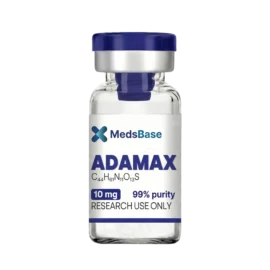
Beoordelingen
Er zijn nog geen beoordelingen