







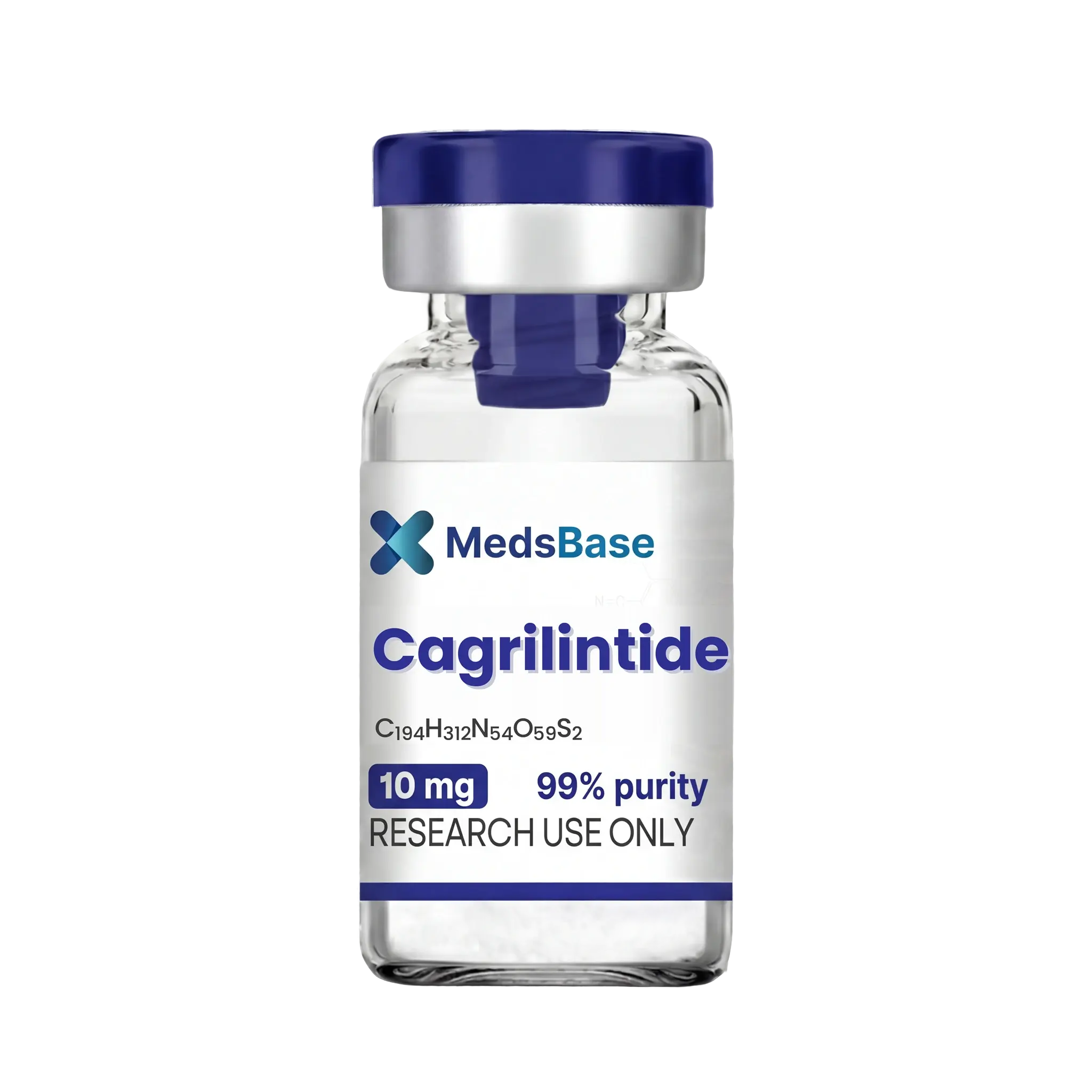
Cagrilintide
✅ Langwerkend amyline-analoog (Novo Nordisk AM833)
✅ Amyline-/calcitoninereceptoragonist
✅ CagriSema-combinatiepartner met semaglutide
✅ Verzadiging in de hersenstam + glucagonsuppressie
✅ Eénmaal per week doseren (~159 uur halfwaardetijd)
Cagrilintide bevat synthetisch peptideverbinding.
✓ Medisch beoordeeld door Morgan Ellis — Apotheekonderzoeker · 8 jaar ervaring · Laatst beoordeeld: mei 2026
Kort antwoord — Wat is Cagrilintide?
Cagrilintide (ontwikkelingscode AM833) is een synthetisch amylin-analoog met lange werkingsduur van 37 aminozuren, ontwikkeld door Novo Nordisk. Het is het belangrijkste onderzoekspeptide in de amylineklasse in het huidige metabolische onderzoek en het partnercompound in de CagriSema-combinatie (cagrilintide + semaglutide), nu in de late fase 3-onderzoeken voor obesitas en diabetes type 2. Een plasmahalfwaardetijd van ~159 uur maakt een eenmaal per week dosering mogelijk. Leverbaar in 5 mg en 10 mg lyofilisatieflacons uitsluitend voor laboratoriumonderzoek.
📦 Elke bestelling is gedekt door onze Reshipment Assurance-beleid — als uw pakket niet binnen 20 werkdagen arriveert, sturen wij het opnieuw.
| Specificatie | Detail |
|---|---|
| CAS-nummer | 1415456-99-3 (cagrilintide; vaak geciteerd) |
| Type | Synthetisch amylin-analoog met lange werkingsduur (geacyleerd 37-aminozuurpeptide; calcitonine/amylinereceptoragonist; Novo Nordisk ontwikkelingscode AM833) |
| Moleculair gewicht | ~4.981 Da (met C20-vetzuurdiacylering en intramoleculaire disulfidebrug) |
| Structuur | 37 aminozuren gebaseerd op het menselijke amylineskelet met substituties die amyloidvormende aggregatie verminderen, een intramoleculaire Cys2–Cys7 disulfidebrug die nodig is voor receptorbinding, en een C20-vetzuurdiacylketen bevestigd via een γ-Glu-OEG-OEG spacer die zorgt voor sterke reversibele serumalbuminebinding voor de halfwaardetijd van eenmaal per week. C-terminus geamidineerd. |
| Form | Lyofiliseerd poeder (wit tot off-white) |
| Zuiverheid | ≥99% (HPLC geverifieerd, COA op aanvraag) |
| Opslag | Lyofiliseerd: 2–8 °C (koelkast) voor werkvoorraad; −20 °C voor langdurige opslag van ongeopende flesjes. Gereconstitueerd: 2–8 °C, gebruik binnen ~30 dagen. Bescherm tegen licht. Vries de gereconstitueerde oplossing niet in en ontdooi deze niet. |
| Oplosbaarheid | Bacteriostatisch water (aanbevolen) of steriel water voor kortere gebruiksperioden. Geacyleerde peptiden kunnen langzamer oplossen dan kleinere ongemodificeerde peptiden — zorg voor extra equilibratie tijd. |
| Onderzoeksgebruik | Alleen voor laboratoriumonderzoek. Niet voor humaan of veterinair diagnostisch of therapeutisch gebruik. |
Wat Is Cagrilintide?
Cagrilintide is een synthetisch analoog van amylin met lange werkingsduur — een 37-aminozuur pancreashormoon dat samen met insuline wordt uitgescheiden door bètacellen en een van de belangrijkste endogene regulatoren is van postprandiale glucosefluctuaties, verzadigingssignalen en maaglediging. Endogeen menselijk amylin heeft een korte plasmahalfwaardetijd (~13 minuten), slechte farmacokinetiek en een sterke neiging om amyloïde aggregaten te vormen (hetzelfde eilandamyloïde dat zich ophoopt in pancreasweefsel bij diabetes type 2). Cagrilintide is door Novo Nordisk (ontwikkelingscode AM833) ontwikkeld om elk van deze beperkingen te overwinnen: substituties om aggregatie te verminderen, een intramoleculaire disulfidebrug behouden voor receptorbinding, en een C20-vetzuurdiacylketen bevestigd via een γ-Glu-OEG-OEG spacer die zorgt voor sterke reversibele binding aan circulerend serumalbumine. Het gecombineerde effect is een plasmahalfwaardetijd van ongeveer 159 uur (~6,5 dagen), wat eenmaal per week subcutane onderzoeksdosering mogelijk maakt.
Cagrilintide heeft een molecuulgewicht van ongeveer 4.981 Da inclusief de acylketen en disulfidebrug. De intramoleculaire Cys2–Cys7 disulfidebrug is essentieel voor receptorbinding — reductie van deze binding zet het peptide om in een inactieve lineaire vorm. De vetzuurketen is één koolstof langer dan de C18-acylketen van semaglutide, wat zorgt voor de lange halfwaardetijd via hetzelfde albuminebindingsmechanisme. Cagrilintide is het meest geavanceerde compound in de hernieuwde golf van amylinepadfarmacologie, met als belangrijkste klinische programma de CagriSema-combinatie — cagrilintide 2,4 mg + semaglutide 2,4 mg wekelijks — die de REDEFINE-1 (obesitas) en REDEFINE-2 (T2DM) fase 3-onderzoeken hebben afgerond met gewichtsverminderingen van ongeveer 20–23% over 68 weken. Cagrilintide is niet goedgekeurd door de FDA, EMA, MHRA of enige andere grote regelgever goedgekeurd voor humaan therapeutisch gebruik als alleenstaand middel of in combinatie. Het onderzoeksgrade cagrilintide dat hier wordt verkocht, is geleverd uitsluitend voor laboratoriumonderzoek en is niet bedoeld voor menselijke of veterinaire toediening.
Werkingsmechanisme — Amylinereceptoragonisme in het centrale zenuwstelsel en perifere locaties
Wat cagrilintide farmacologisch onderscheidt van GLP-1-agonisten is dat het inwerkt op een volledig ander receptorsysteem — de amyline/calcitonine receptorfamilie — via drie hoofdmechanismen die zijn gedocumenteerd in gepubliceerd onderzoek:
- Amylinereceptor (AMY1, AMY2, AMY3) agonisme — verzadigingscircuits in de hersenstam — Amylinereceptoren zijn heterodimeren van de calcitoninereceptor (CTR) met receptor activity-modifying proteins RAMP1, RAMP2 en RAMP3, wat resulteert in de AMY1-, AMY2- en AMY3-receptorsubtypen. De belangrijkste locatie voor verzadigingssignalisering is de area postrema in de hersenstam — een van de weinige gebieden in het centrale zenuwstelsel zonder bloed-hersenbarrière, waardoor circulerende amyline en geacyleerde analogen zoals cagrilintide direct toegang hebben. Activatie van AMY-receptoren in de hersenstam activeert vagale en noradrenerge projecties naar de hypothalamus, wat de voedselinname per maaltijd onderdrukt.
- Glucagonsuppressie en vertraagde maaglediging — Naast centrale verzadiging reproduceert cagrilintide de perifere metabolische effecten van amyline: glucose-afhankelijke suppressie van glucagonsecretie door pancreascellen, vermindering van postprandiale hepatische glucoseproductie en een aanzienlijke vertraging van de maaglediging. De vertraagde maaglediging versterkt de verzadiging door het postprandiale verzadigingssignaal te verlengen en vermindert de omvang van de postprandiale glucosepiek. Tachyfylaxie (gedeeltelijke desensibilisatie) van de maagledigingsvertraging ontwikkelt zich na weken van continue receptorbezetting, parallel aan het GLP-1-aspatroon.
- Complementair mechanisme aan GLP-1 — de redenatie achter CagriSema — De klinische redenatie voor het combineren van cagrilintide met semaglutide berust op de niet-overlappende mechanismen. GLP-1-agonisten werken voornamelijk op POMC-neuronen in de hypothalamische boogkern (regulatie van voedselinname via het centrale eetlustsysteem) en pancreatische bètacellen (glucose-afhankelijke insulinesecretie). Amylin-agonisten werken voornamelijk op AMY-receptoren in het hersenstamgebied area postrema (versterking van verzadiging per maaltijd) en pancreatische alfacellen (onderdrukking van glucagon). De twee mechanismen zijn mechanistisch additief in plaats van overlappend, wat verklaart waarom CagriSema in fase 3-onderzoeken lichaamsgewichtseffecten produceert die de omvang van een triple-agonist benaderen. retatrutide zonder via de GIP- of glucagonreceptor te gaan.
De C20-vetzuuracrylering bij lysine (vergelijkbaar met de C18-modificatie van semaglutide) zorgt voor reversibele serumalbuminebinding die een plasma-halfwaardetijd van ~159 uur oplevert. De intramoleculaire disulfidebrug tussen Cys2 en Cys7 handhaaft de bioactieve conformatie die nodig is voor AMY-receptorbinding — onderzoekers moeten krachtig schudden of vries-dooicycli vermijden die de disulfidebinding kunnen verstoren. Subcutane toediening is de standaard onderzoeksroute en de enige route die in klinische ontwikkeling wordt gebruikt.
Gepubliceerde onderzoeksapplicaties
Cagrilintide wordt gebruikt in laboratoriumonderzoeken die zich richten op:
- Obesitas en lichaamsgewichtregulatie — preklinische DIO (dieet-geïnduceerde obesitas) knaagdier-modellen, lichaamssamenstelling (DEXA/MRI), voedselinname-assays, karakterisering van energieverbruik; canoniek onderzoekspeptide voor het vernieuwde amyline-pathway farmacologieprogramma
- Gecombineerd cagrilintide + GLP-1 (CagriSema) onderzoek — head-to-head en combinatiestudies met semaglutide in obesitas- en T2DM-modellen; mechanistische ontleding van complementaire versus additieve versus synergetische lichaamsgewichtseffecten (Enebo et al., Lancet 2021; CagriSema fase 3-resultaten)
- Preklinisch onderzoek naar diabetes type 2 — glykemische controle, glucagononderdrukking, postprandiale glucose-excursie in knaagdier-modellen met hoog-vetdieet
- Amylinereceptorfarmacologie — AMY1 / AMY2 / AMY3 receptor-subtypeselectiviteit, RAMP-afhankelijke signalering, vergelijkende agonistpotentie bij calcitonine versus amylinereceptoren
- Onderzoek naar verzadigingscircuits in de hersenstam — area postrema-specifieke receptoractivatie, vagale en noradrenerge projectie-mapping, onderscheid met GLP-1-mechanismen in de boogkern
- Onderzoek naar maaglediging en postprandiale fysiologie — maagledigingstijd, postprandiale glucosedynamiek, integratie van de darm-hormoon-as
- Vergelijkend onderzoek naar incretine/amylin-peptiden — benchmarken tegen enkelvoudige GLP-1-agonisten (Semaglutide), dubbele GIP/GLP-1-agonisten (Tirzepatide), en drievoudige GLP-1/GIP/glucagon-agonisten (Retatrutide) voor lichaamsgewichtseffect, glykemische controle en bijwerkingenprofiel.
Voor een bredere context over waar cagrilintide past in het metabolische peptidenlandschap, zie Semaglutide als de CagriSema-combinatiepartner, Tirzepatide als de dubbele-receptorvergelijker, en Retatrutide als de drievoudige-receptorvergelijker. Bekijk het volledige onderzoekspeptiden catalogus voor gerelateerde verbindingen.
Beschikbare sterktes en concentraties
MedsBase stocks Cagrilintide in two lyophilized vial sizes calibrated to typical research protocol lengths. Each strength is available in 10-vial, 20-vial, or 30-vial pack formats with full reconstitution guidance:
| Vulsterkte | Typisch Onderzoeksgebruik | Verpakkingsgroottes |
|---|---|---|
| 5 mg | Standaard onderzoekssterkte — pilotdosering, enkelvoudige cohortprotocollen, kortcyclische titratiestudies | 10, 20 of 30 vialen |
| 10 mg | Langdurige protocollen, multi-cohortstudies, laagste kosten per mg | 10, 20 of 30 vialen |
Beide sterktes zijn dezelfde chemische vorm (lyofilisaatpoeder, 99%+ HPLC-puur). Fase 3 klinische doseringen zijn 2,4 mg wekelijks (de CagriSema-arm), dus onderzoeksvials van 5 mg of 10 mg vertegenwoordigen meerweekse voorraden van klinisch-equivalente doseringen voor in-vivo werk. Cagrilintide is een relatief schaars onderzoekspeptide vanwege de structurele complexiteit (disulfidebrug + acylbinding) en lopende klinische ontwikkelingscontroles, wat zich weerspiegelt in de prijs per mg ten opzichte van kleine synthetische peptiden.
Hoe het zich verhoudt — Cagrilintide vs Semaglutide
Cagrilintide en Semaglutide zijn de twee componenten van de CagriSema-combinatie — het belangrijkste fase 3-klinische middel in de huidige obesitasfarmacologie. Ze werken op volledig verschillende receptorsystemen (amyline/calcitonine versus GLP-1) en produceren mechanistisch complementaire effecten: amyline-as verzadigingsversterking en glucagonsuppressie aan de ene kant, GLP-1-as eetlustregulatie en glucose-afhankelijke insulinesecretie aan de andere kant.
| Criterium | Cagrilintide | Semaglutide |
|---|---|---|
| Receptorfamilie | Amyline / calcitonine receptorfamilie (AMY1/2/3) | GLP-1 receptor (GLP-1R) |
| Lengte | 37 aminozuren | 31 aminozuren |
| Primair CNS-doelwit | Brainstem area postrema | Hypothalamische nucleus arcuatus (POMC-neuronen) |
| Perifere effecten | Glucagonsuppressie, vertraagde maaglediging | Insulinesecretie, glucagonsuppressie, maaglediging |
| Vetzuurverbinding | C20 diacid + γGlu-OEG-OEG | C18 diacid + γGlu-AEEA-AEEA |
| Halfwaardetijd | ~159 uur (~6,5 dagen) | ~165 uur (~7 dagen) |
| Merkreferentie | Onderzoek (AM833; CagriSema-combinatie) | Ozempic / Wegovy / Rybelsus |
| Gewichtseffect (alleenstaand) | ~10% (Fase 2-monotherapie) | ~15% (STEP-onderzoeken) |
| Gecombineerd (CagriSema) | ~20–23% gewichtsvermindering bij 2,4 mg + 2,4 mg wekelijks (REDEFINE-1 Fase 3) | |
Voor onderzoek specifiek gericht op de amylin-as is cagrilintide het standaard langwerkende onderzoekspeptide. Voor onderzoek gericht op maximaal gewichtseffect via combinatiefarmacologie is het CagriSema-model (cagrilintide + semaglutide) het belangrijkste referentiepunt. Voor vergelijking met de receptor-stackingbenadering van enkelvoudige molecuulmulti-agonisten, zie Tirzepatide (dubbele GLP-1/GIP) en Retatrutide (drievoudige GLP-1/GIP/glucagon).
Opslag en Reconstituering
Voor reconstituering: bewaar lyofiliseerde flesjes gekoeld bij 2–8 °C in de originele verpakking voor kortdurende werkvoorraad. Voor ongeopende langdurige opslag, vries in bij −20 °C. Lyofiliseerd cagrilintide is stabiel onder koeling tot 24 maanden en bij −20 °C tot 36 maanden. Vermijd vries-ontdooicycli van het lyofiliseerde poeder. Net als andere disulfidebrugpeptiden hangt de receptorbinding van cagrilintide af van de intacte Cys2–Cys7-binding — omgang die het disulfide verstoort, zal de activiteit verminderen.
Reconstitueringsprocedure: spuit bacteriostatisch water langs de zijkant van het flesje (niet rechtstreeks op de gevriesdroogde cake). Voor een flesje van 5 mg levert 2,0 mL bacteriostatisch water een werkconcentratie van 2,5 mg/mL op — 0,04 mL levert 100 mcg; 0,1 mL levert 250 mcg; ~1,0 mL levert een klinisch equivalente onderzoeksdosis van 2,4 mg. Draai voorzichtig — doe niet bewaar gekoeld bij 2–8 °C en gebruik binnen 30 dagen voor optimale stabiliteit. Vries de gereconstitueerde oplossing niet in — vries-ontdooicycli tasten de peptide-integriteit aan en kunnen de Cys2–Cys7-disulfidebinding verstoren. Gooi elk flesje weg dat troebelheid, neerslag of verkleuring vertoont.
Na reconstitutie: bewaar gekoeld bij 2–8 °C en gebruik binnen 30 dagen voor optimale stabiliteit. Vries de gereconstitueerde oplossing niet in — vries-dooicycli tasten de peptide-integriteit aan en kunnen de Cys2–Cys7-disulfidebinding verstoren. Gooi elke fles weg die troebelheid, neerslag of verkleuring vertoont.
Veelgestelde vragen
Waar wordt Cagrilintide voor gebruikt in onderzoek?
Cagrilintide wordt gebruikt in laboratoriumonderzoek naar de amyline/calcitonine-receptoras, verzadigingscircuits in het hersenstamgebied area postrema, fysiologie van postprandiale glucose, maaglediging, obesitas en lichaamsgewichtsregulatie, preklinische modellen van diabetes type 2, en met name combinatiefarmacologie met GLP-1-agonisten (het CagriSema-onderzoeksmodel met semaglutide). Het is het meest geciteerde langwerkende amyline-analoog in het huidige metabolische peptide-onderzoek. De onderzoekskwaliteit cagrilintide die hier wordt verkocht is niet FDA-goedgekeurd en wordt strikt geleverd voor laboratoriumonderzoek alleen.
CagriSema is de ontwikkelingsnaam voor de vaste-dosiscombinatie van
CagriSema is de ontwikkelingsnaam voor de vaste-dosiscombinatie van cagrilintide + semaglutide bij 2.4 mg + 2.4 mg wekelijks. Het is het belangrijkste fase 3-obesitasprogramma van Novo Nordisk — de REDEFINE-1- en REDEFINE-2-onderzoeken rapporteerden gewichtsverminderingen van ongeveer 20–23% over 68 weken, waardoor CagriSema in hetzelfde bereik voor effectgrootte valt als triple-agonist retatrutide terwijl het een volledig ander mechanisme volgt (combinatie van twee enkele-receptoragonisten in plaats van een enkel multi-agonist molecuul). Cagrilintide is het amylinedeel van deze combinatie.
Hoe verschilt Cagrilintide van Semaglutide?
Het fundamentele verschil zit in het receptorsysteem. Cagrilintide werkt in op de amylin/calcitonin-receptorfamilie (AMY1, AMY2, AMY3) met voornamelijk centrale effecten in het hersenstamgebied area postrema. Semaglutide werkt in op de GLP-1-receptor met voornamelijk centrale effecten in de nucleus arcuatus van de hypothalamus. De twee zijn farmacologisch complementair, niet concurrerend — hun combinatie in CagriSema produceert additieve effecten op lichaamsgewicht die groter zijn dan elk afzonderlijk. Beide zijn langwerkende peptiden met C20/C18-vetzuuracylering die een eenmaal per week dosering mogelijk maken.
Hoe verschilt Cagrilintide van Tirzepatide?
Tirzepatide is een enkel molecuul dat twee receptoren activeert (dual GLP-1/GIP agonist). Cagrilintide activeert alleen de amylin/calcitonine receptorfamilie. Voor onderzoek gericht op lichaamsgewichtseffecten die verder gaan dan enkel-receptor GLP-1, kiest tirzepatide voor de “receptor-stacking in één molecuul”-aanpak, terwijl CagriSema (cagrilintide + semaglutide) de “aparte moleculen in combinatie”-strategie volgt. De twee strategieën hebben vergelijkbare effecten op lichaamsgewicht laten zien in hun respectievelijke fase 3-onderzoeken.
Wat is de typische onderzoeksdosis van Cagrilintide?
Gepubliceerde preklinische en klinische onderzoeksprotocollen gebruiken wekelijkse subcutane toediening met een titratieschema dat start bij 0,16 mg en oploopt via 0,3, 0,6, 1,2 tot uiteindelijk 2,4 mg onderhoudsdosis per week — dezelfde dosis die gebruikt wordt in de CagriSema-combinatie. Een flesje van 5 mg gereconstitueerd met 2,0 mL bacteriostatisch water levert 2,5 mg/mL op — ongeveer 1,0 mL komt overeen met een klinisch-equivalente onderzoeksdosis van 2,4 mg.
Is Cagrilintide goedgekeurd door de FDA?
Nee. Cagrilintide is niet goedgekeurd door de FDA, EMA, MHRA of enige andere grote regelgever voor humaan therapeutisch gebruik, noch als op zichzelf staand middel noch in de CagriSema-combinatie. Fase 3-onderzoeken van CagriSema (REDEFINE-1 obesitas, REDEFINE-2 diabetes type 2) hebben positieve resultaten gerapporteerd, maar indiening en beoordeling door regelgevende instanties zijn volgens de huidige literatuur nog gaande. Alle cagrilintide die door leveranciers voor onderzoeksgebruik wordt verkocht, is bestemd voor laboratoriumonderzoek en mag niet aan mensen worden toegediend.
Hoe moet Cagrilintide worden bewaard?
Gevriesdroogde flesjes: gekoeld bewaren bij 2–8 °C voor kortetermijnvoorraad, of bij −20 °C voor langdurige opslag van ongeopende flesjes. Gereconstitueerde oplossing: gekoeld bewaren bij 2–8 °C, binnen 30 dagen gebruiken. Vries de gereconstitueerde oplossing niet in — vries-dooicycli degraderen het peptide en kunnen de essentiële Cys2–Cys7-disulfidebrug verstoren. Bescherm te allen tijde tegen direct licht.
Hoe reconstitueer ik Cagrilintide?
Volg de hierboven beschreven reconstitueringsprocedure. Voeg bacteriostatisch water langs de zijkant van het flesje toe (niet rechtstreeks op de lyofiliseerde cake), draai voorzichtig en laat 5-10 minuten staan voor volledige oplossing (geacyleerde peptiden lossen langzamer op dan kleinere ongewijzigde peptiden). Doe niet MedsBase voert Cagrilintide in gevriesdroogde flesjes van 5 mg en 10 mg. Elke sterkte is beschikbaar in verpakkingen van 10 of 20 flesjes. Alle flesjes hebben een HPLC-puurheid van 99%+ en een certificaat van analyse is op aanvraag beschikbaar.
Welke sterktes heeft MedsBase op voorraad?
MedsBase carries Cagrilintide in 5 mg and 10 mg lyophilized vials. Each strength is available in 10-vial, 20-vial, or 30-vial pack sizes. All vials are supplied at 99%+ HPLC purity with a certificate of analysis available on request.
Waarom is Cagrilintide duurder dan andere peptiden?
Cagrilintide is structureel complex (37 aminozuren met een intramoleculaire disulfidebrug en een vetzuren-diacylketen) en is een relatief recente verbinding die nog in actieve klinische ontwikkeling is door Novo Nordisk. Beide factoren dragen bij aan hogere synthesekosten en beperkte beschikbaarheid in vergelijking met volwassen kleine synthetische peptiden zoals BPC-157 of TB-500. De prijs per mg weerspiegelt deze leverings- en complexiteitsfactoren, niet een verschil in onderzoeksnut.
Kan Cagrilintide worden gecombineerd met Semaglutide in onderzoek?
Ja — dit is het standaard CagriSema-onderzoeksprotocol en de belangrijkste fase 3-klinische combinatie. Cagrilintide en semaglutide werken in op verschillende receptorfamilies (amyline/calcitonine versus GLP-1) met niet-overlappende centrale en perifere mechanismen, wat additieve effecten op lichaamsgewicht oplevert die aanzienlijk groter zijn dan elk afzonderlijk. De vaste klinische dosisverhouding is 2,4 mg cagrilintide + 2,4 mg semaglutide wekelijks.
Veroorzaakt Cagrilintide bijwerkingen in onderzoek?
Net als andere peptiden op de verzadigingsas is het meest consistente effect gastro-intestinaal — misselijkheid, tijdelijke eetlustremming en vertraagde maaglediging zijn dosisafhankelijk en nemen meestal af na 4–8 weken continue dosering naarmate receptor-tachyfylaxie optreedt. Omdat cagrilintide het amyline-analoog is en geen GLP-1, verschilt het gastro-intestinale profiel in patroon van semaglutide, maar de omvang is vergelijkbaar in gepubliceerd klinisch onderzoek. Langetermijnveiligheidsdata worden nog verzameld in fase 3-onderzoeken.
Wat is de halfwaardetijd van Cagrilintide?
Cagrilintide heeft een plasmahalfwaardetijd van ongeveer 159 uur (~6,5 dagen) na subcutane toediening. De verlengde halfwaardetijd wordt bereikt door reversibele binding aan circulerend serumalbumine via de C20-vetzuren-diacylketen aan lysine, wat het peptide beschermt tegen renale klaring. De halfwaardetijd is vergelijkbaar met die van semaglutide (~165 uur), waardoor beide verbindingen wekelijks samen kunnen worden gedoseerd in CagriSema-onderzoek zonder uiteenlopende farmacokinetiek.
Hoe lang duurt het voordat Cagrilintide effecten laat zien in preklinisch onderzoek?
Acute farmacodynamische effecten op maaglediging en verzadiging per maaltijd zijn al binnen uren na de eerste dosis detecteerbaar. Effecten op lichaamsgewicht in DIO-knaagdier-modellen worden meestal statistisch significant na 1–2 weken wekelijkse dosering en blijven toenemen tot 8–12 weken. Het maximale effect op lichaamssamenstelling ontwikkelt zich over 16–24 weken continue dosering, in lijn met de fase 3-trajectorie bij mensen in REDEFINE-1.
Kan ik Cagrilintide bestellen voor internationale verzending?
Ja. MedsBase verzendt Cagrilintide wereldwijd via ons toegewijde peptideverzendnetwerk. Bestellingen met alleen peptiden komen in aanmerking voor onze aparte peptideverzendservice. Alle bestellingen worden verzonden in temperatuurgecontroleerde verpakkingen met volledige tracking en vallen onder onze Reshipment Assurance-beleid.
Andere peptiden voor metabolisch, lichaamssamenstellings- en verzadigingsasonderzoek
- Semaglutide — Enkelvoudige GLP-1-agonist — CagriSema-combinatiepartner; standaard vergelijker voor glykemisch en CV-onderzoek
- Tirzepatide — Dubbele GLP-1/GIP-agonist — receptor-stacking-in-één-molecuul vergelijker
- Retatrutide — Triple GLP-1/GIP/glucagon-agonist — multi-as metabolisch onderzoek
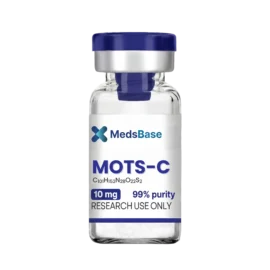
- MOTS-c — Mitochondriaal gecodeerd peptide — AMPK en insulinegevoeligheidsonderzoek
- Tesamorelin — GHRH-analoog — onderzoek naar viscerale adipositas
Verder lezen
📖 Verken het landschap van metabolische-peptidecombinaties
Bekijk het volledige onderzoekspeptiden catalogus, met verwante metabolische-peptideverbindingen zoals Semaglutide (CagriSema-partner), Tirzepatide (dubbele GLP-1/GIP-vergelijker), en Retatrutide (triple-agonistvergelijker). Head-to-head gids: Retatrutide vs Tirzepatide — triple versus dual agonist.
Meer opties in Peptiden
Gerangschikt op recente bestelvolumes van MedsBase — wat andere klanten in deze categorie kiezen.
| Sterkte | 5 mg, 10 mg |
|---|---|
| Hoeveelheid | 10 flacons, 20 flacons, 30 flacons |
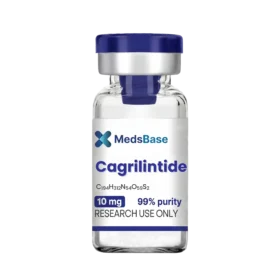 Cagrilintide
Vragen & antwoorden
Cagrilintide
Gerelateerde producten
Beoordelingen
Er zijn nog geen beoordelingen