






Choose by goal area
Best sellers — proven demand
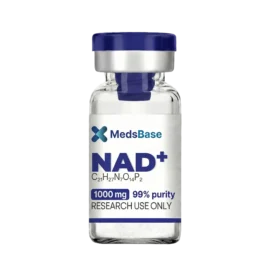
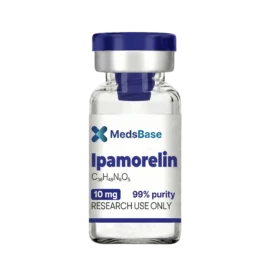
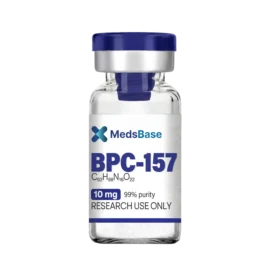
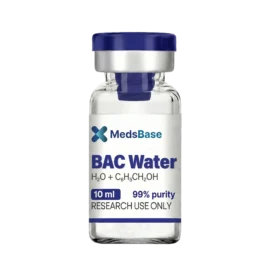
Compare compounds
Side-by-side reference for choosing between related compounds. Every compound links to its full guide and vial ladder.
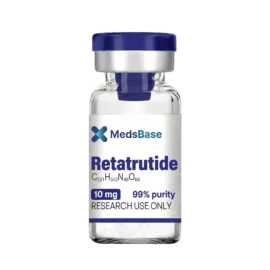
Retatrutide vs other metabolic compounds
| Verbindung | Research class | Format | Stärke | Pack | Preis | Price / vial | COA |
|---|---|---|---|---|---|---|---|
| Retatrutide | Incretin tri-agonist (GLP-1 / GIP / glucagon) | Lyophilized vial | 5 mg | 10 Fläschchen | US$150,00 | US$15.00 | On request |
| Tirzepatide | Incretin dual agonist (GLP-1 / GIP) | Lyophilized vial | 5 mg | 10 Fläschchen | US$105,00 | US$10.50 | On request |
| Semaglutide | Incretin (GLP-1 receptor agonist) | Lyophilized vial | 2 mg | 10 Fläschchen | US$60.00 | US$6,00 | On request |
| Mazdutide | Incretin dual agonist (GLP-1 / glucagon) | Lyophilized vial | 5 mg | 10 Fläschchen | US$560,00 | US$56,00 | On request |
| Survodutide | Incretin dual agonist (GLP-1 / glucagon) | Lyophilized vial | 5 mg | 10 Fläschchen | US$860.00 | US$86,00 | On request |
Prices shown for the entry pack (10 vials, base strength); full vial ladder available on each product page. HPLC ≥99% purity, COA available on request.
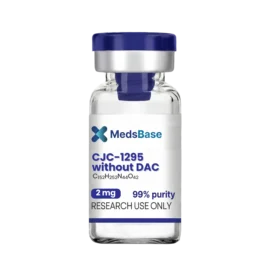
CJC-1295 with DAC vs without DAC
| Verbindung | Research class | Format | Stärke | Pack | Preis | Price / vial | COA |
|---|---|---|---|---|---|---|---|
| CJC-1295 mit DAC | GHRH analogue (DAC-bound, long-acting) | Lyophilized vial | 2 mg | 10 Fläschchen | US$225.00 | US$22,50 | On request |
| CJC-1295 ohne DAC | GHRH analogue (modified GRF 1-29) | Lyophilized vial | 2 mg | 10 Fläschchen | US$210.00 | US$21.00 | On request |
Prices shown for the entry pack (10 vials, base strength); full vial ladder available on each product page. HPLC ≥99% purity, COA available on request.
BPC-157 vs TB-500 positioning
| Verbindung | Research class | Format | Stärke | Pack | Preis | Price / vial | COA |
|---|---|---|---|---|---|---|---|
| BPC-157 | Pentadecapeptide (gastric-derived, tissue repair) | Lyophilized vial | 2 mg | 10 Fläschchen | US$115,00 | US$11,50 | On request |
| TB-500 (Thymosin Beta-4) | Thymosin β-4 fragment (actin-binding) | Lyophilized vial | 2 mg | 10 Fläschchen | US$150,00 | US$15.00 | On request |
Prices shown for the entry pack (10 vials, base strength); full vial ladder available on each product page. HPLC ≥99% purity, COA available on request.
BPC-157 + TB-500 blend vs individual vials
| Verbindung | Research class | Format | Stärke | Pack | Preis | Price / vial | COA |
|---|---|---|---|---|---|---|---|
| BPC-157 + TB-500 Blend | Combined tissue-repair blend (pre-mixed) | Lyophilized vial | 10 mg | 10 Fläschchen | US$300,00 | US$30,00 | On request |
| BPC-157 | Pentadecapeptide (gastric-derived, tissue repair) | Lyophilized vial | 2 mg | 10 Fläschchen | US$115,00 | US$11,50 | On request |
| TB-500 (Thymosin Beta-4) | Thymosin β-4 fragment (actin-binding) | Lyophilized vial | 2 mg | 10 Fläschchen | US$150,00 | US$15.00 | On request |
Prices shown for the entry pack (10 vials, base strength); full vial ladder available on each product page. HPLC ≥99% purity, COA available on request.
GHK-Cu vs AHK-Cu
| Verbindung | Research class | Format | Stärke | Pack | Preis | Price / vial | COA |
|---|---|---|---|---|---|---|---|
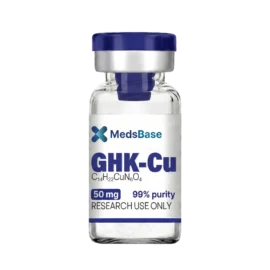
| GHK-Cu | Copper tripeptide (GHK) — cosmetic / regenerative | Lyophilized vial | 50 mg | 10 Fläschchen | US$105,00 | US$10.50 | On request |
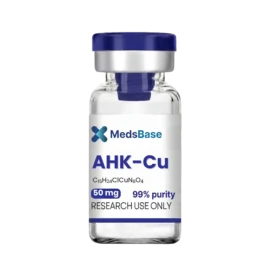
| AHK-Cu | Copper tripeptide (AHK) — cosmetic / hair | Lyophilized vial | 20 mg | 10 Fläschchen | US$120,00 | US$12.00 | On request |
Prices shown for the entry pack (10 vials, base strength); full vial ladder available on each product page. HPLC ≥99% purity, COA available on request.
Semax vs Selank
| Verbindung | Research class | Format | Stärke | Pack | Preis | Price / vial | COA |
|---|---|---|---|---|---|---|---|
| Semax | ACTH(4-10) analogue — nootropic | Lyophilized vial | 5 mg | 10 Fläschchen | US$150,00 | US$15.00 | On request |
| Selank | Tuftsin-derived anxiolytic peptide — nootropic | Lyophilized vial | 5 mg | 10 Fläschchen | US$150,00 | US$15.00 | On request |
Prices shown for the entry pack (10 vials, base strength); full vial ladder available on each product page. HPLC ≥99% purity, COA available on request.


Wichtigste Erkenntnisse
- MedsBase führt 62 peptides and companion compounds across ten biological clusters — tissue repair, growth-hormone secretagogues, GLP‑1/incretin metabolic compounds, cosmetic copper peptides, nootropic CNS peptides, longevity/mitochondrial peptides, reproductive/sexual signalling peptides, immune & antimicrobial peptides, fat-loss & exercise-mimetic compounds, and oncology-peptides.
- Jedes Fläschchen ist lyophilisiert, HPLC ≥99% Reinheit, Analysezertifikat auf Anfrage erhältlich, and shipped via a dedicated peptide courier with discreet protective packaging.
- Lyophilisierte Lagerung: 2–8 °C für Arbeitsbestände, −20 °C für die Langzeitlagerung ungeöffneter Fläschchen. Nach Rekonstitution: 2–8 °C, innerhalb von ~30 Tagen verwenden. Vor Licht schützen. Rekonstituierte Lösung niemals einfrieren und auftauen.
- Below: a goal-led decision tree, a CAS-keyed A–Z reference table of the 39 core compounds (the 23 May 2026 additions are catalogued in the expansion block above), cluster-by-cluster guides, and a sterile reconstitution protocol.
>
Shipping & pricing
Every peptide order carries a flat $50 peptide shipping — dedicated courier charge, applied once per order whenever any Peptides item is in your cart. On a peptide-only order this is the only shipping charge; on a mixed order the peptide parcel ships via courier and any medications ship separately. Product price, this $50 charge, and tax (if any) are shown as separate lines at checkout.
Peptides at MedsBase — The Complete Reference
Peptides are short chains of amino acids that act as biological signalling molecules — coordinating tissue repair, immune responses, growth-hormone release, satiety, melanocortin activity, mitochondrial function, and dozens of other physiological processes. Peptides have become one of the most actively studied categories in modern biotech, regenerative medicine, and longevity science.
This hub is the canonical reference for the entire MedsBase peptide catalogue: it groups the 62 in-stock compounds by goal, provides a CAS-keyed analytical table for clinical referencing, links each molecule to its dedicated guide, and answers the practical questions users actually need answered before reconstitution — sterile technique, cold-chain storage, and how to read the Certificate of Analysis that accompanies every shipment.
User quick‑reference shortcuts
📦 Katalogerweiterung — Mai 2026
Der Katalog wuchs von 39 auf 62 vorrätige Verbindungen through a May 2026 expansion that added 22 new molecules across four genuinely new mechanism classes and several extensions of existing clusters. New additions:
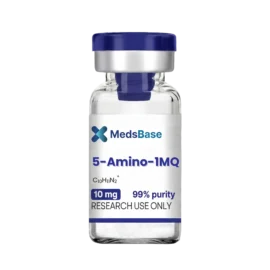
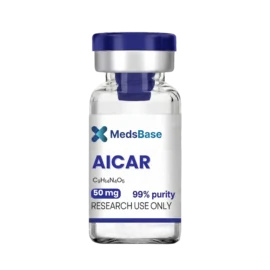
- NAD-Achse & Energiestoffwechsel (neuer Cluster): 5-Amino-1MQ (NNMT-Hemmer — schont NAD-Vorstufen), AICAR (Acadesin) (zellgängiger AMPK-Aktivator), Vitamin B12 (Cyanocobalamin) (Methylierung + Methylmalonyl-CoA-Mutase-Cofaktor), L-Carnitin (Mitochondrien-Shuttle für langkettige Fettsäuren), L-Glutathion (GSH) (Master-Antioxidans-Tripeptid).
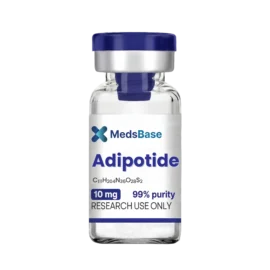
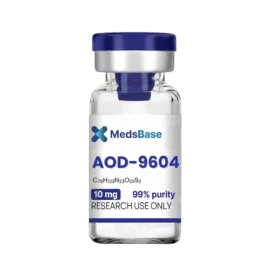
- Fettabbau & Trainingsmimetikum (neues Cluster): AOD-9604 (GHR-entkoppeltes hGH-C-terminales Fragment), Adipotid (FTPP) (weißes Fettgewebe-vaskuläres pro-apoptotisches Chimär), SLU-PP-332 (pan-ERR-transkriptionales Trainingsmimetikum), Super Shred Blend (L-Carnitin + MIC + ATP + Albuterol + B12 zusammengesetzte Mischung).
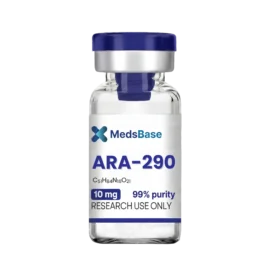
- Immunsystem & antimikrobiell (neues Cluster): Thymosin Alpha-1 (Tα1 / Thymalfasin) (definiertes 28-aa TLR9/TLR2-Agonist), Thymalin (Khavinson-Multikomponenten-Thymusbioregulator), LL-37 (Cathelicidin) (breitbandiges antimikrobielles + immunmodulatorisches Mittel), VIP (Vasoaktives Intestinalpeptid) (28-AS-Neuropeptid VPAC1/VPAC2-Agonist), ARA-290 (Cibinetide) (angeborener Reparaturrezeptor-Agonist — nicht-erythropoetisches EPO-Derivat).
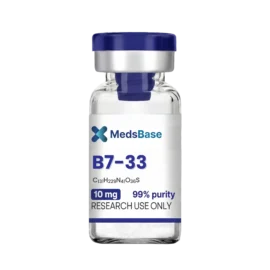
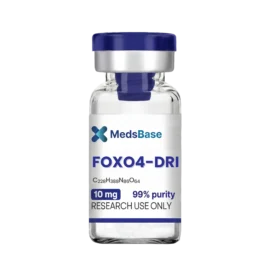
- Senolytisch & antifibrotisch (neues Cluster): FOXO4-DRI (D-retro-inverso Peptid zur Clearance seneszenter Zellen — Baar 2017 Cell) B7-33), (biased RXFP1 Relaxin B-Ketten-Analogon — einsträngiges antifibrotisches Mittel), (verzerrtes RXFP1-Relaxin-B-Ketten-Analogon — Einzelketten-Antifibrotikum), (Khavinson-Tripeptid-Bioregulator). HPG-Achse & reproduktive Expansion:.
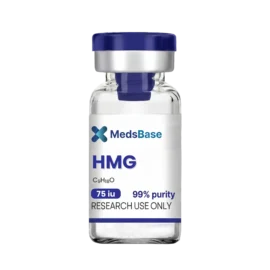
- HPG-axis & reproductive expansion: HCG (Human Chorionic Gonadotropin) — Pharmaceutical Grade (LHCGR-Agonist; Halbwertszeit 33–37 h), HMG (Human Menopausal Gonadotropin / Menotropin) — Pharmaceutical Grade (dual LHCGR + FSHR-Agonist; das aus Urin gewonnene Misch-Gonadotropin-Präparat).
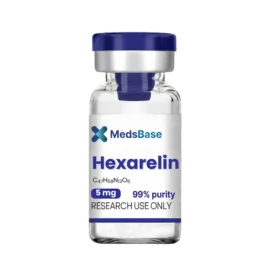
- GH-Achse & kosmetische Erweiterung: Hexarelin Acetat (Examorelin) (potenter GHSR-1a-Agonist; CD36 kardioprotektive Signalgebung), SNAP-8 (Acetyl Octapeptide-3) (topischer SNARE-Komplex-Inhibitor — erweitert das kosmetische Peptid-Cluster).
- Oncology (new niche): PNC-27 (p53-HDM2 Membran-zielgerichtetes Chimär – tumorspezifische Membranlyse).
Each new compound has a dedicated pharmaceutical-grade product page with CAS number (where canonical), molecular formula, published-studies summary, dosing protocol references, and sibling links to mechanistically-related compounds.
Pick by goal
Der schnellste Weg, durch einen Katalog mit 62 Verbindungen zu navigieren, ist der biologische Signalweg, den Sie untersuchen. Die sieben unten aufgeführten Cluster umfassen alle SKUs auf dieser Kategorieseite.
1. Gewebereparatur & Regeneration
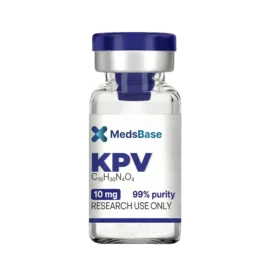
Das am häufigsten erforschte Cluster in der regenerativen Peptidwissenschaft. BPC‑157 ist das Prototyp – ein stabiles 15-Aminosäure-Fragment des Body Protection Compound, das in Magensaft vorkommt und für die Reparatur von Sehnen, Bändern, Magen-Darm-Trakt und Gefäßen untersucht wird. TB‑500 (Thymosin β‑4) ist sein häufiger Stack-Partner, wirkt auf die Aktin-Polymerisation und Angiogenese. KPV ist das α‑MSH-Tripeptid-Fragment mit entzündungshemmenden Effekten, das bei Colitis- und Hautbarriere-Modellen untersucht wird.
- BPC‑157 · Full guide
- TB‑500 (Thymosin Beta-4) · Full guide
- BPC‑157 + TB‑500 Blend · BPC vs TB: Auswahlhilfe
- Peptid-Heilungsstack (BPC + TB + BAC)
- GLOW Blend (BPC‑157 + GHK-Cu + TB‑500)
- KPV (Lys‑Pro‑Val) · Full guide
- Hintergrund: Beste Peptide für Regeneration — Vergleichsanalyse
2. Wachstumshormon-Achse (GHRH & GHRP-Sekretagoga)
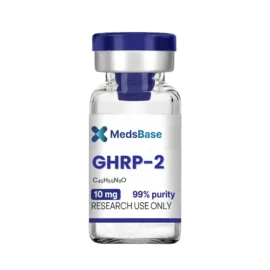
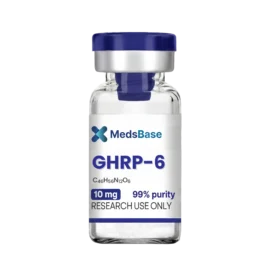
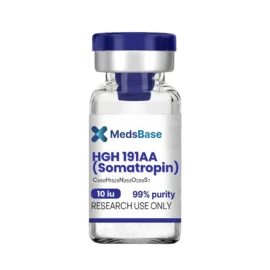
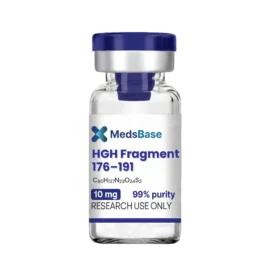
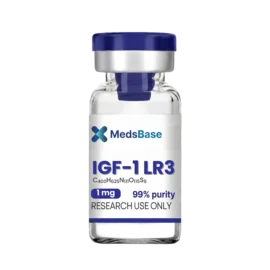
Diese Peptide stimulieren die endogene Wachstumshormonausschüttung über zwei komplementäre Mechanismen. GHRH-Analoga (Sermorelin, CJC‑1295, Tesamorelin) binden an den GHRH-Rezeptor der Hypophysen-Somatotrophen. GHRPs / Ghrelin-Mimetika (Ipamorelin, GHRP‑2, GHRP‑6, Hexarelin) bind the GHS-R1a receptor for amplified pulsatile release. The classical stack pairs one of each — e.g. CJC‑1295 + Ipamorelin — for synergistic GH release with minimal cortisol/prolactin elevation. HGH 191AA ist rekombinantes menschliches Wachstumshormon selbst (Somatropin); HGH Fragment 176‑191 ist ein lipolytisch-selektives C-terminales Fragment ohne die wachstumsfördernden Effekte des vollständigen GH. IGF‑1 LR3 liegt stromabwärts von GH und repräsentiert den anabolen Effekt.
- Sermorelin · Full guide
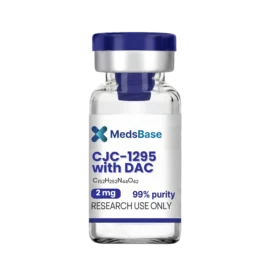
- CJC‑1295 mit DAC (4–8 Tage Halbwertszeit)
- CJC‑1295 ohne DAC (Mod-GRF 1‑29, ~30 min Halbwertszeit)
- Tesamorelin (das Vergleichsmedikament Egrifta ist von der FDA für HIV-assoziierte Lipodystrophie zugelassen – das einzige FDA-zugelassene GHRH-Analogon)
- Ipamorelin (das selektivste GHRP)
- GHRP‑2 Acetat · GHRP‑6 Acetat
- HGH 191AA (Somatropin)
- HGH Fragment 176‑191
- IGF‑1 LR3 · Full guide
- Hintergrund: CJC‑1295 + Ipamorelin Stack-Anleitung · Stack-Mechanismus im Detail
3. GLP‑1 & Inkreten-/Stoffwechselpeptide
Die klinisch am weitesten fortgeschrittene Peptidgruppe – jede Verbindung in dieser Gruppe hat entweder ein FDA-zugelassenes Vergleichsmedikament oder Phase-2/3-Studiendaten. Semaglutide (Vergleichspräparat: Ozempic / Wegovy) ist der GLP‑1-Monoagonist, der die Klasse etabliert hat. Tirzepatide (Vergleichspräparat: Mounjaro / Zepbound) fügt GIP für einen dualen Agonisten zur Gewichtsreduktion hinzu. Retatrutide ist der derzeit in Phase 3 befindliche Triple-Agonist (GLP-1 + GIP + Glucagon) mit den bisher größten Gewichtsverlust-Ergebnissen. Mazdutide und Survodutide sind duale GLP-1/Glucagon-Agonisten. Cagrilintide ist ein langwirksames Amylin-Analogon, das typischerweise zusammen mit Semaglutid (“CagriSema”) erforscht wird.
- Semaglutide
- Tirzepatide
- Retatrutide · Mechanismus-Leitfaden · Study protocol · Retatrutide vs Tirzepatide
- Mazdutide
- Survodutide
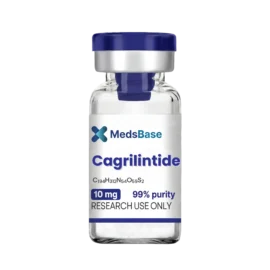
- Cagrilintide
- Hintergrund: Peptid-Stacks für Fettabbau
4. Cosmetic, skin & hair peptides
GHK‑Cu is the prototype copper tripeptide — the most-studied cosmetic peptide, with documented effects on collagen synthesis, hair-follicle stimulation, and wound healing. AHK‑Cu ist sein haarspezifisches Analogon. Melanotan II ist ein synthetisches α‑MSH-Analogon, das auf seine Wirkung auf Melanocortin-Rezeptoren und Pigmentierung untersucht wurde (und die Muttersubstanz von Bremelanotid, separat als PT‑141 weiter unten erhältlich).
- GHK‑Cu (Kupfer-Tripeptid) · Mechanismus-Leitfaden · GHK-Cu for hair loss
- AHK‑Cu
- Melanotan II · Full guide
5. Nootropika & ZNS-Peptide
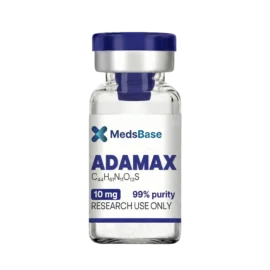
Kurze Peptide, die auf ihre Fähigkeit zur Blut-Hirn-Schranken-Penetration und Wirkung auf ZNS-Rezeptoren untersucht wurden. Semax und Selank sind russisch entwickelte regulatorische Peptide, die auf ihre Wirkung bei Aufmerksamkeit/Angstlösung untersucht wurden (beide basieren auf den ACTH 4‑7-/Tuftsin-Motiven). DSIP ist das Delta-Schlaf-induzierende Peptid. Adamax is a compound being investigated as a Semax follow-on.
6. Langlebigkeit & mitochondriale Peptide
Die neueste Gruppe – Peptide, die auf zelluläre Alterung, mitochondriale Funktion und Telomerbiologie untersucht werden. Epitalon ist das pineal-abgeleitete Tetrapeptid, das auf Telomerase-Aktivität untersucht wird. NAD⁺ ist der zentrale Redox-Cofaktor, dessen altersbedingter Rückgang mehrere Langlebigkeitshypothesen antreibt. SS‑31 (Elamipretide) ist ein Cardiolipin-gerichtetes Tetrapeptid mit FDA-Orphan-Drug-Status für primäre mitochondriale Myopathie (ein regulatorischer Marker, dass das Molekül Phase-2-Sicherheitsmeilensteine erreicht hat, obwohl es nicht für die allgemeine Anwendung zugelassen ist). MOTS‑c ist ein mitochondrien-abgeleitetes Peptid, das im 12S-rRNA-Gen kodiert ist.
7. Sexual, reproductive & muscle-building peptides
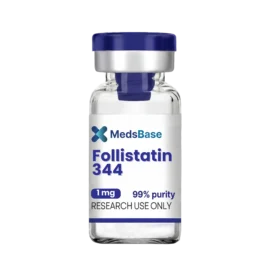
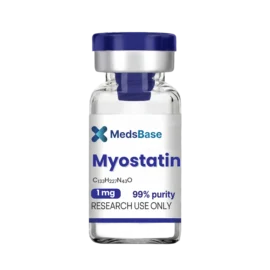
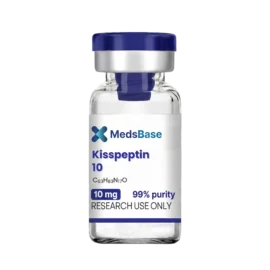
PT‑141 (Bremelanotide) ist das Vergleichsmolekül zum FDA-zugelassenen Vyleesi bei hypoaktiver sexueller Luststörung. Kisspeptin‑10 ist der upstream-Aktivator von GnRH an der hypothalamisch-hypophysär-gonadalen Achse. Oxytocin Acetat ist das Nonapeptid, das für soziale Bindung und Geburt untersucht wird. Follistatin 344 bindet und neutralisiert Myostatin, und GDF‑8 (Myostatin) itself is included for users studying the inhibition axis directly.
CAS-indizierte A–Z-Referenztabelle
Analytical reference for the 39 core compounds — the 23 compounds added in the May 2026 expansion are catalogued in the expansion block above, each linked to its dedicated product page. Compounds are listed alphabetically. CAS numbers, molecular formulae, and molecular weights are provided where the compound has a formal registration; recombinant proteins and proprietary compounds are flagged accordingly. Click any compound name to open its product page; the full Certificate of Analysis with batch-specific HPLC purity is available on request.
| Verbindung | CAS | Molekülformel | MW (Da) | Class / use |
|---|---|---|---|---|
| Adamax | Not registered (compound) | — | — | Nootropikum / ZNS |
| AHK‑Cu | 76549‑44‑9 (Peptid) + Cu(II) | C₁₄H₂₆N₇O₃·Cu | — | Kosmetik / Haare |
| BAC Water | N/A (steriles Rekonstitutionsmedium) | H₂O + 0,9% Benzylalkohol | — | Rekonstitutionslösung |
| BPC‑157 | 137525‑51‑0 | C₆₂H₉₈N₁₆O₂₂ | 1419.5 | Gewebereparatur / GI |
| BPC‑157 + TB‑500 Blend | Komposit | — | — | Gewebereparatur (Kombination) |
| Cagrilintide | 1415456‑99‑3 | C₁₈₃H₂₈₆N₄₄O₅₆ | ~4144 | Amylin-Analogon / Stoffwechsel |
| CJC‑1295 mit DAC | 863288‑34‑0 | C₁₅₂H₂₅₂N₄₄O₄₂ | 3367.9 | GHRH-Analogon (langwirksam) |
| CJC‑1295 ohne DAC | 446262‑90‑4 | C₁₄₉H₂₄₆N₄₄O₄₂S | 3358.9 | GHRH-Analogon (Mod-GRF 1‑29) |
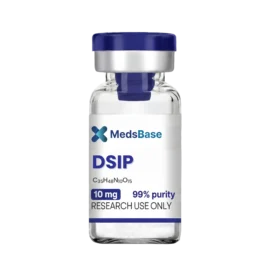
| DSIP | 62568‑57‑4 | C₃₅H₄₈N₁₀O₁₅ | 848.8 | Sleep-peptide |
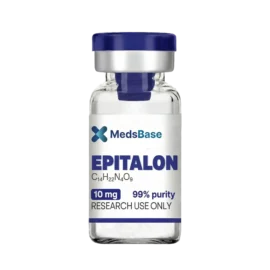
| Epitalon | 307297‑39‑8 | C₁₄H₂₂N₄O₉ | 390.4 | Longevity / telomere support |
| Follistatin 344 | Rekombinantes Protein | — | ~38,000 | Myostatin-Signalweg |
| GDF‑8 (Myostatin) | Rekombinantes Protein | — | ~26.000 (Dimer) | Myostatin-Referenzstandard |
| GHK‑Cu | 89030‑95‑5 | C₁₄H₂₃N₆O₄·Cu | 402.9 | Kosmetik / Kollagen / Haare |
| GHRP‑2 Acetat | 158861‑67‑7 | C₄₅H₅₅N₉O₆ | 817.9 | GHRP / Ghrelin-Mimetikum |
| GHRP‑6 Acetat | 87616‑84‑7 | C₄₆H₅₆N₁₂O₆ | 873.0 | GHRP / Ghrelin-Mimetikum |
| GLOW Blend | Komposit | BPC + GHK-Cu + TB-500 | — | Kosmetik + Reparatur (Kombination) |
| HGH 191AA | 12629‑01‑5 | C₉₉₀H₁₅₂₈N₂₆₂O₃₀₀S₇ | 22,124 | Rekombinantes Somatropin |
| HGH Fragment 176‑191 | 66004‑57‑7 | C₇₈H₁₂₅N₂₃O₂₃S₂ | 1817.1 | Lipolyse-selektives GH-Fragment |
| IGF‑1 LR3 | 946870‑92‑4 | C₄₀₀H₆₂₅N₁₁₁O₁₁₅S₉ | 9111.5 | IGF-1-Lang-Arginin-Analogon |
| Ipamorelin | 170851‑70‑4 | C₃₈H₄₉N₉O₅ | 711.9 | GHRP (selektiv) |
| Kisspeptin‑10 | 374675‑21‑5 | C₆₃H₈₃N₁₇O₁₄ | 1302.5 | HPG-Achsen-Upstream-Aktivator |
| KPV | PubChem CID 125672 | C₁₆H₃₀N₄O₄ | 342.4 | α-MSH-Fragment / entzündungshemmend |
| Mazdutide | 2259147‑25‑2 | — | ~4860 | GLP-1/Glucagon-Doppelagonist |
| Melanotan II | 121062‑08‑6 | C₅₀H₆₉N₁₅O₉ | 1024.2 | Melanocortin-Agonist |
| MOTS‑c | 1627580‑64‑6 | C₇₅H₁₃₃N₂₃O₂₁S₂ | 1720.0 | Mitochondriales Peptid |
| NAD⁺ | 53‑84‑9 | C₂₁H₂₇N₇O₁₄P₂ | 663.4 | Redox-Cofaktor / Langlebigkeit |
| Oxytocin Acetat | 6233‑83‑6 (Acetat) | C₄₃H₆₆N₁₂O₁₂S₂ | 1007.2 | Nonapeptide / social bonding |
| Peptide Healing Stack | Komposit | BPC + TB‑500 + BAC | — | Gewebereparatur (Bundle) |
| PT‑141 (Bremelanotide) | 189691‑06‑3 | C₅₀H₆₈N₁₄O₁₀ | 1025.2 | Melanocortin-4-Agonist |
| Retatrutide | 2381089‑83‑2 | — | ~4731 | GLP-1-/GIP-/Glucagon-Triple-Agonist |
| Selank | 129954‑34‑3 | C₃₃H₅₇N₁₁O₉ | 751.9 | Tuftsin-Analogon / Anxiolytikum |
| Semaglutide | 910463‑68‑2 | C₁₈₇H₂₉₁N₄₅O₅₉ | 4113.6 | GLP-1-Monoagonist |
| Semax | 80714‑61‑0 | C₃₇H₅₁N₉O₁₀S | 813.9 | ACTH 4-7 Analogon / Nootropikum |
| Sermorelin | 86168‑78‑7 | C₁₄₉H₂₄₆N₄₄O₄₂S | 3358.0 | GHRH-Analogon (GRF 1-29) |
| SS‑31 (Elamipretide) | 736992‑21‑5 | C₃₂H₄₉N₉O₅ | 639.8 | Cardiolipin-gerichtetes Mitochondrien-Peptid |
| Survodutide | 2406796‑94‑9 | — | ~4830 | GLP-1/Glucagon-Doppelagonist |
| TB‑500 (Thymosin Beta-4) | 77591‑33‑4 | C₂₁₂H₃₅₀N₅₆O₇₈S | 4963.5 | Aktin-bindend / Gewebereparatur |
| Tesamorelin | 218949‑48‑5 | C₂₂₁H₃₆₆N₇₂O₆₇S | 5135.8 | GHRH-Analogon (langwirksam) |
| Tirzepatide | 2023788‑19‑2 | — | 4813.5 | GLP-1 / GIP Dualagonist |
CAS values and molecular weights are provided for analytical/reference use. Where a compound is a recombinant protein or proprietary compound without a single formal CAS registration, that fact is noted explicitly rather than substituted with an arbitrary identifier. Batch-specific HPLC purity (typically ≥99.0%), sequence verification, and full COA are available on request for any shipment.
Rekonstitution & sterile Technik
Every peptide on this page ships lyophilized (freeze-dried) under vacuum-stoppered glass. Reconstitution introduces the working solution at the concentration appropriate for the planned dosing. Three rules cover ~95% of reconstitution problems.
- Verwenden Sie bakterostatisches Wasser, nicht steriles Wasser allein, für jede Lösung, die länger als 24 Stunden aufbewahrt werden soll. BAC-Wasser enthält 0,9% Benzylalkohol, der das Bakterienwachstum in der Mehrdosisflasche verhindert; steriles Wasser enthält diesen Konservierungsstoff nicht und fördert die mikrobielle Kontamination innerhalb weniger Stunden.
- Fügen Sie das Verdünnungsmittel langsam an der Seitenwand der Flasche hinzu. Direkte Injektion auf den lyophilisierten Kuchen denaturiert das Peptid und verursacht Klumpenbildung. Nach dem Kontakt mit dem Verdünnungsmittel vorsichtig schwenken — niemals schütteln. Die meisten Peptide denaturieren bei heftiger Bewegung. Die vollständige Auflösung sollte unter 60 Sekunden dauern; wenn es nach 5 Minuten trüb ist, vermuten Sie eine Undichtigkeit des Verschlusses oder abgelaufenes Verdünnungsmittel.
- Berechnen Sie die Konzentration vor dem Aufziehen. Eine 5 mg BPC-157-Flasche, rekonstituiert mit 2 ml BAC-Wasser = 2500 µg/ml. Auf einer Standard-Insulinspritze mit 100-Einheiten-/1-ml-Einteilung entsprechen 10 Einheiten = 0,1 ml = 250 µg. Die vollständige Rekonstitutionsrechnung — einschließlich der Zuordnung der Spritzenmarkierungen zur Peptiddosis — wird beispielhaft im BPC‑157 Rekonstitutions- & Dosierungsrechner und dem BAC-Wasser sterile Technik-Anleitung.
Lagerung & Kühlkettenprotokoll
Die Peptidstabilität ist temperaturabhängig und das Stabilitätsfenster unterscheidet sich erheblich zwischen dem lyophilisierten und dem rekonstituierten Zustand.
Kanonisches Lagerprofil (gilt für alle lyophilisierten Peptide in diesem Katalog)
- Lyophilisierte Flasche, ungeöffnet, Langzeitlagerung: −20 °C (Standard-Laborkühlschrank). Stabil für 18–24 Monate unter diesen Bedingungen für die meisten Sequenzen.
- Lyophilisierte Flasche, Arbeitsvorrat: 2–8 °C (Kühlschrank). Stabil für mehrere Monate, während Sie aktiv daraus entnehmen.
- Rekonstituierte Lösung: 2–8 °C (Kühlschrank). Innerhalb von ~30 Tagen verwenden. Einige Sequenzen (z.B. GHRP-Klasse, BPC-157, TB-500) vertragen 30+ Tage gut; andere (z.B. Wachstumshormonfragmente, oxidationsanfällige Met/Cys-haltige Peptide) verlieren nach 14 Tagen an Potenz.
- Vor Licht schützen in allen Lagerungsphasen – aromatische Reste (Trp, Tyr, Phe) photodegradieren.
- Die rekonstituierte Lösung nicht einfrieren und wieder auftauen. Das Einfrieren wässriger Peptide verursacht Eiskristallschäden und Denaturierung. Einmal verflüssigt, gekühlt lagern bis zur vollständigen Verwendung.
MedsBase ships in discreet protective packaging designed to keep lyophilized vials below 25 °C across typical 5–14 day international transit. The peptide-specific courier route is the reason peptide orders are billed a separate $50 USD special-handling fee rather than the standard pharmacy courier — the route uses cold-chain operators and an EU-bonded warehouse rather than the general-medication network.
Häufig gestellte Fragen
Wie lange dauert der Versand von Peptidbestellungen in der Regel?
The dedicated peptide-courier route ships from an EU-bonded warehouse and clears most destinations within 5–14 business days. The route is separate from the general MedsBase pharmacy network — that’s why peptide orders carry a flat $50 USD special-handling fee (the peptide courier itself ships free on peptide-only carts) and a separate dispatch confirmation. Every order is covered by the same reshipment-assurance policy applied to all products on the site.
Werden die Peptide HPLC-getestet? Kann ich ein COA einsehen?
Ja. Jede Charge wird auf eine HPLC-Reinheitsschwelle von ≥99,0 % getestet. Das Analysezertifikat für eine bestimmte Charge — mit Retentionszeiten, Peak-Integration, Massenspektrometrie-Bestätigung des Molekulargewichts und Sequenzverifizierung — ist auf Anfrage erhältlich. Kontaktieren Sie den Support nach der Bestellung mit der Chargen-ID, die auf Ihrem Fläschchen aufgedruckt ist, und das COA wird innerhalb eines Werktages per E-Mail zurückgesendet.
Was ist der Unterschied zwischen CJC‑1295 mit DAC und ohne DAC?
The “DAC” stands for Drug Affinity Complex — a maleimidopropionyl group that lets the peptide bind covalently to circulating albumin, extending half-life from ~30 minutes to roughly 4–8 days. Without-DAC CJC‑1295 (also called Mod-GRF 1‑29) produces sharp pulsatile GH release approximating endogenous pulsatility; with-DAC CJC‑1295 produces a sustained “GH bleed” elevation across days. Users pick based on which pulse profile they’re modelling. With-DAC is more commonly paired with Ipamorelin for sustained GH/IGF‑1 elevation studies; without-DAC is preferred where preservation of the natural pulse pattern matters.
Was ist der Unterschied zwischen Retatrutide, Tirzepatide, Semaglutide, Mazdutide und Survodutide?
Alle fünf sind Peptide der Incretin-Klasse, die sich durch die von ihnen aktivierten Rezeptor(en) unterscheiden. Semaglutide — Nur GLP‑1-Rezeptor (Monoagonist). Tirzepatide — GLP‑1 + GIP (Dualagonist). Retatrutide — GLP‑1 + GIP + Glukagon (Tripleagonist). Mazdutide und Survodutide — GLP‑1 + Glukagon (Dualagonisten, ohne den GIP-Arm). Die Studienergebnisse zum Gewichtsverlust korrelieren weitgehend mit der Anzahl der aktivierten Rezeptorarme. Siehe die Retatrutide vs Tirzepatide im direkten Vergleich für direkte Vergleichsstudien.
Kann ich BPC‑157 und TB‑500 kombinieren?
The BPC‑157 + TB‑500 stack is one of the most-studied tissue-repair combinations in peptide science — BPC‑157 acts on local growth-factor signalling and angiogenesis at the injury site, while TB‑500 acts systemically on actin polymerization and cell migration. Both products are stocked individually, as a vorgemischte Mischung, oder als Teil des Peptide Healing Stack mit enthaltenem BAC-Wasser. Siehe den BPC vs TB Vergleichsleitfaden für mechanistische Unterschiede.
Warum kommt GHK-Cu mit Kupfer gepaart, während andere Peptide das nicht tun?
GHK ist ein Tripeptid (Glycyl-L-Histidyl-L-Lysin) mit hoher Kupferbindungsaffinität. Die biologische Aktivität, die in kosmetischen und wundheilenden Modellen erforscht wird – wie die Hochregulierung der Kollagensynthese und die Aktivierung von Haarfollikel-Stammzellen – hängt von der chelatisierten Cu(II)-Form ab, nicht vom freien Peptid. Die gleiche Logik gilt für AHK-Cu. Die meisten anderen Peptide auf dieser Seite werden in ihrer freien Säure- oder Acetatsalzform ohne Metallchelatisierung untersucht.
Was bedeutet “lyophilisiert” und warum ist das wichtig?
Lyophilisation (Gefriertrocknung) ist die Standardkonservierungsmethode für Peptide – das Peptid wird eingefroren, dann wird das Wasser durch Sublimation unter Vakuum entfernt, wodurch ein stabiler fester Kuchen zurückbleibt. Lyophilisierte Peptide haben eine viel längere Haltbarkeit als wässrige Lösungen, da Hydrolyse, Oxidation und mikrobielles Wachstum alle Wasser benötigen. Bereiten Sie nur das Arbeitsvolumen auf, das Sie innerhalb von ~30 Tagen verwenden werden; bewahren Sie die restlichen Fläschchen im Gefrierschrank auf.
Kann ich bakteriostatisches Wasser separat bestellen?
Ja – BAC-Wasser wird als eigenständige SKU versendet. Das Peptide Healing Stack Bundle enthält BAC-Wasser mit BPC‑157 + TB‑500. Standardgrößen sind 10-mL-Mehrdosenfläschchen – ausreichend für mehrere Rekonstitutionsrunden, abhängig von der Peptidkonzentration und dem Studiendesign.
Welchen Peptid-Leitfaden sollte ich zuerst lesen, wenn ich neu in diesem Katalog bin?
Für den Gewebereparatur-Cluster: BPC‑157 guide → Beste Peptide für die Regeneration. Für Wachstumshormone: CJC‑1295 + Ipamorelin Stack. Für GLP-1 / Stoffwechsel: Retatrutide-Wirkmechanismus-Leitfaden. Für kosmetische / Hautanwendungen: GHK-Cu-Vertiefung. Für Langlebigkeit: Epitalon & NAD⁺. Für den praktischen Rekonstitutionsaspekt: BAC-Wasser-Leitfaden.