







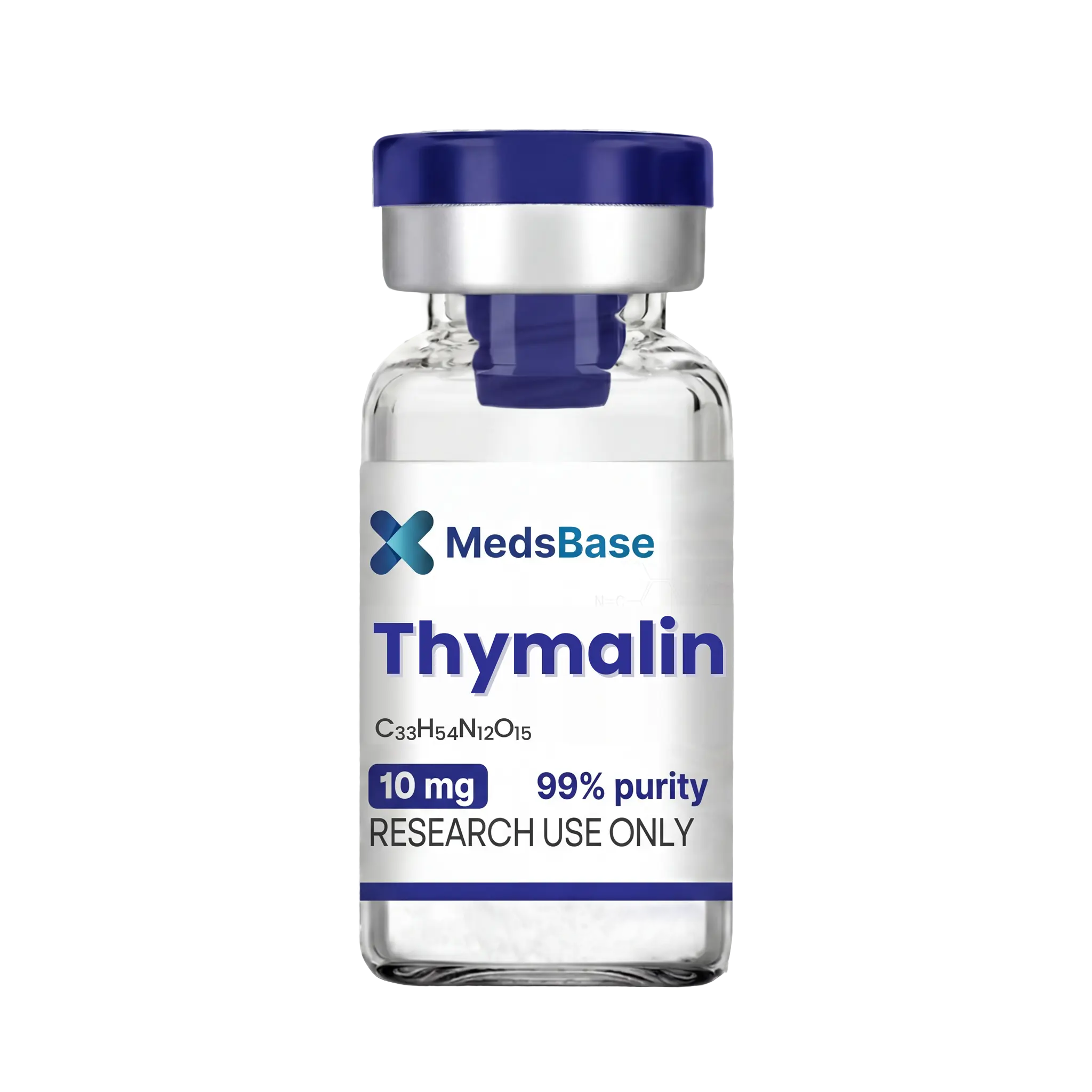
Thymalin (Khavinson Thymus Polypeptide Bioregulator)
✅ Meervoudige thymuspolypeptidepreparaat (Khavinson bioregulatorklasse)
✅ Mengsel van korte oligopeptiden (di- tot hexapeptiden) — geen enkele sequentie
✅ Thymus-as T-celrijping + onderzoek naar leeftijdsgerelateerde thymusinvolutie
✅ Gepubliceerd Russisch onderzoek naar immuunmodulator (St. Petersburg Gerontology Institute)
✅ Gefreeze-droogd HPLC ≥99% met batch-fingerprint COA
Thymalin bevat een meervoudige thymus-afgeleide polypeptide bioregulatorpreparaat.
✓ Medisch beoordeeld door Morgan Ellis — Apotheekonderzoeker · 8 jaar ervaring · Laatst beoordeeld: mei 2026
Kort antwoord — Wat is Thymalin?
Thymalin is een polypeptidepreparaat geëxtraheerd uit thymusweefsel van kalveren of varkens, ontwikkeld door Khavinson en collega's aan het St. Petersburg Instituut voor Bioregulatie en Gerontologie vanaf de jaren 1970. In tegenstelling tot enkelvoudige peptide-onderzoeksverbindingen, is Thymalin een multi-componenten peptidecomplex (typisch MW-bereik 1–10 kDa in het mengsel) bestaande uit korte oligopeptidebioregulatoren afkomstig uit thymusstromacellen. De meest aangehaalde actieve componenten zijn tetrapeptide EW (Glu-Trp) en andere Khavinson-klasse korte peptidebioregulatoren. Thymalin wordt in gepubliceerd Russisch en Oost-Europees onderzoek gebruikt als een thymus-as immuunmodulator die T-celrijping bevordert, leeftijdsgerelateerde thymusinvolutiemarkers herstelt en neuro-endocriene-immuun interactie moduleert. Alleen voor laboratoriumonderzoek. Polypeptidebioregulatorpreparaat — geen enkelvoudig sequentiepeptide.
📦 Elke bestelling is gedekt door onze Reshipment Assurance-beleid — als uw pakket niet binnen 20 werkdagen arriveert, sturen wij het opnieuw.
| Specificatie | Detail |
|---|---|
| Compound Class | Polypeptidebioregulatorpreparaat (multi-componenten thymuspeptidemengsel); Khavinson-klasse peptidebioregulator |
| Source | Weefselextractie uit kalfs- of varkensthymus; gezuiverd door zuurextractie + chromatografische fractionering |
| CAS-nummer | Multi-componenten preparaat — geen enkelvoudig canoniek CAS; identificatie via HPLC-fingerprint en bioactiviteitstest |
| Molecuulformule | Meervoudige thymus-polypeptide bioregulator (Khavinson-preparaat) — heterogene laagmoleculaire peptidepool uit kalfsthymus ultrafiltraat, < 10 kDa. Geen enkele molecuulformule vanwege multi-peptide samenstelling; activiteit toegeschreven aan de kort-peptide fractie. |
| Actieve componenten | Mengsel van korte oligopeptiden (voornamelijk di- tot hexapeptiden), MW-bereik ~200–10.000 Da. Best gekarakteriseerde componenten omvatten thymus dipeptide EW (Glu-Trp) en andere Khavinson kort-peptide bioregulatoren. |
| Werkingsmechanisme | Meervoudige thymus-as immuunmodulatie. Gepubliceerd onderzoek schrijft effecten toe aan: (1) bevordering van T-cel precursor rijping in thymus cortex en medulla; (2) herstel van leeftijdsgerelateerde thymus involutie markers (verbeterde TREC telling, verhoogde thymus-output naive T-cel productie); (3) modulatie van cytokine balans (IL-2, IFN-γ upregulatie in lymfocyt culturen); (4) cross-talk met hypothalamus-hypofyse-as via het Khavinson-peptide bioregulator netwerk. |
| Vorm / Zuiverheid | Gevriesdroogd wit tot bleekgeel amorfe poeder; ≥99% HPLC zuiverheid (meervoudige component preparaat; HPLC profiel-fingerprint COA beschikbaar) |
| Opslag | Gevriesdroogd: 2–8 °C kortetermijn, −20 °C langetermijn. Aangemaakt: 2–8 °C, gebruik binnen 30 dagen. Vermijd vries-ontdooicycli. |
| Onderzoeksgebruik | Alleen voor laboratoriumonderzoek. Niet voor menselijke of veterinaire diagnostische of therapeutische toepassing. Thymalin heeft klinisch gebruik goedkeuring in Rusland en enkele CIS-landen maar is niet goedgekeurd door FDA / EMA / MHRA. Staat niet op de WADA Verboden Lijst. |
Werkingsmechanisme — Thymus-As Bioregulator
Thymalin is de klassieke Khavinson-klasse peptide bioregulator afkomstig van thymusweefsel. Het Khavinson bioregulator concept (ontwikkeld aan het St. Petersburg Institute of Bioregulation and Gerontology vanaf de jaren 1970) stelt dat weefselspecifieke korte peptiden fungeren als inter-organ signaalmoleculen die leeftijdsadequate weefselfunctie behouden — en dat leeftijdsgerelateerde achteruitgang het verlies van deze peptide bioregulator signalen uit het bronweefsel reflecteert. Thymalin is het oorspronkelijke lid van deze klasse en wordt in gepubliceerd Russisch onderzoek gebruikt als de klassieke thymus-as bioregulator.
Werkingsmechanisme volgens gepubliceerd onderzoek:
- T-cel precursor rijping — bevordert differentiatie van CD4-CD8- thymocyt precursors door CD4+CD8+ dubbel-positief stadium naar volwassen CD4+ of CD8+ T-cel uitstroompopulaties
- Thymus involutie omkering — gepubliceerd onderzoek bij knaagdieren en mensen toont verbetering in leeftijdsgerelateerde thymus-involutie markers (verhoogde thymus-output TREC-telling, verbeterde naive-T-cel ratio)
- Cytokinemodulatie — gepubliceerd in-vitro lymfocytkweekonderzoek rapporteert upregulatie van IL-2 en IFN-γ productie
- Neuro-endocriene-immuun interactie — Khavinson-klasse peptiden worden voorgesteld om de hypothalamus-hypofyse-immuunintegratie te moduleren
- Anti-aging / levensduuronderzoek — meerdecennia follow-up van een Russische onderzoekscohort heeft verminderde leeftijdsgecorrigeerde mortaliteit gerapporteerd bij oudere populaties die herhaalde Thymalin-kuren ontvingen (controversieel — niet gerepliceerd in Westerse trials)
Gepubliceerde onderzoeksapplicaties
- Khavinson bioregulator farmacologie — canonieke thymus-as onderzoekscompound
- Thymus-involutie onderzoek — leeftijdsgerelateerde afname van T-celproductie
- Onderzoek naar veroudering van het immuunsysteem — productie van naive T-cellen, TREC-telling
- Modulatie van het cytokine-netwerk — onderzoek naar IL-2, IFN-γ
- Vergelijkend onderzoek naar thymuspeptiden — vergeleken met Epitalon (pineale-as bioregulator) en andere Khavinson korte peptiden
Voor bredere context, zie Epitalon (Khavinson pineaal tetrapeptide), Pinealon (Khavinson tripeptide), Thymosine Alpha-1 (enkelvoudige thymus immuunpeptide — directe vergelijking), en de volledige peptide-onderzoekcatalogus.
Beschikbare sterktes
| Vulsterkte | Verpakkingsgroottes |
|---|---|
| 10 mg — onderzoeksprotocol standaard; weerspiegelt klinisch gebruiksvialformaat van Russische Thymalin preparaten | 10, 20 of 30 vialen |
Hoe het zich verhoudt — Thymalin versus Thymosin Alpha-1
Beide zijn thymus-afgeleide immuunpeptiden, maar ze verschillen fundamenteel in moleculaire aard. Thymosine Alpha-1 is een gedefinieerd enkelvoudig 28-aminozuur peptide (CAS 62304-98-7, MW 3108) met een gekarakteriseerd werkingsmechanisme (PRR-pathway en T-cel-as modulatie). Thymalin is een multi-component polypeptidepreparaat afgeleid van volledig thymusweefselextract — bevat meerdere korte oligopeptiden waarvan de individuele identiteiten en verhoudingen licht variëren tussen batches. Onderzoekers die gedefinieerde-mechanisme enkelvoudige peptide farmacologie bestuderen, gebruiken Thymosin Alpha-1; zij die bredere Khavinson-bioregulator-klasse thymus-extract effecten bestuderen, gebruiken Thymalin.
Opslag en Reconstituering
Gevriesdroogd 2–8 °C kortdurend, −20 °C langdurig. Reconstitueren in bacteriostatisch water (1,0 mL per 10 mg vial → 10 mg/mL). Zachtjes zwenken. Bewaar gereconstitueerd bij 2–8 °C, gebruik binnen 30 dagen.
FAQ
Is Thymalin een enkelvoudig peptide of een mengsel?
Thymalin is een multi-component polypeptidepreparaat — een mengsel van korte oligopeptiden (voornamelijk di-, tri-, tetra- en hexapeptiden) geëxtraheerd uit thymusweefsel. Het is geen enkelvoudig sequentie peptide. De HPLC vingerafdruk is reproduceerbaar batch-tot-batch, maar het preparaat wordt gekarakteriseerd door mengselcompositie in plaats van een enkelvoudig CAS / sequentie.
Hoe verschilt Thymalin van Thymosin Alpha-1?
Thymalin is een multi-component thymus extract; Thymosine Alpha-1 is een gedefinieerd enkelvoudig 28-aa peptide. Ze zijn mechanistisch verwant (beide moduleren thymus-as immuunfunctie) maar moleculair verschillend.
Welke doseringsbereiken worden in onderzoek gebruikt?
Russische klinische protocollen gebruiken 5–20 mg/d IM voor 5-10 daagse kuren. In-vitro lymfocyt-cultuur studies gebruiken micromolaire peptide-mengsel concentraties.
Andere Khavinson / Immuun Bioregulator Onderzoekspeptiden
- Thymosine Alpha-1 — Gedefinieerd enkelvoudig 28-aa thymus peptide — directe vergelijking
- Epitalon — Khavinson pineal-as tetrapeptide
- Pinealon — Khavinson tripeptide bioregulator
- Selank — Russisch ontwikkeld anxiolyticum / immuunmodulerend peptide
- Semax — Russisch ontwikkeld nootropisch peptide
- BAC Water (Bacteriostatisch Water) — Benodigd voor het reconstitueren van elk lyofiliseerd flesje — steriel, 0,9% benzylalcohol-geconserveerd oplosmiddel
Meer opties in Peptiden
Gerangschikt op recente bestelvolumes van MedsBase — wat andere klanten in deze categorie kiezen.
| Sterkte | 10 mg |
|---|---|
| Hoeveelheid | 10 flacons, 20 flacons, 30 flacons |
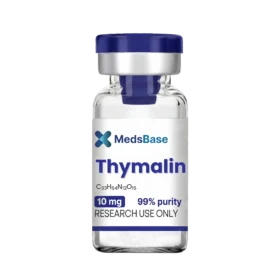 Thymalin (Khavinson Thymus Polypeptide Bioregulator)
Vragen & antwoorden
Thymalin (Khavinson Thymus Polypeptide Bioregulator)
Gerelateerde producten
Beoordelingen
Er zijn nog geen beoordelingen