CagriSema Blend (Cagrilintide 5 mg + Semaglutide 5 mg)
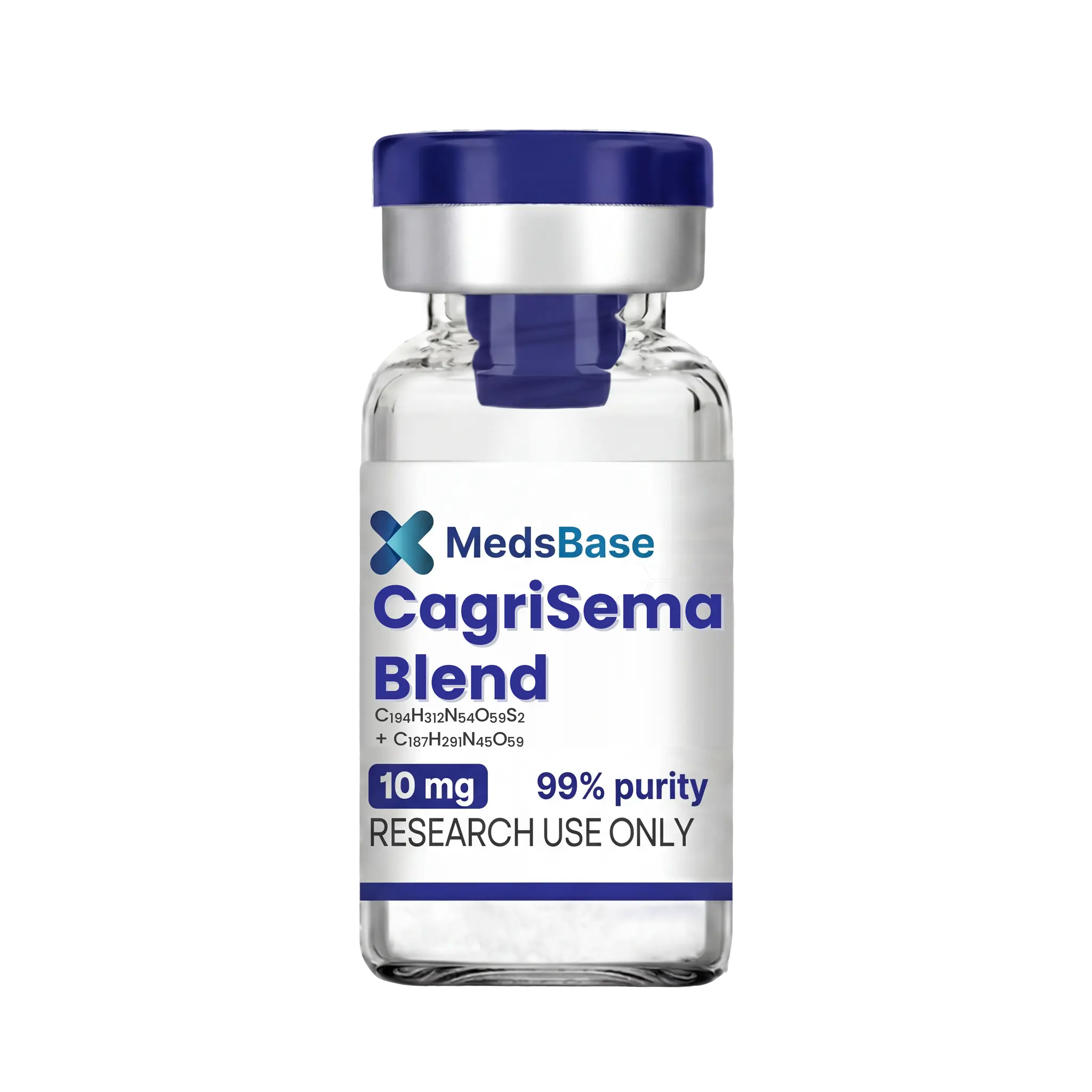
✅ Co-geformuleerde cagrilintide + semaglutide blend (1:1)
✅ Beide peptiden in één vial (5 mg + 5 mg)
✅ Novo Nordisk leidt fase 3 obesitascombinatie
✅ ~20–23% lichaamsgewichtseffect (REDEFINE-1)
✅ Amylin + GLP-1 complementaire mechanismen
CagriSema is een gecombineerd peptidemengsel.
✓ Medisch beoordeeld door Morgan Ellis — Apotheekonderzoeker · 8 jaar ervaring · Laatst beoordeeld: mei 2026
Kort antwoord — Wat is CagriSema?
CagriSema is de gecombineerde formulering van cagrilintide (langwerkend amyline-analoog) en semaglutide (langwerkend GLP-1-agonist) in een enkele gevriesdroogde fles. Het is het belangrijkste fase 3-obesitasprogramma van Novo Nordisk en resulteerde in een gewichtsverlies van ongeveer 20–23% over 68 weken in de REDEFINE-1-studie — effectgroottes vergelijkbaar met triple-agonist retatrutide bereikt door de combinatie van twee enkelvoudige receptoragonisten in plaats van een enkele multi-agonistmolecule. Elke fles bevat 5 mg cagrilintide + 5 mg semaglutide uitsluitend voor laboratoriumonderzoek.
📦 Elke bestelling is gedekt door onze Reshipment Assurance-beleid — als uw pakket niet binnen 20 werkdagen arriveert, sturen wij het opnieuw.
| Specificatie | Detail |
|---|---|
| Samenstelling | Cagrilintide 5 mg + Semaglutide 5 mg per fles (1:1 massaverhouding, gecombineerd) |
| Totaal peptide per fles | 10 mg totaal peptidegewicht (5 mg + 5 mg) |
| Component CAS-nummers | 1415456-99-3 (cagrilintide) / 910463-68-2 (semaglutide) |
| Receptorprofiel | Amyline / calcitonine receptorfamilie (AMY1/2/3) plus GLP-1-receptor — mechanistisch complementair, niet-overlappend |
| Form | Gevriesdroogd co-geformuleerd poeder (wit tot off-white) |
| Zuiverheid | ≥99% (elk component HPLC-geverifieerd, COA op aanvraag) |
| Halfwaardetijd (per component) | Cagrilintide ~159 uur; Semaglutide ~165 uur — beide geschikt voor eenmaal per week subcutane toediening |
| Opslag | Lyofiliseerd: 2–8 °C (koelkast) voor werkvoorraad; −20 °C voor langdurige opslag van ongeopende flesjes. Gereconstitueerd: 2–8 °C, gebruik binnen ~30 dagen. Bescherm tegen licht. Vries de gereconstitueerde oplossing niet in en ontdooi deze niet. |
| Oplosbaarheid | Bacteriostatisch water (aanbevolen). Beide peptiden kunnen tegelijkertijd uit hetzelfde flesje worden gereconstitueerd. |
| Onderzoeksgebruik | Alleen voor laboratoriumonderzoek. Niet voor humaan of veterinair diagnostisch of therapeutisch gebruik. |
Wat Is CagriSema?
CagriSema is de ontwikkelingsnaam van Novo Nordisk voor de vaste-ratio combinatie van twee langwerkende peptiden in een enkele subcutane formulering: cagrilintide (het langwerkende amyline-analoog, ontwikkelingscode AM833) en semaglutide (de langwerkende GLP-1-receptoragonist die als Ozempic en Wegovy op de markt wordt gebracht als een op zichzelf staand middel). De combinatie is het belangrijkste fase 3-obesitasprogramma in de pijplijn van Novo Nordisk en rapporteerde de REDEFINE-1-onderzoeksresultaten in 2024–2025: ongeveer 20–23% gewichtsvermindering over 68 weken bij de wekelijkse dosis van 2,4 mg + 2,4 mg — effectgroottes die CagriSema in hetzelfde bereik plaatsen als de triple-receptoragonist retatrutide terwijl een volledig ander farmacologische route wordt gevolgd.
De strategische reden voor CagriSema berust op de complementaire, niet-overlappende mechanismen van de twee componentpeptiden. GLP-1-receptoragonisten (semaglutide) werken voornamelijk op POMC-neuronen in de hypothalamus (centrale eetlustregulatie) en pancreascellen (glucoseafhankelijke insulinesecretie). Amylin/calcitonin-receptoragonisten (cagrilintide) werken voornamelijk op neuronen in het hersenstamgebied (versterking van verzadiging per maaltijd) en pancreascellen (onderdrukking van glucagon). De twee mechanismen zijn mechanistisch additief in plaats van redundant, wat verklaart waarom de combinatie aanzienlijk grotere gewichtseffecten produceert dan elk van de componenten afzonderlijk — zoals aangetoond in de fase 2-head-to-head-gegevens waarin CagriSema zowel cagrilintide-monotherapie als semaglutide-monotherapie overtrof.
Deze onderzoekskwaliteit CagriSema-coformulering bevat 5 mg cagrilintide + 5 mg semaglutide per flesje in een 1:1 massaverhouding die overeenkomt met de vaste dosisverhouding die in het fase 3-klinische programma wordt gebruikt. Beide componenten zijn vooraf gemengd in hetzelfde lyofilisatieflacon; reconstitutie met bacteriostatisch water levert een werkende oplossing op die beide peptiden tegelijkertijd bevat. Deze aanpak elimineert de noodzaak om afzonderlijke flesjes aan de werkbank te combineren. CagriSema is niet goedgekeurd door de FDA, EMA, MHRA of enige andere grote regelgever voor humaan therapeutisch gebruik goedgekeurd volgens de huidige literatuur; regelgevende indiening en beoordeling zijn nog gaande. De hier verkochte onderzoekskwaliteit CagriSema wordt geleverd uitsluitend voor laboratoriumonderzoek en is niet bedoeld voor menselijke of veterinaire toediening. Voor meer details over elke component, zie onze individuele Cagrilintide en Semaglutide productpagina's.
Werkingsmechanisme — Complementaire dual-receptorfarmacologie
Wat CagriSema mechanistisch onderscheidend maakt onder de huidige metabolische onderzoeksverbindingen, is dat de twee componentpeptiden volledig verschillende receptorfamilies activeren met niet-overlappende centrale en perifere mechanismen — waardoor multi-asfarmacologie wordt bereikt door combinatie in plaats van door het ontwerpen van een enkel multi-agonistmolecuul zoals tirzepatide of retatrutide:
- GLP-1-receptorarm (semaglutide) — centrale eetlustregulatie en glykemische controle — Semaglutide activeert de GLP-1-receptor op POMC-neuronen in de hypothalamische arcuate nucleus (onderdrukking van voedselinname via het centrale eetlustsysteem), pancreatische bètacellen (glucose-afhankelijke insulinesecretie), pancreatische alfacellen (onderdrukking van glucagon) en gastrische vagale afferenten (vertraagde maaglediging). Dit onderdeel biedt de canonieke incretine-farmacologie waar semaglutide en andere GLP-1-agonisten om bekend staan in gepubliceerd onderzoek en goedgekeurd klinisch gebruik.
- Amylin / calcitonine receptor onderdeel (cagrilintide) — verzadiging in de hersenstam en feedback per maaltijd — Cagrilintide activeert de amylin receptor heterodimeren (AMY1, AMY2, AMY3 — calcitonine receptor + RAMP1/2/3) die dicht opeengepakt voorkomen in de area postrema van de hersenstam, een CNS-gebied zonder bloed-hersenbarrière. Dit versterkt de verzadiging per maaltijd volgens een ander tijdspatroon dan de tonische centrale eetlustonderdrukking van GLP-1. Het amyline-onderdeel vertraagt ook de maaglediging via een gedeeltelijk afzonderlijk vagaal pad en onderdrukt postprandiaal glucagon in pancreatische alfacellen.
- Additief versus synergetisch effect op lichaamsgewicht-fenotype — De fase 2 head-to-head data vormen het duidelijkste bewijs van additieve (en mogelijk synergetische) farmacologie: cagrilintide monotherapie met 2,4 mg per week resulteerde in ~10% lichaamsgewichtsvermindering; semaglutide monotherapie met 2,4 mg per week resulteerde in ~15%; de CagriSema-combinatie met 2,4 + 2,4 mg resulteerde in ~20–23%. Het netto-effect benadert of overtreft de som van de individuele effecten, in lijn met de mechanistische voorspelling dat twee niet-overlappende verzadigingspaden die gelijktijdig geactiveerd worden een sterker anorectisch signaal produceren dan elk afzonderlijk.
Beide peptiden zijn geacyleerd met vetzurenketens die reversibel binden aan circulerend serumalbumine (cagrilintide gebruikt een C20-keten via γ-Glu-OEG-OEG; semaglutide gebruikt C18 via γ-Glu-AEEA-AEEA). De halfwaardetijden zijn goed op elkaar afgestemd met ~159 uur (cagrilintide) en ~165 uur (semaglutide) — beide geschikt voor eenmaal per week subcutane toediening zonder divergente farmacokinetiek. Deze farmacokinetische afstemming is een van de ontwerpkenmerken die co-formulering in een enkele fles praktisch maakt: de twee componenten kunnen samen worden gereconstitueerd, opgeslagen en toegediend zonder het blootstellingsprofiel van een van beide aan te tasten.
Gepubliceerde onderzoeksapplicaties
CagriSema co-formuleringsonderzoekspeptiden worden gebruikt in laboratoriumcontexten die onderzoeken:
- Combinatie-obesitasfarmacologie — het hoofdprogramma: preklinische DIO-knaagdier modellen, lichaamssamenstelling (DEXA/MRI), voedselinname-assays, karakterisering van energieverbruik; head-to-head tegen monotherapie-onderdelen (cagrilintide alleen, semaglutide alleen) om de additieve versus synergetische vraag te ontrafelen (Enebo et al., Lancet 2021; REDEFINE-1 / REDEFINE-2 fase 3 resultaten)
- Preklinisch onderzoek naar diabetes type 2 — glykemische controle, HbA1c-surrogaten, postprandiale glucosedynamiek in db/db en hoogvetdieet-knaagdier modellen
- Vergelijkend multi-agonistisch onderzoek — head-to-head met enkelvoudige moleculaire multi-agonisten inclusief Tirzepatide (dual GLP-1/GIP), Retatrutide (triple GLP-1/GIP/glucagon), Mazdutide (dual GLP-1/glucagon), en Survodutide (dual GLP-1/glucagon); de centrale vraag is of farmacologie met een combinatie van twee moleculen enig voordeel biedt ten opzichte van enkele multi-agonist moleculen
- Amylin/GLP-1-as interactieonderzoek — niet-overlappende mechanisme karakterisering, dissectie van hersenstam-versus-hypothalamische centrale eetlustcircuits, gelijktijdige receptorbezettingsassays
- Maaglediging en postprandiale fysiologie — maagledigingstijd onder gecombineerde versus individuele behandeling, postprandiale glucosedynamiek, integratie van de darm-hormoon-as
- Energieverbruikonderzoek — ruststofwisseling, respiratoir quotiënt; de CagriSema-combinatie vertoont een ander profiel dan multi-agonisten die de glucagonreceptor bevatten (mazdutide, retatrutide) omdat geen van de componenten de glucagonreceptor activeert
- Onderzoek naar combinatiefarmacologie-ontwerp — CagriSema als casestudy in vaste-ratio multi-peptideformulering, vergelijking van co-formulering farmacokinetiek versus sequentiële of gelijktijdig toegediende aparte flacons.
Voor een bredere context, zie onze individuele Cagrilintide en Semaglutide productpagina's voor farmacologie op componentniveau, Retatrutide als het belangrijkste alternatief met één molecuul en drievoudige werking, en Tirzepatide als de dubbele GLP-1/GIP-vergelijker. Bekijk het volledige onderzoekspeptiden catalogus voor gerelateerde verbindingen.
Beschikbare Configuraties
MedsBase heeft de CagriSema-blend in één co-formulering op voorraad: 5 mg cagrilintide + 5 mg semaglutide per flesje at the clinical 1:1 mass ratio. The vial is available in 10-vial, 20-vial, or 30-vial pack formats with full reconstitution guidance:
| Samenstelling Flesje | Typisch Onderzoeksgebruik | Verpakkingsgroottes |
|---|---|---|
| 5 mg + 5 mg (cagri + sema) | Standaard CagriSema onderzoeksblend — combinatieonderzoek naar obesitas, diabetes type 2 en additieve farmacologie in de klinische massaverhouding van 1:1 | 10, 20 of 30 vialen |
Beide componenten worden geleverd met een HPLC-puurheid van ≥99% (elk afzonderlijk geverifieerd) en zijn vooraf gemengd in hetzelfde lyofiliseerde flesje. De samenstelling van 5 mg + 5 mg per flesje ondersteunt ongeveer 2 weken klinisch-equivalente dosering (2,4 mg + 2,4 mg wekelijks) per flesje — een verpakking van 10 flesjes dekt ongeveer 20 weken onderzoek op de onderhoudsdosis van fase 3. Vergeleken met het apart kopen van 10 flesjes losse Cagrilintide (5 mg) plus 10 flesjes losse Semaglutide (5 mg), biedt de geformuleerde blend een bescheiden kostenbesparing en het praktische gemak van reconstructie uit één flesje.
Hoe Het Vergelijkt — CagriSema vs Retatrutide
CagriSema en Retatrutide zijn de twee belangrijkste multi-mechanisme benaderingen voor maximaal gewichtseffect in het huidige metabolische peptideonderzoek. Ze hanteren fundamenteel verschillende ontwerpbenaderingen: CagriSema combineert twee enkele-receptoragonisten in een vaste dosisblend, terwijl retatrutide een drievoudige-receptorfarmacologie in één molecuul integreert. De twee bereiken vergelijkbare gewichtseffectgroottes in fase 2/3 via deze verschillende routes — de vergelijking is een van de meest aangehaalde in het huidige obesitas-farmacologieonderzoek.
| Criterium | CagriSema | Retatrutide |
|---|---|---|
| Ontwerpbenadering | Combinatie van twee enkele-receptoragonisten | Enkelvoudig triple-agonistmolecuul |
| Receptorprofiel | GLP-1 + Amylin/Calcitonin | GLP-1 + GIP + Glucagon |
| Componenten | Cagrilintide + Semaglutide | Enkel molecuul (LY3437943) |
| Ontwikkelaar | Novo Nordisk | Eli Lilly |
| Effect op lichaamsgewicht | ~20–23% (REDEFINE-1, 68 wk) | ~24% (fase 2, 48 wk) |
| Half-life-alignment | ~159 / ~165 uur (goed op elkaar afgestemd) | ~6 dagen (enkel molecuul, geen afstemming nodig) |
| Breedte van het mechanisme | Centrale eetlust + hersenstamverzadiging + glucagonsuppressie | Centrale eetlust + GIP-gemedieerde lipolyse + glucagon-gestuurde energieverbranding |
| Energieverbranding | Bescheiden (geen glucagon-arm) | Aanzienlijk (glucagon-arm) |
De farmacologische keuze tussen CagriSema en retatrutide hangt af van de onderzoeksvraag. Voor onderzoek gericht op maximaal lichaamsgewichtseffect met het schoonste receptorselectiviteitsprofiel (geen off-target GIP- of glucagonsignalering), is CagriSema de voorkeursreferentie. Voor onderzoek gericht op de extra mechanismebreedte die glucagonreceptoractivatie biedt (energieverbranding, hepatische lipidenmobilisatie), is retatrutide de canonieke vergelijker. De combinatie-versus-enkelvoudige-molecuul ontwerpvraag is zelf een actief onderzoeksgebied in de farmaceutische industrie — beide benaderingen hebben de late ontwikkelingsfase bereikt, en fase 3 head-to-head trials zullen waarschijnlijk de langetermijnwinnaar bepalen.
Opslag en Reconstituering
Voor reconstituering: bewaar lyofiliseerde flesjes gekoeld bij 2–8 °C in de originele verpakking voor kortdurende werkvoorraad. Voor ongeopende langdurige opslag, vries in bij −20 °C. De lyofiliseerde CagriSema co-formulering is stabiel onder koeling tot 24 maanden en bij −20 °C tot 36 maanden. Beide componentpeptiden hebben nauw aansluitende stabiliteitsprofielen, dus de opslag wordt bepaald door welk peptide als eerste degradeert onder gegeven omstandigheden — in de praktijk zijn de twee componenten opmerkelijk vergelijkbaar. Vermijd vries-ontdooicycli van het lyofiliseerde poeder.
Reconstitueringsprocedure: spuit bacteriostatisch water langs de zijkant van het flesje (niet direct op de lyofiliseerde cake). Omdat het flesje 10 mg totale peptide massa bevat (5 mg cagri + 5 mg sema), resulteert een 2,0 mL reconstitutie in een 5 mg/mL totale peptide werkconcentratie — equivalent aan 2,5 mg/mL van elke individuele component. Ongeveer 0,96 mL levert een 2,4 mg + 2,4 mg klinisch-equivalente onderzoeksdosis. Draai voorzichtig — schud niet — en laat 5–10 minuten staan voor volledige oplossing (beide peptiden zijn geacyleerd en lossen langzamer op dan kleinere ongewijzigde peptiden). Een correct gereconstitueerde oplossing moet helder en kleurloos zijn zonder zichtbare deeltjes. niet bewaar gekoeld bij 2–8 °C en gebruik binnen 30 dagen voor optimale stabiliteit van beide componenten. Vries de gereconstitueerde oplossing niet in — vries-ontdooicycli tasten de peptide-integriteit aan en kunnen een van de componenten onevenredig beïnvloeden. Gooi elk flesje weg dat troebelheid, neerslag of verkleuring vertoont.
Na reconstitutie: bewaar gekoeld bij 2–8 °C en gebruik binnen 30 dagen voor optimale stabiliteit van beide componenten. Vries de gereconstitueerde oplossing niet in — vries-dooicycli tasten de peptide-integriteit aan en kunnen een van beide componenten onevenredig beïnvloeden. Gooi elke fles weg die troebelheid, neerslag of verkleuring vertoont.
Veelgestelde vragen
Waar wordt CagriSema voor gebruikt in onderzoek?
CagriSema wordt gebruikt in laboratoriumonderzoek naar de additieve farmacologie van GLP-1- en amylinereceptoractivatie, combinatiefarmacologie bij obesitas, preklinische modellen voor diabetes type 2, vergelijkende head-to-head-studies met enkelvoudige moleculaire multi-agonisten (tirzepatide, retatrutide, mazdutide, survodutide) en vragen over combinatiefarmacologisch ontwerp. Het is het belangrijkste fase 3-combinatiefarmacologie-onderzoek in het huidige metabolische peptideonderzoek van Novo Nordisk. De onderzoekskwaliteit CagriSema die hier wordt verkocht, is niet FDA-goedgekeurd en wordt strikt geleverd voor laboratoriumonderzoek alleen.
Wat zit er in een CagriSema-flesje?
Elk flesje bevat 5 mg cagrilintide en 5 mg semaglutide, samen geformuleerd en gevriesdroogd als een enkel poeder. De massaverhouding van 1:1 komt overeen met de vaste dosisverhouding die wordt gebruikt in het fase 3-klinische CagriSema-programma (2,4 mg + 2,4 mg per week). Beide peptiden worden tegelijkertijd gereconstitueerd wanneer bacteriostatisch water wordt toegevoegd.
Hoe verschilt CagriSema van alleen Cagrilintide of alleen Semaglutide?
CagriSema combineert beide peptiden in één flesje. Alleen Cagrilintide activeert alleen de amyline/calcitoninereceptorfamilie en resulteert in ongeveer 10% gewichtsverlies in fase 2-monotherapieonderzoek. Alleen Semaglutide activeert alleen de GLP-1-receptor en resulteert in ongeveer 15% gewichtsverlies in fase 3-monotherapie (STEP-onderzoeken). De CagriSema-combinatie resulteert in ongeveer 20–23% — meer dan elk van de componenten afzonderlijk, omdat de twee mechanismen niet overlappen (verschillende receptoren, verschillende CNS-locaties, complementaire perifere effecten).
Hoe verschilt CagriSema van Retatrutide?
Beide zijn toonaangevende multi-mechanisme-benaderingen voor gewichtseffect, maar ze volgen fundamenteel verschillende ontwerproutes. CagriSema combineert twee afzonderlijke enkelvoudige receptoragonisten (cagrilintide + semaglutide) in één flesje — combinatiefarmacologie. Retatrutide bouwt drievoudige receptorfarmacologie (GLP-1 + GIP + glucagon) in één molecuul. Beide bereiken ongeveer 20–24% gewichtseffect bij onderhoudsdosis in fase 2/3-onderzoek, maar via verschillende receptorsets — CagriSema gebruikt GLP-1 + amylin, retatrutide gebruikt GLP-1 + GIP + glucagon.
Waarom worden de twee peptiden in één flesje gecombineerd?
De co-formulering heeft drie praktische voordelen: (1) de halfwaardetijden van cagrilintide (~159 uur) en semaglutide (~165 uur) zijn goed op elkaar afgestemd, waardoor een wekelijkse injectie beide peptiden volgens hetzelfde farmacokinetische schema afgeeft; (2) reconstitutie is eenvoudiger — één flesje, één verdunningsvolume, één onttrekking; (3) onderzoek met vaste dosisverhouding is rechttoe rechtaan omdat de dosisverhouding bij productie wordt vastgesteld en niet kan verschuiven tussen afzonderlijke flesjes. Het belangrijkste nadeel is dat de dosisverhouding vaststaat op 1:1 massa — voor onderzoek dat verschillende verhoudingen vereist, kunnen afzonderlijke flesjes cagrilintide en semaglutide de voorkeur hebben.
Wat is de typische onderzoeksdosis van CagriSema?
Gepubliceerd fase 3 klinisch onderzoek gebruikt 2,4 mg cagrilintide + 2,4 mg semaglutide per week als onderhoudsdosis, met een titratieschema van enkele maanden dat start bij 0,25 mg + 0,25 mg. Een flesje gereconstitueerd met 2,0 mL bacteriostatisch water levert 2,5 mg/mL van elke component (5 mg/mL totale peptide massa) — ongeveer 0,96 mL komt overeen met een klinisch equivalente onderzoeksdosis van 2,4 mg + 2,4 mg.
Is CagriSema goedgekeurd door de FDA?
Nee. CagriSema is niet goedgekeurd door de FDA, EMA, MHRA of enige andere grote regelgevende instantie voor humaan therapeutisch gebruik. De REDEFINE-1 (obesitas) en REDEFINE-2 (T2DM) fase 3 onderzoeken rapporteerden positieve resultaten in 2024–2025, maar regelgevende indiening en beoordeling zijn nog gaande. Alle CagriSema die door leveranciers voor onderzoeksgebruik wordt verkocht, is bedoeld voor laboratoriumonderzoek en mag niet aan mensen worden toegediend.
Hoe moet CagriSema worden opgeslagen?
Gevriesdroogde flesjes: gekoeld bij 2–8 °C voor kortetermijnwerkvoorraad, of −20 °C voor langdurige opslag van ongeopende flesjes. Gereconstitueerde oplossing: gekoeld bij 2–8 °C, gebruik binnen 30 dagen. Vries de gereconstitueerde oplossing niet in — vries-dooicycli tasten de peptide-integriteit aan en kunnen een van de componenten onevenredig beïnvloeden. Bescherm te allen tijde tegen direct licht.
Hoe reconstitueer ik CagriSema?
Volg de bovenstaande reconstitutieprocedure. Voeg bacteriostatisch water langs de zijkant van het flesje toe (niet rechtstreeks op de gevriesdroogde cake), draai voorzichtig en laat 5–10 minuten staan voor volledige oplossing (beide peptiden zijn geacyleerd en lossen langzamer op dan kleinere ongewijzigde peptiden). Schud niet het flesje niet. Beide peptiden worden gelijktijdig gereconstitueerd uit hetzelfde flesje. Een correct gereconstitueerde oplossing is helder en kleurloos zonder zichtbare deeltjes. Voor een flesje + 2,0 mL verdunningsmiddel is de werkconcentratie 2,5 mg/mL van elke peptide.
Welke configuraties heeft MedsBase op voorraad?
MedsBase carries the CagriSema co-formulation in a single composition: 5 mg cagrilintide + 5 mg semaglutide per vial (1:1 mass ratio, lyophilized). The vial is available in 10-vial, 20-vial, or 30-vial pack sizes. Each component is verified individually at ≥99% HPLC purity with a certificate of analysis available on request.
Kan ik de CagriSema-componenten apart kopen?
Ja — MedsBase voert beide peptidecomponenten als zelfstandige producten: Cagrilintide in 5 mg en 10 mg flacons, en Semaglutide in 2–50 mg flacons. Aparte flacons zijn nuttig als onderzoeksprotocollen doseringsverhoudingen vereisen die afwijken van de klinische 1:1 massa-verhouding, of als onderzoekers cagrilintide en semaglutide onafhankelijk willen doseren. De gecombineerde blend biedt een kleine bundelkorting en het gemak van reconstitutie uit één flacon voor protocollen met de klinische 1:1 verhouding.
Veroorzaakt CagriSema bijwerkingen in onderzoek?
Het bijwerkingenprofiel van CagriSema in fase 3-onderzoek wordt gedomineerd door gastro-intestinale bevindingen die gedeeld worden door beide componentpeptiden: misselijkheid, tijdelijke eetlustremming en vertraagde maaglediging zijn dosisafhankelijk en hebben de neiging af te nemen over 4–8 weken van continue dosering. Het gecombineerde regime veroorzaakt geen kwalitatief andere bijwerkingen dan elk component afzonderlijk — de GI-as tolerantie is ruwweg vergelijkbaar met semaglutide monotherapie bij equivalente doseringen.
Wat is de halfwaardetijd van CagriSema?
Beide componentpeptiden hebben nauw overeenkomende plasmahalfwaardetijden: cagrilintide ~159 uur (~6,5 dagen) en semaglutide ~165 uur (~7 dagen). Deze overeenkomst is een van de ontwerpkenmerken die co-formulering in één flacon praktisch maken — beide peptiden worden volgens hetzelfde schema uit de circulatie verwijderd, wat een eenmaal per week dosering ondersteunt zonder divergente farmacokinetiek. Het albumine-bindingsmechanisme (C20 / C18 vetzuuracylering) is de basis voor de verlengde halfwaardetijd in beide peptiden.
Hoe lang duurt het voordat CagriSema effecten laat zien in preklinisch onderzoek?
Acute farmacodynamische effecten op maaglediging, verzadiging per maaltijd en glucosetolerantie zijn binnen enkele uren na de eerste dosis detecteerbaar. Effecten op lichaamsgewicht in DIO-knaagdier modellen worden doorgaans statistisch significant na 1–2 weken van wekelijkse dosering en blijven toenemen gedurende 16–24 weken. Het maximale effect op lichaamssamenstelling ontwikkelt zich over 48–68 weken, in lijn met de REDEFINE-1 fase 3-trajectorie.
Kan ik CagriSema bestellen voor internationale verzending?
Ja. MedsBase verzendt CagriSema wereldwijd vanuit ons toegewijde peptide-verzendnetwerk. Bestellingen met alleen peptiden komen in aanmerking voor onze standalone peptide-verzendservice. Alle bestellingen worden verzonden in temperatuurgecontroleerde verpakking met volledige tracking en vallen onder onze Reshipment Assurance-beleid.
Andere peptiden voor metabolisch, lichaamssamenstellings- en multimachanisme-onderzoek
- Cagrilintide — Langwerkend amyline-analoog — het amyline-onderdeel van CagriSema, losse ampullen
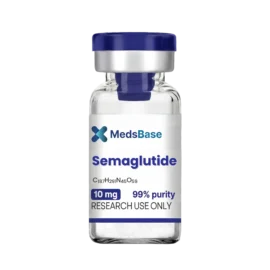
- Semaglutide — Langwerkende GLP-1-agonist — het GLP-1-onderdeel van CagriSema, losse ampullen
- Retatrutide — Drievoudige GLP-1/GIP/glucagon-agonist — enkelvoudig molecuul met multi-agonistwerking
- Tirzepatide — Dubbele GLP-1/GIP-agonist — alternatieve multimachanisme-benadering
- Mazdutide — Dubbele GLP-1/glucagon-co-agonist — oxyntomoduline-afgeleid alternatief
Verder lezen
📖 Verken het combinatiefarmacologie-metabolische landschap
Bekijk het volledige onderzoekspeptiden catalogus, met gerelateerde combinatie- en multimachanisme-verbindingen inclusief Cagrilintide (los amyline), Semaglutide (los GLP-1), Retatrutide (enkelvoudig molecuul met drievoudige agonistwerking), en Mazdutide (dubbele GLP-1/glucagon). Vergelijkende gids: Retatrutide versus Tirzepatide.
| Samenstelling | 5 mg cagrilintide + 5 mg semaglutide |
|---|---|
| Hoeveelheid | 10 flacons, 20 flacons, 30 flacons |
Vragen & antwoorden
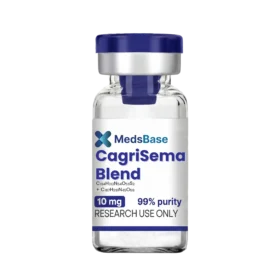 CagriSema Blend (Cagrilintide 5 mg + Semaglutide 5 mg)
Gerelateerde producten