







HGH Fragment 176-191
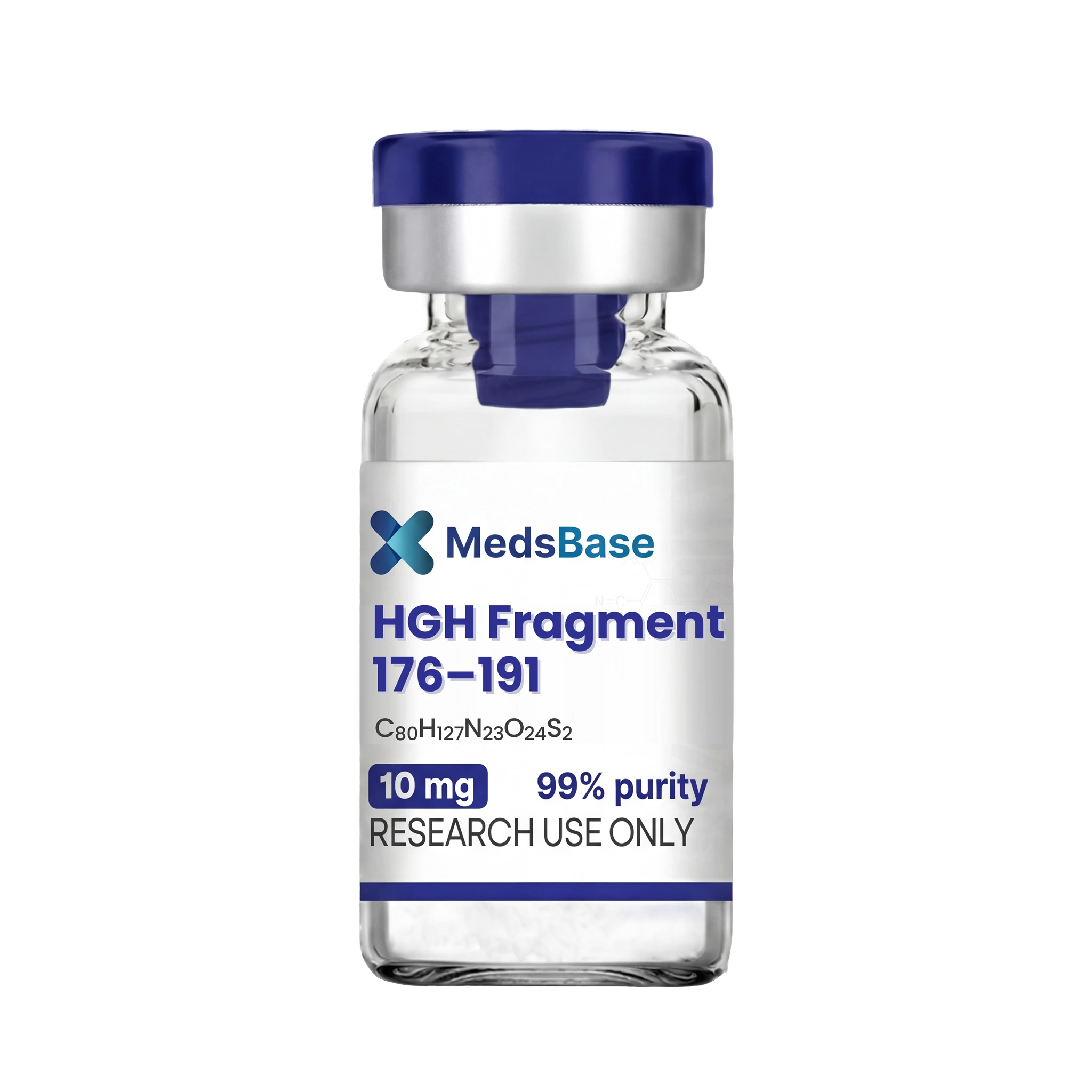
✅ 16-aa C-terminaal fragment van humaan groeihormoon
✅ Behoudt lipolytische activiteit, geen GH-receptorbinding
✅ Geen IGF-1 inductie of groeibevorderende effecten
✅ Alleen lipolyse-onderzoeksinstrument (anders dan AOD9604)
✅ ≥99% HPLC zuiverheid, COA op aanvraag
HGH Fragment 176-191 bevat synthetisch peptideverbinding.
✓ Medisch beoordeeld door Morgan Ellis — Apotheekonderzoeker · 8 jaar ervaring · Laatst beoordeeld: mei 2026
Snelle vraag — Wat is HGH Fragment 176-191?
HGH Fragment 176-191 is een synthetisch peptide van 16 aminozuren dat overeenkomt met de C-terminale residuen 176–191 van humaan groeihormoon. In gepubliceerd onderzoek behoudt het de lipolytische (vetmobiliserende) en glucoseregulerende activiteit van het oorspronkelijke HGH-molecuul, maar mist het affiniteit voor de GH-receptor en activeert het daarom geen IGF-1-productie, chondrocytsignalering of een van de groeibevorderende effecten van volledig HGH. Sequentie: YLRIVQCRSVEGSCGF. Wordt geleverd in 5–15 mg lyofiliseerflesjes, uitsluitend voor laboratoriumonderzoek.
📦 Elke bestelling is gedekt door onze Reshipment Assurance-beleid — als uw pakket niet binnen 20 werkdagen arriveert, sturen wij het opnieuw.
| Specificatie | Detail |
|---|---|
| CAS-nummer | 66004-57-7 (HGH Fragment 176-191; verschillend van AOD9604 CAS 221231-10-9) |
| Molecuulformule | C78H125N23O23S2 |
| Moleculair gewicht | 1817.06 Da |
| Sequentie | Tyr-Leu-Arg-Ile-Val-Gln-Cys-Arg-Ser-Val-Glu-Gly-Ser-Cys-Gly-Phe (YLRIVQCRSVEGSCGF, 16 aminozuren; posities 176–191 van het natuurlijke menselijke groeihormoon, met behoud van de Cys182–Cys189 disulfidebrug van het oorspronkelijke molecuul) |
| Form | Lyofiliseerd poeder (wit tot off-white) |
| Zuiverheid | ≥99% (HPLC geverifieerd, COA op aanvraag) |
| Opslag | Lyofiliseerd: 2–8 °C (koelkast) voor werkvoorraad; −20 °C voor langdurige opslag van ongeopende flesjes. Gereconstitueerd: 2–8 °C, gebruik binnen ~30 dagen. Bescherm tegen licht. Vries de gereconstitueerde oplossing niet in en ontdooi deze niet. |
| Oplosbaarheid | Bacteriostatisch water (aanbevolen) of steriel water voor kortere gebruiksperioden |
| Onderzoeksgebruik | Alleen voor laboratoriumonderzoek. Niet voor humaan of veterinair diagnostisch of therapeutisch gebruik. |
Wat Is HGH Fragment 176-191?
HGH Fragment 176-191 is een synthetisch peptide van 16 aminozuren dat overeenkomt met de C-terminale residuen 176 tot en met 191 van het natuurlijke menselijke groeihormoon. Het fragment werd geïdentificeerd tijdens structureel-functioneel onderzoek naar HGH dat in de jaren 1990 aan de Monash University werd uitgevoerd, waarbij onderzoekers het HGH-molecuul systematisch verkortten en aanpasten om de regio's te identificeren die verantwoordelijk zijn voor elk van zijn meerdere biologische activiteiten. De 176-191-regio bleek de lipolytische (vetmobiliserende) en antilipogene activiteit van het volledige HGH te behouden, terwijl het GH-receptorbindende domein, dat zich in het N-terminale deel van het oorspronkelijke molecuul bevindt, volledig verloren ging.
De goed gekarakteriseerde sequentie is YLRIVQCRSVEGSCGF met de natuurlijke Cys182–Cys189 intramoleculaire disulfidebrug behouden (deze worden Cys7–Cys14 binnen de fragmentnummering). Molecuulgewicht 1817.06 Da, empirische formule C78H125N23O23S2. HGH Fragment 176-191 is structureel en farmacologisch verschillend van AOD9604 — een analoog ontwikkeld door Metabolic Pharmaceuticals dat een N-terminale tyrosinesubstitutie toevoegt (waardoor Tyr-HGH 177-191 ontstaat) en de disulfidebrug aanpast. AOD9604 heeft zijn eigen CAS (221231-10-9) en farmacologisch profiel en mag niet worden verward met het ongemodificeerde 176-191 fragment dat hier wordt aangeboden.
HGH Fragment 176-191 wordt geleverd als een hoogzuiver lyofilizaat voor reconstitutie met bacteriostatisch water. Het fragment is niet goedgekeurd door de FDA, EMA, MHRA of een andere grote regelgevende instantie voor menselijk therapeutisch gebruik. Het onderzoeksgerichte HGH Fragment 176-191 dat hier wordt verkocht, wordt geleverd uitsluitend voor laboratoriumonderzoek en is niet bedoeld voor menselijke of veterinaire toediening. Voor het volledige oorspronkelijke molecuul, zie onze HGH 191AA productpagina.
Werkingsmechanisme — Lipolytische Activiteit Zonder GH-Receptorbinding
Wat HGH Fragment 176-191 mechanistisch onderscheidend maakt, is de ontkoppeling van lipolyse van groei-gerelateerde signalering — een van de meest duidelijke voorbeelden van structuur-functie-analyse in peptidefarmacologisch onderzoek:
- Afwezigheid van GH-receptorbinding — Het GH-receptor-bindende oppervlak van natuurlijk HGH bevindt zich in het N-terminale deel van het molecuul (residuen 1–120), niet in het C-terminale fragment 176–191. Hierdoor bindt HGH Fragment 176-191 NIET aan de groeihormoonreceptor (GHR), activeert het NIET de JAK2/STAT5-signalering, induceert het NIET de hepatische IGF-1-productie en veroorzaakt het GEEN van de groeibevorderende, chondrocyt-stimulerende of insuline-tegenregulerende effecten van het oorspronkelijke molecuul. Dit is de bepalende negatieve farmacologische eigenschap en de basis voor het onderzoeksnut als een lipolyse-gericht isoleermiddel. HGH 191AA molecuul. Dit is de bepalende negatieve farmacologische eigenschap en de basis voor het onderzoeksnut als een lipolyse-as-isolerend hulpmiddel.
- — Gepubliceerd onderzoek heeft aangetoond dat HGH Fragment 176-191 de vetmobiliserende activiteit van volledig HGH behoudt in adipocyten. Het exacte moleculaire doelwit achter het lipolytische effect blijft een actieve onderzoeksvraag; voorgestelde mechanismen omvatten directe werking op adipocyten beta-3-adrenerge receptoren, modulatie van hormoongevoelige lipase en veranderde vetzuuroxidatiekinetiek. Het lipolytische signaal wordt in sommige gepubliceerde rodentstudies bij voorkeur waargenomen in visceraal vetweefsel, parallel aan maar mechanistisch verschillend van het — Gepubliceerd onderzoek heeft aangetoond dat HGH Fragment 176-191 de vetmobiliserende werking van volledig HGH behoudt in adipocyten. Het exacte moleculaire doelwit dat ten grondslag ligt aan het lipolytische effect blijft een actief onderzoeksvraagstuk; voorgestelde mechanismen omvatten directe werking op bèta-3-adrenerge receptoren van adipocyten, modulatie van hormoongevoelige lipase en veranderde vetzuuroxidatiekinetiek. Het lipolytische signaal wordt in sommige gepubliceerde onderzoeken bij knaagdieren bij voorkeur waargenomen in viscerale vetweefseldepots, parallel aan maar mechanistisch verschillend van het Tesamorelin Antilipogene activiteit.
- — Naast het stimuleren van vetmobilisatie onderdrukt HGH Fragment 176-191 de lipogene genexpressie in adipocytenonderzoeksmodellen — wat de snelheid van nieuwe vetopslag vermindert parallel aan het verhogen van vetmobilisatie. De twee effecten produceren een netto negatief-vetbalanssignaal in vetweefsel. — Naast het stimuleren van vetmobilisatie, onderdrukt HGH Fragment 176-191 de expressie van lipogene genen in adipocytenonderzoeksmodellen — wat het tempo van nieuwe vetopslag vermindert parallel aan de toename van vetmobilisatie. Deze twee effecten produceren een netto negatieve vetbalans in vetweefsel.
The structure-function-decoupling property is the principal scientific reason HGH Fragment 176-191 has remained in active research despite never reaching regulatory approval as a stand-alone therapeutic. It is a useful tool for researchers who want to study HGH’s lipolytic effects independently from its growth-promoting effects — a separation that is impossible to achieve with full-length HGH or with GH secretagogues that drive endogenous full-length GH release. Plasma half-life is short (~30 minutes); subcutaneous administration is the standard research route.
Gepubliceerde onderzoeksapplicaties
HGH Fragment 176-191 wordt gebruikt in laboratoriumonderzoeken die zich richten op:
- Farmacologie van adipocytenlipolyse — geïsoleerde karakterisering van lipolytische mechanismen, interactiestudies van bèta-3-adrenerge receptoren, activering van hormoongevoelige lipase, kinetiek van vetzuurmobilisatie
- Onderzoek naar obesitas en lichaamssamenstelling — preklinische DIO-knaagdier modellen, lichaamssamenstelling (DEXA/MRI), effecten op regionale vetweefseldepots (visceraal vs subcutaan), onderzoeksopzetten voor lipolyse zonder verstorende groeias-effecten
- Onderzoek naar structuur-functie van HGH — mechanistische analyse van groeibevorderende versus lipolytische activiteitsdomeinen binnen natuurlijk HGH; HGH Fragment 176-191 als het standaard “alleen lipolyse”-instrument, met HGH 191AA als de volledige-activiteitsvergelijker
- Onderzoek naar lipogene genexpressie — adipocytendifferentiatie, vorming van lipidedruppels, interacties met PPARγ- en SREBP-1-signaalwegen
- Onderzoek naar viscerale adipositas — directe vergelijkingen met Tesamorelin als het GHRH-as-onderzoeksinstrument voor vermindering van visceraal vet; gepubliceerde interesse in het ontrafelen van GH-receptor-afhankelijke versus GH-receptor-onafhankelijke mechanismen voor visceraal vetverlies
- Onderzoek naar glucosehomeostase — in tegenstelling tot volledig HGH, veroorzaakt HGH Fragment 176-191 niet de insuline-tegenregulerende effecten die worden waargenomen bij het oorspronkelijke HGH; gepubliceerd onderzoek gebruikt dit verschil om directe GH-effecten op de glykemie te ontrafelen
- Vergelijkend onderzoek naar de HGH-as — benchmarking tegen HGH 191AA (volledige ouderpeptide), Tesamorelin (visceraal vet GHRH-analoog), en Sermorelin / CJC-1295 (GHRH-as stimulatoren).
Voor een bredere context over waar HGH Fragment 176-191 past binnen het groei-as en vetweefsel onderzoekslandschap, zie HGH 191AA als de volledige ouderpeptide, Tesamorelin voor de GHRH-as benadering van visceraal vet, en Sermorelin + CJC-1295 met DAC voor endogeen GH-puls onderzoek. Bekijk het volledige onderzoekspeptiden catalogus voor gerelateerde verbindingen.
Beschikbare sterktes en concentraties
MedsBase stocks HGH Fragment 176-191 in three lyophilized vial sizes calibrated to typical research protocol lengths. Each strength is available in 10-vial, 20-vial, or 30-vial pack formats with full reconstitution guidance:
| Vulsterkte | Typisch Onderzoeksgebruik | Verpakkingsgroottes |
|---|---|---|
| 5 mg | Korte onderzoeksprotocollen, pilotdosering, lipolyse-studies met enkele cohorten | 10, 20 of 30 vialen |
| 10 mg | Standaard onderzoekssterkte, meerweekse protocollen | 10, 20 of 30 vialen |
| 15 mg | Langdurige protocollen, laagste kosten per mg, onderzoek met meerdere cohorten | 10, 20 of 30 vialen |
Alle drie de sterktes hebben dezelfde chemische vorm (gevriesdroogd poeder, 99%+ HPLC zuiverheid). Hogere mg-flacons vereisen kleinere reconstitutievolumes per eenheidsdosis, wat nuttig is wanneer onderzoekers het injectievolume in knaagdiermodellen willen minimaliseren.
Hoe het zich verhoudt — HGH Fragment 176-191 vs HGH 191AA
HGH Fragment 176-191 en HGH 191AA zijn een functioneel ontkoppeld paar — het fragment is letterlijk een onderdeel van het volledige oorspronkelijke molecuul. Door ze te vergelijken, kan de GH-receptorbindende activiteit (aanwezig in het volledige molecuul, afwezig in het fragment) worden geïsoleerd van de lipolytische activiteit (aanwezig in beide). Deze vergelijking is een van de meest zuivere mechanistische ontledingen in het huidige groei-asonderzoek.
| Criterium | HGH Fragment 176-191 | HGH 191AA (volledige lengte) |
|---|---|---|
| Lengte | 16 aminozuren (~1,8 kDa) | 191 aminozuren (~22 kDa) |
| GH-receptorbinding | Nee (bindingsdomein is N-terminaal) | Ja (volledig molecuul) |
| IGF-1 inductie | Geen | Aanzienlijke hepatische inductie |
| Lipolytische activiteit | Ja (behouden) | Ja (activiteit van het volledige oorspronkelijke molecuul) |
| Groei-bevorderende effecten | Geen | Substantieel (canoniek anabool peptide) |
| Insuline-tegenregulerend effect | Nee | Ja (tijdelijke insulineresistentie) |
| Plasma-halfwaardetijd | ~30 minuten | ~3–5 uur |
| Goedgekeurd klinisch gebruik | Geen | Meerdere indicaties (Genotropin, Humatrope, etc.) |
| Typische onderzoeksdosis | 200–500 mcg, 1–3x per dag | 1–8 IE per toediening |
Voor onderzoek gericht op geïsoleerde lipolyse farmacologie zonder de verstorende factor van GH-receptor-gemedieerde groei- en metabolische effecten, is HGH Fragment 176-191 het canonieke “alleen lipolyse” onderzoeksinstrument. Voor onderzoek naar de volledige GH/IGF-as of vergelijking met secretagoog-gestuurde endogene GH-afgifte, HGH 191AA is het geschikte volledige referentiemolecuul. Veel gepubliceerde onderzoeksopzetten gebruiken beide in parallelle onderzoeksarmen om te onderscheiden welke HGH-effecten afhankelijk zijn van GH-receptorsignalering versus welke voortkomen uit het C-terminale lipolytische mechanisme.
Opslag en Reconstituering
Voor reconstituering: bewaar lyofiliseerde flesjes gekoeld bij 2–8 °C in de originele verpakking voor kortetermijnvoorraad. Voor ongebruikte langetermijnopslag, vries in bij −20 °C. Lyofiliseerd HGH Fragment 176-191 is stabiel onder koeling tot 24 maanden en bij −20 °C tot 36 maanden. Vermijd vries-ontdooicycli van het lyofilisaatpoeder. Net als andere disulfidebrug-peptiden hangt de fragmentactiviteit af van de intacte Cys182–Cys189-binding (Cys7–Cys14 fragmentnummering) — hantering die het disulfide verstoort, zal de activiteit verminderen.
Reconstitueringsprocedure: spuit bacteriostatisch water langs de zijkant van het peptideflesje (niet rechtstreeks op de lyofiliseerde cake). Voor een flesje van 5 mg levert 2,0 mL bacteriostatisch water een werkconcentratie van 2,5 mg/mL op — 0,04 mL levert 100 mcg; 0,1 mL levert 250 mcg; 0,2 mL levert 500 mcg. Draai voorzichtig — doe niet niet Schud — en laat 2–5 minuten staan voor volledige oplossing. Een correct gereconstitueerde oplossing moet helder en kleurloos zijn.
Na reconstitutie: bewaar gekoeld bij 2–8 °C en gebruik binnen 30 dagen voor optimale stabiliteit. Vries de gereconstitueerde oplossing niet in — vries-ontdooicycli tasten de peptide-integriteit aan en kunnen de disulfidebinding verstoren. Gooi elk flesje weg dat troebelheid, neerslag of verkleuring vertoont.
Veelgestelde vragen
Waar wordt HGH Fragment 176-191 voor gebruikt in onderzoek?
HGH Fragment 176-191 wordt gebruikt in laboratoriumonderzoek naar geïsoleerde adipocytenlipolyse farmacologie, obesitas en lichaamssamenstellingsregulatie zonder verstoring van de groeias, HGH structuur-functie-analyse, regulatie van lipogene genexpressie, effecten op regionale vetweefseldepots en vergelijkende onderzoeksopzetten van GH-as versus alleen lipolyse. Het is het canonieke “alleen lipolyse” onderzoekspeptide afgeleid van native HGH. Het onderzoekskwaliteit HGH Fragment 176-191 dat hier wordt verkocht, is niet FDA-goedgekeurd en wordt strikt geleverd voor laboratoriumonderzoek alleen.
Hoe verschilt HGH Fragment 176-191 van HGH 191AA?
HGH Fragment 176-191 bestaat uit slechts 16 aminozuren — het C-terminale deel van het volledige 191-aminozuur HGH. Het fragment mist het GH-receptor-bindende domein (dat zich bevindt in het N-terminale deel van het oorspronkelijke molecuul), waardoor het GEEN GHR bindt, GEEN IGF-1 induceert en GEEN van de groeibevorderende of insuline-tegenregulerende effecten van volledig HGH produceert. Het behoudt alleen de lipolytische en antilipogene activiteit. HGH 191AA is het volledige oorspronkelijke molecuul met zowel lipolytische ALS groeias-activiteit.
Hoe verschilt HGH Fragment 176-191 van AOD9604?
Het zijn verschillende verbindingen die vaak met elkaar worden verward. HGH Fragment 176-191 (CAS 66004-57-7) is het ongemodificeerde C-terminale fragment van natuurlijk HGH. AOD9604 (CAS 221231-10-9) is een gemodificeerd analoog ontwikkeld door Metabolic Pharmaceuticals — specifiek voegt AOD9604 een N-terminale tyrosine-substitutie toe, waardoor Tyr-HGH 177-191 ontstaat, met aangepaste veranderingen aan de disulfidebrug voor verbeterde stabiliteit en onderzoek naar orale biologische beschikbaarheid. De twee hebben verwante maar verschillende farmacologie. Dit product is het ongemodificeerde 176-191 fragment, niet AOD9604.
Wat is de gebruikelijke onderzoeksdosis van HGH Fragment 176-191?
Gepubliceerde preklinische protocollen gebruiken typisch 200–500 mcg per toediening, subcutaan toegediend 1–3 keer per dag voor onderzoekscycli van 4–12 weken. Een flesje van 5 mg gereconstitueerd met 2,0 mL bacteriostatisch water levert 2,5 mg/mL — 0,04 mL komt overeen met 100 mcg, 0,2 mL komt overeen met 500 mcg.
Is HGH Fragment 176-191 goedgekeurd door de FDA?
Nee. HGH Fragment 176-191 is niet goedgekeurd door de FDA, EMA, MHRA of enige andere grote regelgever voor therapeutisch gebruik bij mensen. De verwante verbinding AOD9604 werd onderzocht in klinische onderzoeken voor obesitas, maar kreeg geen goedkeuring van de regelgevende instanties. Alle HGH Fragment 176-191 dat wordt verkocht door leveranciers voor onderzoeksgebruik is bedoeld voor laboratoriumonderzoek en mag niet aan mensen worden toegediend.
Hoe moet HGH Fragment 176-191 worden opgeslagen?
Gevriesdroogde flesjes: gekoeld bewaren bij 2–8 °C voor kortetermijngebruik, of bij −20 °C voor langdurige opslag van ongeopende flesjes. Heropgeloste oplossing: gekoeld bewaren bij 2–8 °C, binnen 30 dagen gebruiken. Vries de heropgeloste oplossing niet in — vries-ontdooicycli degraderen het peptide en kunnen de essentiële Cys182–Cys189 disulfidebrug verstoren. Bescherm te allen tijde tegen direct licht.
Hoe moet ik HGH Fragment 176-191 reconstitueren?
Volg de hierboven beschreven reconstitutieprocedure. Voeg bacteriostatisch water toe langs de zijkant van het flesje (niet rechtstreeks op het gevriesdroogde poeder), draai voorzichtig en laat 2–5 minuten staan voor volledige oplossing. Schud niet Schud het flesje niet — krachtig schudden kan de disulfidebinding verstoren. Een correct gereconstitueerde oplossing is helder en kleurloos. Voor een flesje van 5 mg + 2,0 mL verdunningsmiddel is de werkconcentratie 2,5 mg/mL.
Welke sterktes heeft MedsBase op voorraad?
MedsBase carries HGH Fragment 176-191 in 5 mg, 10 mg, and 15 mg lyophilized vials. Each strength is available in 10-vial, 20-vial, or 30-vial pack sizes. All vials are supplied at 99%+ HPLC purity with a certificate of analysis available on request.
Waarom beïnvloedt HGH Fragment 176-191 IGF-1 niet?
Het GH-receptorbindende oppervlak van natuurlijk humaan groeihormoon bevindt zich in het N-terminale deel van het 191-aminozuur molecuul, niet in het C-terminale 176–191 gebied. Omdat het fragment het receptorbindende domein mist, kan het de GH-receptor niet activeren; zonder GHR-activering wordt de downstream JAK2/STAT5-signaleringcascade die hepatische IGF-1-transcriptie aandrijft, niet geactiveerd. Deze structureel-functionele ontkoppeling is de belangrijkste wetenschappelijke reden waarom het fragment onderzoeksinteresse behoudt als een lipolyse-isolerend hulpmiddel.
Waar komt de lipolytische activiteit vandaan als het niet van GH-receptorbinding komt?
Het exacte moleculaire doelwit van de lipolytische werking van HGH Fragment 176-191 blijft een actieve onderzoeksvraag. Voorgestelde mechanismen omvatten directe interactie met adipocyten beta-3-adrenerge receptoren, modulatie van hormoongevoelige lipase-activiteit en veranderde vetzurenoxidatiekinetiek in vetweefsel. Het fragment onderdrukt ook lipogene genexpressie, wat suggereert dat het gelijktijdig op meerdere adipocytspecifieke pathways inwerkt. Gepubliceerd onderzoek blijft het exacte receptor- of bindingsplaatsdoelwit karakteriseren.
Veroorzaakt HGH Fragment 176-191 bijwerkingen in onderzoek?
Gepubliceerd preklinisch onderzoek heeft een opmerkelijk schoon veiligheidsprofiel gedocumenteerd bij typische onderzoeksdoseringen, met lipolyse als belangrijkste doelwiteffect. De afwezigheid van GH-receptorbinding betekent dat geen van de GH-as bijwerkingen die bij volledige HGH worden waargenomen (tijdelijke insulineresistentie, gewrichtsongemak, natriumretentie, mitogene signalering) aanwezig zijn. Langetermijnveiligheidsgegevens bij mensen zijn beperkt omdat het ongemodificeerde fragment geen moderne regelgevende beoordeling heeft ondergaan (hoewel het verwante AOD9604 uitgebreider is onderzocht in klinische onderzoeken).
Wat is de halfwaardetijd van HGH Fragment 176-191?
In preklinisch onderzoek heeft HGH Fragment 176-191 een plasmahalfwaardetijd van ongeveer 30 minuten na subcutane toediening — korter dan volledige HGH (~3–5 uur) vanwege de kleinere moleculaire grootte en afwezigheid van albuminebindende modificaties. De korte halfwaardetijd betekent dat typische onderzoeksprotocollen meerdere dagelijkse toedieningen of continue-afgifte onderzoeksformuleringen gebruiken voor werk met aanhoudende blootstelling.
Hoe lang duurt het voordat HGH Fragment 176-191 effecten laat zien in preklinisch onderzoek?
Acute effecten op adipocytenlipolyse en vetzurenmobilisatie zijn binnen enkele uren na toediening detecteerbaar. Lichaamssamenstellingseffecten in DIO-knaagdier modellen worden doorgaans statistisch significant na 2–4 weken van regelmatige dosering en blijven toenemen gedurende 8–12 weken van continue toediening. De kinetiek is vergelijkbaar met andere vetweefselgerichte onderzoeksverbindingen.
Kan ik HGH Fragment 176-191 bestellen voor internationale verzending?
Ja. MedsBase verzendt HGH Fragment 176-191 wereldwijd via ons toegewijde peptide-verzendnetwerk. Bestellingen met alleen peptides komen in aanmerking voor onze aparte peptide-verzendservice. Alle bestellingen worden verzonden in temperatuurgecontroleerde verpakking met volledige tracking en zijn gedekt door onze Reshipment Assurance-beleid.
Andere peptides voor onderzoek naar vetweefsel, groeias en lichaamssamenstelling
- HGH 191AA — Volledige lengte recombinant humaan groeihormoon — het moedermolecuul van dit fragment
- Tesamorelin — GHRH-analoog — onderzoek naar visceraal vetweefsel; FDA-goedgekeurd voor HIV-gerelateerde lipodystrofie
- CJC-1295 met DAC — Langwerkende GHRH-analoog — onderzoek naar endogene GH-pulsen
- Sermorelin — GHRH(1-29)-analoog — onderzoek naar kortwerkende GHRH
- Ipamorelin — Selectieve groeihormoonsecretagoog — onderzoek naar schone GH-pulsen
Verder lezen
📖 Verken het onderzoekslandschap van de HGH-as
Bekijk het volledige onderzoekspeptiden catalogus, met verwante groeiasverbindingen inclusief HGH 191AA (volledige ouderpeptide), Tesamorelin (viscerale adipositas GHRH-analoog), Sermorelin en CJC-1295 met DAC voor onderzoek naar endogene pulsen.
Meer opties in Peptiden
Gerangschikt op recente bestelvolumes van MedsBase — wat andere klanten in deze categorie kiezen.
| Sterkte | 5 mg, 10 mg, 15 mg |
|---|---|
| Hoeveelheid | 10 flacons, 20 flacons, 30 flacons |
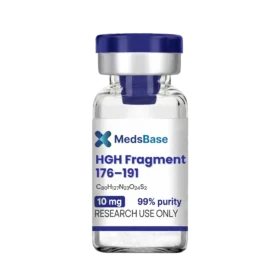 HGH Fragment 176-191
Vragen & antwoorden
HGH Fragment 176-191
Gerelateerde producten
Beoordelingen
Er zijn nog geen beoordelingen