







Adipotide (FTPP — Vetgericht Pro-apoptotisch Peptide)
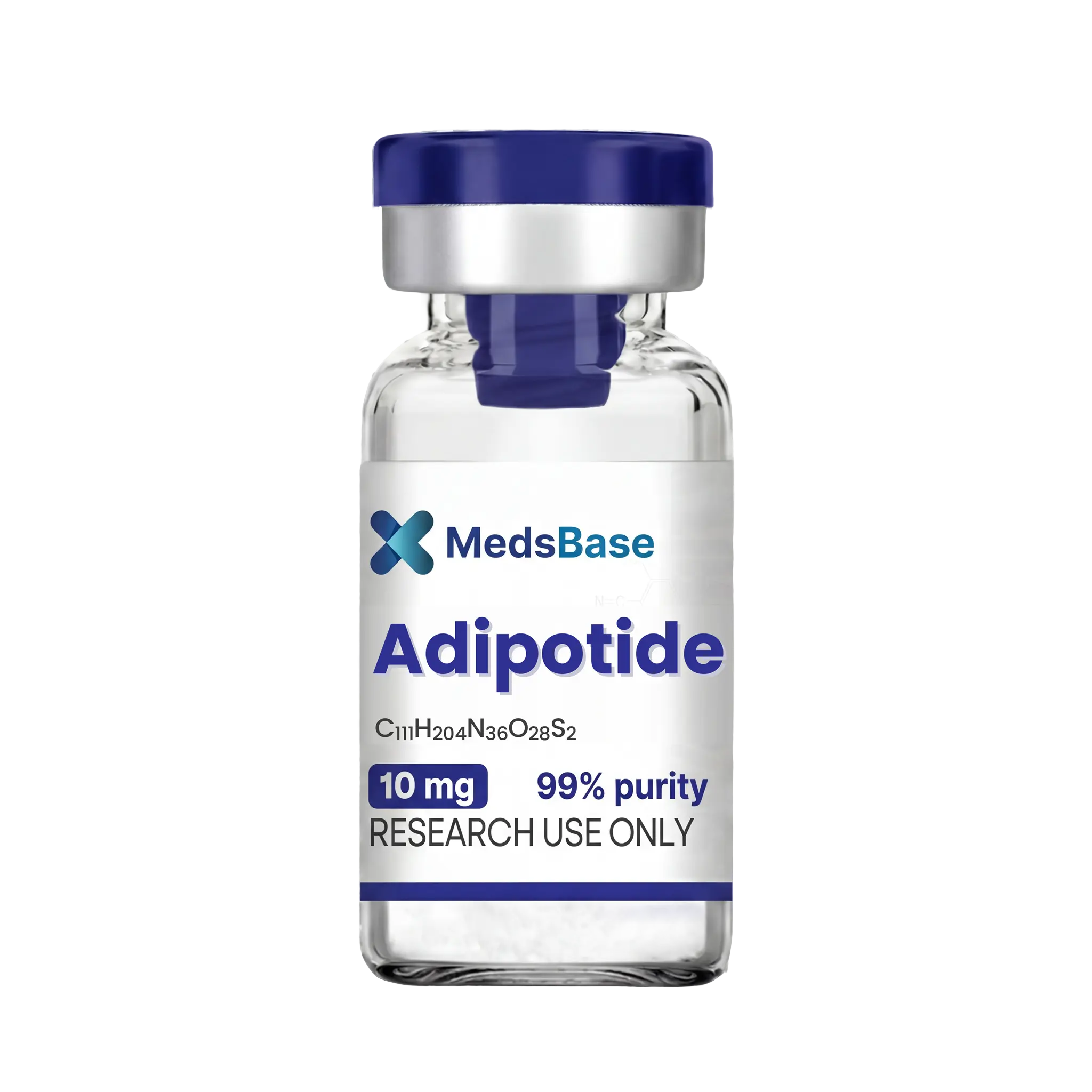
✅ 25-aa chimeer peptide — CKGGRAKDC homing + GG linker + D(KLAKLAK)₂ pro-apoptotische killer
✅ Richt zich op prohibitin-1 + annexine A2 op capillaire endotheel van wit vetweefsel
✅ Veroorzaakt vasculaire endotheel apoptose → bloedtoevoerverstoring adipocyten
✅ ~11% gewichtsverlies bij resusapen over 4 weken (Barnhart 2011, Sci Trans Med)
✅ MD Anderson / Kolonin-Arap-Pasqualini chimeer peptide; MW ~2,611 Da
Adipotide / FTPP bevat CKGGRAKDC-GG-D(KLAKLAK)₂ chimeer onderzoekspeptide. Gedocumenteerde nefrotoxiciteit in primatenstudies — alleen onderzoekscontext.
✓ Medisch beoordeeld door Morgan Ellis — Apotheekonderzoeker · 8 jaar ervaring · Laatst beoordeeld: mei 2026
Snelle vraag — Wat is Adipotide (FTPP)?
Adipotide (ook wel genoemd FTPP — “Fat-Targeted Pro-apoptotic Peptide”) is een synthetisch onderzoekspeptide van 25 aminozuren, ontwikkeld door Kolonin, Arap, en Pasqualini bij het MD Anderson Cancer Center. Het combineert twee functioneel verschillende domeinen: een cyclisch homingpeptide CKGGRAKDC die prohibitin-1 (en annexine A2) bindt op het endotheel van haarvaten in wit vetweefsel, en een D-stereoisomeer pro-apoptotisch α-helix peptide D(KLAKLAK)2 die mitochondriale membranen verstoort. De gefuseerde chimère richt zich selectief op de vasculatuur die wit vetweefsel voedt en induceert endotheelapoptose, waardoor adipocyten van bloedtoevoer worden beroofd en snel verlies van vetweefselmassa optreedt. Gepubliceerd bij obese resusapen (Barnhart et al. 2011, Science Translational Medicine) — ~11% lichaamsgewichtsverlies over 4 weken. Let op: gedocumenteerde nefrotoxiciteit in primatenstudies is de belangrijkste translationele beperking, en een fase I-kankerstudie bij mensen (2014–2016) had beperkte gepubliceerde resultaten. Alleen voor laboratoriumonderzoek.
📦 Elke bestelling is gedekt door onze Reshipment Assurance-beleid — als uw pakket niet binnen 20 werkdagen arriveert, sturen wij het opnieuw.
| Specificatie | Detail |
|---|---|
| Compound Class | Synthetisch 25-aminozuur chimeer peptidomimetisch; homing domein + pro-apoptotisch domein verbonden door GG linker; vetgericht pro-apoptotisch peptide |
| Chemical Name | Adipotide / FTPP (Fat-Targeted Pro-apoptotic Peptide); synoniemen: Prohibitin-targeting peptide-1 + D(KLAKLAK)2 chimeer; CKGGRAKDC-GG-D(KLAKLAK)2 |
| CAS-nummer | Onderzoeksgraad chimeer peptide — geen enkele canonieke CAS. Sommige leveranciers vermelden 1422956-49-3; identificatie voornamelijk door gepubliceerde sequentie (CKGGRAKDC-GG-D(KLAKLAK)2) in plaats van CAS. Raadpleeg COA voor batch-specifieke identificatie. |
| Sequentie | Cys-Lys-Gly-Gly-Arg-Ala-Lys-Asp-Cys (gecycliseerd Cys1–Cys9 disulfide, het “CKGGRAKDC” prohibitin-bindende homingmotief) — Gly-Gly linker — D-Lys-D-Leu-D-Ala-D-Lys-D-Leu-D-Ala-D-Lys-D-Lys-D-Leu-D-Ala-D-Lys-D-Leu-D-Ala-D-Lys (het D-stereoisomeer pro-apoptotische α-helicale peptide D(KLAKLAK)2. Totale lengte: 25 aminozuurresten (9 + 2 + 14). |
| Moleculair gewicht | ~2.611 Da (berekend gemiddelde; gerapporteerd als 2.500–2.611 Da in gepubliceerde bronnen) |
| Molecuulformule | Chimeer peptide — sequentie CKGGRAKDC-GG-D(KLAKLAK)2; sequentie-afgeleide geschatte MF ~C114H196N40O26S2; gepubliceerd MW ~2.611 Da (cyclische disulfidevorm). Geen enkele Sigma-canonical CAS; identificatie door sequentie + COA. |
| Werkingsmechanisme | Tweestaps gerichte apoptose. (1) Het cyclische CKGGRAKDC homingdomein bindt aan prohibitin-1 — een mitochondriaal chaperon-achtig eiwit dat ongebruikelijk tot expressie komt op het oppervlak van capillaire endotheelcellen die wit vetweefsel van bloed voorzien (geïdentificeerd door Kolonin et al. 2004 in-vivo phage-display screen) — en ook aan annexine A2 op hetzelfde vaatstelsel. (2) Gebonden aan het celoppervlak wordt de chimeer geïnternaliseerd, en het D(KLAKLAK)2 α-helicale pro-apoptotische domein verstoort het mitochondriale membraan van de endotheelcel via directe membraaninteractie. Mitochondriale instorting → caspase-gemedieerde apoptose van het vetweefselvaatstelsel → bloedtoevoer-uitputting van adipocyten → verlies van vetweefselmassa over dagen tot weken. |
| D-aminozuur stereochemie | Het pro-apoptotische KLAKLAKKLAKLAK domein wordt uitsluitend gesynthetiseerd in D-aminozuur stereochemie (spiegelbeeldresiduen). De D-stereochemie verleent protease-resistentie — gastheerproteasen herkennen alleen L-aminozuren — wat de in-vivo halfwaardetijd van het killer-domein verlengt ten opzichte van de natuurlijke L-vorm. Het homing-domein (CKGGRAKDC) bevindt zich in de normale L-aminozuur-stereochemie omdat het een gastheereiwit (prohibitin-1) moet binden in de canonieke receptor-ligand geometrie. |
| Gedocumenteerde toxiciteit (relevant voor onderzoek) | Nefrotoxiciteit werd gedocumenteerd in de obese-resusaapstudie (Barnhart et al. 2011) en is de belangrijkste translationele beperking. De nier exprimeert prohibitin en is sterk gevasculariseerd, waardoor off-target homing van de chimeer naar de renale vasculatuur dosisafhankelijke nierschade veroorzaakt. De MD Anderson-groep heeft de verbinding herpositioneerd voor kanker in plaats van obesitas, precies omdat de risico-batenbalans gunstiger is in een kankerbehandelingscontext dan in een electieve vetverliescontext. Onderzoekers in elk in-vivo protocol met Adipotide moeten uitgebreide nierfunctiemonitoring omvatten (BUN, creatinine, urineonderzoek). |
| Form | Gevriesdroogd wit tot off-wit amorfe poeder; onderzoeksflesjes voor eenmalig gebruik. Synthese is technisch veeleisend (D-aminozuur Fmoc-SPPS + cyclische disulfide-sluiting van het homing-domein) — zuiverheidsgraad is belangrijker voor deze verbinding dan voor de meeste. |
| Zuiverheid | ≥99% (HPLC-geverifieerd); MALDI-TOF massaspectrometrie bevestigt ~2,611 Da. Disulfidebrugvorming van het cyclische homing-domein bevestigd door gereduceerde versus niet-gereduceerde massa-vergelijking. COA beschikbaar op verzoek. |
| Oplosbaarheid | Oplosbaar in bacteriostatisch water, steriel water en PBS bij ≥2 mg/mL; oplosbaar in DMSO bij ≥10 mg/mL voor in-vitro voorraadbereiding. Het amfipathische D(KLAKLAK)2 domein heeft oppervlakte-actieve eigenschappen — oplossingen kunnen bij aanvankelijke reconstitutie tijdelijk schuimen; laat het bezinken voordat het wordt opgenomen. |
| Opslag | Gevriesdroogd: 2–8 °C ongeopend voor kortetermijnwerkvoorraad; −20 °C voor langdurige opslag (stabiel ≥36 maanden bij −20 °C; ≥18 maanden bij 2–8 °C). Gereconstitueerd in water: 2–8 °C, gebruik binnen ~30 dagen. Beschermen tegen licht. Vermijd herhaalde vries-ontdooicycli — cumulatieve cycli kunnen leiden tot Cys1–Cys9 disulfide-scrambling. |
| Onderzoeksgebruik | Alleen voor laboratoriumonderzoek. Niet voor menselijke of veterinaire diagnostische of therapeutische toepassingen. Adipotide staat niet op de huidige WADA Verboden Lijst onder zijn specifieke naam (zijn ontwikkelingsarc was gericht op oncologie in plaats van atletische prestaties). De verbinding heeft een goed gedocumenteerde nefrotoxiciteit in primatenstudies en is geen door de FDA goedgekeurd therapeutisch middel. Onderzoekers in elke in-vivo context moeten passende nierbewaking implementeren. |
Wat Is Adipotide / FTPP?
Adipotide (ook wel genoemd FTPP — “Fat-Targeted Pro-apoptotic Peptide” is een synthetisch 25-aminozuur chimeer peptidomimetisch middel ontwikkeld aan het MD Anderson Cancer Center door Mikhail Kolonin, Wadih Arap en Renata Pasqualini. De verbinding vertegenwoordigt een van de meest heldere voorbeelden van rationeel chimeer-peptide medicijnontwerp in de moderne peptidefarmacologie: een weefselspecifiek homingdomein (geïdentificeerd door in-vivo faagdisplay) is covalent verbonden aan een generiek killerdomein (een pro-apoptotisch mitochondrion-verstorend α-helixaal peptide), wat een chimeer oplevert dat de killeractiviteit selectief aflevert aan het doelweefsel.
De twee functionele domeinen en de ontwerplogica:
1. CKGGRAKDC — het prohibitin-bindende homingpeptide. Kolonin et al. (2004) gebruikten in-vivo faagdisplayscreening bij obese muizen om een 9-residu cyclisch peptide te identificeren (sequentie Cys-Lys-Gly-Gly-Arg-Ala-Lys-Asp-Cys, met een Cys1-Cys9 disulfidebrug die de geometrie beperkt) dat selectief bindt aan de vasculatuur van wit vetweefsel. Het bindingsdoel werd later geïdentificeerd als prohibitin-1 (PHB1) — een normaal in het mitochondriale membraan aanwezige chaperonne-achtig eiwit dat, in het endotheel van wit vetweefsel, ook op het celoppervlak wordt uitgedrukt en toegankelijk is voor circulerende liganden. Annexine A2 is geïdentificeerd als een secundaire bindingspartner op dezelfde vasculatuur. Het CKGGRAKDC homingdomein is de moleculaire postcode die de chimeer specifiek naar vetweefselcapillairen dirigeert in plaats van naar algemeen systemisch endotheel.
2. D(KLAKLAK)2 — het pro-apoptotische α-helicale killerpeptide. Het 14-residu D-aminozuur α-helicale peptide D-Lys-D-Leu-D-Ala-D-Lys-D-Leu-D-Ala-D-Lys-D-Lys-D-Leu-D-Ala-D-Lys-D-Leu-D-Ala-D-Lys is een synthetisch membraanverstorend peptide (oorspronkelijk ontwikkeld in kankeronderzoek door Ellerby et al. 1999). De amfipathische α-helicale geometrie zorgt ervoor dat het peptide in membranen insereert; de D-aminozuur stereochemie verleent protease-resistentie in vivo. Cruciaal is dat de killeractiviteit niet selectief is voor elk specifiek celtype — het peptide zal mitochondriale membranen verstoren in vrijwel elke cel waar het binnenkomt — wat de reden is waarom het koppelen aan een homingdomein noodzakelijk is voor therapeutisch nut.
3. GG linker. De twee functionele domeinen zijn verbonden door een eenvoudige di-glycine linker die flexibele afstand biedt en sterische interferentie tussen de homing- en killerfuncties vermijdt.
De gecombineerde chimera (CKGGRAKDC-GG-D(KLAKLAK)2, ~2.611 Da) werd gekarakteriseerd in obese resusapen in het baanbrekende artikel van Barnhart et al. (2011) in Science Translational Medicine — de dieren verloren ongeveer 11% lichaamsgewicht gedurende 4 weken van dagelijkse subcutane dosering, met gelijktijdige verbeteringen in insulinegevoeligheid. Echter, dezelfde studie en vervolgwerk documenteerden dosisafhankelijke nefrotoxiciteit: de nier heeft een hoge expressie van prohibitin en is dicht gevasculariseerd, waardoor off-target homing van de chimera naar het renale vaatstelsel schade aan de tubuli in de nierschors veroorzaakt. De MD Anderson-groep herpositioneerde Adipotide voor humane oncologie in plaats van obesitas, en een fase I klinische trial bij patiënten met gemetastaseerde prostaatkanker werd uitgevoerd van 2014–2016 met beperkte gepubliceerde resultaten. De verbinding blijft vandaag een onderzoeksinstrument — uitgebreid geciteerd als een referentievoorbeeld van chimeer peptidedrugontwerp en het canonieke farmacologische hulpmiddel voor het bestuderen van gerichte adipose-vasculaire apoptose.
Werkingsmechanisme — Weefselgerichte Apoptose van Adipose Vasculatuur
Het werkingsmechanisme van Adipotide is een van de best gekarakteriseerde in de chimeer-peptidefarmacologie:
- Vasculaire targeting via prohibitin-1 binding — Het CKGGRAKDC homing-domein bindt aan prohibitin-1 dat wordt uitgedrukt op het oppervlak van capillaire endotheelcellen die wit vetweefsel (WAT) van bloed voorzien. Prohibitin-1 is normaal gesproken een chaperonne in het mitochondriale binnenmembraan, maar in WAT-endotheel wordt het anomalie uitgedrukt op de buitenste laag van het plasmamembraan, waardoor het toegankelijk is voor circulerende liganden. Het CKGGRAKDC-motief is zeer selectief voor de WAT-endotheel prohibitinpool over andere prohibitin-expressiecontexten — gepubliceerde bindingsstudies tonen een ~10–100-voudige verrijking van Adipotide in WAT-vasculatuur over generieke systemische vasculatuur.
- Annexine A2 als secundaire bindingspartner — Vervolgwerk heeft annexine A2 geïdentificeerd als een aanvullende bindingspartner van het CKGGRAKDC homing-domein op hetzelfde WAT-endotheel. Het dubbele prohibitin/annexine A2-herkenningspatroon kan bijdragen aan het selectiviteitsprofiel van Adipotide.
- Internalisatie en cytosolische afgifte van het killer-domein — Nadat CKGGRAKDC bindt aan de endotheelceloppervlakreceptoren, wordt de chimera geïnternaliseerd door endocytose. Het amfipathische D(KLAKLAK)2 domein wordt vrijgegeven in het cytosol via endosomale ontsnapping, en van daaruit bereikt het het mitochondriale buitenmembraan.
- Verstoring van het mitochondriale membraan en apoptose — De α-helicale amfipathische geometrie van D(KLAKLAK)2 drijft insertie in het mitochondriale buitenmembraan aan, met daaropvolgende depolarisatie, vrijgave van cytochroom c en activering van de intrinsieke caspase apoptose cascade. De D-aminozuur stereochemie voorkomt proteolytische degradatie van het killer peptide voordat het zijn doelwit kan bereiken.
- Vasculaire ablatie → adipocyten uithongering → verlies van vetweefselmassa — Apoptose van de WAT-voedende endotheelcellen ontneemt adipocyten van bloedtoevoer. Over dagen tot weken ondergaan de adipocyten hun eigen secundaire celdood door metabole deprivatie, en het vetweefsel krimpt. Het macroscopische fenotype is dosisafhankelijke gewichtsvermindering zonder de acute lipidenmobilisatie die wordt gezien bij klassieke lipolytische middelen zoals AOD-9604 of β3-adrenerge agonisten.
- Het nefrotoxiciteitsprobleem — De nier heeft een zeer hoge vasculaire dichtheid en hoge prohibitin expressie. Off-target homing van Adipotide naar renale haarvaten veroorzaakt dosisafhankelijke nierschors tubulaire schade in primatenstudies (Barnhart et al. 2011). Dit is de belangrijkste translationele beperking van de verbinding en de reden waarom het obesitas-farmacologieprogramma werd stopgezet ten gunste van kankerapplicaties waar een agressievere risico-batenbalans acceptabel is.
Het gecombineerde mechanistische profiel maakt Adipotide uniek nuttig voor onderzoek naar de vasculaire bijdrage aan vetweefselbiologie — onderscheiden van onderzoek naar adipocyt-intrinsieke lipolyse (de AOD-9604 / β3-AR-as) of GLP-1-gemedieerde centrale eetlustremming (de semaglutide / GLP-1-familie-as). Onderzoekers die angiogenese versus anti-angiogenese benaderingen voor obesitas bestuderen, of andere gerichte apoptose-peptideconstructen testen, gebruiken Adipotide als het canonieke positieve controlecompound.
Gepubliceerde onderzoeksapplicaties
Adipotide wordt gebruikt in laboratoriumonderzoekcontexten die onderzoeken:
- Chimeer peptide-drugontwerp — het canonieke referentiecompound — verreweg het meest geciteerde voorbeeld van een weefselgerichte apoptotische chimeer in gepubliceerde literatuur; standaardreferentiecompound voor het bredere “homing-peptide + killer-peptide” therapeutische-peptideontwerpparadigma
- Wit vetweefsel vasculatuuronderzoek — Adipotide's selectiviteit voor WAT-vasculatuur maakt het het canonieke instrument voor het bestuderen van de rol van vasculaire biologie in vetweefselmassa-regulatie; gebruikt in onderzoek dat onderzoekt of obesitas benaderd kan worden via anti-angiogene / vasculair-gerichte strategieën in plaats van eetlustremmende of lipolytische strategieën
- Prohibetine en annexine A2-biologie — het homing-receptor identificatiewerk (Kolonin 2004 en verder) vestigde oppervlakteprohibetine als een vasculaire marker; Adipotide is het standaard farmacologische instrument voor het onderzoeken van prohibetine-gerichte benaderingen in primaire endotheelculturen en in-vivo werk
- D-aminozuur pro-apoptotische peptidefarmacologie — D(KLAKLAK)2 is het meest geciteerde pro-apoptotische D-peptide in de literatuur; Adipotide is de meest geciteerde chimeer die het bevat; veel gebruikt in onderzoek naar protease-resistente peptideontwerpen
- Vergelijkend onderzoek naar obesitasfarmacologie — gepubliceerde hoofd-tot-hoofd vergelijkingen van Adipotide versus lipolytische peptiden (AOD-9604), GLP-1-agonisten (semaglutide, tirzepatide), en directe β3-AR-agonisten (mirabegron) karakteriseren de verschillende mechanismeprofielen voor vetmassa-reductie
- Onderzoek naar kanker-/tumorvasculatuur — nadat het obesitasprogramma werd stopgezet, werden Adipotide en verwante chimeren herpositioneerd voor prostaatkankeronderzoek (fase I-onderzoek 2014–2016); gepubliceerd onderzoek heeft hetzelfde homing-killer-paradigma onderzocht dat gericht is op tumorspecifieke endotheliale markers (RGD-bevattende homing-peptiden + D(KLAKLAK)2 voor ablatie van tumorvasculatuur)
- Gericht apoptose-farmacologie en onderzoek naar geneesmiddelenafgifte — Adipotide is het canonieke positieve controleverbinding voor nieuwe weefselgerichte apoptose-peptideconstructen (CPP-toxine-chimeren, antilichaam-toxine-conjugaten met peptide-koppen, enz.)
- Nefrotoxiciteit / onderzoek naar vasculaire off-target-effecten — de gedocumenteerde niertoxiciteit is zelf een onderzoeksonderwerp; gepubliceerd werk heeft de basis onderzocht van de renale off-target-homing en heeft tweede generatie Adipotide-analogen getest met gewijzigde homing-domeinen om renale accumulatie te verminderen
Voor een bredere context over vetverlies- en vetweefselbiologie-onderzoekspeptiden in deze catalogus, zie AOD-9604 (alleen lipolytisch hGH-fragment — direct mechanisme-vergelijking; adipocyt-intrinsieke vs vasculaire targeting), HGH Fragment 176-191 (het oorspronkelijke niet-gestabiliseerde lipolytische fragment), Semaglutide (GLP-1-receptoragonist — centraal mechanisme voor eetlustonderdrukking), Tirzepatide (dubbele GLP-1/GIP — bredere metabolische effecten), en MOTS-c (mitochondriaal afgeleid metabolisch peptide). Bekijk de volledige onderzoekspeptiden & verbindingen catalogus, of bekijk de geselecteerde peptiden voor vetverliesonderzoek hub.
Beschikbare sterktes en concentraties
MedsBase stocks Adipotide / FTPP in three lyophilized vial sizes calibrated to typical in-vitro and in-vivo research protocols. Each strength is available in 10-vial, 20-vial, or 30-vial pack formats:
| Vulsterkte | Typisch Onderzoeksgebruik | Verpakkingsgroottes |
|---|---|---|
| 2 mg | In-vitro celkweekfarmacologie en kortdurende in-vivo titratie — primaire apoptose-assays van adipovasculaire endotheelcellen, dosis-responspanelen, titratie bij een enkele muizencohort met nierfunctiemonitoring | 10, 20 of 30 vialen |
| 5 mg | Standaard middelsterkte — in-vivo protocollen voor door dieet geïnduceerde obesitas bij knaagdieren (typische gepubliceerde doses 0,43 mg/kg/d SC over 4-wekelijkse cycli volgens Kolonin 2004), steekproefgroottes voor meerdere cohorten | 10, 20 of 30 vialen |
| 10 mg | Hoogsterkte onderzoeksvial — protocollen voor verlengde cycli/meerdere cohorten, dosering op primatenschaal (gepubliceerde doses bij resusapen 0,43 mg/kg/d), grootschalig onderzoek naar werkingsmechanismen; laagste kosten per mg | 10, 20 of 30 vialen |
Alle drie de sterktes zijn dezelfde chemische entiteit (lyofiliseerd Adipotide/FTPP, ≥99% HPLC zuiverheid, MALDI-TOF massa-bevestigd op ~2.611 Da, cyclisch disulfide-bevestigd homing domein). De 10 mg vial biedt de laagste kosten per mg voor grote in-vivo protocollen. Onderzoekers die in-vivo werk met Adipotide uitvoeren, moeten vanaf het begin uitgebreide nierfunctiemonitoring plannen (BUN, creatinine, urineonderzoek, histologie waar nodig), gezien het goed gedocumenteerde nefrotoxiciteitsprofiel in primatenstudies. Onderzoekers moeten specifieke doseringsbereiken bepalen uit peer-reviewed literatuur die passend is voor het protocol.
Vergelijking — Adipotide vs AOD-9604
Adipotide en AOD-9604 zijn de twee best gekarakteriseerde onderzoekspeptiden voor vetverlies in deze catalogus, en ze richten zich op de biologie van vetweefsel via volledig verschillende mechanismen. Adipotide werkt in op de vasculatuur die het vetweefsel van bloed voorziet — het selectief vernietigen van het WAT-endotheel via gerichte apoptose, waardoor adipocyten van bloedtoevoer worden beroofd. AOD-9604 werkt in op de adipocyten zelf — het stimuleren van lipolyse en het onderdrukken van lipogenese via een β3-AR-afhankelijk mechanisme (GHR-ontkoppeld). De twee verbindingen onderzoeken daarom volledig verschillende lagen van vetweefselbiologie en worden vaak gebruikt als positieve controles in onderzoek naar werkingsmechanismen.
| Criterium | Adipotide / FTPP | AOD-9604 |
|---|---|---|
| Chemische klasse | 25-aa chimeer peptide (homing + GG + pro-apoptotisch D-peptide); cyclische disulfide in homing domein | 16-aa lineair peptide (hGH C-terminaal fragment + N-terminale Tyr); enkele interne disulfide |
| Molecuulgewicht | ~2,611 Da | 1.815,1 Da |
| Celiair doelwit | WAT-capillair endotheel (prohibitin-1 + annexine A2-receptoren) | Adipocyt (β3-adrenerge receptor, verondersteld) |
| Celgevolg | Apoptose van vasculair endotheel → adipocyten uithongering → weefselmassa verlies | Lipolyse activering (HSL fosforylering) + lipogenese onderdrukking in adipocyten |
| Begin / tijdsverloop | Langzaam — dagen tot weken (apoptose → uithongeringscascade) | Snel — minuten tot uren (lipolyse activering) |
| Gedocumenteerde in-vivo werkzaamheid | ~11% lichaamsgewicht verlies over 4 weken bij obese resusapen (Barnhart 2011) | Fase IIb obesitasstudie bereikte geen gewichtsverlies eindpunt (2007) |
| Gedocumenteerde toxiciteit | Nefrotoxiciteit — dosisafhankelijke nierschors tubulaire schade in primatenstudies; grote translationele beperking | Over het algemeen goed verdragen in klinische onderzoeken; geen gedocumenteerde orgaanspecifieke toxiciteit in Fase II |
| Beste onderzoeksapplicaties | Vasculair-gerichte apoptose onderzoek, chimeer peptide medicijnontwerp, anti-angiogene obesitas onderzoek, oncologie vasculaire ablatie | GHR-ontkoppelde lipolyse farmacologie, structuur-functie HGH onderzoek, β3-AR-gebonden adipocyt signaaltransductie |
Voor onderzoek gericht op vasculaire bijdrage aan adipose biologie, chimeer peptide medicijnontwerp, of gerichte-apoptose farmacologie, is Adipotide het canonieke referentiecompound. Voor onderzoek gericht op directe adipocyt lipolyse geïsoleerd van GH-as signaaltransductie, AOD-9604 is het meer gerichte hulpmiddel. De twee verbindingen zijn mechanistisch complementair en worden vaak gebruikt als parallelle positieve controles in onderzoek naar obesitas-farmacologie mechanismen.
Opslag en Reconstituering
Voor reconstituering: bewaar gevriesdroogde flesjes gekoeld bij 2–8 °C in de originele verpakking voor kortdurende voorraad. Voor langdurige opslag, vries ongeopende flesjes in bij −20 °C (stabiel ≥36 maanden bij −20 °C; ≥18 maanden bij 2–8 °C). De cyclische disulfide van het homing domein is stabiel in de gevriesdroogde staat. Bescherm tegen licht.
Reconstitueringsprocedure: spuit bacteriostatisch water langs de zijkant van het flesje (niet direct op de gevriesdroogde cake). Voor een flesje van 2 mg, 1,0 mL oplosmiddel geeft een werkvoorraad van 2 mg/mL. Voor een flesje van 5 mg, 1,0 mL geeft 5 mg/mL; 2,5 mL geeft 2 mg/mL. Voor een flesje van 10 mg, 1,0 mL geeft 10 mg/mL (de praktische oplosbaarheidslimiet in waterige buffer); 5,0 mL geeft 2 mg/mL. Adipotide lost op met zachtjes zwenken bij kamertemperatuur binnen 30–60 seconden; het amfipathische D(KLAKLAK)2 domein kan tijdelijk schuim veroorzaken bij het eerste reconstitueren — laat het bezinken voordat u het opzuigt. Niet vortexen — hoog-shear mengen kan de Cys1–Cys9 disulfidebinding van het homing domein verstoren.
Na reconstituering, bewaar het flesje bij 2–8 °C en gebruik het binnen 30 dagen. Bescherm tegen licht. Vermijd herhaalde vries-ontdooicycli van gereconstitueerd materiaal — cumulatieve cycli kunnen leiden tot disulfide scrambling en verlies van doelselectiviteit van het homing domein. Gooi weg als troebelheid, deeltjes of duidelijke kleurverandering optreedt.
Veelgestelde vragen
Wat is Adipotide en hoe verschilt het van andere “vetverliespeptiden”?
Adipotide (FTPP) is het klassieke voorbeeld van een vasculair-gerichte apoptose benadering voor vetweefselreductie — mechanistisch volledig verschillend van de lipolytische peptiden (AOD-9604, β3-AR agonisten), de centrale eetlustremmende peptiden (semaglutide, tirzepatide, de GLP-1 familie), en de energiebalanspeptiden (MOTS-c). Waar lipolytische peptiden de intrinsieke lipidenmobilisatie in adipocyten activeren, vernietigt Adipotide de bloedtoevoer om naar de adipocyten — een fundamenteel ander mechanistisch aangrijpingspunt. Het is het klassieke onderzoeksinstrument voor het bestuderen van de vasculaire bijdrage aan vetweefselbiologie.
Wat is de gedocumenteerde nefrotoxiciteit en wat betekent dit voor onderzoeksprotocollen?
Barnhart et al. (2011) en latere primatenstudies hebben dosisafhankelijke nierschors tubulaire schade gedocumenteerd bij met Adipotide behandelde resusapen. De mechanistische basis is eenvoudig: de nier heeft een zeer hoge vasculaire dichtheid en hoge prohibitin-expressie, waardoor off-target binding van de chimeer aan renale haarvaten dezelfde vasculaire apoptose-gevolgd-door-verhongeringscascade veroorzaakt als in vetweefsel, maar nu in een weefsel waar dit zeer ongewenst is. Dit is de belangrijkste translationele beperking van de verbinding en is de reden waarom het obesitas-farmacologieprogramma is stopgezet ten gunste van oncologische herpositionering (waar een agressiever risico-voordeelbalans acceptabel is). Onderzoeksprotocollen die Adipotide in vivo gebruiken, moeten uitgebreide nierfunctiemonitoring omvatten — BUN, serumcreatinine, urineonderzoek en waar nodig nierhistologie.
Welke gepubliceerde doseringsbereiken zijn gebruikt in onderzoek?
Het muizenwerk van Kolonin et al. (2004) gebruikte 0,43 mg/kg/d SC voor 4-wekelijkse cycli. Het resusaapwerk van Barnhart et al. (2011) gebruikte dezelfde 0,43 mg/kg/d SC gedurende 4 weken, met gelijktijdige nierfunctiemonitoring. De fase I klinische studie bij prostaatkanker bij mensen (2014–2016) gebruikte oplopende SC doseringen op een wekelijkse of tweewekelijkse schema. In-vitro endotheliale cel apoptose-assays gebruiken typisch micromolaire concentraties. Onderzoekers moeten primaire literatuur raadplegen (Kolonin et al. 2004, Nature Medicine; Barnhart et al. 2011, Science Translational Medicine) voor soort-, model- en eindpunt-specifieke doseringsrichtlijnen.
Wat is de D-aminozuur stereochemie van D(KLAKLAK)2, en waarom is dit belangrijk?
Het pro-apoptotische killer domein van Adipotide wordt uitsluitend gesynthetiseerd in D-aminozuur stereochemie — spiegelbeeldversies van de natuurlijke L-aminozuren. De reden is protease-resistentie: cellulaire en circulerende proteasen herkennen en breken peptiden af op basis van de natuurlijke L-aminozuur stereochemie, waardoor een D-aminozuur peptide in feite onzichtbaar is voor gastheerproteolyse. Dit beschermt het killer domein tegen voortijdige afbraak voordat het zijn mitochondriale doel bereikt. Het homing domein (CKGGRAKDC) heeft een normale L-aminozuur stereochemie omdat het moet binden aan een gastheereiwit (prohibitin-1) in de canonieke receptor-ligand geometrie — D-stereochemie zou binding volledig verhinderen. Dit split-stereochemie ontwerp (L-domein voor binding + D-domein voor protease-resistentie) is een terugkerend motief in chimeer peptide medicijnontwerp en is een van de meest aangehaalde kenmerken van Adipotide.
Waarom is Adipotide niet goedgekeurd door de FDA?
Adipotide is een onderzoeksverbinding die fase I-onderzoeken bij menselijke kankerpatiënten (prostaatkanker, 2014–2016) heeft voltooid, maar niet is doorgegaan naar grootschalige fase II/III-onderzoeken. De redenen zijn een combinatie van de gedocumenteerde nefrotoxiciteit (die de dosisvenster beperkt in elke menselijke context), de bescheiden gepubliceerde effectiviteitsgegevens in het beperkte klinische werk tot nu toe, en de relatief smalle indicatie (vasculair-gerichte apoptose is mechanisme-geschikt voor bepaalde kankerinstellingen, maar het bredere ontwikkelingspad is onduidelijk). De verbinding blijft vandaag een onderzoeksinstrument, veel gebruikt als de canonieke chimeer peptide medicijnontwerp referentieverbinding.
Hoe verschilt Adipotide van AOD-9604?
Volledig verschillende mechanismen ondanks dat beide “onderzoekspeptiden voor vetverlies” zijn.” AOD-9604 is een 16-aminozuur hGH C-terminaal fragment dat lipolyse direct in adipocyten activeert via de β3-adrenerge receptor (GHR-ontkoppeld). Adipotide is een 25-aminozuur chimeer peptide dat de vasculaire bloedtoevoer vernietigt om adipocyten via gerichte endotheel apoptose. AOD-9604 produceert snelle acute lipolytische effecten binnen uren; Adipotide veroorzaakt langzame weefselmassa reductie over dagen tot weken. AOD-9604 wordt over het algemeen goed verdragen; Adipotide heeft gedocumenteerde nefrotoxiciteit. Onderzoekers die obesismechanismen bestuderen, gebruiken beide vaak als parallelle positieve controles die de twee uiteinden van het “adipocyt-intrinsiek vs adipose-vasculair” mechanistische spectrum vertegenwoordigen.
Kan Adipotide gecombineerd worden met andere vetverliespeptiden in onderzoeksprotocollen?
Ja — Adipotide werkt mechanistisch orthogonaal aan lipolytische peptiden (AOD-9604), GLP-1-as peptiden (semaglutide, tirzepatide), en metabolische peptiden (MOTS-c), waardoor combinaties mechanistisch rationeel zijn voor onderzoeksprotocollen die gericht zijn op het ontrafelen van verschillende lagen van vetweefselbiologie. De meest gepubliceerde combinaties in de beperkte literatuur zijn Adipotide + GLP-1-agonist (om te testen of vasculaire ablatie bijdraagt aan gewichtsverlies door eetlustonderdrukking). Reconstitueer elk apart en volg de specifieke opslagregels van elke verbinding. Zoals altijd met Adipotide in vivo, is uitgebreide monitoring van de nierfunctie vereist, ongeacht het gecombineerde middel.
Wat is het verschil tussen Adipotide / FTPP en “prohibitin-targeting peptide-1” (PTP1)?
PTP1 is alleen het homing-domein peptide — alleen de cyclische CKGGRAKDC-sequentie, zonder het pro-apoptotische D(KLAKLAK)2 killer domein. PTP1 alleen bindt aan prohibitin-1 in het vetweefselvasculatuur maar triggert geen apoptotische activiteit — het is slechts het moleculaire postcode zonder de lading. Adipotide / FTPP is de complete chimeer (CKGGRAKDC + GG-linker + D(KLAKLAK)2) die de homing-functie combineert met de killer-functie. Onderzoekers die de biologie van het homing-domein in isolatie bestuderen, gebruiken PTP1; onderzoekers die het geïntegreerde gerichte apoptose-effect bestuderen, gebruiken de volledige Adipotide-chimeer.
Andere onderzoekspeptiden voor adipose biologie en vetverliesonderzoek
- AOD-9604 — Lipolytisch hGH C-terminal fragment — directe mechanismevergelijking; adipocyt-intrinsiek versus vasculaire targeting
- HGH Fragment 176-191 — Niet-gestabiliseerd lipolytisch fragment — alternatief adipocyt-direct lipolyse-instrument
- Semaglutide — GLP-1 receptoragonist — centraal eetlustremmend mechanisme
- Tirzepatide — Dubbele GLP-1/GIP agonist — bredere metabolische effecten
- MOTS-c — Mitochondriaal afgeleid metabolisch peptide — alternatief-mechanisme vetverliesonderzoek
- BAC Water (Bacteriostatisch Water) — Benodigd voor het reconstitueren van elk lyofiliseerd flesje — steriel, 0,9% benzylalcohol-geconserveerd oplosmiddel
Meer opties in Peptiden
Gerangschikt op recente bestelvolumes van MedsBase — wat andere klanten in deze categorie kiezen.
| Sterkte | 2 mg, 5 mg, 10 mg |
|---|---|
| Hoeveelheid | 10 flacons, 20 flacons, 30 flacons |
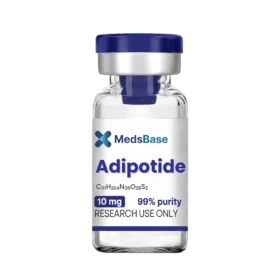 Adipotide (FTPP — Vetgericht Pro-apoptotisch Peptide)
Vragen & antwoorden
Adipotide (FTPP — Vetgericht Pro-apoptotisch Peptide)
Gerelateerde producten
Beoordelingen
Er zijn nog geen beoordelingen