







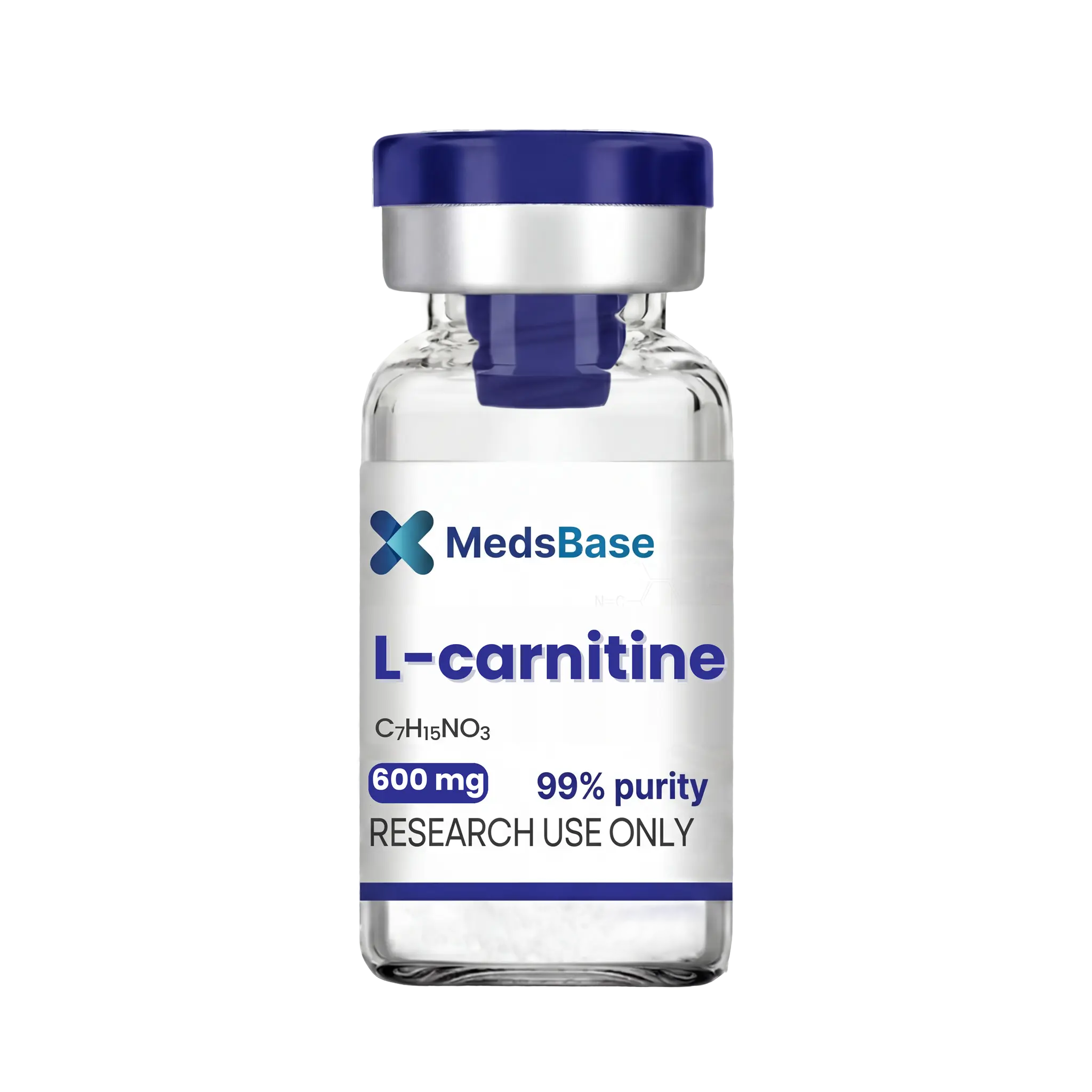
L-Carnitine (Levocarnitine)
✅ Mitochondriale langeketen-vetzuurtransportsysteem (geen peptide)
✅ CPT-I / CACT / CPT-II transportsubstraat
✅ Onderzocht in vetoxidatie-, insulinegevoeligheid-, cardiovasculaire modellen
✅ Acyl-CoA / vrij-CoA-ratio buffer; onderzoek naar spermamotiliteit
✅ Levocarnitine door FDA goedgekeurd voor carnitinedeficiëntie (oraal en IV)
L-Carnitine bevat synthetische levocarnitine.
✓ Medisch beoordeeld door Morgan Ellis — Apotheekonderzoeker · 8 jaar ervaring · Laatst beoordeeld: mei 2026
Kort antwoord — Wat is L-Carnitine?
L-Carnitine (levocarnitine; (3R)-3-hydroxy-4-(trimethylammonio)butanoaat) is een klein quaternair ammonium aminozuurderivaat — geen peptide — dat fungeert als het essentiële dragermolecuul voor het transport van langeketenvetzuren over het mitochondriale binnenmembraan voor β-oxidatie. Het wordt endogeen gebiosynthetiseerd uit L-lysine en L-methionine en is geconcentreerd in skeletspieren, hart en lever. L-Carnitine wordt onderzocht in mitochondriale functieonderzoek, vetoxidatiefysiologie, insulinegevoeligheidsmodellen, cardiovasculair onderzoek, neuroprotectie (Alzheimer/autisme in-vitro werk), inspanningsfysiologie en spermamotiliteitsonderzoek. Leverbaar in 600 mg en 1200 mg flacons als levocarnitine USP-grade zwitterion uitsluitend voor laboratoriumonderzoek. Opgenomen in ons peptidecatalogus naast NAD⁺ als een complementair mitochondriaal/metabool onderzoeksinjecteerbaar middel.
📦 Elke bestelling is gedekt door onze Reshipment Assurance-beleid — als uw pakket niet binnen 20 werkdagen arriveert, sturen wij het opnieuw.
| Specificatie | Detail |
|---|---|
| CAS-nummer | 541-15-1 (L-carnitine inwendig zout/zwitterion) |
| Type | Quaternair ammonium aminozuurderivaat (geen peptide); de levo-roterende (3R) enantiomeer is de biologisch actieve vorm die verantwoordelijk is voor mitochondriaal langeketenvetzuurtransport via het carnitine palmitoyltransferase (CPT-I/CPT-II) systeem; endogeen gebiosynthetiseerd uit L-lysine en L-methionine; ook wel levocarnitine (INN) of vitamine BT in oudere literatuur |
| Molecuulformule | C7H15NEE3 |
| Moleculair gewicht | 161.20 g/mol |
| IUPAC-naam | (3R)-3-hydroxy-4-(trimethylazaniumyl)butanoaat |
| Sequentie | n/v (kleinmoleculair aminozuurderivaat — geen peptide) |
| Form | Gevriesdroogd poeder, wit tot off-white (zwitterion/inwendig zoutvorm) |
| Zuiverheid | ≥99% (HPLC geverifieerd, COA op aanvraag) |
| Opslag | Gevriesdroogd: 2–8 °C (koelkast) voor kortetermijnwerkvoorraad; −20 °C voor langdurige opslag van ongeopende flesjes. Gereconstitueerd: 2–8 °C, binnen ~30 dagen gebruiken. Beschermen tegen licht. Vermijd herhaalde vries-dooicycli van de gereconstitueerde oplossing. Levocarnitine is hygroscopisch — sluit flesjes direct na elke onttrekking. |
| Oplosbaarheid | Zeer goed wateroplosbaar (zwitterion bij fysiologische pH). Reconstitueert snel in bacteriostatisch water of steriel water met zachtjes zwenken. Geen gespecialiseerde oplosmiddelen nodig. Werkoplossingen kunnen worden bereid in concentraties tot ~500 mg/mL zonder neerslag. |
| Onderzoeksgebruik | Alleen voor laboratoriumonderzoek. Niet voor humaan of veterinair diagnostisch of therapeutisch gebruik. |
Wat Is L-Carnitine?
L-Carnitine (levocarnitine) is een klein, wateroplosbaar, quaternair-ammonium aminozuurderivaat met de molecuulformule C7H15NEE3 en molecuulgewicht 161,20 g/mol. Het is geen peptide — het is een enkel-residu zwitterionisch molecuul dat metabolisch wordt afgeleid van de aminozuren L-lysine en L-methionine via een meerstaps biosynthetisch pad verdeeld over nier, lever en hersenen. Alleen het (3R) enantiomeer (de L-vorm/levo-vorm/levocarnitine) is biologisch actief; het (3S) enantiomeer (D-carnitine) is inactief en is goed gedocumenteerd dat het de transport van de L-vorm verstoort, daarom wordt farmaceutisch materiaal geleverd als het enantiomeerzuivere L-vorm in plaats van als racemisch DL-carnitine.
De centrale fysiologische functie van het molecuul is om te dienen als de verplichte drager voor het transport van langketen vetzuren (C12+) over de anders ondoordringbare binnenste mitochondriale membraan, waar ze vervolgens worden afgebroken door β-oxidatie tot acetyl-CoA, het substraat voor de citroenzuurcyclus en ATP-synthese. Het transportsysteem — carnitine palmitoyltransferase I (CPT-I) op de buitenste mitochondriale membraan, de carnitine/acylcarnitine translocase (CACT) over de binnenste membraan, en carnitine palmitoyltransferase II (CPT-II) aan de matrixzijde — zet vrije vetzuren om in acylcarnitines, transporteert ze over de dubbele laag en laat ze weer vrij als acyl-CoA's voor oxidatie. L-Carnitine is daarom de beperkende metaboliet voor vetoxidatie in weefsels met hoge oxidatieve vraag: skeletspier, hartspier en lever.
L-Carnitine is ook een hoogaffiniteitsbuffer van de cellulaire acyl-CoA/vrije-CoA-verhouding. Door acylgroepen te accepteren op zijn hydroxyl-zijketen, handhaaft L-carnitine het intracellulaire pool van vrije CoA dat andere CoA-afhankelijke enzymen (pyruvaatdehydrogenase, α-ketoglutaraatdehydrogenase, vetzuur β-oxidatie) nodig hebben om te functioneren. Carnitinedeficiëntie veroorzaakt daarom effecten die verder gaan dan vetoxidatie alleen — uitbreidend naar pyruvaatverwerking, TCA-cyclusflux en algehele mitochondriale bio-energetische balans.
L-Carnitine heeft FDA-goedkeuring (onder de naam levocarnitine) voor therapeutisch gebruik bij mensen in primaire en secundaire carnitinedeficiëntie (orale en IV-formuleringen) en wordt veel gebruikt in onderzoekscontexten die mitochondriale bio-energetica, vetoxidatie, insulinegevoeligheid, cardiovasculaire functie, neuroprotectie, inspanningsfysiologie en spermamotiliteit onderzoeken. De onderzoekskwaliteit L-Carnitine die hier wordt verkocht, wordt geleverd uitsluitend voor laboratoriumonderzoek en is niet bedoeld voor menselijke of veterinaire toediening zonder passende regelgevende goedkeuring.
Werkingsmechanisme — Mitochondriaal Transport van Langeketen Vetzuren
Het centrale mechanisme van L-Carnitine is gedocumenteerd in tientallen jaren onderzoek naar mitochondriale biochemie:
- Carnitine palmitoyltransferase I (CPT-I) — buitenste mitochondriale membraan — Langeketen vetzuren worden eerst geactiveerd tot langeketen acyl-CoA in het cytoplasma. CPT-I, ingebed in het buitenste mitochondriale membraan, brengt de acyl-groep over van CoA naar de hydroxylgroep van L-carnitine, waardoor langeketen acylcarnitine wordt gevormd. Dit is de meest gereguleerde stap van mitochondriale vetoxidatie — CPT-I wordt allosterisch geremd door malonyl-CoA (het product van acetyl-CoA carboxylase in lipogene metabolisme tijdens de gevoede toestand), wat verklaart hoe insuline/glucagon en het AMPK-systeem vetoxidatie afzetten tegen vet synthese.
- Carnitine/acylcarnitine translocase (CACT) — binnenste mitochondriale membraan — Langeketen acylcarnitine gevormd door CPT-I kan niet diffunderen door het binnenste mitochondriale membraan. CACT, een antiporter, wisselt cytosolisch acylcarnitine uit voor vrij carnitine in de matrix in een 1:1 stoichiometrie, waardoor acylcarnitine in de matrix wordt afgeleverd en carnitine wordt gerecycled voor verdere rondes van CPT-I.
- Carnitine palmitoyltransferase II (CPT-II) — binnenste mitochondriale membraan, matrixgericht — In de matrix keert CPT-II de CPT-I-reactie om: het brengt de acyl-groep over van carnitine terug naar matrix-CoA, waardoor langeketen acyl-CoA wordt geregenereerd, dat nu β-oxidatie kan ondergaan. Het vrijgekomen carnitine wordt via CACT terug over het membraan gebracht voor een nieuwe transportcyclus.
- Buffering van Acyl-CoA / vrij-CoA ratio en metabole flexibiliteit — Naast het langeketen transportsysteem accepteert L-carnitine ook korte- en middellangeketen acyl-groepen (acetylcarnitine, propionylcarnitine) en fungeert het als een hoogcapaciteitsbuffer voor de intracellulaire acyl-CoA / vrij-CoA ratio. Dit behoudt vrij CoA voor pyruvaatdehydrogenase, α-ketoglutaar dehydrogenase en β-oxidatie. De vorming van acetylcarnitine dient ook als het mechanisme waarmee overtollig acetyl-CoA — door vasten, ketogenese, inspanning — veilig kan worden gebufferd en geëxporteerd over het mitochondriale membraan.
Het farmacokinetische profiel van oraal toegediende L-carnitine is ongebruikelijk: de orale biologische beschikbaarheid is laag (~15%) vanwege actieve intestinale verzadiging, waarbij de overige 85% onderhevig is aan uitgebreide bacteriële afbraak in de dikke darm (wat resulteert in TMA en TMAO — een bevinding die aandacht heeft getrokken in cardiovasculair onderzoek). Intraveneuze en intramusculaire onderzoeksroutes bereiken veel hogere plasmaspiegels en omzeilen het darm-microbiële afbraakpad volledig, wat de reden is waarom farmacologische onderzoeksprotocollen vaak parenterale toediening gebruiken ondanks het gemak van orale dosering.
Gepubliceerde onderzoeksapplicaties
L-Carnitine wordt gebruikt in laboratoriumonderzoeken die zich richten op:
- Mitochondriale functie en bio-energetica — Seahorse / Oroboros respirometrie, mitochondriale membraanpotentiaal, ATP-generatiesnelheid, vetzuuroxidatiesnelheid in primaire hepatocyten, skeletspier- en cardiomyocytculturen
- Vetoxidatie en metabole flexibiliteit — omschakeling tussen glucose- en vetoxidatie in skeletspieren en lever; insulineresistentie-omkeermodellen; obese-knaagdier- en DIO-studiecohorten
- Insulinegevoeligheidsonderzoek — verbetering van skeletspier-insulinegevoeligheid in modellen van metabool syndroom en preklinisch onderzoek naar diabetes type 2; mechanistische analyse van de L-carnitine / acyl-CoA-buffering / pyruvaatverwerkingsas
- Cardiovasculair onderzoek — angina pectoris, hartfalen, ischemie-reperfusieletsel, cardiomyopathie (met name doxorubicine-geïnduceerde cardiotoxiciteit en primaire carnitinedeficiëntie-cardiomyopathie); TMA/TMAO microbioom-as cardiovasculair onderzoek
- Onderzoek naar neuroprotectie — Alzheimer-ziekte in-vitro modellen (specifiek acetylcarnitine), Parkinson-ziekte modellen, preklinische modellen van perifere diabetische neuropathie, autismespectrumonderzoek waarbij carnitinedeficiëntie is geïmpliceerd
- Onderzoek naar spermamotiliteit en mannelijke vruchtbaarheid — verkrijging van motiliteit in de bijbal, mitochondriële energetica van de zweepslag van spermacellen, antioxidantbescherming van spermatozoën; een van de meest onderzochte verbindingen in onderzoek naar mannelijke vruchtbaarheid
- Onderzoek naar fysiologie van inspanning en uithoudingsvermogen — substraatgebruik tijdens langdurige inspanning, glycogeensparing, herstel na inspanning; onderzoeksinteresse in carnitinebelastingsprotocollen en co-toediening van insuline om verzadiging van spieropname te overwinnen
- Onderzoek naar chronische nierziekte / hemodialyse — carnitinetekort komt vaak voor bij dialyseafhankelijke patiënten met eindstadium nierfalen en L-carnitine heeft FDA-goedkeuring voor deze indicatie; preklinisch onderzoek naar dialysegerelateerde cardiomyopathie en spierzwakte gaat door
Voor een bredere context over mitochondriale en metabole-as onderzoeksverbindingen in deze catalogus, zie NAD⁺ (geoxideerd dinucleotide co-enzym, centraal elektronentransportsubstraat), SS-31 (Elamipretide) (mitochondriaal-gericht cardiolipine-bindend peptide), en MOTS-c (mitochondriaal afgeleid metabool-regulerend peptide). Bekijk het volledige onderzoekspeptiden & verbindingen catalogus voor gerelateerde verbindingen.
Beschikbare sterktes en concentraties
MedsBase stocks L-Carnitine in two lyophilized vial sizes calibrated to typical research protocol lengths. Each strength is available in 10-vial, 20-vial, or 30-vial pack formats:
| Vulsterkte | Typisch Onderzoeksgebruik | Verpakkingsgroottes |
|---|---|---|
| 600 mg | Standaard onderzoekssterkte — dosis-titratieprotocollen, in-vitro mitochondriële functiepanels, kortcyclisch in-vivo werk, onderzoek naar spermamotiliteit | 10, 20 of 30 vialen |
| 1200 mg | Langcyclische of hogere dosis onderzoeksprotocollen — langetermijn metabole studies, verzadigingsexperimenten in inspanningsfysiologie, werk met meerdere cohorten; laagste kosten per mg | 10, 20 of 30 vialen |
Beide sterktes zijn dezelfde chemische vorm (gevriesdroogd levocarnitine zwitterion, ≥99% HPLC zuiverheid). Vial-doses zijn bewust veel groter dan het peptidebereik (5–20 mg) omdat L-carnitine een klein molecuul is dat in gramniveaus wordt gebruikt — een 600 mg of 1200 mg vial komt ongeveer overeen met een enkele intraveneuze onderzoeksdosis in knaagdier- of grootdierprotocollen. Onderzoekers moeten specifieke doseringsbereiken bepalen uit peer-reviewed literatuur die passend is voor het protocol.
Hoe het zich verhoudt — L-Carnitine vs NAD⁺
L-Carnitine en NAD⁺ zijn de twee niet-peptide mitochondriale/metabole onderzoeksverbindingen in deze catalogus, en ze richten zich op volledig verschillende lagen van mitochondriale bio-energetica. L-Carnitine bevindt zich aan de brandstofzijde — het transporteert langeketenvetzuren naar de matrix voor β-oxidatie. NAD⁺ bevindt zich aan de elektronentransportzijde — het is de verplichte elektronenacceptor voor β-oxidatie, glycolyse en de TCA-cyclus, geregenereerd door Complex I van de elektronentransportketen. De twee verbindingen zijn mechanistisch complementair, en onderzoeksprotocollen combineren ze soms om bijdragen van upstream-substraat versus downstream-elektronenstroom aan mitochondriale output te onderzoeken.
| Criterium | L-Carnitine | NAD⁺ |
|---|---|---|
| Chemische klasse | Quaternaire ammonium aminozuurderivaat (enkel zwitterion) | Dinucleotide co-enzym (adenine + nicotinamide nucleotiden verbonden via difosfaat) |
| Molecuulgewicht | 161.20 g/mol | 663.43 g/mol |
| Rol in mitochondriën | Drager — langeketenvetzuurtransport over het binnenmembraan | Elektronenacceptor voor β-oxidatie, glycolyse, TCA-cyclus; substraat voor sirtuïnen en PARPs |
| Best-studied research focus | Vetoxidatie, insulinegevoeligheid, cardiovasculair, spermamotiliteit, bewegingsfysiologie | Sirtuïnebiologie, levensduur, cellulaire veroudering, NAD-as redoxregulatie |
| FDA-goedkeuring | Ja — levocarnitine, voor primaire/secundaire carnitinedeficiëntie (oraal en IV) | Nee — alleen onderzoeksstof |
| Endogene biosynthese | Van L-lysine en L-methionine, in nieren/lever/hersenen | Van tryptofaan (de novo) of nicotinamide/niacine (salvage) |
| Plasmastabiliteit | Stabiel — uren halfwaardetijd | Instabiel — korte minuten halfwaardetijd in oplossing; oxideert en degradeert snel |
| Typische onderzoeksdosis | Honderden mg tot gramniveau (enkele dosis in knaagdier/groot-dierprotocollen) | Tientallen tot honderden mg (celkweek: µM-concentraties) |
Voor onderzoek gericht op de oxidatie van langeketen vetzuren, cardiovasculaire metabole functie, insulinegevoeligheid of spermamotiliteit is L-Carnitine de standaard referentieverbinding. Voor onderzoek gericht op sirtuinebiologie, biochemie van de levensduuras of NAD-afhankelijke redoxregulatie, NAD⁺ is het meer gerichte hulpmiddel. Zie ook SS-31 (Elamipretide) voor cardiolipine-/binnenmembraangericht mitochondriaal onderzoek en MOTS-c voor onderzoek naar mitochondriale peptidesignalering.
Opslag en Reconstituering
Voor reconstituering: bewaar gevriesdroogde flesjes gekoeld bij 2–8 °C in de originele verpakking voor kortdurende werkvoorraad. Voor langdurige opslag, vries ongeopende flesjes in bij −20 °C. Gefriesdroogde L-Carnitine is stabiel onder koeling tot 36 maanden en bij −20 °C tot 60 maanden — aanzienlijk stabieler dan de meeste gevriesdroogde peptiden omdat de kleine molecuulstructuur geen amidebindingen of disulfidebruggen heeft die kunnen hydrolyseren. De verbinding is echter, hygroscopisch, dus sluit de flesjes direct na elke onttrekking weer af en vermijd langdurige blootstelling aan omgevingsvochtigheid.
Reconstitueringsprocedure: spuit bacteriostatisch water langs de zijkant van het flesje (niet direct op de gevriesdroogde cake). Voor een flesje van 600 mg levert 3,0 ml bacteriostatisch water een werkconcentratie van 200 mg/ml op; 1,2 ml levert een voorraad van 500 mg/ml. Voor een flesje van 1200 mg levert 6,0 ml een werkvoorraad van 200 mg/ml op; 2,4 ml levert een voorraad van 500 mg/ml. L-Carnitine lost zeer snel op met zachtjes zwenken — meestal binnen 10–30 seconden — omdat het een klein zwitterion is zonder gevouwen structuur die verstoord moet worden. Na reconstitutie bewaar je het flesje bij 2–8 °C en gebruik je het binnen 30 dagen. Bescherm tegen licht. Gooi weg als troebelheid, deeltjes of kleurverandering optreedt.
Veelgestelde vragen
Is L-Carnitine een peptide?
Nee. L-Carnitine is een kleine molecuul quaternaire ammonium aminozuurderivaat (MW 161,20 g/mol), niet een peptide. We voeren het in ons onderzoekspeptidecatalogus naast NAD⁺ omdat het een complementaire rol vervult in mitochondriaal/metabool onderzoek en in hetzelfde injecteerbare flesjesformaat wordt geleverd. De rij “Sequence” in de specificatietabel is daarom gemarkeerd als 'n.v.t.'.
Wat is het verschil tussen L-Carnitine en acetyl-L-carnitine (ALCAR)?
Acetyl-L-carnitine is L-carnitine met een acetylgroep geësterificeerd aan de hydroxylzijketen. ALCAR passeert de bloed-hersenbarrière efficiënter en is de vorm die het meest wordt gebruikt in onderzoek gericht op het centrale zenuwstelsel (Alzheimerziekte, perifere neuropathie). Het basis L-carnitine zwitterion dat wij hier leveren is de vorm die wordt gebruikt in perifeer metabool onderzoek (cardiovasculair, skeletspier, spermamotiliteit, dialysegerelateerde deficiëntie). De twee verbindingen kunnen metabolisch in elkaar worden omgezet via carnitine acetyltransferase.
Wat is het verschil tussen L-Carnitine en raceem DL-carnitine?
Alleen het L (3R) enantiomeer is biologisch actief. Het D (3S) enantiomeer is inactief en het is nu goed gedocumenteerd dat het de transport van de L-vorm verstoort, zich ophoopt in weefsel en zwakte en andere bijwerkingen veroorzaakt bij langdurig hooggedoseerd gebruik. Farmaceutisch-grade levocarnitine (wat wij leveren) is het enantiomeerzuivere L-vorm. De raceemische DL-vorm is verouderd en wordt niet meer gebruikt in klinische of rigoureuze onderzoekscontexten.
Waarom is de onderzoeksdosis zoveel groter dan de peptide doses in deze catalogus?
L-Carnitine is een klein molecuul (MW 161) en wordt gebruikt in gramniveau doses — de endogene carnitinepool van het lichaam is ongeveer 25 g, geconcentreerd in skeletspieren. Onderzoeksprotocollen gebruiken typisch 100–500 mg/kg in rodent in-vivo werk, wat zich vertaalt naar honderden milligrammen tot grammen per dosis. Vergelijk dit met onderzoekspeptiden (BPC-157, semaglutide, etc.) waar typische doses 100 µg tot 5 mg per toediening zijn — drie tot vier ordes van grootte kleiner, wat de verschillende moleculaire gewichten en de verschillende receptor-/mechanismeschalen weerspiegelt.
Wat is de TMA / TMAO kwestie die ik zie in cardiovasculair onderzoek?
Een subset van oraal ingenomen L-carnitine wordt afgebroken door darmbacteriën tot trimethylamine (TMA), dat de lever vervolgens oxideert tot trimethylamine-N-oxide (TMAO). Verhoogde TMAO-niveaus zijn in epidemiologisch onderzoek geassocieerd met nadelige cardiovasculaire gebeurtenissen, wat een controverse heeft opgeworpen over of langdurige hooggedoseerde orale L-carnitine-suppletie netto gunstig of schadelijk is voor cardiovasculaire eindpunten. De kwestie is actief en onopgelost. Parenterale L-carnitine omzeilt het darmmicrobiële afbraakpad en is niet onderhevig aan deze zorg.
Wat betekent CPT-I remming in metabool onderzoek?
Carnitine palmitoyltransferase I (CPT-I) is het snelheidsbepalende enzym voor mitochondriale opname van langeketenvetzuren. Etomoxir is een klassieke CPT-I remmer die wordt gebruikt om vetoxidatie in onderzoeksmodellen te blokkeren; het is het farmacologische hulpmiddel tegenhanger van het L-carnitine substraat. Onderzoeksprotocollen combineren soms L-carnitine-suppletie (substraatzijde) met CPT-I remming (enzymzijde) om substraatgelimiteerde versus enzymgelimiteerde vetoxidatie in verschillende weefsels en omstandigheden te ontrafelen.
Kan ik L-Carnitine combineren met NAD⁺ in hetzelfde onderzoeksprotocol?
Ja — de twee verbindingen richten zich op verschillende lagen van mitochondriale bio-energetica (substraattransport versus elektronentransport), en combinatie wordt vaak gebruikt in onderzoek dat gericht is op het onderzoeken van upstream versus downstream beperkingen van mitochondriale output. Ze zijn chemisch stabiel in oplossing samen. Reconstitueer elk eerst apart om stabiliteit en concentratienauwkeurigheid vast te stellen, combineer ze dan direct voor gebruik in plaats van gereconstitueerde flesjes samen op te slaan.
Welke toedieningsroute wordt gebruikt in gepubliceerd onderzoek?
Intraveneuze en intramusculaire routes zijn het meest gebruikelijk in farmacologisch onderzoek omdat ze de lage (~15%) orale biologische beschikbaarheid en het darmmicrobiële TMA/TMAO afbraakpad omzeilen. Subcutane toediening wordt gebruikt in sommige knaagdierprotocollen. Orale toediening wordt gebruikt in farmacokinetisch en nutritioneel onderzoek waar de biologische beschikbaarheidsvraag zelf de onderzoeksfocus is.
Meer opties in Peptiden
Gerangschikt op recente bestelvolumes van MedsBase — wat andere klanten in deze categorie kiezen.
| Sterkte | 600 mg, 1200 mg |
|---|---|
| Hoeveelheid | 10 flacons, 20 flacons, 30 flacons |
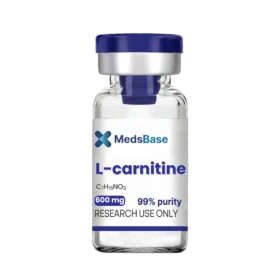 L-Carnitine (Levocarnitine)
Vragen & antwoorden
L-Carnitine (Levocarnitine)
Gerelateerde producten
Beoordelingen
Er zijn nog geen beoordelingen