







SLU-PP-332 (Pan-ERR Agonist Oefening Mimetic)
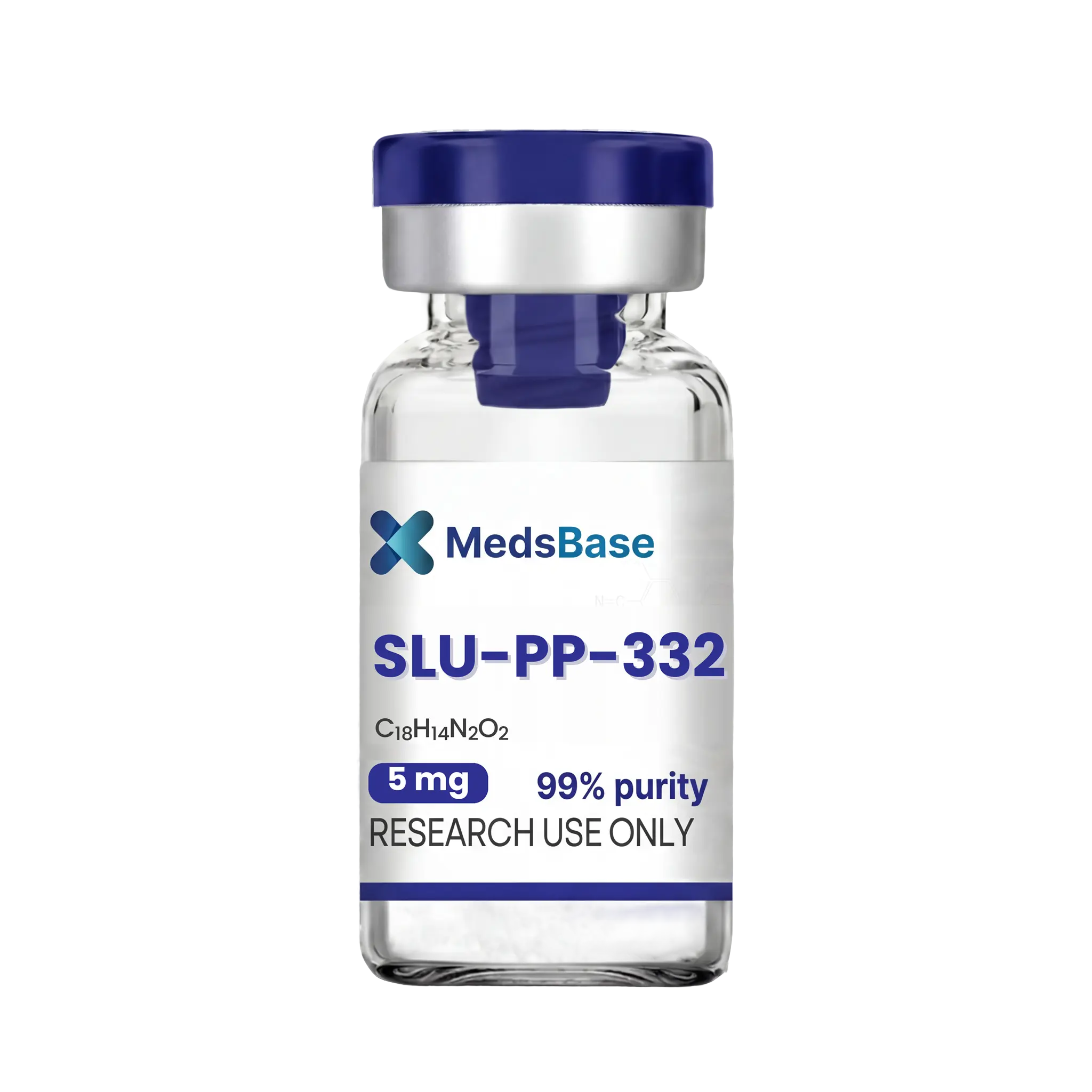
✅ Synthetisch klein molecuul pan-agonist van ERRα/β/γ nucleaire receptoren
✅ Directe transcriptionele aanjager van mitochondriale biogenese + oxidatieve vezelinductie
✅ Toonaangevend onderzoeksexercise-mimetic verbinding (Billon et al. 2023, ACS Chem Biol)
✅ EC₅₀ ERRα ~98 nM; ~4-voudige ERRα-selectiviteit over ERRγ
✅ Sommige leveranciers labelen als SLU-PP-322; canonieke naam SLU-PP-332; CAS 303760-60-3, MW 290.32
SLU-PP-332 bevat synthetisch pan-ERR klein molecuul onderzoeksverbinding. Geen peptide.
✓ Medisch beoordeeld door Morgan Ellis — Apotheekonderzoeker · 8 jaar ervaring · Laatst beoordeeld: mei 2026
Kort antwoord — Wat is SLU-PP-332?
SLU-PP-332 (CAS 303760-60-3, MF C18H14N2O2, MW 290.3 g/mol) is een synthetisch klein molecuul pan-agonist van oestrogeen-gerelateerde receptoren (ERRα / ERRβ / ERRγ) ontwikkeld in het Burris-laboratorium aan de Saint Louis University. ERR's zijn wees-nucleaire-receptor transcriptiefactoren die mitochondriale biogenese, vetzuuroxidatie, oxidatieve vezelontwikkeling en het spieraanpassingsprogramma stimuleren dat normaal gesproken door lichaamsbeweging wordt geactiveerd — waardoor SLU-PP-332 een toonaangevend “bewegingsmimeticum” onderzoeksinstrument. Gepubliceerd in Billon et al. (2023, ACS Chemical Biology) — een acute eenmalige dosis veroorzaakt een aerobe trainingsrespons-genexpressieprofiel in skeletspieren; chronische dosering verhoogt het aandeel van type IIa oxidatieve vezels en verbetert het uithoudingsvermogen bij muizen. Kleine molecule — geen peptide. Opmerking: sommige leverancierspartijen worden aangeduid als SLU-PP-322 / SLU-PP-332 door elkaar — beide verwijzen naar dezelfde Burris-lab ERR pan-agonist; raadpleeg het COA voor batchspecifieke identificatie. Alleen voor laboratoriumonderzoek.
📦 Elke bestelling is gedekt door onze Reshipment Assurance-beleid — als uw pakket niet binnen 20 werkdagen arriveert, sturen wij het opnieuw.
| Specificatie | Detail |
|---|---|
| Compound Class | Synthetische kleine molecule pan-agonist van oestrogeen-gerelateerde receptoren (ERRα / ERRβ / ERRγ); wees-nucleaire-receptor agonist; onderzoeksinstrument als bewegingmimeticum; geen peptide |
| Chemical Name | SLU-PP-332 (synoniemen: SLU-PP-322 in sommige leverancierspartijen; pan-ERR agonist; Burris-lab Verbinding 332) |
| CAS-nummer | 303760-60-3 (canoniek, volgens MedKoo / MedChemExpress / wetenschappelijke literatuur) |
| Molecuulformule | C18H14N2O2 |
| Moleculair gewicht | 290.32 g/mol |
| Werkingsmechanisme | Pan-agonist van ERRα, ERRβ, ERRγ nucleaire receptoren met ~4-voudige ERRα-selectiviteit ten opzichte van ERRγ. EC50 ERRα ~98 nM (Billon et al. 2023). ERR-receptoractivatie drijft transcriptie van PGC-1α-doelgenen aan — mitochondriale biogenese (TFAM, NRF1, NRF2), vetzuur-β-oxidatie (CPT1B, MCAD, LCAD), onderdelen van oxidatieve-fosforyleringscomplexen en myosine-zware ketens van oxidatieve vezeltypen. Het netto-effect bootst het transcriptieprogramma van trainingsadaptatie na. |
| Sequentie | n.v.t. (kleinmoleculaire synthetische verbinding — geen peptide) |
| Form | Gevriesdroogd wit tot off-white poeder; eenmalig gebruik onderzoeksvials |
| Zuiverheid | ≥99% (HPLC geverifieerd, COA op aanvraag) |
| Oplosbaarheid | DMSO ≥50 mg/mL; wateroplosbaarheid matig (sub-mg/mL). Voor in-vitrowerk, bereid DMSO-voorraden en verdun deze vlak voor gebruik in kweekmedium. Voor in-vivowerk gebruiken formuleringen doorgaans DMSO/PEG/zoutoplossing of vergelijkbare co-oplosmiddelsystemen. |
| Opslag | Gevriesdroogd: 2–8 °C kortdurend, −20 °C langdurig (≥36 maanden). Gereconstitueerd DMSO: −20 °C, eenmalig ontdooien. Beschermen tegen licht. Vermijd herhaald invriezen/ontdooien. |
| Onderzoeksgebruik | Alleen voor laboratoriumonderzoek. Niet voor menselijke of veterinaire diagnostische of therapeutische toepassingen. Momenteel niet op de WADA Verboden Lijst onder zijn specifieke naam, maar onderzoekers moeten zich ervan bewust zijn dat de bredere S4-klasse (Hormoon- en Metabole Modulatoren) trainingsmimetische verbindingen omvat en de regelgevende status van SLU-PP-332 kan evolueren. |
Werkingsmechanisme — Pan-ERR-agonisme drijft transcriptie van trainingsadaptatie aan
SLU-PP-332 is de meest geciteerde synthetische kleinmoleculaire pan-agonist voor ERR in de gepubliceerde literatuur. ERR's (oestrogeen-gerelateerde receptoren α, β, γ) zijn wees-nucleaire receptoren die het DNA-bindende domein van oestrogeenreceptoren delen, maar geen oestrogeen binden — ze zijn constitutief actief in afwezigheid van een natuurlijke endogene ligand en worden in plaats daarvan gereguleerd door coactivator-binding (met name PGC-1α). ERR's zijn de belangrijkste transcriptionele aanjagers van:
- Mitochondriale biogenese — directe transcriptionele controle van TFAM, NRF1, NRF2 en tientallen genen voor mitochondriale-eiwitimport
- Vetzuur-β-oxidatie — inductie van CPT1B (carnitine palmitoyltransferase 1B), MCAD, LCAD en andere β-oxidatie-enzymen
- Oxidatieve fosforylering — transcriptie van nucleair gecodeerde ETC-complexonderdelen
- Ontwikkeling van oxidatieve vezels — Type IIa (oxidatieve snel samentrekkende) myosine-zware keten inductie; conversie van glycolytische Type IIb-vezels naar oxidatieve Type IIa-vezels
- Aanpassing van de glucoseverwerking — verbeterde insulinegevoeligheid van het skeletspierweefsel in DIO-muismodellen
Dit is hetzelfde transcriptieprogramma dat wordt geactiveerd door PGC-1α-gestuurde trainingsaanpassing — waardoor pan-ERR-agonisme een directe farmacologische route naar het fenotype van trainingsaanpassing wordt. Het onderzoek van Billon et al. (2023) ACS Chemical Biology toonde aan dat een acute eenmalige dosis SLU-PP-332 een genexpressiesignatuur in muizenskeletspieren produceert die aanzienlijk overlapt met de signatuur die wordt geproduceerd door een sessie van vrijwillig loopradgebruik — en chronische dosering (50 mg/kg/dag intraperitoneaal gedurende 4 weken) verhoogt het aandeel van Type IIa-vezels en het uithoudingsvermogen op de loopband bij muizen. Vervolgonderzoek (Billon et al. 2024, verlichting van het metabool syndroom) heeft metabole verbeteringseffecten aangetoond bij DIO-muizen, waaronder verbeterde glucosetolerantie en verminderde hepatische steatose.
Gepubliceerde onderzoeksapplicaties
- Pan-ERR-receptorfarmacologie — canonieke referentie-kleine molecule ERR-pan-agonist
- Transcriptieonderzoek naar trainingsmimetica — gepubliceerd als het toonaangevende “training in een pil”-compound naast AICAR; mechanistisch verschillend (ERR-direct vs AMPK-AMP-mimetisch)
- Onderzoek naar mitochondriale biogenese — directe transcriptiedriver van de TFAM / NRF1 / NRF2-as
- Onderzoek naar skeletspieraanpassing — Inductie van type IIa oxidatieve vezels, uithoudingsvermogen fenotype
- Onderzoek naar metabool syndroom — DIO muismodellen, hepatische steatose, insulinegevoeligheid
- Farmacologie van het PGC-1α pad — activeert de PGC-1α-gestuurde transcriptiecascade vanaf stroomafwaarts
Voor bredere context zie AICAR (canonieke AMPK-gemedieerde oefening mimetic — ander mechanisme), AOD-9604 (alleen lipolytisch vetverlies onderzoekspeptide), MOTS-c (mitochondriaal afgeleid peptide), 5-Amino-1MQ (NAD-as NNMT-remmer), NAD⁺ (elektrontransport co-enzym).
Beschikbare sterktes
| Vulsterkte | Verpakkingsgroottes |
|---|---|
| 5 mg — onderzoeksstandaard; ondersteunt DIO muis cohorten bij 50 mg/kg/d ×4–8 wk en in-vitro farmacologie bij nM-µM concentraties | 10, 20 of 30 vialen |
Vergelijking — SLU-PP-332 vs AICAR
SLU-PP-332 en AICAR zijn de twee meest geciteerde “oefening mimetic” onderzoeksverbindingen in deze catalogus, maar ze activeren het oefening-aanpassingsprogramma via mechanistisch verschillende upstream routes. SLU-PP-332 activeert direct de ERR familie (de downstream transcriptiefactor voor het mitochondriale biogenese programma). AICAR activeert AMPK (de upstream energie-sensor kinase die, naast vele andere effecten, PGC-1α expressie en PGC-1α-ERR co-activatie stimuleert). De twee verbindingen komen daarom samen in dezelfde downstream genexpressie signatuur maar activeren deze vanuit verschillende punten van de regulatoire cascade.
| Criterium | SLU-PP-332 | AICAR |
|---|---|---|
| MW | 290.32 g/mol | 258,23 g/mol |
| Werkingsmechanisme | Directe ERRα/β/γ nucleaire-receptoragonist | AMPK-activator (via intracellulair ZMP) |
| Interventiepunt | Downstream transcriptiefactor | Upstream energie-sensor kinase |
| Best bestudeerde focus | Type IIa oxidatieve-spiervezelinductie, uithoudingsfenotype | Insulinegevoeligheid, hepatische gluconeogenese, bredere AMPK-farmacologie |
| Typische dosering | 50 mg/kg/d IP (muis, Billon-protocol) | 250–500 mg/kg/d IP (muis) |
| WADA-status | Momenteel niet benoemd | Te allen tijde verboden (S4.5) |
Opslag en Reconstituering
Gevriesdroogde flacons: bewaren bij 2–8 °C kortdurend, −20 °C langdurig. Herstellen in DMSO bij ≥10 mg/mL werkvoorraad (wateroplosbaarheid is beperkt; DMSO is het voorkeursoplosmiddel). Voor in-vivo werk, formuleren met co-oplosmiddelen (DMSO/PEG-400/zoutoplossing of vergelijkbaar) vlak voor toediening. DMSO-voorraden bewaren bij −20 °C, eenmalig ontdooien. Beschermen tegen licht. Vermijd herhaaldelijk invriezen/ontdooien.
FAQ
Is “SLU-PP-322” hetzelfde als SLU-PP-332?
Sommige leverancierspartijen gebruiken “SLU-PP-322” en “SLU-PP-332” uitwisselbaar voor dezelfde Burris-lab ERR pan-agonist. De canonieke wetenschappelijke benaming is SLU-PP-332 (Billon et al. 2023, ACS Chemical Biology), met CAS 303760-60-3. Raadpleeg batch COA voor definitieve identificatie.
Welke gepubliceerde doseringsbereiken zijn gebruikt?
Muizen in-vivo protocollen gebruiken 50 mg/kg/d IP gedurende 4–8 weken (Billon et al. canoniek protocol). In-vitro myotube en primaire spiercel farmacologie gebruikt 100 nM tot 10 µM in groeimedium. EC50 op ERRα is ~98 nM.
Hoe verschilt SLU-PP-332 van andere exercise mimetics?
SLU-PP-332 activeert direct ERRs — de downstream transcriptiefactoren. AICAR activeert AMPK (upstream kinase). De PPARδ agonisten uit de jaren 2010 (GW501516) activeren een ander maar gedeeltelijk overlappend transcriptieprogramma. Verschillend mechanisme, gedeeltelijk overlappend resultaat.
Staat SLU-PP-332 op de WADA Verboden Lijst?
Momenteel niet onder zijn specifieke naam, maar de bredere S4 klasse (Hormoon en Metabole Modulatoren) omvat exercise-mimetic verbindingen. De regelgevende status van de verbinding kan evolueren naarmate meer onderzoeksdata beschikbaar komt. Onderzoekers in humane contexten moeten de huidige WADA lijst raadplegen.
Andere Exercise-Mimetic / Metabole Onderzoeksverbindingen
- AICAR — Canonieke AMPK-gemedieerde exercise mimetic — complementair mechanisme
- AOD-9604 — Alleen lipolytisch hGH C-terminal fragment
- MOTS-c — Mitochondriaal afgeleid metabolisch peptide AMPK-activator
- 5-Amino-1MQ — NNMT-remmer — NAD-as precursor besparend
- NAD⁺ — Directe dinucleotide pool suppletie
- BAC Water (Bacteriostatisch Water) — Benodigd voor het reconstitueren van elk lyofiliseerd flesje — steriel, 0,9% benzylalcohol-geconserveerd oplosmiddel
Meer opties in Peptiden
Gerangschikt op recente bestelvolumes van MedsBase — wat andere klanten in deze categorie kiezen.
| Sterkte | 5 mg |
|---|---|
| Hoeveelheid | 10 flacons, 20 flacons, 30 flacons |
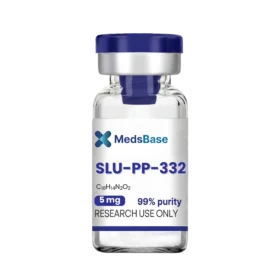 SLU-PP-332 (Pan-ERR Agonist Oefening Mimetic)
Vragen & antwoorden
SLU-PP-332 (Pan-ERR Agonist Oefening Mimetic)
Gerelateerde producten
Beoordelingen
Er zijn nog geen beoordelingen