







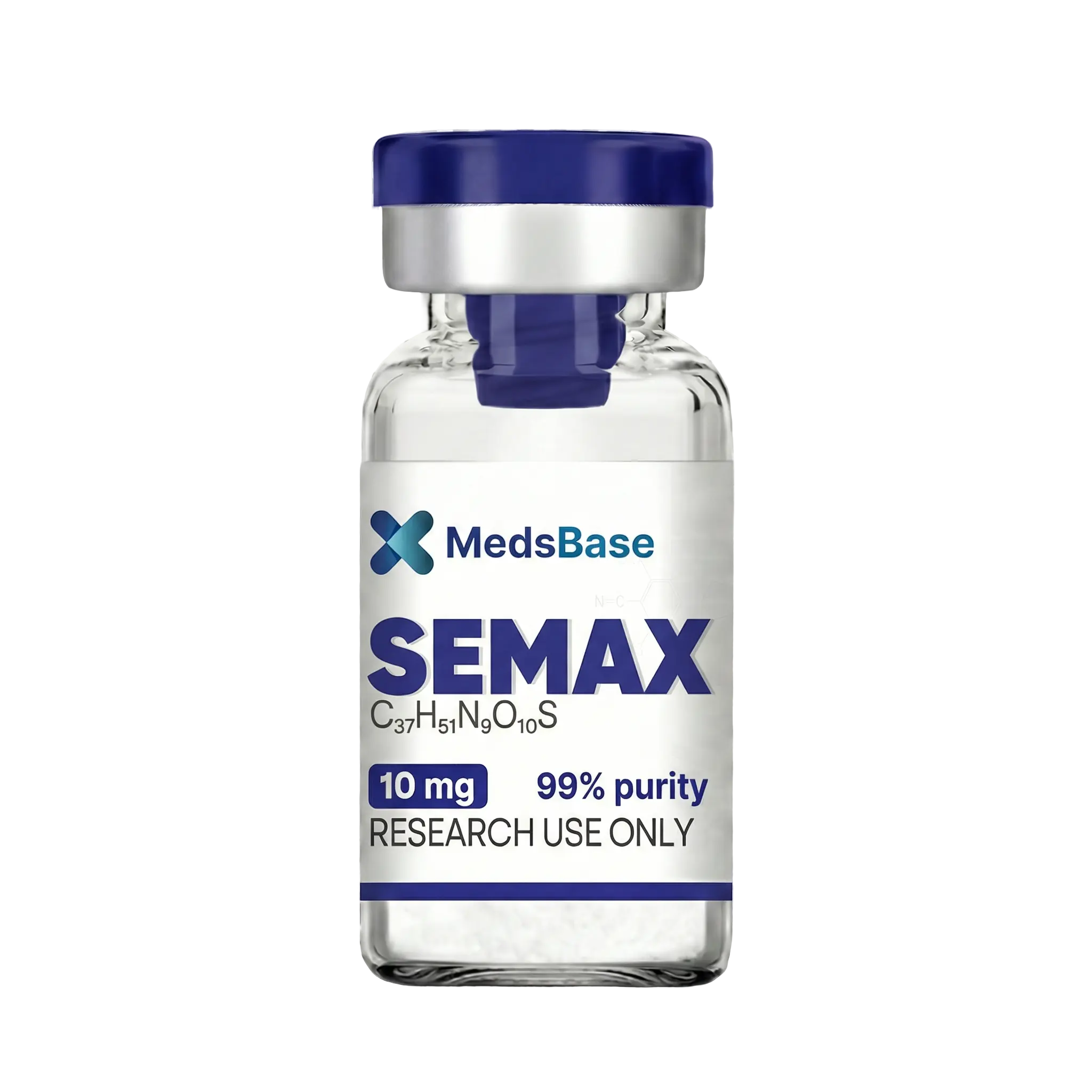
Semax
✅ Ondersteunt neuronale veerkracht
✅ Versterkt cognitieve pathways
✅ Moduleert neurotransmitteractiviteit
✅ Bevordert neurotrofische factoren
✅ Stabiliseert stressresponsmarkers
Semax bevat synthetisch peptideverbinding.
✓ Medisch beoordeeld door Morgan Ellis — Apotheekonderzoeker · 8 jaar ervaring · Laatst beoordeeld: mei 2026
Kort antwoord — Wat is Semax?
Semax is een synthetisch heptapeptide gebaseerd op het 4–10 fragment van adrenocorticotroop hormoon (ACTH). Ontwikkeld aan het Instituut voor Moleculaire Genetica in Rusland, is het een nootropisch en neuroprotectief onderzoekspeptide dat vooral bekend staat om zijn krachtige BDNF-verhoging en intranasale CNS-toediening. Goedgekeurd in Rusland als een medicijn voor herstel na een beroerte — niet goedgekeurd door de FDA. Leverbaar in 5 mg tot 10 mg lyofiliseerbare flesjes uitsluitend voor laboratoriumonderzoek.
📦 Elke bestelling is gedekt door onze Reshipment Assurance-beleid — als uw pakket niet binnen 20 werkdagen arriveert, sturen wij het opnieuw.
| Specificatie | Detail |
|---|---|
| CAS-nummer | 80714-61-0 |
| Molecuulformule | C37H51N9O10S |
| Moleculair gewicht | 813.93 Da |
| Sequentie | Met-Glu-His-Phe-Pro-Gly-Pro (MEHFPGP) |
| Form | Lyofiliseerd poeder (of zoals geleverd) |
| Zuiverheid | ≥99% (HPLC geverifieerd, COA op aanvraag) |
| Opslag | Lyofiliseerd: 2–8 °C (koelkast) voor werkvoorraad; −20 °C voor langdurige opslag van ongeopende flesjes. Gereconstitueerd: 2–8 °C, gebruik binnen ~30 dagen. Bescherm tegen licht. Vries de gereconstitueerde oplossing niet in en ontdooi deze niet. |
| Oplosbaarheid | Bacteriostatisch water (aanbevolen) of steriel water voor kortere gebruiksperioden |
| Onderzoeksgebruik | Alleen voor laboratoriumonderzoek. Niet voor humaan of veterinair diagnostisch of therapeutisch gebruik. |
Wat is Semax?
Semax (Met-Glu-His-Phe-Pro-Gly-Pro, sequentie MEHFPGP) is een synthetisch zeven-aminozuur peptide dat in de jaren 80 is ontwikkeld aan het Russische Instituut voor Moleculaire Genetica door Mekhedov, Malyshev en medewerkers. Het is een structureel analoog van het ACTH 4–10 fragment — het centrale biologisch actieve gebied van adrenocorticotroop hormoon — gemodificeerd met een C-terminale Pro-Gly-Pro sequentie die de halfwaardetijd verlengt en de CNS-penetratie verbetert.
Semax is goedgekeurd in de Russische Federatie als voorgeschreven medicijn voor acute ischemische beroerte en indicaties voor cognitieve stoornissen, verkocht onder de handelsnamen Semax en Semaks. Het is niet goedgekeurd door de FDA, EMA of andere westerse regelgevende instanties, waardoor westerse onderzoekers het alleen kunnen verkrijgen via onderzoeksgebruik. Molecuulgewicht ongeveer 813,9 Da. Leverbaar als een hoogzuiver lyofilisaat voor reconstitutie met bacteriostatisch water. Semax is uitsluitend voor laboratoriumonderzoek buiten zijn goedgekeurde rechtsgebied. Voor het werkingsmechanisme, klinische geschiedenis en onderzoekscontext, zie onze Semax onderzoeksgids.
Werkingsmechanisme — BDNF, Melanocortine en CNS-penetratie
De farmacologie van Semax combineert drie kenmerken die het ongewoon goed bestudeerd maken voor een nootropisch onderzoekspeptide:
- BDNF-verhoging — de meest consistente observatie in de Semax-onderzoeksliteratuur is de snelle upregulatie van hersenafgeleide neurotrofe factor (BDNF) in de hippocampus en cortex. BDNF is een hoofdregulator van synaptische plasticiteit, neuronale overleving en consolidatie van langetermijngeheugen; de verhoging ervan is de voorgestelde moleculaire basis voor waargenomen cognitieve en neuroprotectieve effecten.
- Melanocortine-receptor gerelateerde activiteit — omdat Semax is afgeleid van ACTH 4–10, behoudt het een bescheiden bindingsaffiniteit voor MC3R en MC4R. Deze melanocortine-receptoractiviteit is verschillend van de perifere tanning-gerelateerde effecten van bredere MC-analogen zoals Melanotan II omdat Semax centraal werkt en MC1R niet significant activeert.
- Intranasale CNS-toediening — Semax is specifiek ontworpen voor neus-naar-hersenen toediening. Intranasale toediening omzeilt de bloed-hersenbarrière via olfactorische-epitheliale en trigeminale routes, wat resulteert in snelle CNS-blootstelling binnen enkele minuten. Dit is de primaire onderzoeksroute en is hoe de goedgekeurde Russische producten worden toegediend.
Aanvullende gerapporteerde mechanismen omvatten de vermindering van oxidatieve stress in neuronale onderzoeksmodellen, modulatie van enkefaline en monoamine pathways, en effecten op aandacht-gerelateerde dopaminerge signalering — de combinatie die ten grondslag ligt aan ADHD-gerelateerde onderzoekscontexten.
Gepubliceerde onderzoeksapplicaties
Semax wordt gebruikt in laboratoriumonderzoekscontexten die onderzoeken:
- Cognitief onderzoek — onderzoek naar geheugen, aandacht en executieve functies in gedragsmodelen van knaagdieren (Dolotov et al., J Neurochem 2006)
- Onderzoek naar herstel na beroerte — ischemische beroerte modellen bij knaagdieren; Semax is in Rusland goedgekeurd voor deze indicatie
- ADHD-onderzoek — gedragsmodelen voor aandacht/hyperactiviteit bij knaagdieren
- Neuroprotectie — onderzoek naar oxidatieve stress, glutamaat toxiciteit en neuronale overleving in verouderingsmodellen
- Onderzoek naar stemming — gedragsonderzoek naar angst en depressie in knaagdier modellen
- Onderzoek naar BDNF-signalering — Semax is een van de meest consistente peptide-gebaseerde BDNF-verhogers beschikbaar voor preklinisch onderzoek (Kaplan et al., Neurosci Biobehav Rev 2022)
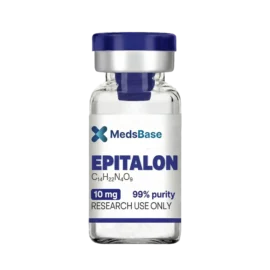
- Stacking onderzoek — vaak gecombineerd met NAD+ en Epitalon in levensduur / cognitieve onderzoeksprotocollen
Voor een bredere context over nootropische en levensduurpeptiden, zie de onderzoekspeptiden catalogus.
Beschikbare sterktes en concentraties
MedsBase heeft Semax in de volgende lyofilisatievialen beschikbaar:
| Vulsterkte | Typisch gebruik | Verpakkingsgroottes |
|---|---|---|
| 5 mg | Pilotdosering, korte onderzoeksprotocollen | 10, 20 of 30 vialen |
| 10 mg | Standaard onderzoekssterkte — ondersteunt ~33 toedieningen bij 300 mcg | 10, 20 of 30 vialen |
Semax kan zowel intranasaal (de primaire onderzoeksroute) als subcutaan worden toegediend als een SC-referentiedoseringsarm. Alle sterktes worden geleverd als lyofilisaatpoeder met een HPLC-puurheid van 99%+.
Hoe het zich verhoudt — Semax versus andere cognitieve / levensduurpeptiden
Semax behoort tot een kleine groep nootropische en levensduurpeptiden met gepubliceerd preklinisch onderzoek. Elk gebruikt een uniek mechanisme:
| Criterium | Semax | Epitalon | NAD+ |
|---|---|---|---|
| Primair werkingsmechanisme | BDNF-verhoging, MC-gerelateerd | Telomerase / pijnappelklier-signalering | Sirtuine / PARP-co-enzym |
| Sterkste onderzoekssignaal | Cognitief, herstel na beroerte | Telomeerlengte, circadiaan | Cellulaire energie, levensduur |
| Primaire route | Intranasaal (ook SC) | Subcutaan | SC, IM of IV |
| Typische dosering | 250–600 mcg intranasaal per dag | 5–10 mg SC per dag | 50–100 mg SC/IM per dag |
| Regelgeving | Goedgekeurd in Rusland | Niet goedgekeurd | Niet goedgekeurd |
Onderzoekers bestuderen Semax vaak samen met Epitalon en NAD+ in levensduur / neurocognitieve verouderingsonderzoeksprotocollen omdat hun mechanismen complementair zijn.
Opslag en Reconstituering
Voor reconstituering: Bewaar lyofiliseerde flesjes gekoeld bij 2–8 °C in de originele verpakking, stabiel tot 36 maanden. Vermijd vries-dooicycli van het poeder.
Reconstitueringsprocedure: voor intranasaal onderzoek, reconstitueer bij een concentratie die overeenkomt met een neusdruppelaar of spray. Voor SC-referentiedosering, volg de bovenstaande tabel. Draai voorzichtig — niet niet schudden — en laat 5–10 minuten staan voor volledige oplossing.
Na reconstitutie: bewaar gekoeld bij 2–8 °C en gebruik binnen 30 dagen. Vries de gereconstitueerde oplossing niet in.
Veelgestelde vragen
Waar wordt Semax voor gebruikt in onderzoek?
Semax wordt gebruikt in laboratoriumonderzoek naar cognitieve functie, geheugen, aandacht, herstel na een beroerte, ADHD-gerelateerde pathways, neuroprotectie, onderzoek naar stemming/angst en BDNF-signalering. Het is goedgekeurd in Rusland voor de behandeling van ischemische beroerte; in de VS en EU is het niet FDA/EMA-goedgekeurd en wordt het hier strikt verkocht voor alleen laboratoriumonderzoek.
Hoe wordt Semax toegediend in onderzoek?
De primaire onderzoeksroute is intranasaal, overeenkomend met het goedgekeurde Russische product. Toediening via de neus naar de hersenen omzeilt de bloed-hersenbarrière via olfactorische pathways en zorgt voor snelle blootstelling aan het CZS. Sommige protocollen gebruiken subcutane injectie als referentietoedieningsroute. Orale toediening is niet effectief omdat Semax snel wordt afgebroken door maagenzymen.
Wat is de typische onderzoeksdosis van Semax?
Gepubliceerde preklinische en Russisch-goedgekeurde protocollen gebruiken typisch 250–600 mcg intranasaal, 1–3 keer per dag. Sommige onderzoeksprotocollen gebruiken SC 100–300 mcg equivalent. Een flesje van 10 mg gereconstitueerd met 2,0 mL bacteriostatisch water levert 5,0 mg/mL — 6 ticks op een U-100 SC-spuit geeft 300 mcg.
Is Semax FDA-goedgekeurd?
Nee. Semax is goedgekeurd in de Russische Federatie voor indicaties van acute ischemische beroerte en cognitieve stoornissen, maar is niet niet goedgekeurd door de FDA, EMA, MHRA of enige andere westerse regelgevende instantie. Voorraad voor onderzoeksgebruik is hoe westerse onderzoekers het verkrijgen voor preklinisch werk.
Wat doet Semax met BDNF?
Gepubliceerd onderzoek toont consequent een snelle en aanhoudende upregulatie van brain-derived neurotrophic factor (BDNF) expressie in de hippocampus en cortex na toediening van Semax. BDNF is een hoofdregulator van synaptische plasticiteit en langetermijngeheugenconsolidatie, en de verhoging ervan is de voorgestelde mechanistische basis voor de cognitieve en neuroprotectieve onderzoeksobservaties.
Hoe moet Semax worden opgeslagen?
Gevriesdroogde flesjes: gekoeld bij 2–8 °C in originele verpakking, stabiel tot 36 maanden. Gereconstitueerde oplossing: gekoeld bij 2–8 °C, gebruik binnen 30 dagen. Vries de gereconstitueerde oplossing niet in.
Hoe moet ik Semax reconstitueren voor intranasaal onderzoek?
Voor nasale toediening, reconstitueer op een concentratie die overeenkomt met het volume van uw neusdruppelaar of spray. Een flesje van 10 mg in 2 mL geeft 5 mg/mL; een typisch neussprayvolume van 50–100 mcL levert dan 250–500 mcg per toediening. Onderzoeksprotocollen moeten gericht zijn op het specifieke per-sprayvolume van het gebruikte toedieningsapparaat.
Kan Semax worden gecombineerd met andere peptiden in onderzoek?
Ja. Semax wordt vaak gecombineerd met Epitalon en NAD+ in onderzoeksprotocollen voor levensduur en cognitieve veroudering. De mechanismen zijn complementair — BDNF-gestuurde neurotrofe signalering (Semax), telomeer / circadiane ritme (Epitalon), cellulaire energie / sirtuïnen (NAD+).
Welke sterktes heeft MedsBase op voorraad?
MedsBase voert Semax in lyofiliseerde flesjes van 5 mg en 10 mg. Elke sterkte is beschikbaar in verpakkingen van 10, 20 of 30 flesjes. Alle flesjes worden geleverd met een HPLC-puurheid van 99%+ en een certificaat van analyse op verzoek.
Veroorzaakt Semax bijwerkingen in onderzoek?
Gepubliceerd preklinisch onderzoek en Russische klinische onderzoeksgegevens melden een schoon veiligheidsprofiel. Lichte tijdelijke nasale irritatie na intranasale toediening is de meest gerapporteerde observatie. Geen significante systemische bijwerkingen zijn geïdentificeerd bij standaard onderzoeksdoseringen.
Wat is de halfwaardetijd van Semax?
Semax heeft een korte plasmahalfwaardetijd van ongeveer 2–3 minuten wanneer het intranasaal of subcutaan wordt toegediend, toegeschreven aan snelle proteolytische afbraak. Ondanks de snelle systemische klaring, toont Semax langdurige cognitieve effecten in preklinisch onderzoek — geschat op 20–24 uur — vanwege aanhoudende BDNF-upregulatie in de hersenen in plaats van directe receptorbezetting.
Hoe verhoudt Semax zich tot Selank in onderzoek?
Semax en Selank zijn beide synthetische nootropische peptiden van Russische oorsprong, maar met verschillende farmacologische profielen. Semax activeert de BDNF/TrkB-route en vertoont sterkere stimulerende en cognitief versterkende effecten in preklinisch onderzoek. Selank is afgeleid van het immunomodulerende peptide tuftsin en heeft meer uitgesproken anxiolytische eigenschappen. Onderzoeksstapels combineren soms beide voor complementaire cognitieve en anxiolytische effecten.
Kan ik Semax bestellen voor internationale verzending?
Ja. MedsBase verzendt Semax wereldwijd vanuit ons toegewijde peptide-verzendnetwerk. Bestellingen met alleen peptiden komen in aanmerking voor onze standalone peptide-verzendservice. Bestellingen worden verzonden in temperatuurgecontroleerde verpakkingen met volledige tracking.
Andere Peptiden voor Herstel- en Prestatieonderzoek
- BPC-157 — Body Protection Compound — onderzoek naar pees-, ligament- en darmherstel
- TB-500 — Thymosine Beta-4 fragment — onderzoek naar zacht weefsel en vasculair herstel
- Ipamorelin — Selectieve ghreline-agonist — schone GH-puls zonder cortisol/prolactine
- CJC-1295 met DAC — GHRH-analoog met verlengde halfwaardetijd
- GHK-Cu — Koperpeptide — onderzoek naar huid- en bindweefselregeneratie
Verder lezen
📖 Lees het onderzoek achter dit peptide
Lees onze volledige evidence-based gids: Semax — werkingsmechanisme, Russische klinische geschiedenis en eerlijk onderzoek. Behandelt BDNF-farmacologie, ACTH 4-10 oorsprong, intranasale toedieningsprotocollen, onderzoeksdoseringbereiken en vergelijkende nootropische context.
Meer opties in Peptiden
Gerangschikt op recente bestelvolumes van MedsBase — wat andere klanten in deze categorie kiezen.
| Sterkte | 5 mg, 10 mg |
|---|---|
| Hoeveelheid | 10 flacons, 20 flacons, 30 flacons |
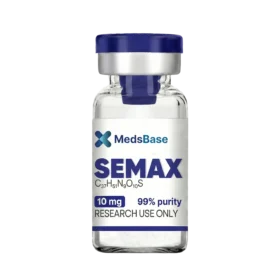 Semax
Semax
Vragen & antwoorden
Semax
Gerelateerde producten
Beoordelingen
Er zijn nog geen beoordelingen